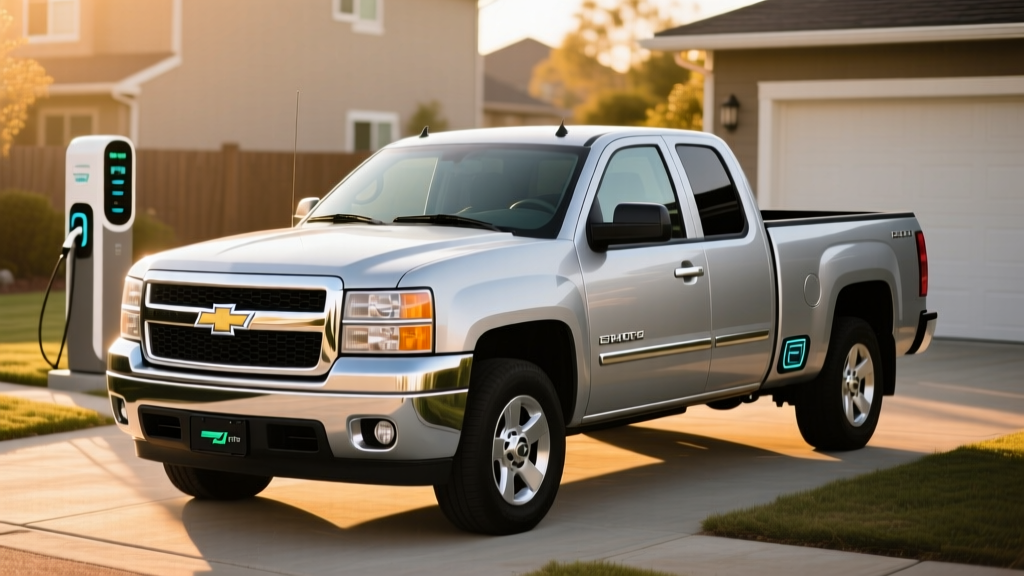
The 2011 Silverado Hybrid: A Discontinued Experiment Worth Buying Used?
Chevrolet's Two-Mode Hybrid full-size pickup was an ambitious answer to a simple question in the late 2000s: could a body-on-frame truck deliver V8 towing capability while sipping fuel like a midsize sedan in city driving? The 2011 Silverado Hybrid was the final model year for this powertrain before GM pulled the plug, making it a niche find on the used market today. For buyers eyeing a fuel-efficient truck without committing to a modern plug-in hybrid (PHEV) or full electric vehicle (BEV), this conventional hybrid (HEV) deserves a closer look — with significant caveats about age, parts availability, and what a 15-year-old hybrid battery actually means for your wallet.
This guide breaks down the 2011 Silverado Hybrid's fuel economy, powertrain, battery longevity, reliability concerns, and how it compares to today's electrified trucks. If you're searching for a 2011 Silverado Hybrid on the used market, here's everything you need to know before signing the paperwork.
HEV vs PHEV vs EV: Where the 2011 Silverado Hybrid Fits
The 2011 Silverado Hybrid is a conventional hybrid electric vehicle (HEV). It does not plug in. It has no electric-only driving range. The small nickel-metal hydride (NiMH) battery pack recharges exclusively through regenerative braking and the gasoline engine. This is fundamentally different from the plug-in hybrids and full EVs dominating today's market.
| Feature | HEV (2011 Silverado Hybrid) | PHEV (e.g., modern plug-in truck) | BEV (e.g., Ford F-150 Lightning) |
|---|---|---|---|
| Plugs in to charge? | No | Yes | Yes |
| Electric-only range | 0 miles | 20–50 miles typical | 230–400+ miles |
| Battery size | ~1.8 kWh (NiMH) | 15–25 kWh (lithium-ion) | 90–150 kWh (lithium-ion) |
| DC fast charging | N/A | Rarely; most AC only | Yes, 50–350 kW |
| Primary fuel | Gasoline | Gasoline + electricity | Electricity only |
| Federal tax credit (new) | None (expired) | Up to $7,500 (§30D) | Up to $7,500 (§30D) |
The distinction matters enormously for used buyers. The Silverado Hybrid's tiny battery means there's far less to degrade compared to a modern PHEV or BEV, but it also means the efficiency gains are modest — particularly on the highway where the electric motors contribute less.
Fuel Economy: EPA Ratings vs Real-World MPG
The 2011 Chevrolet Silverado Hybrid was rated by the EPA at 21 MPG city / 22 MPG highway / 21 MPG combined in two-wheel-drive (2WD) configuration. Four-wheel-drive (4WD) models dropped slightly to 20 city / 22 highway / 20 combined. For context, the standard 5.3L V8 Silverado of the same year was rated at 15 city / 21 highway / 17 combined — making the hybrid roughly a 24% improvement in combined driving.
| Configuration | City MPG | Highway MPG | Combined MPG |
|---|---|---|---|
| 2011 Silverado Hybrid 2WD | 21 | 22 | 21 |
| 2011 Silverado Hybrid 4WD | 20 | 22 | 20 |
| 2011 Silverado 5.3L V8 2WD (non-hybrid) | 15 | 21 | 17 |
Source: fueleconomy.gov
Powertrain: The 6.0L V8 Two-Mode Hybrid System
The 2011 Silverado Hybrid used GM's Two-Mode Hybrid powertrain, a technically sophisticated system shared with the GMC Sierra Hybrid, Cadillac Escalade Hybrid, and Tahoe/Yukon Hybrid of the same era. Here's the hardware:
| Specification | Detail |
|---|---|
| Engine | 6.0L V8 with Active Fuel Management (cylinder deactivation) |
| Electric motors | Two 60 kW motors integrated into the transmission |
| Combined horsepower | 379 HP (engine + motors) |
| Transmission | Electronically variable transmission (EVT) — Two-Mode |
| Battery type | Nickel-metal hydride (NiMH), ~1.8 kWh |
| Battery location | Under rear seat (crew cab) |
| Towing capacity | Up to 6,100 lbs (2WD) / 5,900 lbs (4WD) |
| Payload capacity | ~1,400 lbs |
| 0–60 MPH | ~8.0 seconds (estimated) |
| Drivetrain | 2WD or 4WD (Autotrac) |
The Two-Mode system operated in one of two modes depending on speed and load: Mode 1 handled low-speed driving, stop-and-go traffic, and light loads, where the electric motors could propel the truck at very low speeds without the engine running. Mode 2 engaged at higher speeds and under heavier loads, where the engine and motors worked in tandem through fixed gear ratios for efficient highway cruising and towing. This dual-mode approach was more sophisticated than the single-mode systems in competitors like the Ford Escape Hybrid of the era.
The 6.0L V8 also featured GM's Active Fuel Management (AFM), which could deactivate four of the eight cylinders under light-load conditions. Combined with the hybrid system, this meant the truck could operate on four cylinders, electric motors, or a combination — depending on demand.
Battery Longevity, Warranty & Replacement Costs
This is the most critical question for anyone considering a 2011 Silverado Hybrid in 2026: what condition is the battery in, and what does replacement cost?
The NiMH battery pack in the Two-Mode Hybrid system is relatively small (~1.8 kWh) and was not subjected to the deep charge-discharge cycles that stress modern lithium-ion packs. NiMH chemistry is generally robust and tolerant of partial cycling, which is exactly how this system uses it. Many Tahoe and Silverado Hybrids from this era have exceeded 150,000–200,000 miles on the original battery pack, though gradual capacity loss is expected.
Battery replacement cost: A refurbished or remanufactured NiMH hybrid battery for the 2011 Silverado Hybrid typically runs $2,000–$3,500 including labor at an independent hybrid specialist. A new OEM battery from GM (if still available) could exceed $4,000–$5,500 installed at a dealership. Given the age of the vehicle, most owners opt for aftermarket refurbished units or individual cell-module replacement, which can bring costs down to $800–$1,500 if you find a qualified technician.
Signs of hybrid battery degradation to watch for:
- Noticeable drop in city MPG (falling below 18 MPG in stop-and-go traffic)
- The gasoline engine running more frequently at low speeds or at stops
- Hybrid system warning light or "Service Hybrid System" message on the dash
- Reduced regenerative braking feel
- Diagnostic trouble codes P0A7F (hybrid battery pack deterioration) or similar
Other hybrid-specific components to inspect: The EVT transmission is complex and expensive to repair ($3,000–$5,000+). The power electronics inverter and the two 60 kW electric motors inside the transmission are generally reliable but should be checked during a pre-purchase inspection. Ensure any mechanic evaluating the truck has hybrid-system diagnostic capability.
Reliability & Common Issues
The 2011 Silverado Hybrid shares the GMT900 platform with its conventional siblings, which means it inherits the same body, chassis, and interior — along with their known issues. The hybrid-specific components add a layer of complexity that can be costly if neglected.
Common issues reported by owners and mechanics:
- Active Fuel Management (AFM) lifter failure: The cylinder-deactivation system on the 6.0L V8 (LFA engine) is known for collapsed lifters, which can cause catastrophic engine damage if not addressed. Many owners have disabled AFM with an aftermarket tuner as a preventive measure.
- Hybrid battery cooling fan: The battery pack has a dedicated cooling system. A failed fan can accelerate battery degradation and trigger warning lights.
- Brake actuator/ABS module: The regenerative braking system uses an electrohydraulic brake actuator that can fail and is expensive to replace ($1,200–$2,000).
- Standard GMT900 issues: Rust on body mounts and frame (especially in salt-belt states), instrument cluster stepper motor failures, power window regulator failures, and transmission cooler line leaks (on non-hybrid models; the hybrid EVT does not share this issue).
On the positive side, the Two-Mode EVT transmission has proven more durable than initially feared, and the electric motors inside it rarely fail independently. The biggest financial risk is the combination of AFM-related engine failure and hybrid battery degradation occurring simultaneously on a high-mileage truck.
Used Pricing & Tax Credit Eligibility
The 2011 Silverado Hybrid originally carried an MSRP of approximately $39,000–$44,000 depending on configuration (it was offered exclusively in the well-equipped 1HY trim as a crew cab). The hybrid premium over a comparably equipped conventional Silverado was roughly $5,000–$7,000.
As of 2026, used 2011 Silverado Hybrids trade in the $6,000–$12,000 range depending on mileage, condition, and location. Low-mileage examples (under 80,000 miles) with documented hybrid-system service command the top of that range. High-mileage trucks (150,000+) with unknown battery health sell for $6,000–$8,000.
Federal tax credit: The 2011 Silverado Hybrid did qualify for a federal hybrid tax credit when new (up to $2,200 under the older Energy Policy Act provisions), but this credit expired long ago and is not available for used purchases. The current IRS §25E used clean vehicle credit (up to $4,000) applies only to used BEVs and PHEVs purchased from a dealer — conventional hybrids like the Silverado Hybrid do not qualify. There are no federal incentives available for purchasing this vehicle in 2026.
Who Should Buy the 2011 Silverado Hybrid?
Pros
- Significantly better city MPG than a conventional V8 Silverado (21 vs 15)
- Retains strong towing (6,100 lbs) and V8 capability
- Well-equipped 1HY crew cab trim standard
- Proven GMT900 platform with wide parts availability (non-hybrid components)
- Small NiMH battery = lower replacement cost than modern lithium packs
- No plug-in charging infrastructure needed
Cons
- Highway MPG improvement over non-hybrid is marginal (22 vs 21)
- All examples are now 15 years old — battery and AFM lifter risk
- No federal or state tax credits available
- Hybrid-specific parts (EVT, brake actuator) are expensive and harder to source
- Outdated interior and safety tech vs modern trucks
- No electric-only driving capability
- Resale value uncertain given discontinued powertrain
Decision Framework: Is the 2011 Silverado Hybrid Right for You?
Choose the 2011 Silverado Hybrid if: You need a V8 truck for occasional towing and hauling, your driving is predominantly city and suburban (where the hybrid system delivers its biggest MPG advantage), you're comfortable with the risk of a 15-year-old hybrid system, and you can find a well-maintained example under $10,000 with a pre-purchase inspection from a hybrid-qualified mechanic.
Choose a conventional used Silverado (5.3L V8) if: You primarily drive highway miles (where the hybrid advantage is minimal), you want simpler mechanics with lower repair risk, or you plan to keep the truck for many more years and want maximum parts availability.
Choose a modern PHEV or BEV truck if: You want meaningful electric-only commuting (the Ford F-150 Lightning or upcoming PHEV trucks like the Ramcharger offer this), you want current safety technology, you want to take advantage of federal tax credits, and your budget allows for a newer vehicle ($40,000+).
Frequently Asked Questions
How many MPG does the 2011 Silverado Hybrid get?
The EPA rated the 2011 Silverado Hybrid at 21 city / 22 highway / 21 combined (2WD) or 20/22/20 (4WD). Real-world driving typically yields 19–23 MPG in mixed use, with city-heavy commutes sometimes exceeding 21 MPG and highway-only driving at high speeds dropping to 18–20 MPG. Towing reduces economy to 12–15 MPG.
Does the 2011 Silverado Hybrid plug in?
No. The 2011 Silverado Hybrid is a conventional hybrid (HEV). It has no plug, no charging port, and no electric-only driving range. The battery recharges through regenerative braking and the gasoline engine. You fuel it exactly like a standard Silverado — with regular unleaded gasoline.
How far can it drive on electric power alone?
The Two-Mode Hybrid system can propel the truck on electric power alone at very low speeds (under ~25 MPH) for short distances, such as creeping through a parking lot or in heavy stop-and-go traffic. This is not a measurable "electric-only range" in the way a PHEV operates — it's a brief assist function, not a commuting mode. There is zero practical electric-only range for sustained driving.
Is the hybrid battery reliable and what does replacement cost?
The NiMH battery pack has proven reasonably durable, with many examples exceeding 150,000 miles. However, at 15 years old, some capacity degradation is expected in any surviving original pack. Replacement costs range from $800–$1,500 for individual cell-module repair to $2,000–$3,500 for a refurbished pack, or $4,000–$5,500 for a new OEM unit (if available). A pre-purchase hybrid diagnostic scan is strongly recommended.
Does the 2011 Silverado Hybrid qualify for any tax credit?
No. The original federal hybrid tax credit for this vehicle expired years ago. The current IRS §25E used clean vehicle credit (up to $4,000) applies only to plug-in vehicles (BEVs and PHEVs), not conventional hybrids. No federal incentives are available for purchasing a 2011 Silverado Hybrid in 2026. Some states may offer minimal incentives for any used vehicle purchase, but these are not hybrid-specific. Check IRS.gov for current rules.
Can I still get hybrid-specific parts for a 2011 Silverado Hybrid?
GM discontinued the Two-Mode Hybrid system after 2013 (in the Tahoe/Yukon), and parts supply for hybrid-specific components has tightened. The EVT transmission, hybrid brake actuator, and battery modules are available through aftermarket suppliers and salvage yards, but lead times can be longer than for standard Silverado parts. Non-hybrid components (body panels, suspension, interior, brakes) remain widely available given the massive GMT900 production run.
How does it compare to modern hybrid trucks?
Modern hybrid trucks like the Ford F-150 PowerBoost Hybrid (3.5L V6 HEV, EPA 24 combined) and the Toyota Tundra i-FORCE MAX (3.5L V6 HEV, EPA 20–22 combined) offer similar or better fuel economy with more advanced technology, better safety features, and full warranty coverage. The Silverado Hybrid's advantage is purely its low used-market entry price. If you can afford a newer hybrid truck, the modern options are superior in nearly every measurable dimension.
For official EPA fuel economy data, consult fueleconomy.gov. For current federal tax credit rules on electrified vehicles, see IRS.gov §25E and §30D.