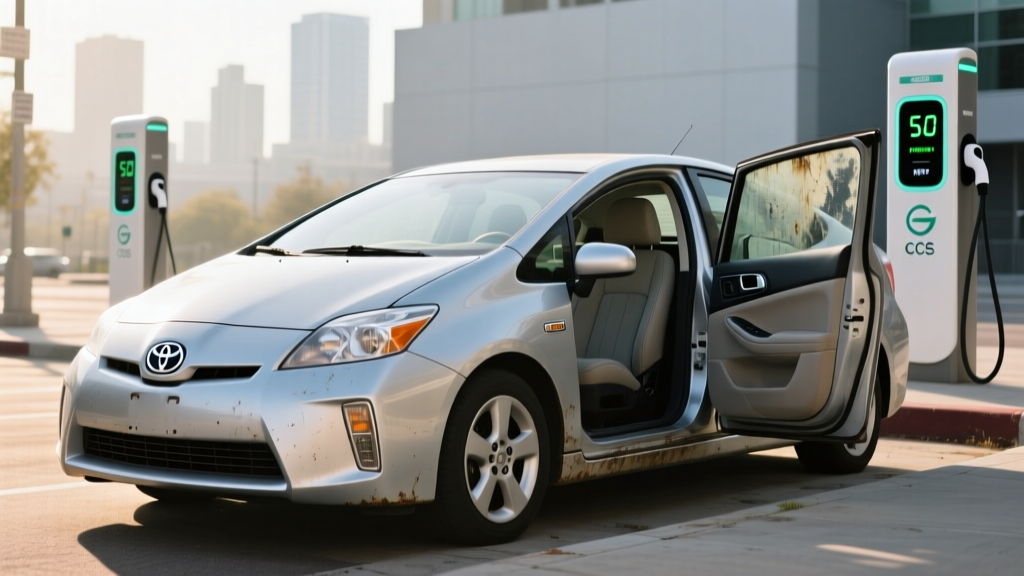
The 2011 Toyota Prius hybrid sits in an unusual position in 2026. Fifteen years after its debut as a third-generation model, it remains one of the most fuel-efficient used vehicles available under $8,000. For buyers navigating sky-high new-car prices and uncertain EV charging access, this conventional hybrid (HEV) offers a pragmatic bridge — no plug required, no range anxiety, and a track record of outlasting most vehicles on the road.
But a 2011 Prius in 2026 is a 15-year-old vehicle with a high-voltage battery that was never designed to last forever. This guide covers the exact fuel economy figures, battery replacement economics, powertrain specs, and ownership realities you need to evaluate before handing over cash for a used third-gen Prius.
2011 Prius Hybrid Powertrain: How It Works
The 2011 Prius is a conventional hybrid electric vehicle (HEV) — not a plug-in hybrid. This distinction matters because it defines everything about how you own and drive the car.
HEV vs. PHEV — What's the Difference?
| Feature | 2011 Prius (HEV) | Prius Plug-in / Prius Prime (PHEV) |
|---|---|---|
| Plug-in charging? | No — self-charging via regen & engine | Yes — plug into Level 1 or Level 2 |
| Electric-only driving | ~1 mile at low speed (EV mode) | 25–44 miles depending on model year |
| Battery size | 1.3 kWh (NiMH) | 4.4–13.6 kWh (Li-ion) |
| Gas engine needed? | Frequently cycles on/off | Only after EV range depleted |
| Federal tax credit (new) | None | Up to $7,500 (when eligible, varies by year) |
The 2011 Prius was never sold as a PHEV in the US. Toyota introduced the Prius Plug-in Hybrid for the 2012 model year.
The 2011 model uses Toyota's Hybrid Synergy Drive system pairing a 1.8-liter Atkinson-cycle four-cylinder gasoline engine (98 hp) with a permanent-magnet synchronous electric motor (80 hp). Combined system output is 134 horsepower. A nickel-metal hydride (NiMH) battery pack with 1.3 kWh of capacity stores energy recovered from regenerative braking and the engine. There is no plug, no charging port, and no external electricity required. You fuel it with gasoline and the hybrid system handles the rest.
| Specification | 2011 Toyota Prius |
|---|---|
| Powertrain | 1.8L I4 Atkinson + electric motor (HEV) |
| Combined horsepower | 134 hp |
| Gas engine | 98 hp @ 5,200 rpm |
| Electric motor | 80 hp (60 kW) |
| Transmission | ECVT (planetary gearset, no fixed gears) |
| Battery chemistry | Nickel-Metal Hydride (NiMH) |
| Battery capacity | 1.3 kWh |
| Drivetrain | Front-wheel drive |
| 0–60 mph | ~9.8 seconds |
| Curb weight | ~3,042 lbs |
Fuel Economy: EPA Ratings vs. Real-World MPG
The EPA rated the 2011 Prius at 51 mpg city / 48 mpg highway / 50 mpg combined. These figures come directly from fueleconomy.gov and remain the official benchmark.
| Driving Condition | EPA Rating | Real-World Expectation (2026) |
|---|---|---|
| City | 51 mpg | 48–54 mpg (hybrids excel in stop-and-go) |
| Highway | 48 mpg | 43–47 mpg (aerodynamic drag, sustained speed) |
| Combined | 50 mpg | 45–50 mpg (depends on driving mix) |
| Cold weather (below 32°F) | — | 38–44 mpg (engine runs more for heat) |
Why real-world MPG varies: Hybrids like the Prius actually tend to exceed their EPA city rating in warm-weather urban driving because regenerative braking recovers more energy in stop-and-go traffic. Highway driving is the opposite — sustained speeds above 65 mph reduce the hybrid system's advantage. Cold weather is the biggest MPG killer: the gasoline engine must run continuously to provide cabin heat, eliminating electric-only mode and dropping efficiency by 15–20%.
At 50 mpg combined and $3.50/gallon gas (a reasonable 2026 national average), the 2011 Prius costs roughly $0.07 per mile in fuel. Compare that to a 28-mpg conventional sedan at $0.125 per mile — the Prius saves approximately $825 per year at 15,000 miles driven annually.
Hybrid Battery Health: The #1 Used-Buyer Concern
At 15 years old, the original NiMH battery in a 2011 Prius is living on borrowed time — or has already been replaced. Understanding battery economics is essential before purchasing.
2011 Prius Hybrid Battery Warranty (Original)
- Hybrid battery warranty: 8 years / 100,000 miles (10 years / 150,000 miles in CARB states including CA, NY, MA, and others)
- Capacity retention threshold: Toyota warranted the battery against failure, not specific degradation percentage
- Current status (2026): Original warranty has expired on all 2011 models regardless of mileage
Battery Replacement Costs in 2026
If the hybrid battery fails or shows significant degradation (common symptoms: reduced MPG, battery warning light, reduced EV-mode availability), you have three options:
| Option | Cost Range | Expected Lifespan |
|---|---|---|
| New OEM Toyota battery | $2,000–$2,500 (parts + labor) | 10–15 years |
| Refurbished/reconditioned battery | $800–$1,500 (parts + labor) | 3–7 years |
| Individual module replacement | $300–$600 (diagnostic + labor) | 1–5 years (band-aid fix) |
Key insight: NiMH batteries degrade gradually rather than failing suddenly. A 2011 Prius with an original battery may still function but deliver 42–45 mpg instead of 50 mpg combined. Before buying, request a hybrid battery health check — many shops can read the battery's State of Health (SoH) via OBD-II scan tool, and apps like Dr. Prius can perform a charge-discharge lifecycle test.
Reliability Record and Known Issues
The third-generation Prius (2010–2015) carries a strong reliability reputation overall, but specific issues have emerged over 15 years of real-world ownership:
- Hybrid battery failure: The most common major repair. Likelihood increases significantly past 150,000 miles and 10+ years.
- EGR (Exhaust Gas Recirculation) valve clogging: Can cause head gasket failure if not cleaned. A known 3rd-gen issue around 100,000–150,000 miles. EGR cleaning costs $200–$400; head gasket replacement runs $2,000–$3,500.
- Oil consumption: Some 2010–2012 models with the 2ZR-FXE engine burn oil at higher mileages. Check oil level frequently.
- Brake actuator: The regenerative braking system's actuator can fail ($1,200–$1,800 repair), though this is less common than battery issues.
- 12V auxiliary battery: Located in the rear cargo area, this standard lead-absorbed glass mat (AGM) battery typically lasts 4–6 years and costs $200–$300 to replace. A dead 12V battery will prevent the car from starting even if the hybrid battery is fully charged.
According to long-term owner data aggregated across forums and repair databases, a well-maintained 2011 Prius routinely reaches 200,000–300,000 miles before major powertrain work beyond the hybrid battery. The planetary gearset transmission (ECVT) has no clutch packs or bands to wear and is exceptionally durable.
2011 Prius Pricing in 2026 and Tax Credit Eligibility
Used 2011 Prius pricing in early 2026 ranges from approximately $4,500 to $8,500 depending on mileage, condition, battery health, and trim level (base through V).
Does a Used 2011 Prius Qualify for Any Tax Credit?
Federal §30D New EV Credit: No. This credit applies only to new plug-in electric vehicles, not conventional hybrids, and not to used vehicle purchases.
Federal §25E Used Clean Vehicle Credit: No. This credit (up to $4,000 or 30% of sale price, whichever is lower) applies only to used plug-in EVs and PHEVs with at least 4 kWh of battery capacity. The 2011 Prius HEV has a 1.3 kWh NiMH battery and no plug — it does not qualify.
State incentives: A small number of states offer used hybrid incentives or emissions-reduction rebates, but these are rare and change frequently. Check your state's environmental or DMV agency for current programs.
Tax credit rules are subject to change. Consult a tax professional and review current IRS guidance at irs.gov before making purchase decisions based on incentive eligibility.
2011 Prius vs. Modern Alternatives: What Should You Buy?
The used-EV and hybrid market in 2026 offers alternatives at various price points. Here is how the 2011 Prius stacks up against common cross-shopping options:
| Vehicle | Type | Combined MPG / Range | Typical Used Price (2026) | Key Trade-off |
|---|---|---|---|---|
| 2011 Toyota Prius | HEV | 50 mpg combined | $4,500–$8,500 | Oldest option; battery risk |
| 2016–2018 Prius (4th gen) | HEV | 52–56 mpg combined | $12,000–$17,000 | Newer battery, better safety tech |
| 2019–2022 Prius Prime | PHEV | 25 mi EV + 54 mpg | $18,000–$25,000 | Plug-in capable; eligible for §25E used credit |
| 2017–2020 Chevrolet Bolt EV | BEV | 238 mi EPA range | $10,000–$16,000 | Zero gas; requires home charging |
| 2013–2018 Ford Fusion Hybrid | HEV | 42 mpg combined | $7,000–$13,000 | More space; lower MPG |
Which Should You Choose?
Choose the 2011 Prius if: Your budget is under $8,000, you drive mostly in the city, you have no access to plug-in charging (apartment/condo), and you can budget $1,500–$2,500 for a potential hybrid battery replacement.
Choose a newer Prius (4th gen) if: You can spend $12,000–$17,000 and want a battery with remaining life, modern safety features (pre-collision, lane departure), and better fuel economy.
Choose a Prius Prime (PHEV) if: You have home charging access and a short commute (under 25 miles). You can drive on electricity daily and only use gas for longer trips — plus the §25E used credit may knock up to $4,000 off the price.
Choose a used BEV (like the Bolt EV) if: You have reliable Level 2 home charging, your daily driving is under 200 miles, and you want to eliminate gas entirely. Just verify the battery's State of Health before buying.
Pros and Cons of the 2011 Prius in 2026
Pros
- 50 mpg combined — still among the most efficient non-plug vehicles ever sold
- Proven powertrain with massive aftermarket and DIY support
- No charging infrastructure needed — fuel at any gas station
- Low annual fuel cost (~$1,050 at 15,000 miles/year)
- Hatchback practicality with 21.6 cu ft cargo space
- Extremely low cost of entry ($4,500–$8,500)
- Strong parts availability; any independent shop can service
Cons
- Hybrid battery likely near end-of-life if original (budget for replacement)
- No federal or state tax credit eligibility
- Outdated infotainment (no Apple CarPlay, no Android Auto, basic Bluetooth)
- Safety tech is minimal — no automatic emergency braking, no lane keeping
- EGR system prone to clogging; must be addressed proactively
- Slow acceleration (9.8 seconds 0–60) — highway merging requires planning
- Interior materials and ride comfort feel dated vs. modern vehicles
Frequently Asked Questions
How many MPG does the 2011 Prius hybrid get?
The EPA rates the 2011 Prius at 51 mpg city, 48 mpg highway, and 50 mpg combined. In real-world driving, expect 48–54 mpg in city conditions and 43–47 mpg on the highway. Cold weather can drop combined MPG into the 38–44 range. A well-maintained example with a healthy battery should deliver 45–50 mpg combined year-round in moderate climates.
Is the 2011 Prius a plug-in hybrid?
No. The 2011 Prius is a conventional hybrid (HEV). It has no charging port and cannot be plugged in. The battery charges exclusively through regenerative braking and the gasoline engine. Toyota did not offer a plug-in Prius in the US until the 2012 Prius Plug-in Hybrid.
How much does it cost to replace the hybrid battery in a 2011 Prius?
A new OEM Toyota NiMH battery costs approximately $2,000–$2,500 installed at a dealership. Refurbished batteries range from $800–$1,500 installed at independent hybrid specialists. Individual module replacement (replacing only failed cells) can cost $300–$600 but is a temporary fix. Factor this into your purchase budget — at 15 years old, battery replacement is a matter of "when," not "if," unless it was done recently.
Is the 2011 Prius reliable at high mileage?
Yes, with proper maintenance. The 2011 Prius powertrain is known to reach 200,000–300,000 miles. The ECVT transmission is nearly bulletproof. The primary wear items are the hybrid battery, the EGR system (which needs periodic cleaning to prevent head gasket damage), and the brake actuator. Regular oil changes (0W-20 synthetic every 5,000–10,000 miles), EGR cleaning every 100,000 miles, and proactive battery monitoring are the keys to longevity.
Does the 2011 Prius qualify for any tax credits?
No. The 2011 Prius is a conventional hybrid with no plug-in capability, so it does not qualify for the federal §30D new clean vehicle credit or the §25E used clean vehicle credit. Those credits require plug-in vehicles with minimum battery capacities. Some states may offer minimal emissions-related rebates, but these are uncommon for older hybrids. Consult IRS guidelines for current rules.
Should I buy a 2011 Prius or a used EV in 2026?
It depends on your charging access and budget. If you cannot install a Level 2 home charger (renters, condo dwellers, street parkers), the 2011 Prius is a safer bet — no infrastructure required. If you have home charging and a predictable commute under 200 miles, a used EV like a Chevrolet Bolt or Nissan Leaf eliminates gas costs entirely and may qualify for the $4,000 §25E used clean vehicle credit. The 2011 Prius wins on lowest upfront cost and maximum flexibility; a used EV wins on lowest per-mile operating cost.
What should I check before buying a used 2011 Prius?
Prioritize these inspections: (1) Hybrid battery health check via OBD-II scan or Dr. Prius app lifecycle test. (2) Check for EGR valve clogging symptoms (rough idle, check engine light) and ask if it has been cleaned. (3) Verify oil consumption isn't excessive — check the dipstick and look for blue exhaust smoke. (4) Confirm the 12V auxiliary battery age (replace if over 5 years old). (5) Check NHTSA recall status for outstanding safety recalls. (6) Review maintenance records for regular oil changes and inverter coolant service.
The Bottom Line for 2026 Buyers
The 2011 Toyota Prius hybrid remains a rational, data-backed choice for budget-conscious drivers who need maximum fuel efficiency without plug-in infrastructure. At $4,500–$8,500 and 50 mpg combined, its cost-per-mile is difficult to beat — even against newer vehicles costing three times as much.
The critical caveat is the hybrid battery. Go into the purchase with a clear-eyed budget: assume a $1,500–$2,500 battery replacement will be needed within your first two years of ownership if the original pack is still installed. With that expense planned for, the 2011 Prius delivers a total cost of ownership that undercuts nearly every alternative on the road. For buyers who value mechanical simplicity, proven reliability, and no dependence on charging networks, this 15-year-old hybrid still makes the math work.