Quick Verdict: A Performance Hybrid Ahead of Its Time
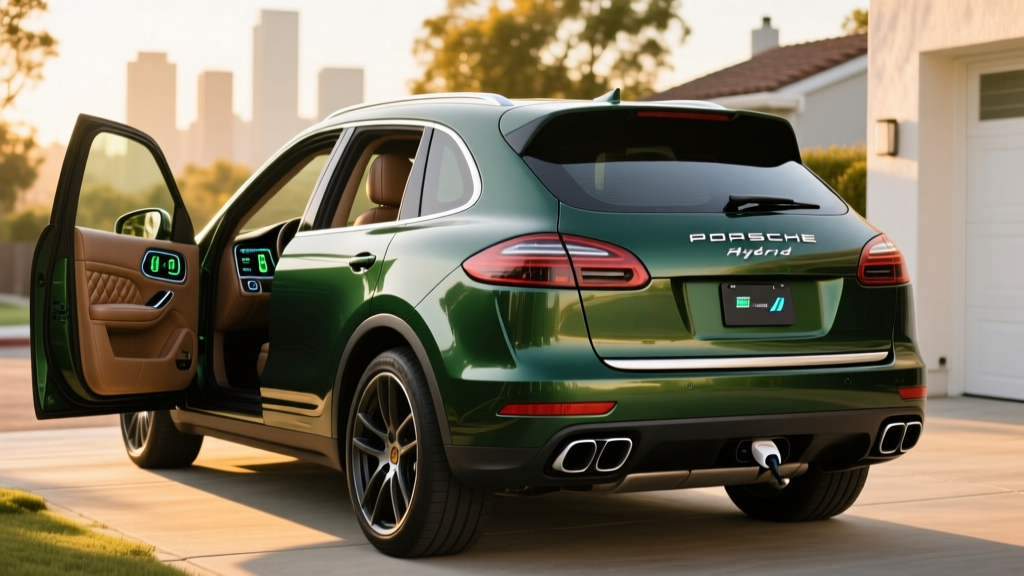
The 2011 Porsche Cayenne S Hybrid was Porsche's first production hybrid, pairing a supercharged 3.0L V6 with an electric motor for a combined 380 horsepower. As a conventional hybrid (HEV)—not a plug-in—it requires no charging infrastructure and recovers energy through regenerative braking. Over a decade later, it remains a compelling used luxury SUV for buyers who want Porsche dynamics without the fuel thirst of the V8 Cayenne S, though its age demands careful battery and maintenance evaluation.
2011 Cayenne Hybrid Specs at a Glance
| Specification | 2011 Cayenne S Hybrid |
|---|---|
| Powertrain | 3.0L Supercharged V6 + Electric Motor |
| Combined Horsepower | 380 hp @ 5,500 rpm |
| Combined Torque | 428 lb-ft @ 3,000 rpm |
| Transmission | 8-speed automatic (Tiptronic S) |
| Drivetrain | All-wheel drive (AWD) |
| Battery Type | NiMH (Nickel-Metal Hydride) |
| Battery Capacity | 1.7 kWh (gross) |
| EPA MPG (City / Hwy / Combined) | 20 / 24 / 21 |
| 0-60 mph | 6.1 seconds |
| Curb Weight | ~4,795 lbs |
| Original MSRP | $67,700 (base) |
| Current Used Range (2026) | $12,000 – $22,000 |
Sources: EPA fueleconomy.gov, Porsche AG press archives.
Fuel Economy: EPA vs Real-World MPG
The EPA rates the 2011 Cayenne S Hybrid at 20 city / 24 highway / 21 combined MPG. For context, the non-hybrid 2011 Cayenne S (4.8L V8) earned just 16 city / 22 highway / 18 combined—making the hybrid roughly 15-20% more efficient in mixed driving.
| Driving Scenario | EPA Estimate | Real-World Expectation |
|---|---|---|
| City (stop-and-go) | 20 MPG | 19–22 MPG (regen helps in traffic) |
| Highway (70+ mph) | 24 MPG | 21–23 MPG (aero drag, heavy curb weight) |
| Combined mixed | 21 MPG | 19–22 MPG |
| Cold weather (below 32°F) | N/A | 17–19 MPG (engine runs more for cabin heat) |
Conventional hybrids often exceed their EPA city estimates because regenerative braking captures energy that gas-only vehicles waste as heat. The Cayenne Hybrid's parallel hybrid system allows brief electric-only operation at low speeds (under ~30 mph for short distances), which helps in urban traffic. However, the vehicle's 4,795-lb curb weight and the supercharged V6's appetite under hard acceleration keep real-world numbers close to—or slightly below—EPA stickers when driven enthusiastically.
Powertrain Deep Dive: How the Hybrid System Works
The 2011 Cayenne S Hybrid uses a parallel hybrid architecture developed in partnership with Toyota (who supplied hybrid system expertise, while Porsche engineered the integration). Here's how the components break down:
- Gasoline Engine: 3.0L supercharged V6 producing 333 hp and 325 lb-ft of torque on its own. The roots-type supercharger provides immediate low-end response without turbo lag.
- Electric Motor: 47 hp (34 kW) electric motor integrated between the engine and transmission, contributing 221 lb-ft of torque.
- Combined Output: 380 hp and 428 lb-ft. Porsche's hybrid control unit seamlessly blends power sources—the electric motor fills torque gaps during gear shifts and provides silent low-speed crawling.
- NiMH Battery Pack: 1.7 kWh gross capacity (roughly 0.9 kWh usable), located under the cargo floor. This is a small buffer designed for assist-and-regen duty, not sustained electric driving.
- Decoupling Clutch: A key innovation—this clutch fully disconnects the gasoline engine at highway speeds when coasting, eliminating engine braking drag and allowing the Cayenne to "sail" in a pure electric idle mode (engine off, motor not driving).
The result is a luxury SUV that hits 60 mph in 6.1 seconds—matching the V8 Cayenne S of the same year—while sipping fuel more like a midsize sedan. The trade-off is complexity: two power sources, a high-voltage battery, and additional cooling circuits all require maintenance attention as the vehicle ages.
Battery Health, Warranty & Replacement Cost
This is the single most important section for any used 2011 Cayenne Hybrid buyer. The NiMH battery pack is now 14-15 years old, and while NiMH chemistry is known for gradual (rather than sudden) degradation, capacity loss is inevitable.
What to Expect from a 15-Year-Old NiMH Pack
NiMH batteries degrade primarily through heat exposure and charge cycling. Unlike the lithium-ion packs in modern EVs and PHEVs, NiMH is more tolerant of full-charge storage but suffers from "memory effect" if repeatedly shallow-cycled without periodic full discharge. In practice:
- Capacity retention: Expect 60-75% of original capacity on a well-maintained original battery. This translates to slightly reduced electric assist, marginally lower regen efficiency, and a small MPG penalty (1-2 MPG below EPA in some cases).
- Symptoms of a failing pack: Reduced fuel economy, more frequent engine engagement at low speeds, dashboard hybrid system warnings, or the vehicle refusing to enter electric-only crawl mode.
- Cell-level failure: NiMH packs consist of many individual cells. A single weak cell can drag down the entire pack. Some specialist shops offer cell-level reconditioning for $1,500–$3,000.
Battery Replacement Cost (2026 Estimates)
| Option | Estimated Cost | Notes |
|---|---|---|
| OEM replacement (Porsche dealer) | $4,500 – $7,000 | New NiMH pack, full warranty; parts availability declining |
| Aftermarket / remanufactured pack | $2,500 – $4,500 | Rebuilt with new cells; 1-3 year warranty typical |
| Cell-level reconditioning | $1,500 – $3,000 | Replace weak cells only; requires specialist; variable results |
| Used pack from salvage | $800 – $2,000 | High risk—unknown SoH; short or no warranty |
Pre-purchase advice: Before buying any 2011 Cayenne Hybrid, have the high-voltage battery inspected by a Porsche specialist or hybrid-certified shop. A proper diagnostic scan reads individual cell voltages and internal resistance—far more informative than a simple test drive. Budget $3,000–$5,000 for a potential battery replacement within your first two years of ownership.
Reliability & Common Issues Beyond the Battery
The 2011 Cayenne (958 generation) is generally robust mechanically, but the hybrid variant adds complexity. Common issues reported by owners and tracked by NHTSA include:
- Hybrid system cooling pump: The electric coolant pump for the hybrid system can fail ($800–$1,200 replacement). Symptoms include hybrid system warnings and reduced electric assist.
- Decoupling clutch wear: The engine disconnect clutch is a wear item. At 100,000+ miles, replacement may be needed ($1,500–$2,500).
- Transmission (Tiptronic S): The 8-speed automatic is durable but requires fluid changes every 60,000 miles. Neglected units develop rough shifts.
- Air suspension (if equipped): Many Cayennes were optioned with air suspension. Air springs and compressors commonly fail at 80,000–120,000 miles ($1,200–$2,000 per corner).
- Transfer case: AWD transfer case failures are a known 958-generation issue. Listen for whining or clunking under acceleration ($3,000–$5,000 repair).
Overall, a well-maintained 2011 Cayenne Hybrid can reach 150,000–200,000 miles, but "well-maintained" means documented service records including hybrid system diagnostics, transmission fluid changes, and timely coolant flushes for the hybrid cooling circuit.
Does the 2011 Cayenne Hybrid Qualify for Any Tax Credit?
No. Under current IRS §30D rules, the federal plug-in electric vehicle tax credit applies exclusively to plug-in electric vehicles (BEVs and PHEVs) with a minimum battery capacity of 7 kWh that can be recharged from an external power source. The 2011 Cayenne S Hybrid is a conventional HEV with a 1.7 kWh NiMH battery and no plug—it does not qualify for any federal EV tax credit.
Additionally, even if it were eligible, the §30D credit applies only to new vehicle purchases (or qualifying used EVs under §25E for vehicles under $25,000 sold by a dealer). A 2011 model purchased privately or at auction would not meet the used-EV credit criteria regardless.
Some states historically offered hybrid purchase incentives, but most have expired or transitioned to plug-in-only programs. Check your state's current energy office or DMV website for any remaining legacy incentives—though for a 2011 model, this is extremely unlikely.
Who Should Buy the 2011 Cayenne Hybrid vs Alternatives?
✓ Choose This If:
- You want Porsche badge and performance at a used bargain price ($12K–$22K)
- You need AWD and towing capability (5,500 lb rating)
- You lack home charging access (no plug needed)
- You drive mostly city/suburban where hybrid regen shines
- You accept $3K–$5K in potential hybrid system maintenance
✗ Look Elsewhere If:
- You want electric-only driving or plug-in capability
- You prioritize low maintenance costs (this is a German luxury SUV)
- You want current-year safety tech (no automatic emergency braking, lane keep)
- You need modern infotainment (2011 PCM is dated by 2026 standards)
- You want federal or state EV tax incentives
How It Compares to Modern Alternatives
If you're cross-shopping the 2011 Cayenne Hybrid, consider these alternatives:
- 2015–2018 Cayenne S E-Hybrid (PHEV): Adds 14 miles of electric-only range, a plug, and 12.6 kWh lithium-ion battery. More efficient (47 MPGe combined with charge), but more expensive used ($25K–$40K).
- 2026 Cayenne E-Hybrid (new): 32 miles electric-only, 25.9 kWh battery, 463 hp. Starts at $91,700—qualifies for up to $7,500 federal credit depending on battery sourcing and buyer income (see IRS §30D guidelines).
- Used Toyota Highlander Hybrid: Far more reliable, 35 MPG combined, lower maintenance costs, but no Porsche performance or prestige.
- Used Tesla Model X: Fully electric, 250+ mile range, lower fuel cost per mile, but higher insurance and potential battery replacement risk at high mileage.
Frequently Asked Questions
How many MPG does the 2011 Cayenne Hybrid get?
The EPA rates it at 20 city / 24 highway / 21 combined MPG. Real-world driving typically yields 19–22 MPG combined, depending on driving style, terrain, and ambient temperature. Cold weather can drop this to 17–19 MPG.
Can the 2011 Cayenne Hybrid drive on electric power alone?
Only briefly and at very low speeds (under ~30 mph for roughly a mile or less). The 1.7 kWh NiMH battery is too small for meaningful electric-only range. This is a conventional hybrid, not a plug-in—its electric motor primarily assists the gasoline engine and enables regenerative braking.
Is the 2011 Cayenne Hybrid reliable?
Mechanically sound when properly maintained, but the hybrid system adds complexity and cost. The NiMH battery, hybrid cooling pump, and decoupling clutch are age-sensitive components. Budget $3,000–$5,000 in the first two years for potential hybrid-related repairs. A pre-purchase hybrid system diagnostic is essential.
How much does it cost to replace the hybrid battery?
An OEM replacement runs $4,500–$7,000 at a Porsche dealer. Aftermarket remanufactured packs cost $2,500–$4,500. Cell-level reconditioning by a specialist is $1,500–$3,000. All original factory warranties expired by 2021 at the latest.
Does it qualify for any federal tax credit?
No. The 2011 Cayenne S Hybrid is a conventional hybrid (HEV), not a plug-in vehicle. Federal §30D and §25E tax credits apply only to plug-in electric vehicles (BEVs and PHEVs). No federal incentive is available for this vehicle.
Should I buy a 2011 Cayenne Hybrid or a newer PHEV?
If your budget is under $25K and you lack home charging, the 2011 HEV offers Porsche performance at a fraction of new-car cost. If you can charge at home and have a higher budget ($30K+), a used Cayenne S E-Hybrid (2015+) or a competing PHEV SUV gives you meaningful electric-only range and better long-term efficiency.