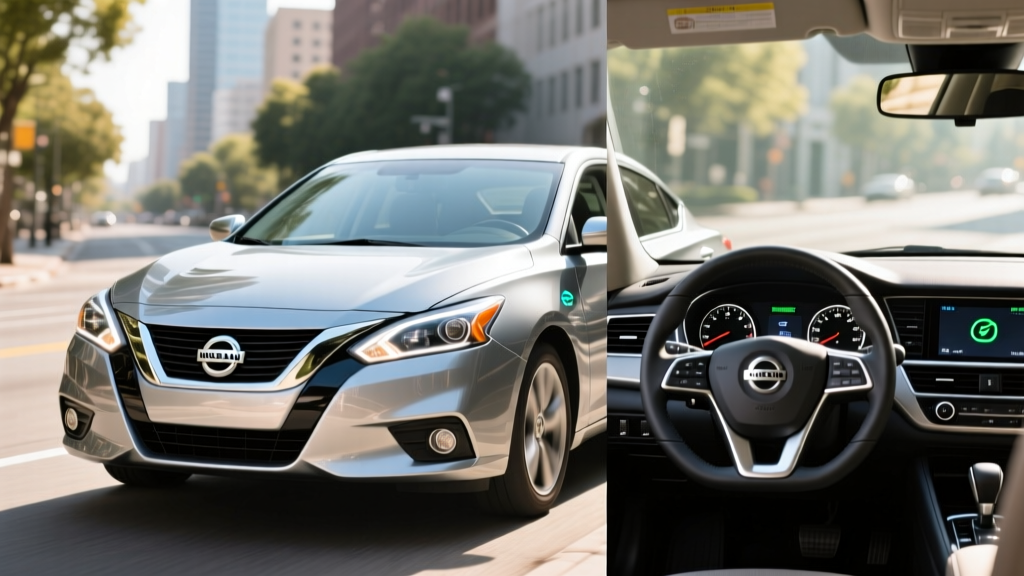
The 2011 Nissan Altima Hybrid occupies an unusual space in the used-car market: it's one of the earliest mainstream midsize sedans to pair a four-cylinder engine with an electric motor, yet it remains largely forgotten next to the Toyota Camry Hybrid and Ford Fusion Hybrid of the same era. If you're researching a 2011 Altima Hybrid as a budget-friendly commuter, this guide covers everything you need to know — from its real-world fuel economy to hybrid battery replacement costs and how it stacks up against modern electrified options in 2026.
HEV vs. PHEV: Where the 2011 Altima Hybrid Fits
Before diving into specs, it's critical to understand what the 2011 Altima Hybrid is — and what it isn't.
Conventional Hybrid (HEV)
The 2011 Altima Hybrid is a conventional hybrid. It has a small battery (approximately 1.6 kWh) that recharges through regenerative braking and the gasoline engine. You never plug it in. The electric motor assists the gas engine to reduce fuel consumption, but the car cannot drive on electric power alone for meaningful distances.
Plug-In Hybrid (PHEV)
A plug-in hybrid (like the 2026 Toyota RAV4 Prime) has a much larger battery (18+ kWh), a charge port, and 25–45 miles of electric-only range before the gas engine engages. PHEVs require plugging in to realize their full efficiency benefit. The 2011 Altima Hybrid has no plug, no charge port, and no usable electric-only range.
This distinction matters because some buyers confuse "hybrid" with "plug-in." The Altima Hybrid operates exactly like a traditional gas car at the fuel pump — you simply fill up and drive. The hybrid system works invisibly in the background to improve MPG.
Fuel Economy: EPA Ratings and Real-World MPG
The 2011 Altima Hybrid's headline number is its fuel economy. Nissan used Toyota's Hybrid Synergy Drive system (licensed from the Camry Hybrid powertrain), which gave it credible efficiency for its time.
| Metric | MPG |
|---|---|
| City | 35 |
| Highway | 33 |
| Combined | 33 |
| Fuel Tank | 20.0 gal |
| Total Range (est.) | ~660 miles |
Source: fueleconomy.gov
Powertrain Specs: Engine, Motor, and Combined Output
The 2011 Altima Hybrid pairs a 2.5-liter four-cylinder gasoline engine with an electric motor through Toyota's well-proven eCVT (electronically controlled continuously variable transmission). This is the same architecture found in the 2007–2011 Toyota Camry Hybrid — a significant reliability advantage.
| Component | Specification |
|---|---|
| Gas Engine | 2.5L inline-4, 158 HP |
| Electric Motor | AC synchronous, 40 HP (30 kW) |
| Net Combined Output | 198 HP |
| Transmission | eCVT |
| Drivetrain | Front-wheel drive |
| Hybrid Battery | ~1.6 kWh, Nickel-Metal Hydride (NiMH) |
| 0–60 MPH | ~7.3 seconds |
| Curb Weight | ~3,492 lbs |
The 198 combined horsepower was competitive for a midsize sedan in 2011 and still provides adequate acceleration for highway merging and passing. The eCVT eliminates shift shock and keeps the engine in its most efficient RPM range, though some drivers find the drone under hard acceleration unpleasant — a characteristic common to all CVTs of this era.
Hybrid Battery Lifespan, Warranty, and Replacement Cost
The number-one concern for any used hybrid buyer is the traction battery. The 2011 Altima Hybrid uses a nickel-metal hydride (NiMH) battery pack — the same chemistry Toyota deployed across millions of Prius and Camry Hybrid vehicles. This is good news: NiMH packs from this generation have a well-documented track record.
What to Expect from a 15-Year-Old NiMH Battery
NiMH hybrid batteries in Toyota-sourced systems commonly last 150,000–200,000 miles before significant capacity loss. However, age is as important as mileage. A 2011 model is now 15 years old, and NiMH cells degrade with time regardless of use. Here's what to watch for:
- Reduced regenerative braking: A weakened battery cannot accept as much charge from regen, making the car feel like it's coasting more and braking less efficiently.
- More frequent engine cycling: The engine will start and stop more often as the battery struggles to hold charge, reducing real-world MPG by 2–4 MPG.
- Check Hybrid System warning: If this dashboard light appears, the battery has likely failed or has a cell imbalance requiring service.
Battery Replacement Cost
| Option | Estimated Cost | Warranty |
|---|---|---|
| New OEM Nissan Battery | $2,500–$3,500 | 1–3 years |
| Remanufactured Battery | $1,500–$2,200 | 1–3 years |
| Individual Cell Rebuild (specialist shop) | $800–$1,400 | 6–12 months |
| Used/Salvage Battery | $400–$800 | 30–90 days |
Because the Altima Hybrid shares its hybrid system with the Toyota Camry Hybrid (XV40 generation), many independent hybrid specialists can service the battery. Parts availability is reasonable, though Nissan-specific packaging may require OEM components for some repairs.
Pricing and Tax Credit Eligibility in 2026
The 2011 Altima Hybrid had an original MSRP of approximately $27,950 (base), which was a $3,650 premium over the gas-only Altima 2.5 S. In the 2026 used market, expect to pay:
- $4,000–$6,000 for a high-mileage example (130,000+ miles) in fair condition
- $6,000–$8,500 for a well-maintained example under 100,000 miles
- $8,500–$10,500 for a low-mileage, clean-title vehicle with service records and a verified healthy hybrid battery
Does the 2011 Altima Hybrid Qualify for Any Tax Credit?
No. Under current IRS §30D rules, the federal tax credit applies only to new qualifying plug-in electric vehicles (BEVs and PHEVs) with sufficient battery capacity. The 2011 Altima Hybrid is a conventional HEV with no plug and a battery far too small to qualify.
The Used Clean Vehicle Credit (§25E) provides up to $4,000 for used plug-in EVs and PHEVs purchased from a dealer — but again, conventional hybrids like this Altima are excluded. There is no federal tax credit for purchasing a used HEV.
Some states or local utilities offer rebates for any electrified vehicle, but these are increasingly focused on plug-in models. Check your state's energy office or utility provider for current programs.
2011 Altima Hybrid vs. Modern Alternatives: What Should You Buy?
The hybrid landscape has shifted dramatically since 2011. Here's how the Altima Hybrid compares to options available today across three buyer profiles.
✅ Choose the 2011 Altima Hybrid If:
- Your budget is under $8,000
- You want a simple, proven hybrid with no plug-in requirement
- You drive mostly city miles (where hybrids shine)
- You don't need modern ADAS, infotainment, or Apple CarPlay
- You have access to a trusted hybrid mechanic
❌ Look Elsewhere If:
- You want warranty coverage on the hybrid battery
- You need electric-only driving (consider a PHEV)
- You want modern safety tech (AEB, lane-keep, blind-spot)
- You want to qualify for federal or state EV/PHEV tax credits
- You want the lowest possible fuel cost (a modern PHEV or BEV is cheaper per mile)
| Vehicle | Type | MPG / MPGe | EV Range | Price Range | Tax Credit |
|---|---|---|---|---|---|
| 2011 Altima Hybrid | HEV | 33 combined | N/A | $4K–$10K | None |
| 2026 Toyota Camry Hybrid | HEV | 52 combined | N/A | $30K–$38K | None |
| 2026 Toyota RAV4 Prime | PHEV | 94 MPGe / 38 MPG | 42 mi | $44K–$50K | Up to $7,500* |
| 2026 Hyundai Ioniq 6 SE | BEV | 140 MPGe | 361 mi | $38K–$42K | Up to $7,500* |
*§30D credit eligibility depends on MSRP caps, buyer income limits, battery sourcing requirements, and point-of-sale transfer rules. See IRS.gov for current-year qualifications.
Reliability, Safety, and Common Issues
The 2011 Altima Hybrid benefits from Toyota's hybrid system, which is widely considered the most reliable in the industry. The eCVT has no conventional clutch packs or bands to wear out, and the NiMH battery chemistry is forgiving of heat and charge cycles compared to early lithium-ion packs.
However, the rest of the vehicle is a standard 2011 Nissan Altima, which has known issues unrelated to the hybrid system:
- CVT transmission concerns: Non-hybrid Altimas of this era had widespread CVT failure issues. The hybrid's eCVT is a different, Toyota-designed unit and is far more robust — this is actually a reliability advantage over the gas model.
- Brake actuator: Some owners report a firm brake pedal or brake actuator replacement around 100,000–130,000 miles. This is a known issue with regenerative braking systems of this era and costs $800–$1,500 to repair.
- Power steering: The electric power steering rack can develop faults; replacement runs $600–$1,000.
- Interior wear: Dashboard cracking and seat bolster wear are common on high-mileage examples.
The 2011 Altima Hybrid earned a Good rating in IIHS frontal offset and side-impact crash tests. It lacks any modern active-safety features — no automatic emergency braking, no lane-departure warning, no blind-spot monitoring. For context, the NHTSA gave it 4 stars overall.
Pre-Purchase Checklist for a Used 2011 Altima Hybrid
If you're seriously considering one, here's what to verify before handing over cash:
- Hybrid battery health check: Have a hybrid specialist run a diagnostic scan to check individual cell voltages and internal resistance. A healthy pack shows cells within 0.2V of each other.
- Regenerative braking feel: During a test drive, lift off the accelerator and confirm the car slows noticeably without touching the brake pedal. Weak regen suggests battery degradation.
- Engine start/stop frequency: At a stoplight, the engine should shut off within seconds. If it stays running or restarts every 10–15 seconds, the battery is struggling.
- Service records: Ask whether the hybrid battery has ever been replaced or reconditioned. A documented replacement with a warranty is a strong positive.
- Rust inspection: Check the undercarriage, rocker panels, and rear subframe — especially if the car lived in a salt-belt state.
- 12V battery condition: Like all hybrids, the Altima has a standard 12V auxiliary battery that powers electronics. If this dies, the car won't start even if the hybrid battery is fine.
Frequently Asked Questions
How many MPG does the 2011 Altima Hybrid get?
The EPA rates it at 35 city / 33 highway / 33 combined MPG. In real-world city driving, many owners report 34–38 MPG thanks to regenerative braking. Highway efficiency drops to 29–31 MPG at speeds above 70 MPH.
Can I plug in the 2011 Altima Hybrid?
No. The 2011 Altima Hybrid is a conventional hybrid (HEV) with no charge port. The battery charges exclusively through regenerative braking and the gasoline engine. You fuel it like any other gas car.
Is the 2011 Altima Hybrid reliable?
The Toyota-sourced hybrid powertrain is among the most reliable ever built. The eCVT and NiMH battery have a proven 200,000+ mile track record in Camry Hybrids. Non-hybrid components (suspension, interior, 12V electrical) are average for a 2011 Nissan.
How much does it cost to replace the hybrid battery?
Expect $1,500–$3,500 depending on whether you choose a remanufactured or new OEM pack. Individual cell rebuilds can cost $800–$1,400 at specialist shops. Used salvage batteries start around $400 but carry minimal warranty.
Does the 2011 Altima Hybrid qualify for any tax credit?
No. Federal §30D and §25E tax credits apply only to plug-in vehicles (BEVs and PHEVs). Conventional hybrids do not qualify for any federal tax incentive. Check your state and local utility for any residual hybrid rebate programs.
How does the 2011 Altima Hybrid compare to a 2026 Camry Hybrid?
The 2026 Camry Hybrid achieves 52 MPG combined — a 57% improvement over the Altima's 33 MPG — and includes modern safety tech (AEB, lane-keep, adaptive cruise), a warranty, and current infotainment. The trade-off is price: a new Camry Hybrid starts around $30,000 versus $4,000–$10,000 for a used 2011 Altima Hybrid.
Is the 2011 Altima Hybrid a Toyota underneath?
Partially. Nissan licensed Toyota's Hybrid Synergy Drive system for this model, so the eCVT, electric motor, inverter, and battery management are Toyota-designed. The gasoline engine, chassis, body, and interior are Nissan. This means hybrid-specific parts often cross-reference to the 2007–2011 Toyota Camry Hybrid.