The 2011 Lincoln MKZ Hybrid holds a specific place in hybrid history: it was the first luxury-brand hybrid sedan to undercut its own gas-only sibling on price, launching at an MSRP identical to the V6 MKZ. More than a decade later, it remains a fixture on the used market for buyers who want luxury-badge comfort, proven Toyota-sourced hybrid hardware, and fuel economy that still embarrasses many newer vehicles. This guide breaks down exactly what you're getting — MPG, battery longevity, real-world ownership costs, and whether this first-generation hybrid sedan still makes sense in 2026.
2011 Lincoln MKZ Hybrid: Key Specifications
| Spec | Value |
|---|---|
| Powertrain | 2.5L Atkinson-cycle I4 + electric motor (hybrid) |
| Combined Horsepower | 191 hp (net system) |
| Engine Output | 156 hp @ 6,000 rpm / 136 lb-ft torque |
| Electric Motor | Permanent-magnet synchronous, integrated in transaxle |
| Transmission | eCVT (planetary gearset, no traditional belts) |
| Battery | 1.4 kWh NiMH (nickel-metal hydride) |
| EPA MPG (City / Hwy / Combined) | 41 / 36 / 39 |
| Fuel Tank | 16.5 gallons |
| Total Range | ~643 miles (EPA combined) |
| 0-60 mph | ~8.7 seconds |
| Drivetrain | Front-wheel drive |
| Curb Weight | ~3,752 lbs |
| Original MSRP (2011) | $41,805 (single loaded trim) |
| Typical 2026 Used Price | $5,500 – $9,500 depending on mileage/condition |
HEV vs PHEV vs EV: Where the MKZ Hybrid Fits
The 2011 MKZ Hybrid is a conventional hybrid electric vehicle (HEV). It has no plug, no electric-only driving mode of meaningful distance, and no external charging requirement. The small 1.4 kWh NiMH battery charges exclusively through regenerative braking and the gasoline engine. This is fundamentally different from a plug-in hybrid (PHEV) like the modern Lincoln Corsair Grand Touring, which carries a larger battery (typically 14–17 kWh), offers 25–30+ miles of electric-only range, and requires plugging in to realize its efficiency advantage.
Quick Reference: HEV vs PHEV vs BEV
| Feature | HEV (this MKZ) | PHEV (e.g., Corsair GT) | BEV (e.g., Model 3) |
|---|---|---|---|
| Plug-in charging? | No | Yes | Yes |
| Electric-only range | ~1 mile at low speed | 25–35 miles typical | 250–360+ miles |
| Battery size | 1–2 kWh | 12–20 kWh | 50–100 kWh |
| Gas engine? | Yes (primary) | Yes (backup) | No |
| Federal tax credit (new) | None | Up to $7,500 (§30D) | Up to $7,500 (§30D) |
| Home charging needed? | No | Recommended | Required |
If you lack access to home or workplace charging, a conventional HEV like the 2011 MKZ Hybrid is often the more practical electrified choice. You get meaningful fuel savings without any infrastructure changes.
Fuel Economy: EPA Ratings and Real-World MPG
EPA Fuel Economy Breakdown
| Driving Cycle | EPA Rating |
|---|---|
| City | 41 MPG |
| Highway | 36 MPG |
| Combined | 39 MPG |
Source: fueleconomy.gov
The city-highway inversion is a hallmark of Toyota's Hybrid Synergy Drive system, which the MKZ shares with the Ford Fusion Hybrid and Toyota Camry Hybrid of the same era. In stop-and-go traffic, the electric motor does heavy lifting, regenerative braking recaptures energy constantly, and the gas engine shuts off at stops. On the highway, the gasoline engine carries most of the load, and aerodynamic drag reduces the hybrid advantage.
Real-world expectations: Owners on fueleconomy.gov report an average of approximately 37–39 MPG in mixed driving. City-heavy commutes regularly push into the low-to-mid 40s. Highway-only road trips at 75+ mph typically yield 33–35 MPG. In cold weather (below 30°F), expect a 3–5 MPG reduction as the engine runs more frequently to generate cabin heat and the battery operates less efficiently. These figures remain competitive in 2026 — the MKZ Hybrid's city MPG still beats many newer non-hybrid sedans by 10–15 MPG.
Powertrain Deep Dive: The Toyota-Ford Hybrid System
The MKZ Hybrid's powertrain is a licensed variant of Toyota's Hybrid Synergy Drive, manufactured by Ford. The 2.5-liter Atkinson-cycle four-cylinder produces 156 hp and 136 lb-ft of torque on its own, while the electric motor adds supplemental power through a planetary eCVT transaxle. Net system output is 191 hp. The eCVT contains no belts, chains, or traditional friction clutches — it uses a planetary gearset to seamlessly blend engine and motor power, which is a major reason these transmissions prove extremely durable over high mileage.
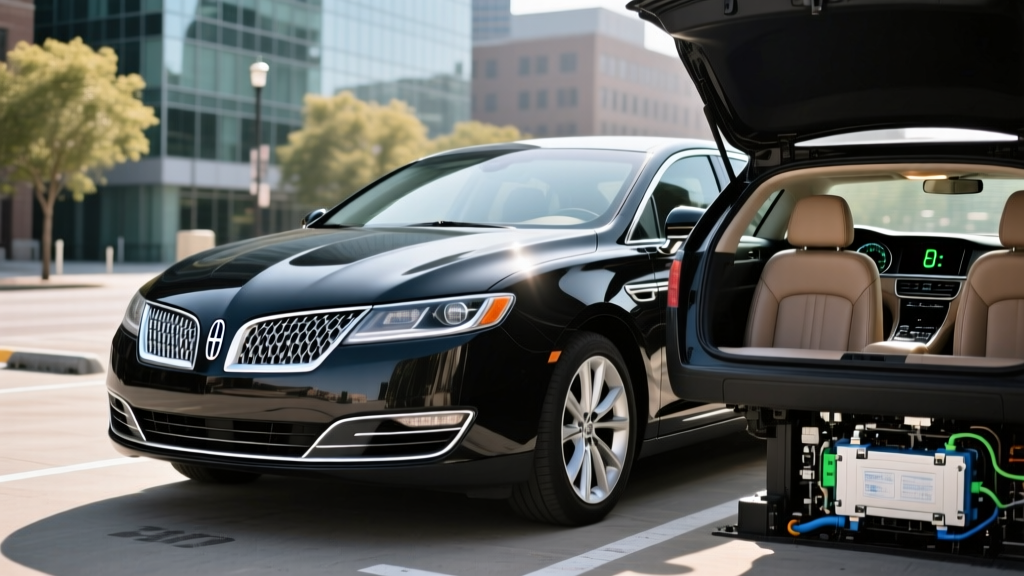
The 1.4 kWh NiMH battery pack is mounted behind the rear seats, which does reduce trunk capacity to 11.8 cubic feet (down from 16.5 cu ft in the gas-only MKZ). This is a meaningful compromise for a luxury sedan — you'll notice the smaller trunk when loading luggage for road trips.
Acceleration is adequate but not quick. The 0-60 mph time of roughly 8.7 seconds is relaxed by modern standards. Passing power on the highway is the more relevant metric, and the electric motor's instant torque fill helps mask the engine's modest output during merging maneuvers. This is a comfort-oriented cruiser, not a performance sedan.
Battery Longevity, Warranty, and Replacement Cost
Original Hybrid Battery Warranty
Original coverage: 8 years / 100,000 miles (10 years / 150,000 miles in CARB states including CA, NY, MA, and others adopting California emissions standards).
2026 status: The original factory battery warranty has expired for all 2011 MKZ Hybrids. Any battery failure is now an out-of-pocket expense for the owner.
The NiMH battery in the MKZ Hybrid shares its fundamental chemistry and design with the Toyota Camry Hybrid and Ford Escape Hybrid of the same era. Long-term data on these packs is extensive: many examples have surpassed 150,000–200,000 miles on the original battery with gradual capacity loss rather than sudden failure. NiMH chemistry degrades more gracefully than early lithium-ion, typically losing 10–20% capacity over 10–15 years rather than failing catastrophically.
When replacement is necessary, here are the realistic cost ranges in 2026:
- OEM new battery (Ford dealer): $2,500–$3,500 installed
- Remanufactured battery (specialist hybrid shops): $1,200–$2,000 installed
- Used/salvage battery: $500–$900 plus $300–$500 installation
- Individual cell/module replacement: $200–$600 if only specific modules have degraded (requires a shop with hybrid battery diagnostic capability)
Given that a clean 2011 MKZ Hybrid sells for $5,500–$9,500 in 2026, a full OEM battery replacement represents 25–50% of the vehicle's value. Most buyers are better served by sourcing a quality remanufactured pack from a hybrid specialist, which typically carries its own 1–3 year warranty.
Reliability and Common Issues
The 2011 MKZ Hybrid benefits from the proven durability of its Ford/Toyota hybrid system. The eCVT transaxle has no wear items like clutch packs or bands, and the Atkinson-cycle engine operates under less thermal stress than a conventional engine due to its lower effective compression ratio. NHTSA records show no systemic powertrain recalls specific to the hybrid system.
Known issues to inspect on a used 2011 MKZ Hybrid:
- Brake actuator assembly: The regenerative braking system uses an electrohydraulic brake actuator that can fail on high-mileage examples. Replacement runs $1,200–$1,800. Test for a firm, consistent brake pedal and absence of warning lights.
- Electric power steering (EPS): Some Ford/Lincoln vehicles of this era developed EPS faults. Check for smooth, consistent steering assist with no warning messages.
- A/C compressor: Electrically driven A/C compressor can fail at higher mileage. Confirm cold air output at idle (the gas engine may be off, so the A/C runs electrically).
- 12V battery: Like all hybrids, the MKZ has a conventional 12V battery that powers electronics. A weak 12V battery can cause bizarre electrical gremlins even though the hybrid battery is fine. This is a $150–$250 fix.
- MyLincoln Touch infotainment: The SYNC/MyLincoln Touch system from this era is slow and prone to freezing. This is an annoyance, not a mechanical concern.
Overall, the hybrid powertrain itself is among the most reliable components in the vehicle. The risks are in the surrounding conventional systems shared with the gas MKZ and Fusion.
Tax Credits and Incentives in 2026
The 2011 Lincoln MKZ Hybrid does not qualify for the federal §30D clean vehicle tax credit. Under current IRS rules, the credit applies only to new qualifying plug-in electric vehicles (BEVs and PHEVs) meeting battery sourcing, MSRP, and buyer income requirements. Conventional hybrids (HEVs) without plug-in capability have not qualified for the federal purchase credit since the original Hybrid Tax Credit phased out for Ford/Lincoln vehicles in 2010.
For used buyers in 2026, the §25E used clean vehicle credit (up to $4,000 or 30% of sale price, whichever is less) also applies only to qualifying plug-in BEVs and PHEVs — not conventional HEVs. The MKZ Hybrid is ineligible.
Some states offer their own hybrid incentives, but these have become rare. Check your state's energy office or DMV for any current programs. In most jurisdictions, the MKZ Hybrid's financial case rests entirely on fuel savings, not tax benefits.
Who Should Buy the 2011 MKZ Hybrid in 2026?
Pros
- 41 MPG city still excellent in 2026
- Proven, durable hybrid system with massive service history
- No plug or charging infrastructure needed
- Luxury features (heated/cooled leather seats, THX audio, SYNC) at budget prices
- Smooth, quiet ride quality
- Low annual fuel cost: ~$1,100–$1,300/year at 15,000 mi and $3.20/gal
Cons
- Trunk reduced to 11.8 cu ft by battery placement
- No EV mode, no plug-in capability, no tax credit
- Sluggish acceleration (8.7s 0-60) by modern standards
- Dated infotainment (MyLincoln Touch)
- Original battery warranty expired; replacement is owner's cost
- Highway MPG (36) less impressive than city (41)
Decision Framework
Choose the 2011 MKZ Hybrid if: You drive mostly in city or suburban traffic, lack home charging access, want a comfortable luxury sedan on a tight budget ($5,000–$9,000), and prioritize low fuel costs without any lifestyle change.
Consider a PHEV instead if: You have reliable home Level 2 charging, your daily commute is under 30 miles round-trip (where electric-only range covers most driving), and you want partial EV benefits without range anxiety.
Consider a full BEV instead if: You have home charging, your budget allows $25,000+, you want zero tailpipe emissions, minimal maintenance, and eligibility for federal/state EV incentives.
Choose a conventional gas car if: You drive predominantly highway miles (where the hybrid advantage shrinks), you need maximum trunk space, or you find a comparable non-hybrid at a significantly lower price that offsets the fuel cost difference.
2011 MKZ Hybrid vs Modern Alternatives
For context on where the MKZ Hybrid stands against newer options in 2026:
| Vehicle | Type | EPA Combined MPG / MPGe | Typical Used Price (2026) | Tax Credit Eligible? |
|---|---|---|---|---|
| 2011 Lincoln MKZ Hybrid | HEV | 39 MPG | $5,500–$9,500 | No |
| 2024 Toyota Camry Hybrid | HEV | 52 MPG | $25,000–$32,000 | No |
| 2024 Lincoln Corsair Grand Touring | PHEV | 33 MPG + 78 MPGe | $38,000–$45,000 | §30D (if eligible) |
| 2024 Tesla Model 3 RWD | BEV | 132 MPGe | $28,000–$35,000 | §30D (if eligible) |
| 2017 Toyota Prius | HEV | 52 MPG | $12,000–$16,000 | No |
The MKZ Hybrid's advantage is pure affordability. No other luxury-branded hybrid sedan is available at this price point, and its 39 MPG combined remains competitive with newer non-luxury hybrids — though the latest Camry Hybrid's 52 MPG combined demonstrates how far the technology has advanced.
Pre-Purchase Checklist for a Used 2011 MKZ Hybrid
- Hybrid battery health check: Have a hybrid-qualified shop run a battery diagnostic. They can read individual module voltages and internal resistance to assess State of Health (SoH). Budget $100–$200 for this test — it's the single most important check.
- Brake actuator test: Pump the brake pedal with the car off (should feel firm after a few pumps as the accumulator pressurizes). Start the car — pedal should remain firm and consistent. Any sponginess or warning lights are expensive red flags.
- Regenerative braking feel: During a test drive, the transition between regenerative and friction braking should be smooth. A jarring or inconsistent brake pedal feel suggests actuator or blend-valve issues.
- Coolant system: The hybrid system has its own inverter coolant loop separate from the engine. Check that both coolant reservoirs are at proper levels and the inverter coolant pump is circulating (visible movement in the reservoir when the car is on).
- Service records: Prior oil changes, transaxle fluid service, and especially any hybrid battery work are high-value documentation.
- 12V battery age: If the 12V battery is more than 4 years old, plan to replace it proactively.
Frequently Asked Questions
How many MPG does the 2011 Lincoln MKZ Hybrid get?
The EPA rates it at 41 MPG city, 36 MPG highway, and 39 MPG combined. Real-world owner averages cluster around 37–39 MPG in mixed driving, with city-heavy routes regularly achieving 40–43 MPG. Highway-only driving at 75+ mph typically yields 33–35 MPG.
Does the 2011 MKZ Hybrid need to be plugged in?
No. This is a conventional hybrid (HEV), not a plug-in hybrid. The 1.4 kWh battery charges entirely through regenerative braking and the gasoline engine. You never plug it in — you simply fill it with gas and drive.
How long does the hybrid battery last?
NiMH batteries in this generation of Ford/Toyota hybrids commonly last 150,000–200,000+ miles with gradual capacity loss. Many 2011 MKZ Hybrids still run on their original battery in 2026. When replacement is needed, expect $1,200–$3,500 depending on whether you choose remanufactured or OEM new.
Is the 2011 MKZ Hybrid reliable?
The hybrid powertrain (engine, eCVT, battery) has an excellent reliability record shared with the Ford Fusion Hybrid and Toyota Camry Hybrid. The main risk areas are the electrohydraulic brake actuator ($1,200–$1,800 replacement) and conventional wear items shared with the gas MKZ. A pre-purchase hybrid diagnostic is strongly recommended.
Does the 2011 MKZ Hybrid qualify for any tax credit?
No. Under current IRS §30D and §25E rules, the federal clean vehicle credits apply only to plug-in electric vehicles (BEVs and PHEVs). Conventional hybrids like the MKZ Hybrid do not qualify for any federal purchase credit. Check your state for any remaining hybrid incentives, though most have been discontinued.
How does the MKZ Hybrid compare to a modern hybrid?
Newer hybrids like the 2024 Camry Hybrid achieve 52 MPG combined (vs. 39 MPG) and feature updated safety tech, modern infotainment, and active battery warranties. However, the MKZ Hybrid offers luxury features (leather, THX audio, heated/cooled seats) at a fraction of a new hybrid's price. If budget is the primary constraint, the MKZ remains a strong value.
What's the total cost of ownership versus a gas-only MKZ?
At 15,000 miles per year and $3.20/gallon, the Hybrid uses roughly 385 gallons annually ($1,232) versus the gas V6 MKZ's approximately 577 gallons ($1,846) at 26 MPG combined. That's roughly $600/year in fuel savings. Over 5 years of ownership, you save approximately $3,000 in fuel, partially offset by potentially higher insurance premiums and the eventual hybrid battery replacement cost.