Quick Verdict: The 2011 Lexus CT 200h in 2026
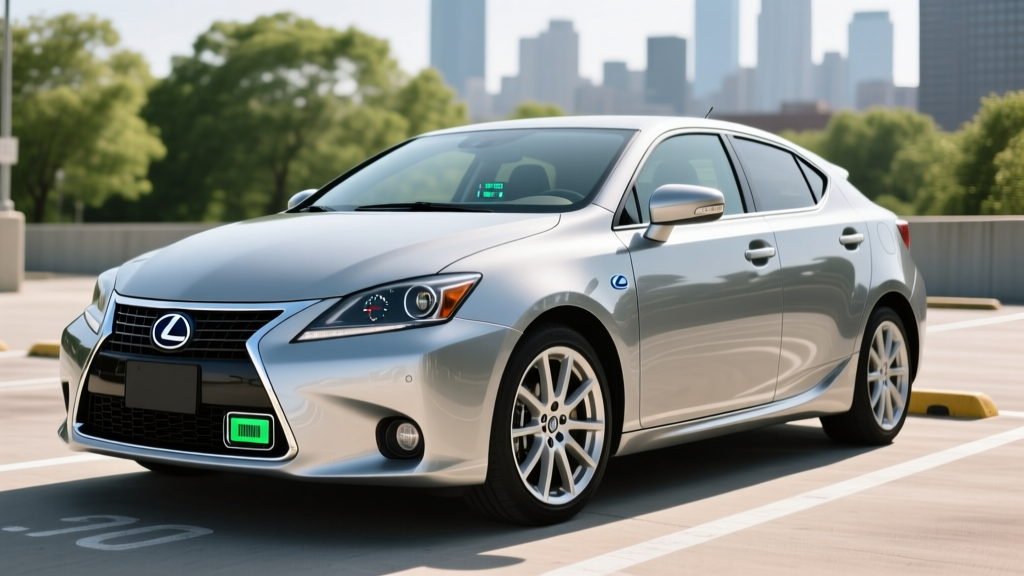
The 2011 Lexus CT 200h hybrid hatchback occupies a specific niche in today's used-car market: a premium, fuel-sipping compact that never needs to be plugged in and still delivers real-world fuel economy that rivals many modern hybrids. Built on Toyota's proven third-generation Prius powertrain but wrapped in a Lexus-tuned chassis with a more refined interior, the CT 200h returns an EPA-estimated 43 MPG city / 40 MPG highway / 42 MPG combined. In real-world driving, owners frequently report exceeding those figures in stop-and-go traffic while seeing slightly lower numbers on sustained highway runs.
If you're cross-shopping a used CT 200h against a newer conventional hybrid, a plug-in hybrid (PHEV), or a full battery-electric vehicle (BEV), this guide breaks down the exact numbers you need — from battery health expectations to total cost of ownership — so you can decide whether this 15-year-old hybrid hatchback still earns a spot in your driveway.
HEV vs. PHEV vs. EV: Where the CT 200h Fits
Before diving into specs, it's critical to understand what the 2011 Lexus CT 200h is — and what it isn't.
Conventional Hybrid (HEV) — That's the CT 200h
The CT 200h is a self-charging conventional hybrid. It uses a small nickel-metal hydride (NiMH) traction battery paired with a gasoline engine and electric motor(s). You never plug it in. The battery recharges through regenerative braking and the engine. There is no electric-only driving range to speak of — the electric motor assists the engine at low speeds and during acceleration, but the car cannot travel meaningful distances on electricity alone.
Plug-In Hybrid (PHEV) — Different Category
A PHEV (like the Toyota RAV4 Prime or Chrysler Pacifica Hybrid) has a larger battery (typically 10–20 kWh), can be plugged into a wall outlet or Level 2 charger, and delivers 25–45 miles of pure electric driving before the gas engine kicks in. The CT 200h is not a PHEV.
Battery Electric Vehicle (BEV) — No Gas at All
A BEV (like the Tesla Model 3 or Hyundai Ioniq 5) runs entirely on electricity with 200–350+ miles of EPA range, no gasoline engine, and requires regular charging. The CT 200h shares none of these characteristics.
Bottom line: The CT 200h is for drivers who want hybrid-level fuel savings with zero change to their refueling habits. You fill up at any gas station and let the hybrid system handle efficiency in the background.
Fuel Economy: EPA Ratings and Real-World MPG
The CT 200h's fuel economy is its headline feature. Here's the official EPA breakdown, sourced from fueleconomy.gov:
| Metric | EPA Estimate | Real-World Expectation |
|---|---|---|
| City | 43 MPG | 44–48 MPG (hybrids excel in stop-and-go) |
| Highway | 40 MPG | 36–39 MPG (aero drag + less regen benefit) |
| Combined | 42 MPG | 40–45 MPG depending on driving mix |
| Fuel Tank | 10.6 gallons | ~420–440 miles per tank |
Real-world note: Like all Toyota/Lexus hybrids of this era, the CT 200h tends to beat its EPA city estimate because regenerative braking recovers more energy in heavy traffic. Highway driving is the opposite — sustained 70+ MPH speeds reduce the hybrid system's advantage, and the car's aerodynamic profile (Cd 0.28) isn't as slippery as modern EVs. Expect combined real-world economy around 40–45 MPG for mixed driving. In cold weather (below 30°F), expect a 5–10% drop due to increased engine idling for cabin heat.
Powertrain Specs: Engine, Motor, and Performance
The 2011 CT 200h shares its hybrid drivetrain with the third-generation Toyota Prius (2010–2015), but with Lexus-specific tuning for slightly firmer acceleration response and a more isolated cabin.
| Specification | 2011 Lexus CT 200h |
|---|---|
| Gas Engine | 1.8L inline-4 (2ZR-FXE), Atkinson cycle |
| Engine Horsepower | 98 HP @ 5,200 RPM |
| Electric Motor | 80 HP (60 kW) AC synchronous |
| Net Combined System HP | 134 HP |
| Transmission | eCVT (planetary gearset, no traditional belt) |
| Drivetrain | Front-wheel drive |
| 0–60 MPH | ~9.8 seconds |
| Traction Battery | 1.3 kWh NiMH (nominal) |
| Curb Weight | 3,130 lbs |
| Cargo Volume | 14.3 cu ft (rear seats up) / 37.4 cu ft (folded) |
At 134 net horsepower and a 9.8-second 0–60 time, the CT 200h is not quick by modern standards. It's adequate for commuting and city driving, but highway merging requires planning. The eCVT is smooth and gearless — there are no shift shocks — but it produces the characteristic "drone" under hard acceleration that Toyota/Lexus hybrids of this generation are known for.
The car offers four drive modes: Normal, Eco, Sport, and EV. EV mode allows very short, low-speed electric-only movement (think: creeping through a parking garage), but it's limited to under 1 mile at speeds below 25 MPH. This is not meaningful electric-only range — it's a convenience feature.
Hybrid Battery Health, Warranty, and Replacement Cost
The single biggest concern for any used hybrid buyer is the traction battery. Here's what you need to know about the CT 200h's NiMH pack.
Original Battery Warranty
When new, Lexus covered the CT 200h hybrid battery for 8 years / 100,000 miles (extended to 10 years / 150,000 miles in California and states adopting CARB emissions standards: CT, ME, MA, NJ, NY, OR, RI, VT, WA, and others).
In 2026, the original warranty has expired for all 2011 models regardless of mileage. Battery health is now entirely an owner responsibility.
Degradation and Lifespan
Toyota/Lexus NiMH hybrid batteries from this era have proven remarkably durable. Data from Prius and CT 200h fleets shows:
- Typical lifespan: 150,000–200,000 miles before significant capacity loss or cell failure
- Age-related degradation: NiMH cells degrade with time as well as mileage. A 2011 model in 2026 is 15 years old — even with low miles, expect some capacity loss
- Failure pattern: Usually one or two weak cells within the 28-module pack, not total pack failure
Replacement Cost Breakdown
| Option | Cost Range | Notes |
|---|---|---|
| New OEM Lexus battery | $3,000–$4,000 (parts + labor) | Dealer-installed; best longevity guarantee |
| Refurbished/remanufactured pack | $1,500–$2,500 | Third-party suppliers; 1–3 year warranty typical |
| Individual cell/module replacement | $500–$1,200 | Requires hybrid-savvy technician; may not address aging adjacent cells |
| Used salvage pack | $400–$800 | Cheapest but unknown remaining life; gamble |
Pre-purchase tip: Before buying any 2011 CT 200h, have a hybrid-qualified mechanic run a hybrid battery health check using Toyota/Lexus diagnostic software (Techstream). This reveals individual module voltage deltas — a spread greater than 0.2V between modules signals impending failure. Also check for the "Check Hybrid System" warning light history and whether the battery cooling fan (located behind the rear seat) is clean and operational. A clogged fan accelerates battery degradation.
Pricing and Tax Credit Eligibility
The 2011 Lexus CT 200h originally started at an MSRP of approximately $29,120 (before destination). In 2026, used examples trade in a wide range depending on mileage, condition, and battery health:
| Condition / Mileage | Approximate Used Price (2026) |
|---|---|
| Under 80k miles, excellent, battery verified | $9,500–$12,000 |
| 80k–130k miles, good condition | $7,000–$9,500 |
| 130k+ miles, fair condition or unknown battery | $4,500–$7,000 |
Federal Tax Credit Status
The 2011 CT 200h does not qualify for the current federal §30D new clean vehicle tax credit — that credit applies only to new vehicle purchases meeting battery sourcing, MSRP caps, and buyer income limits per IRS guidelines.
For used purchases, the Used Clean Vehicle Credit (§25E) offers up to $4,000 (30% of sale price, capped) for qualified used EVs and some fuel cell vehicles purchased from a dealer. However, conventional hybrids like the CT 200h do not qualify for the used vehicle credit either — §25E requires a plug-in electric or fuel cell vehicle. The CT 200h, as a non-plug-in HEV, is ineligible for any current federal tax incentive.
Some states may offer minor registration or inspection fee advantages for hybrids, but these vary by jurisdiction. Check your state's DMV or energy office for specifics.
Reliability, Safety, and Long-Term Ownership
The CT 200h benefits from one of the most proven hybrid powertrains ever built. The 1.8L 2ZR-FXE engine and eCVT are shared with millions of Prius vehicles worldwide, and the powertrain's mechanical simplicity (no traditional transmission, no starter motor, no alternator, regenerative braking extends pad life) means fewer wear items than a conventional gas car.
Common Issues to Watch
- Hybrid battery aging — as discussed above, the primary cost risk
- Brake actuator recall — NHTSA recalled certain 2010–2012 CT 200h models for a brake accumulator defect. Verify the recall was performed (check NHTSA VIN lookup)
- Water pump — the mechanical water pump on the 2ZR-FXE can fail around 100k–120k miles; replacement is ~$400–$600
- EGR valve clogging — carbon buildup in the EGR system can cause rough idle; cleaning or replacement at ~$200–$400
- 12V auxiliary battery — the small 12V lead-acill battery (in the trunk) typically lasts 4–6 years; a dead 12V battery will prevent the car from starting even if the hybrid battery is full
Safety Ratings
The 2011 CT 200h earned an IIHS Top Safety Pick designation with Good ratings in frontal offset, side impact, and roof strength tests. Standard safety equipment includes 8 airbags, stability control, and available pre-collision warning with adaptive cruise control on higher trims. It lacks modern ADAS features like lane-keeping assist, blind-spot monitoring, or automatic emergency braking — those became standard in later model years and competing vehicles.
Who Should Buy the 2011 CT 200h — And Who Shouldn't
✓ Pros
- 42 MPG combined — still competitive with 2026 hybrids
- Lexus build quality, quiet cabin, premium materials
- Proven Prius-derived powertrain with massive parts availability
- No plug-in required — zero lifestyle change from a gas car
- Low running costs: minimal brake wear, no timing belt, regular maintenance only
- Hatchback versatility with 37.4 cu ft cargo space
✗ Cons
- Slow: 9.8-second 0–60 and 134 HP feel dated
- Hybrid battery is 15 years old — replacement likely during ownership
- No modern ADAS (no AEB, no lane-keep, no blind-spot)
- Firm ride quality compared to newer compact crossovers
- Infotainment is outdated — no Apple CarPlay, no Android Auto
- Small fuel tank (10.6 gal) limits highway range despite good MPG
- No federal tax credit eligibility
Decision Framework: Is the CT 200h Right for You?
Choose the 2011 CT 200h if:
- You want 40+ MPG without plugging in or changing habits
- Your budget is under $10,000 and you want premium build quality
- Your commute is city-heavy (where the hybrid system shines)
- You're comfortable budgeting $1,500–$3,000 for a potential battery replacement
Look at a PHEV instead if:
- You have home charging access and want 25–40 miles of electric-only commuting
- You want to qualify for the §25E used EV credit (up to $4,000 on qualified plug-in vehicles)
- You want modern safety tech and infotainment
Look at a full EV instead if:
- You have reliable home Level 2 charging
- Your daily driving is under 200 miles
- You want to eliminate gasoline entirely and access HOV lanes, EV incentives, and lower per-mile fuel costs
Frequently Asked Questions
How many MPG does the 2011 Lexus CT 200h get?
The EPA rates the 2011 CT 200h at 43 MPG city, 40 MPG highway, and 42 MPG combined. In real-world driving, expect 44–48 MPG in city traffic and 36–39 MPG on the highway, for a combined average of roughly 40–45 MPG.
Can the 2011 CT 200h drive on electric power only?
Not in any meaningful way. The CT 200h has an EV mode that allows very low-speed electric-only movement for under 1 mile — useful for parking garages or driveways. It is not a plug-in hybrid and has no usable electric-only driving range.
Is the 2011 CT 200h reliable?
Yes, with a caveat. The powertrain (shared with the Toyota Prius) is one of the most reliable hybrid systems ever produced. The main reliability risk at this age is hybrid battery degradation. With a healthy battery or a recent replacement, the CT 200h can comfortably reach 200,000+ miles with routine maintenance.
What does a replacement hybrid battery cost for the CT 200h?
A new OEM Lexus hybrid battery costs $3,000–$4,000 installed. Refurbished packs run $1,500–$2,500. Individual module repair is possible for $500–$1,200 but may not be a lasting fix if adjacent cells are also aging.
Does the 2011 Lexus CT 200h qualify for any tax credit?
No. The CT 200h is a conventional hybrid (HEV), not a plug-in vehicle. It does not qualify for the federal §30D new vehicle credit or the §25E used clean vehicle credit. No current federal incentive applies to non-plug-in hybrids.
How does the CT 200h compare to a Toyota Prius of the same era?
The CT 200h and 2011 Prius share the same powertrain and achieve nearly identical fuel economy. The CT 200h offers a more premium interior, better sound insulation, firmer suspension tuning, and hatchback styling — but at a higher used price and with slightly less rear-seat and cargo room. The Prius remains the more practical choice; the CT 200h is the more refined one.
Should I buy a 2011 CT 200h or save for a newer hybrid?
If your budget is firm at under $10,000, the CT 200h offers excellent value. If you can stretch to $18,000–$25,000, a 2019–2022 Toyota Corolla Hybrid, Honda Insight, or Hyundai Ioniq Hybrid will give you similar MPG with modern safety tech, updated infotainment, and a hybrid battery with years of remaining warranty coverage.