Quick Verdict: A First-Generation Hybrid That Pioneered Hyundai's Electrification
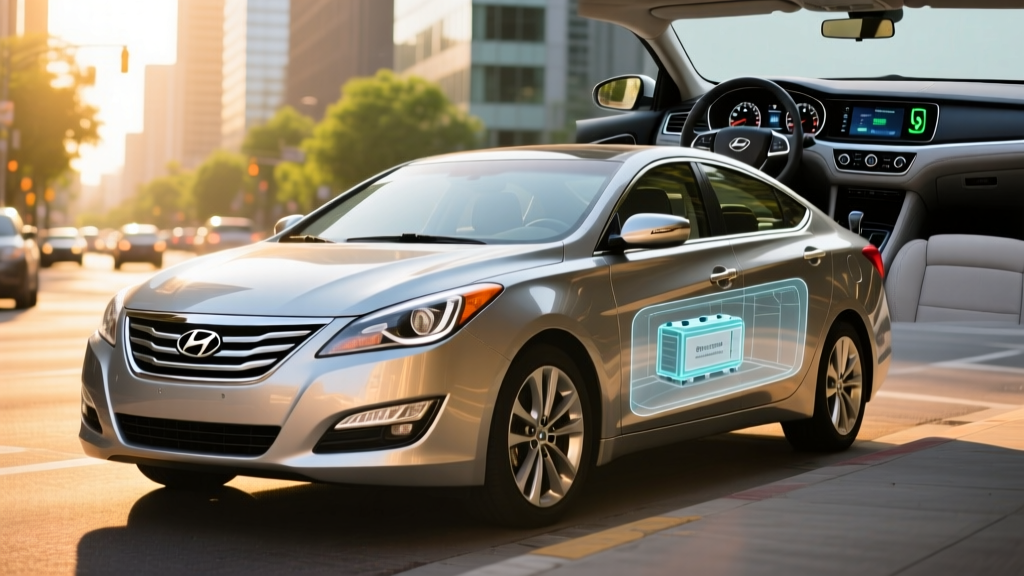
The 2011 Hyundai Sonata Hybrid sedan was Hyundai's first entry into the U.S. hybrid market, pairing a 2.4-liter four-cylinder engine with an electric motor and a compact lithium-polymer battery. As a conventional hybrid (HEV) — not a plug-in — it requires no charging infrastructure and delivers an EPA-rated 36 MPG combined. For 2026 used-car shoppers evaluating budget-friendly hybrids under $8,000, the Sonata Hybrid remains a practical commuter with strong fuel economy, though its age demands careful battery health assessment before purchase.
This guide covers everything a prospective buyer needs: exact fuel economy figures, real-world MPG expectations, powertrain specifications, battery longevity data, replacement costs, and how this 15-year-old hybrid stacks up against modern alternatives.
HEV vs PHEV: Understanding What the 2011 Sonata Hybrid Actually Is
Critical distinction: The 2011 Hyundai Sonata Hybrid is a conventional hybrid electric vehicle (HEV). It cannot be plugged in. Its 1.4 kWh lithium-polymer battery recharges exclusively through regenerative braking and the gasoline engine. There is no electric-only driving range to speak of — the electric motor assists the engine and enables brief low-speed electric operation, but the car always relies on gasoline.
This differs fundamentally from a plug-in hybrid (PHEV) like the later Hyundai Sonata Plug-In Hybrid (introduced for the 2016 model year), which offers 27 miles of electric-only range, a larger 9.8 kWh battery, and a charging port for Level 2 home charging.
If you're shopping for a 2011 model, you are looking at an HEV. No plug, no electric-only commute, no home charger needed. You simply fuel it with gasoline and drive — the hybrid system works invisibly to improve efficiency.
Fuel Economy: EPA Ratings and Real-World MPG Data
| Metric | EPA Rating | Real-World Expectation |
|---|---|---|
| City MPG | 35 MPG | 33–37 MPG (hybrids often exceed EPA in stop-and-go) |
| Highway MPG | 40 MPG | 36–39 MPG (sustained 70+ mph reduces hybrid advantage) |
| Combined MPG | 36 MPG | 34–38 MPG depending on driving mix |
| Fuel Tank Capacity | 18.5 gallons | ~630–670 miles total range |
According to fueleconomy.gov, the 2011 Sonata Hybrid achieves 35 city / 40 highway / 36 combined MPG. These were competitive numbers for 2011, trailing the Toyota Camry Hybrid (41 combined) but beating the non-hybrid Sonata (26 combined).
Real-world note: Hybrids typically perform better than their EPA city rating in actual stop-and-go traffic because regenerative braking recaptures energy that conventional cars waste as heat. Owners on Fuelly report averages clustering around 34–37 MPG combined, with some hypermilers reaching 40+ in warm-weather city driving. Highway driving at 75+ mph diminishes the hybrid system's advantage, as the electric motor contributes less at sustained high speeds and aerodynamic drag dominates.
Age factor for 2026 buyers: A 15-year-old hybrid with 140,000+ miles may show degraded fuel economy if the battery has lost capacity. A weakened hybrid battery forces the gasoline engine to work harder, potentially dropping real-world MPG by 2–4 MPG below original ratings. Always verify actual fuel consumption during a test drive by resetting the trip computer.
Powertrain Specifications: Engine, Motor, and Combined Output
| Specification | Value |
|---|---|
| Gasoline Engine | 2.4L inline-4 (Theta II) |
| Engine Power | 169 hp @ 6,000 rpm |
| Engine Torque | 156 lb-ft @ 4,500 rpm |
| Electric Motor | 30 kW (40 hp) permanent-magnet synchronous |
| Combined System Output | 206 hp |
| Transmission | 6-speed automatic (no CVT) |
| Hybrid Battery | 1.4 kWh lithium-polymer (270V nominal) |
| 0–60 mph | ~8.5 seconds (estimated) |
| Curb Weight | ~3,483 lbs |
Hyundai took an unconventional approach with the 2011 Sonata Hybrid's powertrain. Rather than using a continuously variable transmission (CVT) like Toyota and Ford, Hyundai paired its hybrid system with a traditional 6-speed automatic. This delivers a more familiar driving feel with distinct gear shifts, though it sacrifices some efficiency compared to the seamless power delivery of a CVT-equipped hybrid.
The 2.4-liter Theta II engine operates on an Atkinson cycle for improved thermal efficiency, producing 169 hp on its own. The 30 kW electric motor adds assist during acceleration and enables engine-off coasting and low-speed electric-only crawling. Combined system output is rated at 206 hp — adequate for highway merging and passing, if not sporty.
The 1.4 kWh lithium-polymer battery was a notable choice for 2011. Lithium-polymer chemistry offered better energy density and thermal stability than the nickel-metal hydride (NiMH) packs used in the contemporary Toyota Camry Hybrid and Ford Fusion Hybrid, though at a smaller total capacity.
Battery Lifespan, Warranty, and Replacement Cost
Original Hybrid Battery Warranty: Hyundai covered the 2011 Sonata Hybrid's battery for 10 years / 100,000 miles (in CARB states) or 8 years / 100,000 miles (non-CARB states) from the original in-service date. For a 2011 model, this factory warranty expired between 2019 and 2021 depending on the state of original purchase.
Current status for used buyers: No remaining factory battery warranty applies to any 2011 Sonata Hybrid as of 2026. Any battery failure is an out-of-pocket expense.
Battery degradation reality: Hyundai's lithium-polymer pack has proven reasonably durable, but at 15 years of age, capacity loss is expected. Typical hybrid battery degradation for vehicles of this era ranges from 15–30% capacity loss over 120,000–180,000 miles. Signs of a weakening battery include:
- Noticeably reduced fuel economy (3–5 MPG below historical averages)
- More frequent engine engagement at low speeds
- Reduced regenerative braking feel
- Dashboard warning lights (check engine or hybrid system alerts)
- State of Charge (SoC) gauge that fluctuates rapidly or never reaches full
Replacement cost: A new OEM hybrid battery for the 2011 Sonata Hybrid typically costs between $2,500 and $3,800 including installation at a Hyundai dealer. Refurbished or aftermarket battery packs are available for $1,500–$2,500 installed from independent hybrid specialists. Given that a clean 2011 Sonata Hybrid sells for roughly $5,000–$8,000 in 2026, a battery replacement can represent 25–50% of the vehicle's value — a critical factor in your purchase decision.
Pre-purchase recommendation: Have any 2011 Sonata Hybrid inspected by a technician who can read the hybrid battery's State of Health (SoH) via OBD-II diagnostics. A pack showing more than 20% degradation should factor into price negotiations or be a walk-away condition.
Pricing, Tax Credits, and Total Cost of Ownership in 2026
Used market pricing (2026): The 2011 Hyundai Sonata Hybrid trades between $4,500 and $8,500 depending on mileage, condition, and trim. The single available trim (well-equipped with leather, premium audio, and dual-zone climate) means less variation than multi-trim models.
Tax credit eligibility: The 2011 Sonata Hybrid does not qualify for any current federal tax credit. The IRS §30D Clean Vehicle Credit applies exclusively to new plug-in electric vehicles (BEVs and PHEVs) meeting battery sourcing, MSRP, and buyer income requirements. Conventional hybrids like this HEV are ineligible. No state-level hybrid purchase incentives currently target used vehicles of this age either.
Ownership cost reality: At 36 MPG combined and current national gas prices (~$3.25/gallon in early 2026), the Sonata Hybrid costs approximately $0.09 per mile in fuel. Compare this to the non-hybrid 2011 Sonata 2.4L at 26 combined MPG (~$0.125/mile). Over 15,000 annual miles, the hybrid saves roughly $525 per year in fuel — meaningful savings, though not transformative enough to justify a battery replacement on a marginal example.
Insurance: Expect $900–$1,400 annually depending on your profile — typical for a midsize sedan of this era with no advanced driver-assistance systems.
Reliability Assessment: What 15 Years of Data Reveals
The 2011 Sonata Hybrid carries a mixed reliability record that buyers should weigh carefully:
Strengths:
- The 6-speed automatic transmission avoids the CVT reliability concerns seen in some competitors
- Lithium-polymer battery chemistry has shown better thermal stability than early NiMH packs
- The Theta II engine is generally durable past 150,000 miles with regular maintenance
- Simple hybrid system with fewer failure points than later, more complex PHEV architectures
Known concerns:
- Theta II engines from this era were subject to a NHTSA-recalled bearing issue that could lead to engine seizure — verify recall completion before purchase
- Hybrid inverter coolant pump failures reported on higher-mileage examples
- Some owners report rough transitions between electric and gasoline power at low speeds
- Brake actuator wear can be costly ($800–$1,200) as the regenerative braking system ages
Check the IIHS safety ratings for crash-test performance — the 2011 Sonata earned Top Safety Pick status, which was strong for its era but predates modern small-overlap and pedestrian testing protocols.
2011 Sonata Hybrid vs. Modern Alternatives: What Should You Actually Buy?
Choose the 2011 Sonata Hybrid If:
- Your budget is under $8,000 and you need a fuel-efficient daily driver
- You have no access to home or workplace charging (HEV needs no plug)
- You drive 10,000–15,000 miles/year in mixed city/highway conditions
- You can verify battery health before purchase and budget for potential replacement
- You value a spacious midsize sedan with a comfortable ride
Look Elsewhere If:
- You want modern safety tech (automatic emergency braking, lane-keeping, blind-spot monitoring)
- You want electric-only driving for short commutes (consider a PHEV like the Toyota Prius Prime)
- You want maximum fuel savings (modern hybrids like the 2026 Toyota Prius achieve 57 MPG combined)
- The vehicle has over 150,000 miles without documented battery service
- You plan to keep the car 5+ years — a newer hybrid may offer better long-term value
Hybrid vs PHEV vs EV — which fits you?
The 2011 Sonata Hybrid (HEV) works for drivers who want better fuel economy without changing their fueling habits. You gas up and go. A PHEV (like the 2026 Hyundai Tucson PHEV with 33 miles electric-only range) makes sense if you have home charging and a short commute — you'd rarely use gasoline on weekdays. A full EV (like the Hyundai Ioniq 6 with 361 miles EPA range) eliminates gasoline entirely but requires reliable charging access and a higher upfront investment, partially offset by the §30D tax credit of up to $7,500 for eligible new EVs.
Frequently Asked Questions
How many MPG does the 2011 Hyundai Sonata Hybrid actually get?
The EPA rates it at 35 city / 40 highway / 36 combined MPG. Real-world owners average 34–37 MPG combined, with city driving sometimes exceeding the EPA estimate thanks to regenerative braking. On a 15-year-old example with battery degradation, expect 31–35 MPG combined.
Can you plug in the 2011 Sonata Hybrid to charge it?
No. The 2011 Sonata Hybrid is a conventional HEV with no charging port. The small 1.4 kWh battery charges only through regenerative braking and the gasoline engine. Hyundai did not offer a plug-in Sonata until the 2016 model year.
Is the 2011 Sonata Hybrid reliable at this age?
Reliability is moderate. The powertrain is generally durable, but the Theta II engine bearing recall must be verified as completed. Hybrid-specific components (inverter, battery, brake actuator) are potential failure points at 15 years. A pre-purchase inspection by a hybrid-qualified technician is essential.
How much does it cost to replace the hybrid battery?
Expect $2,500–$3,800 for a new OEM battery at a Hyundai dealer, or $1,500–$2,500 for a refurbished pack from an independent hybrid specialist. Given the car's $5,000–$8,000 market value, battery replacement is a major economic decision.
Does the 2011 Sonata Hybrid qualify for any tax credit?
No. Federal §30D tax credits apply only to new plug-in vehicles (BEVs and PHEVs). Conventional hybrids are not eligible. No state incentives currently target used HEVs of this age.
Is the 2011 Sonata Hybrid worth buying in 2026?
It can be — but only at the right price and with a verified healthy battery. At $5,000–$6,000 with under 120,000 miles and a clean battery health report, it's a reasonable budget commuter. Above $7,500 or above 140,000 miles, you're better served by a newer used hybrid like a 2016–2018 Toyota Prius or Honda Accord Hybrid, which offer better efficiency, modern safety features, and more remaining battery life.