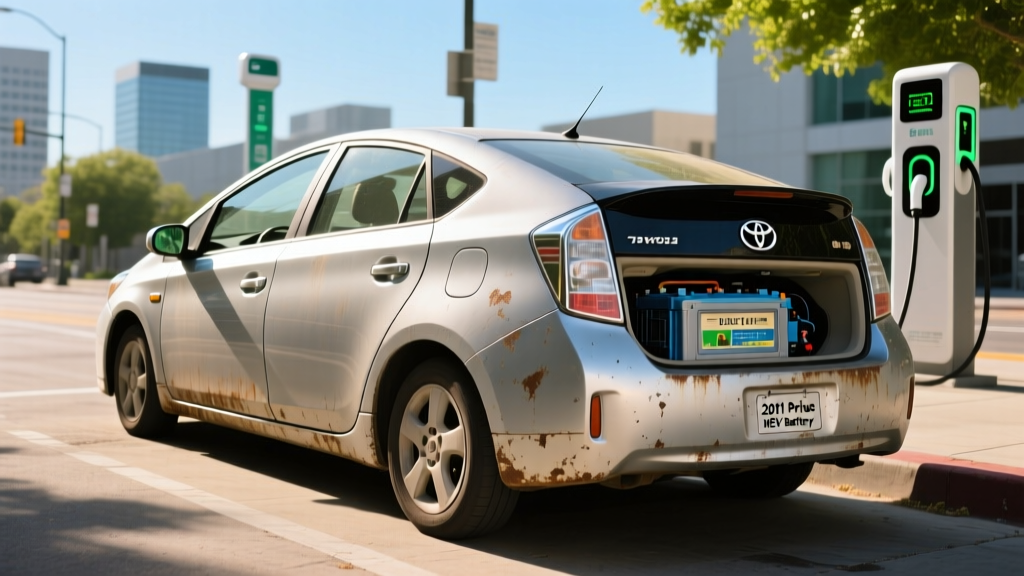
The 2011 Toyota Prius sits in an unusual position in 2026: it's a 15-year-old hybrid that still outperforms many brand-new gasoline cars on fuel economy. With used examples routinely selling between $5,000 and $9,000 depending on mileage and condition, the third-generation Prius remains a fixture in the budget-conscious commuter segment. But buying a hybrid this age means understanding what you're really getting — especially when it comes to the high-voltage battery, the single most expensive component on the car.
This guide covers everything a prospective used buyer needs to know: real-world MPG versus the EPA sticker, the powertrain that made the 2011 model year significant, battery longevity and replacement costs, and whether this HEV still makes sense against modern PHEVs and full EVs.
2011 Prius Fuel Economy: EPA Numbers vs. Real-World Results
The 2011 Toyota Prius carries an EPA rating that was class-leading when new and remains impressive today. Here's the official breakdown from fueleconomy.gov:
| Metric | Value |
|---|---|
| City MPG | 51 |
| Highway MPG | 48 |
| Combined MPG | 50 |
| Annual Fuel Cost (est.) | ~$950 (at $3.20/gal, 15k mi/yr) |
| CO₂ Emissions | 178 g/mi |
What makes the Prius unusual among all vehicles — hybrid or otherwise — is that its city MPG actually exceeds its highway rating. The regenerative braking system recovers kinetic energy during stop-and-go driving, while highway cruising relies more heavily on the gasoline engine with less regen opportunity.
Powertrain: What Made the Third-Generation Prius Different
The 2011 model year falls within Toyota's third-generation Prius (2010–2015), which introduced a larger, more powerful engine compared to the second generation. The powertrain uses Toyota's Hybrid Synergy Drive — a series-parallel full hybrid system that requires no plug-in charging.
| Component | Specification |
|---|---|
| Gasoline Engine | 1.8L inline-4 (2ZR-FXE), Atkinson cycle |
| Engine Horsepower | 98 hp @ 5,200 rpm |
| Electric Motor | Permanent magnet synchronous, 80 hp (60 kW) |
| Net Combined Horsepower | 134 hp |
| Transmission | Planetary eCVT (no traditional gears) |
| 0–60 mph | ~9.8 seconds |
| Drivetrain | Front-wheel drive |
| High-Voltage Battery | 1.3 kWh (usable ~0.9 kWh), NiMH |
That 1.8-liter Atkinson-cycle engine replaced the 1.5-liter from the prior generation, giving the 2011 Prius noticeably better highway passing power and slightly improved fuel economy. The eCVT is not a belt-and-cone CVT like those found in some competitors — it's a planetary gear set that blends engine and motor power with exceptional reliability. There are no belts to break, no clutches to wear, and no traditional transmission fluid to change at short intervals.
HEV vs. PHEV: Understanding What the 2011 Prius Is (and Isn't)
This distinction matters because buyers sometimes confuse hybrid types. The 2011 Prius is a conventional hybrid (HEV) — it has no plug, no electric-only driving range of significance, and it generates all its electricity onboard through regenerative braking and the gasoline engine.
| Feature | 2011 Prius (HEV) | Modern PHEV (e.g., Prius Prime) | Full EV (BEV) |
|---|---|---|---|
| Plug-in charging? | No — gas only | Yes — Level 1/2 | Yes — Level 1/2/DC |
| Electric-only range | ~1 mi at low speed | 25–44 mi | 200–400+ mi |
| Total range | ~500+ mi | 400–600+ mi | 200–400+ mi |
| Battery size | 1.3 kWh (NiMH) | 13.6 kWh (Li-ion) | 50–100+ kWh (Li-ion) |
| Fuel/energy cost per mile | ~$0.064 (gas) | ~$0.035 (elec) / $0.064 (gas) | ~$0.03–0.05 (elec) |
| Federal tax credit (new) | None | Up to $7,500 (§30D) | Up to $7,500 (§30D) |
The Prius Plug-in Hybrid (later renamed Prius Prime) didn't arrive until the 2012 model year as a separate variant. If you're looking at a 2011 Prius, you are looking at a standard HEV. It will never need to be plugged in, and it cannot drive meaningful distances on electric power alone. The small NiMH battery exists to assist the gasoline engine during acceleration, capture braking energy, and enable brief low-speed electric-only creeping.
Battery Life, Degradation, and Replacement Cost
The high-voltage traction battery is the most scrutinized component on any used hybrid. The 2011 Prius uses a nickel-metal hydride (NiMH) pack — a chemistry known for durability but not immune to aging.
NiMH batteries in the third-generation Prius have proven to last 150,000–200,000 miles in many cases, with some original packs exceeding 250,000 miles. However, at 15 years old, age-based degradation is a real factor even on low-mileage examples. Heat is the primary enemy — vehicles in hot climates (Arizona, Texas, Southern California) tend to see earlier battery failures than those in cooler regions.
When replacement is necessary, here's what to expect in 2026:
| Option | Cost Range | Warranty | Notes |
|---|---|---|---|
| New OEM Toyota battery | $2,200–$2,800 (parts + labor) | 3 yr / 36,000 mi | Most reliable, dealer-installed |
| Refurbished/reconditioned pack | $1,000–$1,600 | 1–3 yr (varies) | Replaced weak modules; quality varies |
| Used salvage yard battery | $400–$800 + install | None / 30-day | Highest risk — unknown remaining life |
| Aftermarket new (e.g., Dorman) | $1,800–$2,400 | 2–3 yr | Viable alternative to OEM |
A critical point: a failed Prius hybrid battery doesn't strand you immediately. The car will display a "Check Hybrid System" warning and enter a degraded limp mode with reduced fuel economy and power, but it can often still be driven short distances to a repair facility. Individual bad modules can sometimes be replaced by specialists for $300–$600 rather than swapping the entire pack.
Reliability and Common Issues Beyond the Battery
The 2011 Prius earns strong reliability marks overall, but 15 years of real-world data have revealed a few recurring issues worth checking before purchase:
- Head gasket (EGR-related): The third-gen Prius has a known pattern of head gasket failure around 150,000–200,000 miles, often linked to a clogged EGR (Exhaust Gas Recirculation) cooler and valve. Proactive EGR cleaning every 80,000–100,000 miles significantly reduces risk. Repair cost if failed: $2,500–$4,000.
- Inverter coolant pump: The electric water pump circulating coolant through the inverter can fail, potentially overheating the hybrid system. Listen for coolant flow in the inverter reservoir under the hood with the car in READY mode. Replacement: $400–$700.
- Brake actuator: The regenerative braking system uses an electro-hydraulic actuator that can fail on higher-mileage examples. Symptoms include a firm brake pedal, ABS warning lights, or inconsistent braking feel. Dealer replacement runs $1,500–$2,200.
- 12V auxiliary battery: Like any car, the Prius has a standard 12V battery (located in the rear cargo area). It typically lasts 4–6 years. A dead 12V battery will prevent the car from starting even if the high-voltage pack is fully charged.
- Oil consumption: Some 2010–2012 Prius engines consume oil at higher rates as they age. Check the dipstick regularly — running low on oil accelerates head gasket wear.
Despite these items, the Prius powertrain — particularly the eCVT and electric motor — is among the most durable in the automotive industry. Taxi fleets have run these cars past 400,000 miles with basic maintenance.
Pricing in 2026: What Does a Used 2011 Prius Cost?
As of early 2026, used 2011 Prius pricing varies significantly based on mileage, condition, battery health, and region:
| Condition / Mileage | Typical Price Range |
|---|---|
| 150,000+ mi, fair condition | $4,000–$5,500 |
| 100,000–150,000 mi, good condition | $5,500–$7,500 |
| Under 100,000 mi, excellent condition | $7,500–$9,500 |
| New battery already installed (documented) | Add $1,000–$1,500 premium |
At these prices, the 2011 Prius competes with used Honda Civics, Toyota Corollas, and early Nissan Leafs. The value proposition is simple: you're paying a low entry price for a car that will cost roughly $900–$1,100 per year in fuel at 15,000 miles driven — significantly less than most non-hybrid alternatives.
Tax Credits and Incentives for a Used Hybrid
The 2011 Prius does not qualify for any federal tax credit when purchased used. Here's why:
- Federal §30D New EV/PHEV Credit: Only applies to new plug-in vehicles (BEVs and PHEVs). The 2011 Prius is a conventional HEV with no plug, and it's not new.
- Federal §25E Used EV Credit: This credit (up to $4,000 or 30% of sale price, whichever is lower) applies only to used BEVs and PHEVs purchased from a dealer for $25,000 or less. A conventional HEV like the standard Prius does not qualify.
- State incentives: A few states offer rebates or HOV lane access for hybrids, but most incentive programs have shifted to plug-in vehicles. Check your state's energy office or AFDC state law database for current local programs.
The absence of incentives is offset by the low purchase price. A $6,000 Prius with 50 MPG doesn't need a tax credit to deliver strong economics.
Who Should Buy the 2011 Prius — and Who Shouldn't
Choose the 2011 Prius If:
- You want maximum MPG on a sub-$8,000 budget
- Your commute is stop-and-go city/suburban driving
- You don't have access to home or workplace charging (no plug needed)
- You prioritize low running costs over performance or tech features
- You want a proven, simple-to-maintain powertrain
- You need a reliable daily driver while saving for a future EV
Look Elsewhere If:
- You want electric-only driving or plug-in capability (consider a used Prius Prime or Chevy Volt)
- You need modern safety tech (AEB, lane-keep, blind-spot — not available on 2011)
- You drive primarily long highway routes (a modern diesel or efficient gas car may match its highway MPG)
- You want a car with remaining factory warranty coverage
- You need significant cargo or passenger space (midsize sedan limitations)
Against a full EV like a used 2018–2020 Nissan Leaf or Chevy Bolt, the Prius trades higher per-mile fuel cost (~$0.064 vs. ~$0.04 on electricity) for zero charging infrastructure requirements and longer total range. If you can charge at home, a used BEV will cost less per mile to operate. If you can't, the Prius remains the efficiency king without a plug.
Pre-Purchase Checklist: What to Verify Before Buying
If you're evaluating a specific 2011 Prius, these steps will help you avoid costly surprises:
- Check hybrid battery health: Use an OBD-II scanner with a Prius-compatible app (like Torque Pro or Dr. Prius) to read individual battery module voltages. Voltage spread greater than 0.3V between modules indicates imbalance and likely near-term failure.
- Verify EGR service history: Ask whether the EGR cooler and valve have been cleaned. If not, budget $200–$400 for proactive cleaning to prevent head gasket stress.
- Inspect the inverter coolant reservoir: With the car in READY mode, check for visible coolant turbulence in the reservoir — that means the electric pump is working. Still surface = failing pump.
- Test the brake actuator: Press the brake pedal before starting the car. It should feel firm. Start the car — the pedal should drop slightly as the hydraulic system pressurizes. If it stays rock-hard or feels inconsistent, the actuator may be failing.
- Check for recall completion: Verify on NHTSA's recall lookup that all open recalls have been addressed, particularly those related to the brake system and hybrid inverter.
- Review maintenance records: Oil changes every 5,000 miles (conventional) or 10,000 miles (synthetic), inverter coolant flush at 100,000 miles, and transaxle fluid drain-and-fill at 60,000–100,000 miles are all indicators of a cared-for example.
Frequently Asked Questions
How many MPG does the 2011 Hybrid Prius get?
The EPA rates the 2011 Prius at 51 city / 48 highway / 50 combined MPG. In real-world mixed driving, most owners report 48–53 MPG. Highway-only driving at higher speeds typically yields 42–45 MPG, and cold weather can reduce economy by 5–10%.
Does the 2011 Prius need to be plugged in?
No. The 2011 Prius is a conventional hybrid (HEV), not a plug-in hybrid (PHEV). It charges its small 1.3 kWh NiMH battery through regenerative braking and the gasoline engine. There is no charging port and no electric-only driving capability beyond very brief low-speed creeping.
How much does it cost to replace the hybrid battery on a 2011 Prius?
A new OEM Toyota replacement battery costs approximately $2,200–$2,800 installed at a dealer. Refurbished packs run $1,000–$1,600, and individual module replacement by a hybrid specialist can cost $300–$600. The original NiMH batteries commonly last 150,000–200,000+ miles, but at 15 years old, age-related degradation is a factor regardless of mileage.
Is the 2011 Prius still reliable in 2026?
Yes, with caveats. The hybrid powertrain itself (eCVT, electric motor, inverter) is exceptionally durable. The main risks on a 15-year-old example are the hybrid battery (if original), EGR-related head gasket issues above 150k miles, and the brake actuator. A well-maintained example with a fresh battery can reliably serve as a daily driver for years.
Does the 2011 Prius qualify for any tax credit?
No. The federal §30D credit applies only to new plug-in vehicles, and the §25E used EV credit applies only to used BEVs and PHEVs. The conventional Prius HEV does not qualify for either. Some states may offer minimal incentives — check the AFDC database for your state.
How does the 2011 Prius compare to a modern hybrid?
The current-generation Toyota Prius (2023+) achieves 57 combined MPG — a 14% improvement — with 194 horsepower versus the 2011's 134 hp, plus modern safety features like automatic emergency braking and lane tracing assist. However, a new Prius starts around $28,000. The 2011 model delivers 88% of the fuel economy at roughly 20–25% of the price, making it a compelling budget option if you accept the age-related maintenance risk.