Why the 2011 Hybrid Hyundai Sonata Still Matters in 2026
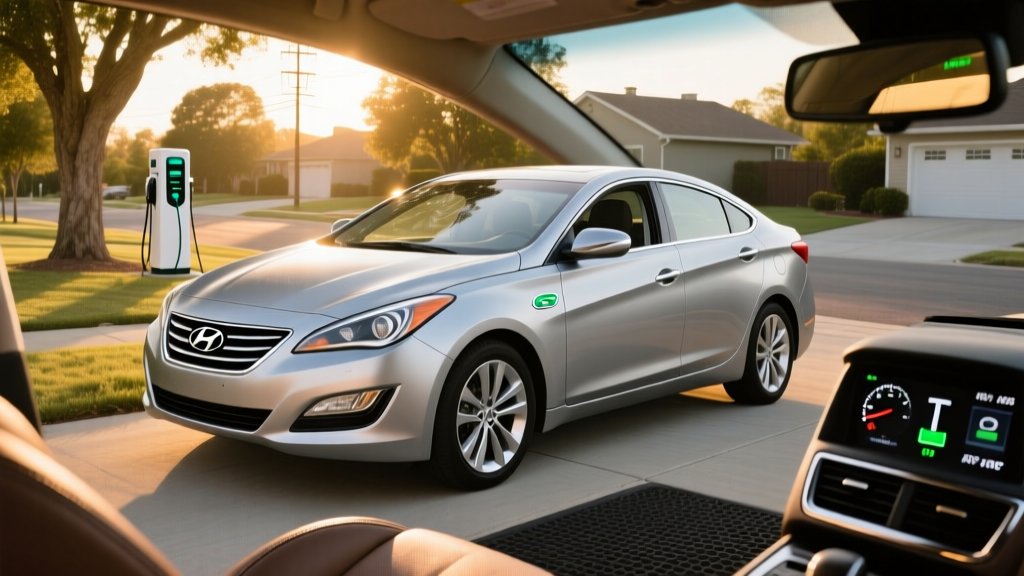
Fifteen years after its debut, the 2011 Hybrid Hyundai Sonata remains one of the most accessible used hybrid sedans on the market. As a conventional hybrid electric vehicle (HEV), it requires no plug, no charging infrastructure, and no behavioral change from a gas-car driver — it simply sips less fuel. For buyers in 2026 navigating high used-car prices and uncertain EV charging access, understanding exactly what this first-generation Sonata Hybrid delivers (and where it falls short) is essential before signing a check.
This guide covers the EPA fuel economy, the real-world MPG you can actually expect, battery longevity and replacement cost, powertrain specifications, and how this 2011 HEV stacks up against modern hybrids, PHEVs, and full EVs.
HEV vs PHEV vs EV: Where the 2011 Sonata Hybrid Fits
The 2011 Hyundai Sonata Hybrid is a conventional hybrid (HEV). It has a small battery that charges exclusively through regenerative braking and the gasoline engine. You never plug it in. This distinguishes it fundamentally from:
| Feature | HEV (2011 Sonata Hybrid) | PHEV (e.g., 2026 Tucson PHEV) | BEV (e.g., 2026 Ioniq 6) |
|---|---|---|---|
| Plug-in required? | No | Yes (Level 1 or 2) | Yes (Level 2 or DC fast) |
| Electric-only range | ~1 mile at low speed | 30–40 miles typical | 250–360 miles (full battery) |
| Battery size | 1.4 kWh (NiMH) | 13–18 kWh (lithium-ion) | 60–100+ kWh (lithium-ion) |
| Fuel source | Gasoline only | Gasoline + electricity | Electricity only |
| Federal tax credit (new) | None | Up to $7,500 (§30D, if eligible) | Up to $7,500 (§30D, if eligible) |
| Used-vehicle credit | Up to $4,000 (§25E) | Up to $4,000 (§25E) | Up to $4,000 (§25E) |
If you have reliable home charging and a commute under 40 miles, a modern PHEV or BEV will save more on fuel. If you lack charging access — apartment living, street parking, no garage — the 2011 Sonata Hybrid's no-plug design is its strongest advantage.
Fuel Economy: EPA Ratings vs Real-World MPG
The EPA rated the 2011 Hyundai Sonata Hybrid at:
| Driving Cycle | EPA Rating | Real-World Expectation |
|---|---|---|
| City | 35 MPG | 36–40 MPG (hybrids excel in stop-and-go) |
| Highway | 40 MPG | 34–38 MPG (sustained speed reduces regen benefit) |
| Combined | 37 MPG | 34–39 MPG depending on driving mix |
Source: EPA Fuel Economy Guide — 2011 Hyundai Sonata Hybrid.
Why Real-World City MPG Often Beats the EPA Sticker
Conventional hybrids recapture kinetic energy during braking and use the electric motor heavily at low speeds. In dense urban traffic with frequent stops, the 2011 Sonata Hybrid's engine shuts off at lights and the motor handles initial acceleration. Owners regularly report 38–42 MPG in city-heavy commutes. Conversely, sustained 75+ MPH highway driving diminishes the hybrid advantage because the gasoline engine does nearly all the work, and aerodynamic drag dominates. Expect highway fuel economy closer to 34–36 MPG on long interstate trips.
Cold-weather note: In sub-freezing temperatures, the engine runs more frequently to maintain cabin heat and battery temperature, reducing city MPG by roughly 3–5 MPG. This is common to all hybrids and is less severe than the 20–30% range loss a full EV experiences in winter.
Powertrain Specs: Engine, Motor, and Combined Output
| Specification | 2011 Hyundai Sonata Hybrid |
|---|---|
| Engine | 2.4L inline-4 (Theta II) |
| Engine horsepower | 169 HP @ 6,000 RPM |
| Electric motor output | 30 kW (40 HP) |
| Combined net horsepower | 206 HP |
| Transmission | 6-speed automatic |
| Battery type | Nickel-metal hydride (NiMH), 1.4 kWh |
| Battery location | Behind rear seat (trunk intrusion) |
| 0–60 MPH | ~8.5 seconds |
| Curb weight | 3,483 lbs |
| Trunk volume | 12.1 cu ft (reduced from 16.4 cu ft in gas model) |
The 2.4-liter Theta II engine paired with a 30 kW electric motor delivers a combined 206 HP — adequate for highway merging and passing. Hyundai used a conventional 6-speed automatic rather than a CVT (which Toyota and Ford favored in their hybrids), resulting in a more familiar driving feel with distinct gear shifts. The trade-off is slightly less seamless electric-to-gas transitions compared to eCVT systems.
Battery Lifespan, Warranty, and Replacement Cost
Original Hybrid Battery Warranty
Hyundai originally warranted the 2011 Sonata Hybrid's battery for 8 years / 100,000 miles (10 years / 100,000 miles in CARB states including California, New York, Massachusetts, and others). By 2026, all original factory warranties have expired unless the vehicle was exceptionally low-mileage and registered in a CARB state with an extended 10-year provision.
How Long Do These Batteries Actually Last?
The 1.4 kWh NiMH battery in the 2011 Sonata Hybrid is small and conservatively managed — Hyundai limited its state-of-charge window to reduce stress. Based on owner reports and hybrid fleet data, these batteries typically last 120,000–180,000 miles before significant capacity loss triggers a check-engine light or noticeable fuel economy decline. Many units survive past 200,000 miles with gradual degradation rather than sudden failure.
Battery Replacement Cost in 2026
- Dealer OEM replacement: $2,800–$3,800 (parts + labor)
- Aftermarket/remanufactured battery: $1,500–$2,400
- Individual cell replacement (specialty hybrid shops): $800–$1,400
For a used 2011 Sonata Hybrid valued at $5,000–$9,000 in 2026, a full OEM battery replacement represents a significant percentage of the car's value. Budgeting for a remanufactured unit or finding a vehicle with a recently replaced battery is the pragmatic approach.
Is the 2011 Sonata Hybrid Reliable?
The 2011 model year was the Sonata Hybrid's first year, and first-year models often carry teething issues. The most common reported problems include:
- Hybrid system cooling fan failure — can cause battery overheating and reduced performance; replacement runs $300–$600.
- Brake actuator wear — the regenerative braking system's actuator may require replacement around 100,000–130,000 miles; cost approximately $800–$1,200.
- Theta II engine concerns — Hyundai's 2.4L Theta II engine was subject to a major recall for bearing wear and potential engine seizure. Verify that recall campaign #19V-653 (and any subsequent campaigns) was completed. Check the NHTSA database at nhtsa.gov/recalls using the VIN.
- Trunk space compromise — the battery pack intrudes significantly, leaving only 12.1 cu ft versus the gas model's 16.4 cu ft.
Overall, the hybrid powertrain itself is reasonably durable, but the Theta II engine recall is a critical item to verify before purchase. A pre-purchase inspection by a hybrid-experienced mechanic is strongly recommended.
Pricing in 2026: What You'll Pay and Tax Credit Eligibility
As of early 2026, used 2011 Hyundai Sonata Hybrid pricing falls in these ranges:
- High mileage (130,000+ mi), fair condition: $4,000–$5,500
- Average mileage (80,000–130,000 mi), good condition: $5,500–$7,500
- Low mileage (under 80,000 mi), excellent condition: $7,500–$9,500
Does It Qualify for Any Tax Credit?
The original federal hybrid tax credit for the Sonata Hybrid expired years ago and was never available at the full $7,500 level for this model. However, if you purchase this vehicle from a licensed dealer for $25,000 or less (which every 2011 Sonata Hybrid will be), you may qualify for the IRS §25E Used Clean Vehicle Credit — up to $4,000 or 30% of the sale price, whichever is less.
§25E Used EV Credit Eligibility Checklist (2026 Rules)
- Sale price must be $25,000 or less
- Vehicle must be at least 2 model years old (2011 qualifies)
- Buyer AGI must not exceed: $75,000 single / $112,500 head of household / $150,000 joint
- Must purchase from a licensed dealer (private-party sales do not qualify)
- Credit equals 30% of sale price, capped at $4,000
- Can be claimed once per buyer every 3 years
- Point-of-sale transfer available — dealer applies credit at purchase
On a $6,000 purchase, the credit would be $1,800 (30% × $6,000). On an $8,500 purchase, it would be $2,550. Always confirm eligibility with a tax professional and verify current IRS rules, as §25E provisions are subject to legislative change.
2011 Sonata Hybrid vs Modern Alternatives: Decision Framework
Choose the 2011 Sonata Hybrid If:
- Your budget is under $8,000 and you need reliable daily transportation
- You lack home charging access (apartment, street parking, no 240V outlet)
- Your commute is city-heavy (stop-and-go maximizes hybrid MPG advantage)
- You want zero learning curve — no apps, no charging planning, no range monitoring
- You drive 10,000–15,000 miles/year and want to reduce fuel costs without a large upfront investment
Choose a Modern PHEV (e.g., 2026 Tucson PHEV, RAV4 Prime) If:
- You have Level 2 home charging and a commute under 35 miles
- You want 30–40 miles of electric-only driving for daily errands
- You want the §30D federal credit (up to $7,500 on new purchases)
- You take occasional long road trips and want zero range anxiety
Choose a Full BEV (e.g., 2026 Ioniq 6, Model 3) If:
- You have reliable home Level 2 charging
- You want to eliminate gasoline entirely and minimize maintenance
- Your daily driving is under 200 miles and you accept DC fast charging on road trips
- You want the lowest per-mile fuel cost (electricity at $0.13/kWh ≈ $4.50/gallon equivalent)
Ownership Costs: Fuel Savings vs Gas-Only Sonata
At 37 MPG combined versus the gas-only 2011 Sonata's 26 MPG combined (2.4L, automatic), the hybrid saves approximately $450–$600 per year in fuel for a driver covering 12,000 miles annually at $3.30/gallon. Over five years, that's $2,250–$3,000 in fuel savings. Factor in the potential §25E credit ($1,800–$2,550) and the hybrid's value proposition strengthens considerably at used-market prices.
Maintenance costs are comparable to the gas Sonata, with one exception: regenerative braking extends pad life significantly (many owners report 80,000+ miles on original brake pads). The hybrid system adds complexity, but the components that fail (cooling fan, actuator) are well-understood and serviced by most hybrid-capable shops.
Pros and Cons at a Glance
Pros
- 37 MPG combined EPA; 38–42 MPG achievable in city driving
- No plug-in required — ideal for renters and street parkers
- Low used purchase price ($4,000–$9,500 in 2026)
- Potential §25E used-vehicle credit up to $4,000
- Extended brake pad life from regenerative braking
- Conventional 6-speed automatic feels natural (no CVT drone)
Cons
- Trunk space severely compromised (12.1 cu ft vs 16.4 cu ft gas model)
- Theta II engine recall history — must verify completion
- First model year — more reported issues than 2013+ refresh
- Original battery warranty expired; replacement costs $1,500–$3,800
- Highway MPG drops to 34–36 at sustained 75+ MPH
- No electric-only driving capability beyond parking-lot speeds
Frequently Asked Questions
How many MPG does the 2011 Hyundai Sonata Hybrid get?
The EPA rates it at 35 city / 40 highway / 37 combined. In real-world city-heavy driving, expect 38–42 MPG. On the highway at 75 MPH, expect 34–36 MPG. Cold weather reduces city MPG by approximately 3–5 MPG.
Does the 2011 Sonata Hybrid need to be plugged in?
No. It is a conventional hybrid (HEV) that charges its battery through regenerative braking and the gasoline engine. There is no plug, no charging cable, and no electric-only range to manage.
How long does the hybrid battery last and what does replacement cost?
The 1.4 kWh NiMH battery typically lasts 120,000–180,000 miles, with many units exceeding 200,000 miles with gradual degradation. OEM dealer replacement costs $2,800–$3,800; remanufactured units run $1,500–$2,400; individual cell replacement at specialty shops costs $800–$1,400.
Is the 2011 Sonata Hybrid reliable?
The hybrid system is generally durable, but the 2.4L Theta II engine was subject to a major recall for bearing wear. Verify recall completion via NHTSA before purchase. Hybrid-specific components (cooling fan, brake actuator) may require attention past 100,000 miles.
Does the 2011 Sonata Hybrid qualify for any tax credit?
It does not qualify for the §30D new-vehicle credit. However, if purchased from a licensed dealer for $25,000 or less, buyers meeting income limits (under $75K single / $150K joint) may claim the §25E used-vehicle credit: 30% of the sale price, up to $4,000. Confirm details at irs.gov.
Should I buy a 2011 Sonata Hybrid or a newer used hybrid?
If your budget allows $15,000–$22,000, a 2017–2020 Toyota Prius or 2018–2021 Hyundai Ioniq Hybrid will deliver 50+ MPG combined, a larger trunk, and remaining battery warranty. The 2011 Sonata Hybrid makes sense strictly as a sub-$8,000 budget option where its low entry price and potential §25E credit offset its age and trunk compromise.
Hybrid vs PHEV vs EV — which should I choose?
Choose the HEV (Sonata Hybrid) if you cannot charge at home. Choose a PHEV if you have home charging and a short commute. Choose a BEV if you want the lowest operating cost and have Level 2 charging access. The 2011 Sonata Hybrid's advantage is its zero-infrastructure requirement — it works for anyone, anywhere, immediately.