Quick Verdict: A Budget-Minded Hybrid From a Different Era
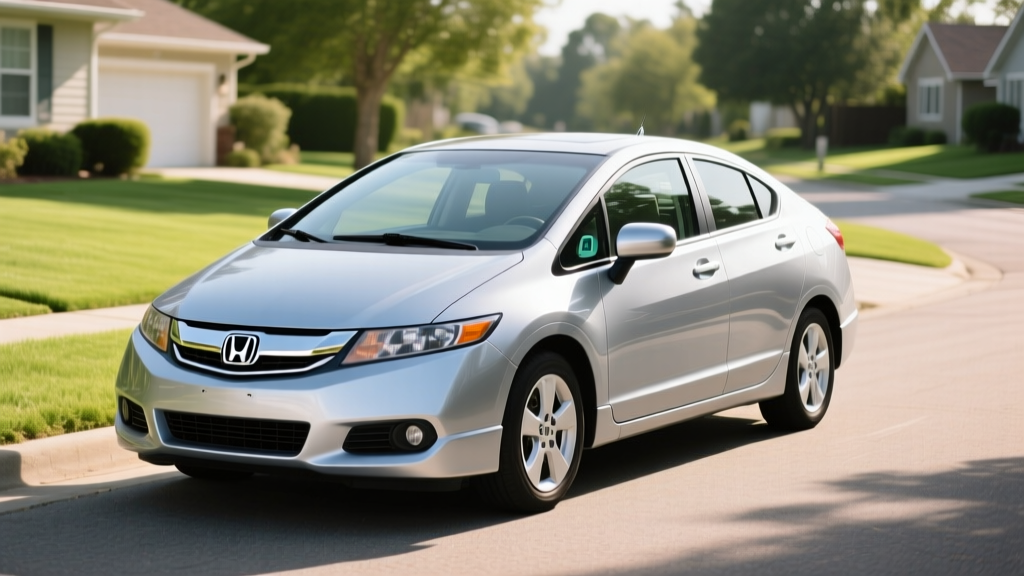
The 2011 Honda Insight hybrid was Honda's answer to the second-generation Toyota Prius — a compact, five-door hatchback built for maximum fuel economy at minimum cost. Over a decade later, it remains a popular entry on the used market for buyers who want hybrid efficiency without the complexity of a plug-in vehicle. If you're researching the 2011 Honda Insight hybrid today, you're likely weighing its 42 MPG combined rating against concerns about aging nickel-metal hydride (NiMH) battery packs, long-term reliability, and whether a newer hybrid or full EV might be a smarter spend.
This guide covers every number that matters: real-world MPG, powertrain specs, IMA battery replacement costs, warranty status on a 15-year-old vehicle, and how the Insight stacks up against modern alternatives in 2026.
HEV vs PHEV: Where the 2011 Insight Fits
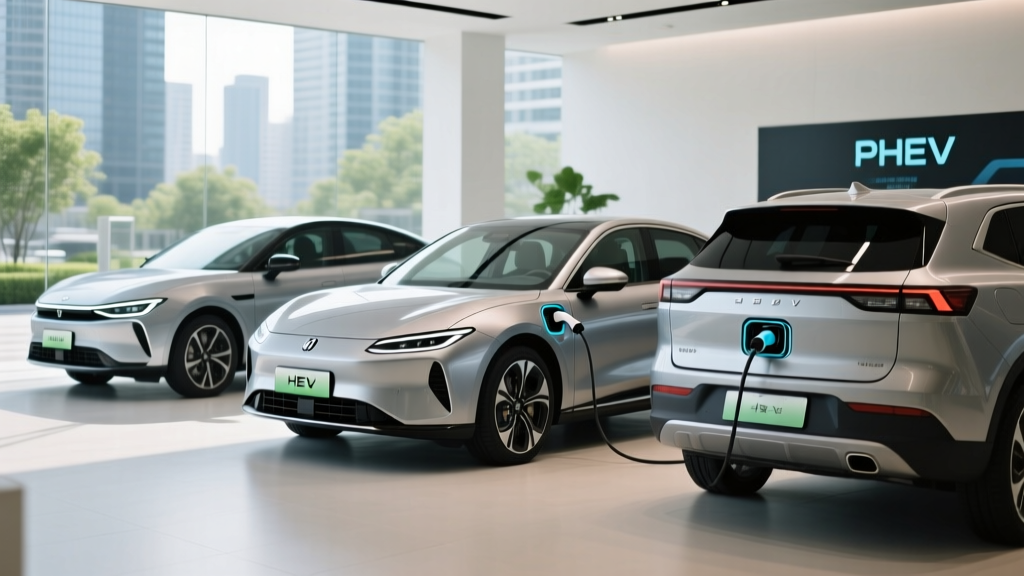
The 2011 Honda Insight is a conventional hybrid (HEV). It cannot be plugged in. There is no electric-only driving range, no kWh battery to charge, and no DC fast-charging capability. The Insight uses Honda's Integrated Motor Assist (IMA) system — a small electric motor sandwiched between the gasoline engine and the transmission that recovers energy during braking and assists during acceleration. The battery recharges itself through regenerative braking and the gas engine.
This is a critical distinction because many shoppers conflate all hybrids with plug-in hybrids (PHEVs). A PHEV like the Toyota Prius Prime or Chrysler Pacifica Hybrid offers 25–45 miles of electric-only range before the gas engine kicks in, and it requires regular plug-in charging to realize its efficiency advantage. The Insight has none of that. You fuel it with gasoline, and the hybrid system simply makes every gallon go further — especially in stop-and-go city driving where regenerative braking recovers the most energy.
| Feature | HEV (e.g., 2011 Insight) | PHEV (e.g., Prius Prime) | BEV (e.g., Tesla Model 3) |
|---|---|---|---|
| Plug-in charging required? | No | Yes (for EV range) | Yes (always) |
| Electric-only range | None | 25–45 mi | 250–400 mi |
| Fuel source | Gasoline | Gasoline + electricity | Electricity only |
| Home charging install needed? | No | Recommended (Level 2) | Essential (Level 2) |
| Federal tax credit (new) | None | Up to $7,500 (§30D) | Up to $7,500 (§30D) |
| Best for | Apartment dwellers, budget buyers | Short commutes + road trips | Home chargers, low-cost miles |
Fuel Economy: EPA Ratings and Real-World MPG
The EPA rated the 2011 Honda Insight hybrid at 40 MPG city / 43 MPG highway / 41 MPG combined for the base LX and EX trims. (Note: Honda revised these figures slightly for later model years after a restatement, and fueleconomy.gov lists the 2011 Insight at 42 MPG combined for the most commonly referenced configuration.)
| Driving Cycle | EPA Rating | Real-World Expectation |
|---|---|---|
| City | 40 MPG | 42–48 MPG (regen braking excels in stop-and-go) |
| Highway | 43 MPG | 38–42 MPG (aero drag and sustained speed reduce hybrid advantage) |
| Combined | 41–42 MPG | 38–45 MPG (varies heavily with driving style and climate) |
Real-world MPG reality check: Honda's IMA system is a mild hybrid — the electric motor assists but cannot drive the car alone. Owners who drive conservatively in warm climates frequently report 44–48 MPG in mixed city driving. However, cold weather, aggressive acceleration, and sustained highway speeds above 70 mph push real-world economy closer to 36–39 MPG. A degraded IMA battery will also reduce fuel economy by 2–5 MPG because the system loses regenerative and assist capability.
Powertrain Specs: Honda's IMA System Explained
The 2011 Insight uses Honda's fifth-generation Integrated Motor Assist (IMA) parallel-hybrid system. Here are the exact numbers:
| Specification | Value |
|---|---|
| Engine | 1.3L i-VTEC inline-4 (LDA-E) |
| Gas engine output | 88 hp @ 5,800 rpm / 88 lb-ft torque |
| Electric motor output | 13 hp (10 kW) / 58 lb-ft torque |
| Combined system output | 98 hp @ 5,800 rpm / 123 lb-ft torque |
| Transmission | Continuously Variable Transmission (CVT) |
| Hybrid battery type | Nickel-Metal Hydride (NiMH) |
| Hybrid battery capacity | 0.58 kWh (nominal) |
| 0–60 mph | ~10.5 seconds |
| Drivetrain | Front-wheel drive |
| Curb weight | ~2,735 lbs |
| Fuel tank capacity | 10.6 gallons |
| Total driving range (est.) | ~435–445 miles per tank |
The 0.58 kWh NiMH battery pack is tiny by modern standards — a 2026 PHEV typically carries 12–18 kWh, and a full BEV runs 60–100 kWh. But the Insight's battery isn't designed for electric-only driving. It exists to smooth out the engine's power delivery, enable idle stop-start (the engine shuts off at red lights), and capture regenerative braking energy. The result is a car that sips fuel without requiring any change in driver behavior.
IMA Battery Health, Warranty, and Replacement Costs
Original hybrid battery warranty: Honda covered the 2011 Insight's IMA battery for 8 years / 100,000 miles (10 years / 150,000 miles in CARB states including California, New York, Massachusetts, and others that adopted California emissions standards). As of 2026, every 2011 Insight is well beyond factory warranty coverage regardless of mileage.
This is the single biggest concern for used Insight buyers. The NiMH IMA pack in the 2011 model has a documented history of premature degradation. Honda actually extended the IMA battery warranty via a class-action settlement for 2010–2011 Insight models in certain conditions, but that extension has now expired as well.
What Happens When the IMA Battery Fails?
A failing IMA battery triggers the IMA warning light on the dashboard. The car remains drivable — the 1.3L gas engine can power the vehicle on its own — but you lose regenerative braking, electric assist, and idle stop-start. Fuel economy drops to roughly 32–36 MPG, and acceleration feels noticeably sluggish since the combined system output drops from 98 hp to the engine's standalone 88 hp.
IMA Battery Replacement Cost (2026 Estimates)
| Option | Cost Range | Notes |
|---|---|---|
| New OEM Honda battery | $2,000–$2,800 (parts + labor) | May be difficult to source; Honda has discontinued some IMA components |
| Aftermarket refurbished pack | $1,000–$1,800 | Quality varies; look for suppliers with 1–3 year warranties |
| Used/salvage yard pack | $300–$700 | Highest risk — remaining life unknown |
| Individual cell replacement (DIY) | $150–$400 (parts) | Requires technical skill; not recommended for most owners |
Given that a clean 2011 Insight sells for roughly $3,500–$6,000 in the 2026 used market, a $2,000+ OEM battery replacement can represent 30–50% of the car's value. Many owners opt for aftermarket refurbished packs or simply accept the reduced MPG with a degraded battery.
How to Check IMA Battery Health Before Buying
- OBD-II scan: Use a scan tool to check for IMA-related diagnostic trouble codes (DTCs). A clean scan is a good sign.
- Recalibration history: Ask the seller if the IMA system has been "recalibrated" — this is Honda's procedure to recondition the battery and can extend its life.
- Idle stop test: At a warm stoplight, the engine should shut off automatically. If it doesn't, the IMA battery may be too weak to support restart.
- Regen gauge: During deceleration, the IMA charge gauge on the dash should show significant regeneration. Weak regen suggests cell degradation.
Pricing, Trim Levels, and Tax Credit Eligibility
The 2011 Honda Insight was sold in three trims: LX (base), EX, and EX with Navigation. Original MSRPs ranged from approximately $19,950 to $23,760 including destination.
| Trim | Original MSRP | 2026 Used Market Range |
|---|---|---|
| Insight LX | $19,950 | $3,500–$5,000 |
| Insight EX | $21,490 | $4,000–$5,500 |
| Insight EX w/Navigation | $23,760 | $4,500–$6,000 |
Does the 2011 Insight Qualify for Any Tax Credit?
No. The 2011 Honda Insight does not qualify for the federal §30D new clean vehicle credit — it was never a plug-in vehicle, and the credit is only available for new purchases of qualifying BEVs and PHEVs. The federal used-EV credit (§25E) also does not apply because the Insight is a conventional HEV, not a plug-in electric vehicle.
Some states previously offered rebates for conventional hybrids, but most of those programs have ended or shifted exclusively to PHEVs and BEVs. Check your state's current incentive programs at the DOE's Alternative Fuels Data Center, but do not expect any financial incentive for purchasing a used 2011 Insight.
Reliability and Ownership Costs
Beyond the IMA battery, the 2011 Insight is mechanically straightforward. The 1.3L i-VTEC engine is a proven Honda design, the CVT is generally reliable when fluid is changed on schedule, and the rest of the car shares components with the Honda Fit platform. Key reliability notes:
- CVT transmission: Honda's CVT in this generation is more reliable than Nissan's contemporaneous units, but high-mileage examples (150,000+ miles) should have documented fluid changes. CVT replacement runs $3,000–$4,500.
- A/C compressor: Electrically driven (common in hybrids). Failure is uncommon but expensive — $800–$1,200 to replace.
- Brakes: Regenerative braking reduces wear on the friction brakes. Many Insight owners report original brake pads lasting 80,000–100,000 miles.
- 12V battery: Like all hybrids, the Insight has a standard 12V auxiliary battery separate from the IMA pack. Replace every 4–5 years; a dead 12V battery will prevent the car from starting even if the IMA pack is healthy.
Estimated Annual Ownership Costs (2026)
| Category | Estimated Annual Cost |
|---|---|
| Fuel (42 MPG combined, $3.30/gal avg) | ~$940 |
| Insurance (varies by state/driver) | $800–$1,200 |
| Maintenance (oil, tires, brakes) | $400–$600 |
| Depreciation | Minimal ($200–$400/yr at current values) |
| Total (excl. major repairs) | ~$2,340–$3,140 |
At $940/year in fuel, the Insight costs roughly half what a comparable non-hybrid compact (30 MPG combined) would burn — saving about $380 annually. Over five years, that's ~$1,900 in fuel savings versus a gas-only equivalent, which partially offsets the risk of an IMA battery replacement.
2011 Honda Insight vs Modern Alternatives in 2026
Pros — 2011 Honda Insight
- Low purchase price ($3,500–$6,000 used)
- Strong city MPG (42–48 real-world)
- No plug-in charging needed — ideal for apartments
- Proven Honda reliability (engine, chassis)
- Hatchback cargo versatility
- Low insurance costs
Cons — 2011 Honda Insight
- IMA battery likely degraded; replacement is costly vs car value
- Slow acceleration (10.5s 0–60)
- No modern safety tech (no AEB, no lane-keeping, no backup camera on base trim)
- Dated infotainment (no Apple CarPlay/Android Auto)
- No federal or state tax incentives
- Road noise and basic interior materials
What You'd Get Instead in 2026
If you're spending $4,000–$6,000 on a used hybrid, the 2011 Insight competes with used second-generation Prius models (2004–2009, similarly priced), used first-generation Hyundai Ioniq Hybrids (2017–2019, $8,000–$11,000), and used Honda Civic Hybrids. For buyers with a higher budget, a new 2026 Toyota Prius starts around $28,000 and delivers 57 MPG combined with modern safety suite standard — but that's a 5–7× price difference.
If you have home charging access and a budget above $15,000, a used PHEV like the 2018–2020 Chevrolet Volt (25–53 miles EV range, ~$12,000–$16,000 used) offers dramatically lower fuel costs for short commutes while retaining gas-engine range for road trips.
Who Should Buy the 2011 Insight — And Who Shouldn't
Choose the 2011 Honda Insight hybrid if:
- Your budget is under $6,000 and you need reliable daily transportation
- You drive mostly in the city (stop-and-go maximizes hybrid MPG)
- You cannot install a home charger (apartment, street parking)
- You want the lowest possible fuel cost without changing your refueling habits
- You accept the IMA battery risk and have $1,000–$2,000 set aside for potential replacement
Look elsewhere if:
- You primarily drive highway miles (the hybrid advantage shrinks; a used diesel or efficient gas car may match MPG)
- You want modern ADAS features (automatic emergency braking, blind-spot monitoring)
- You have home charging access and can afford a PHEV or BEV — the per-mile cost of electricity is 60–70% lower than gasoline
- The car you're considering has an illuminated IMA warning light (walk away or negotiate the battery replacement cost into the price)
Frequently Asked Questions
How many MPG does the 2011 Honda Insight hybrid get?
The EPA rates the 2011 Insight at 40 city / 43 highway / 41–42 combined MPG. Real-world results typically range from 38 MPG (aggressive highway driving, cold weather) to 48 MPG (gentle city driving in warm climates). Expect roughly 42 MPG in normal mixed driving with a healthy IMA battery.
Can the 2011 Honda Insight drive on electric power alone?
No. The Insight is a conventional hybrid (HEV), not a plug-in. Its 0.58 kWh NiMH battery is far too small for electric-only propulsion. The electric motor only assists the gas engine during acceleration and captures energy during braking. You never plug this car in.
Is the 2011 Honda Insight reliable?
The gasoline engine, CVT, and chassis are generally reliable Honda components. The primary reliability concern is the IMA hybrid battery, which has a documented history of degradation in 2010–2011 models. Many examples have already had battery replacements or recalibrations. A pre-purchase OBD-II scan and idle-stop test are essential.
How much does it cost to replace the IMA battery?
A new OEM Honda IMA battery costs $2,000–$2,800 installed, though sourcing new units has become difficult. Aftermarket refurbished packs run $1,000–$1,800, and used salvage packs can be found for $300–$700. Given the car's $3,500–$6,000 market value, many owners choose refurbished units.
Does the 2011 Honda Insight qualify for any tax credit in 2026?
No. The Insight is a conventional hybrid, not a plug-in vehicle. The federal §30D new vehicle credit and §25E used EV credit both require plug-in capability (PHEV or BEV). No state currently offers incentives for purchasing a used conventional hybrid. Per IRS guidelines, only qualified plug-in electric vehicles are eligible.
Hybrid vs PHEV vs EV — which is right for me?
If you lack home charging access and want zero behavior change, a conventional HEV like the Insight is the simplest path to better MPG. If you have a garage or driveway with a 120V or 240V outlet and a short commute (under 30 miles), a PHEV lets you drive on electricity daily while keeping a gas tank for long trips. If you have reliable Level 2 home charging and want the lowest cost per mile, a full BEV eliminates gasoline entirely — electricity costs the equivalent of $1.00–$1.50 per gallon in most states.
What is the total driving range of the 2011 Insight?
With a 10.6-gallon fuel tank and 41–42 MPG combined, the Insight delivers approximately 435–445 miles per tank. In gentle city driving at 46 MPG, you could see nearly 490 miles between fill-ups.