Quick Verdict: A Sporty Hybrid That Prioritizes Fun Over Fuel Economy
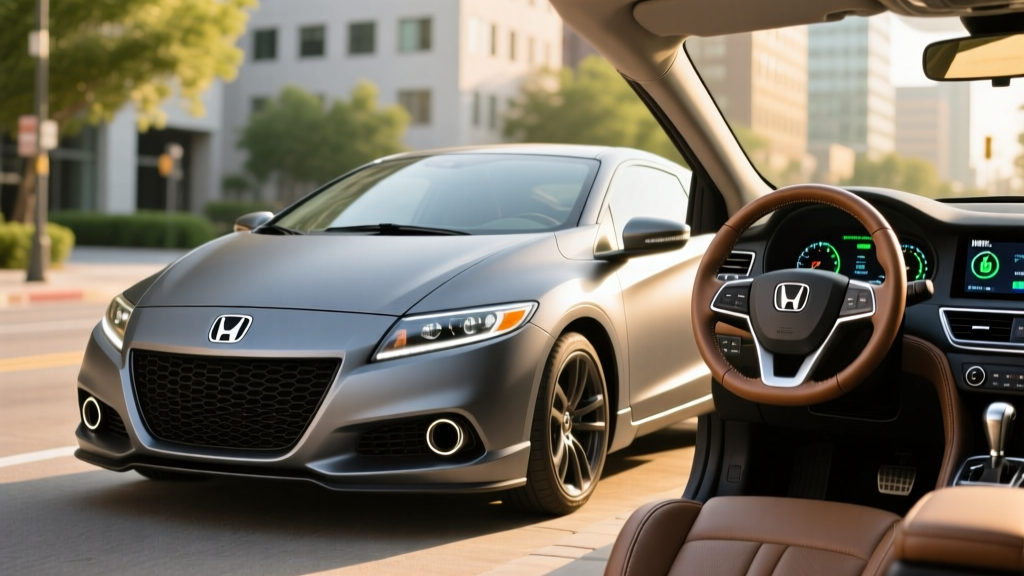
The 2011 Honda CR-Z hybrid occupies a unique space in the used-hybrid market. Unlike the Prius, which maximizes efficiency above all else, the CR-Z pairs Honda's Integrated Motor Assist (IMA) system with a sporty two-seat coupe body and an available 6-speed manual transmission — the only hybrid of its era to offer a stick shift. With an EPA rating of 36 city / 39 highway / 37 combined MPG (CVT trim), it delivers solid fuel economy but falls short of contemporaries like the Toyota Prius (51/48/50 MPG). For used-car shoppers in 2026 evaluating the 2011 CR-Z hybrid as an affordable entry into electrified driving, the real questions center on battery longevity, real-world efficiency, and whether this 15-year-old hybrid still makes financial sense.
This guide covers everything a prospective buyer needs: exact EPA and real-world MPG figures, the IMA powertrain breakdown, hybrid battery health and replacement costs, reliability track record, and how the CR-Z stacks up against modern HEVs, PHEVs, and full EVs.
HEV vs. PHEV vs. EV: Where the CR-Z Fits
Before diving into specs, it's critical to understand what type of electrified vehicle the 2011 CR-Z is — because this determines your fueling routine, maintenance expectations, and cost profile.
| Feature | HEV (Conventional Hybrid) | PHEV (Plug-In Hybrid) | BEV (Battery Electric) |
|---|---|---|---|
| Example | 2011 Honda CR-Z, Toyota Prius | Toyota RAV4 Prime, Jeep Wrangler 4xe | Tesla Model 3, Hyundai Ioniq 5 |
| Plug-in charging? | No — refuels with gasoline only | Yes — plug in to access electric-only range | Yes — plug in; no gas engine |
| Electric-only range | None (motor assists engine) | 20–50 miles typical | 200–400+ miles |
| Battery size | 0.5–1.5 kWh (small) | 8–25 kWh | 50–120 kWh |
| Federal tax credit (new) | None | Up to $7,500 (§30D, if eligible) | Up to $7,500 (§30D, if eligible) |
| Fueling | Gas station only | Gas station + charging outlet | Charging outlet / DC fast charger |
The 2011 Honda CR-Z is a conventional hybrid (HEV). It cannot be plugged in, has no electric-only driving mode, and relies entirely on gasoline for energy. The small nickel-metal hydride (NiMH) battery recharges through regenerative braking and the gasoline engine. If you're looking for plug-in capability or pure-electric commuting, you'll need a PHEV or BEV instead.
Fuel Economy: EPA Ratings and Real-World MPG
The 2011 CR-Z was offered with two transmissions, and the EPA ratings differ between them:
| Transmission | City MPG | Highway MPG | Combined MPG |
|---|---|---|---|
| CVT (Continuously Variable) | 36 | 39 | 37 |
| 6-Speed Manual | 31 | 39 | 34 |
Source: EPA / fueleconomy.gov
Real-World MPG: What Owners Actually Report
Conventional hybrids like the CR-Z tend to exceed their EPA city ratings in stop-and-go traffic because regenerative braking recaptures energy that would otherwise be lost. However, highway driving at sustained speeds above 70 mph reduces the electric motor's contribution and drops efficiency.
Based on aggregated owner data from Fuelly and EPA user reports:
- CVT owners report an average real-world combined MPG of 36–40 MPG, with city-heavy drivers occasionally seeing 41–43 MPG
- Manual transmission owners average 33–37 MPG, heavily dependent on driving style — aggressive shifting and high RPMs erode efficiency
- Cold-weather impact: Expect a 5–10% MPG reduction in winter months (roughly 32–34 MPG combined for CVT) as the engine runs more frequently to heat the cabin and the NiMH battery operates less efficiently at low temperatures
The CR-Z's 10.6-gallon fuel tank yields a practical driving range of approximately 370–400 miles per tank for CVT models under normal conditions.
Powertrain Specs: Honda's IMA System Explained
The 2011 CR-Z uses Honda's Integrated Motor Assist (IMA) parallel-hybrid system. Unlike Toyota's Hybrid Synergy Drive (which can drive the wheels with the electric motor alone at low speeds), Honda's IMA primarily uses the electric motor to assist the gasoline engine during acceleration and to enable idle stop-start. The motor cannot propel the car on electric power alone.
| Specification | Detail |
|---|---|
| Engine | 1.5L inline-4, i-VTEC, SOHC 16-valve |
| Engine horsepower | 111 hp @ 6,000 rpm |
| Engine torque | 107 lb-ft @ 1,000–1,500 rpm |
| Electric motor | IMA (10 kW / 13 hp) |
| Combined system output | 122 hp @ 6,000 rpm (CVT) / 121 hp (MT) |
| Combined system torque | 128 lb-ft @ 1,000–1,750 rpm (CVT) |
| Battery type | Nickel-Metal Hydride (NiMH) |
| Battery capacity | 0.5 kWh (nominal) |
| 0–60 mph | ~9.7 seconds (CVT) / ~9.1 seconds (MT) |
| Drivetrain | Front-wheel drive |
| Curb weight | ~2,683 lbs (CVT) / ~2,654 lbs (MT) |
The 3-Mode Drive System lets the driver select between Sport, Normal, and Econ modes. Sport mode sharpens throttle response and increases electric motor assist, while Econ mode softens throttle input and reduces A/C load to maximize efficiency. The difference between Sport and Econ is noticeable in both acceleration feel and observed MPG.
Hybrid Battery Health, Warranty, and Replacement Cost
For any used hybrid buyer, the traction battery is the single biggest financial risk. Here's what you need to know about the CR-Z's NiMH pack:
Original Honda IMA Battery Warranty
- Duration: 8 years / 80,000 miles (10 years / 150,000 miles in CARB states — CA, CT, MA, ME, MD, NJ, NY, OR, RI, VT, WA)
- Coverage: Defects and capacity loss below functional threshold
- Current status (2026): Original warranty has expired on all 2011 CR-Z vehicles. Any battery failure is an out-of-pocket expense unless an extended warranty was purchased.
Battery Degradation and Lifespan
The CR-Z's NiMH battery is relatively small (0.5 kWh) and operates within a narrow state-of-charge window — Honda's battery management system rarely allows full charge or full discharge, which extends cell life. In practice:
- Typical lifespan: 10–15 years or 120,000–180,000 miles before significant degradation
- Degradation symptoms: Reduced electric assist during acceleration, more frequent engine starts, lower observed MPG (dropping to 30–32 combined), and eventually an IMA warning light on the dashboard
- Calendar aging: At 15 years old (as of 2026), most original CR-Z batteries are approaching or have exceeded their practical lifespan, even with low mileage. Heat exposure (Southern states) accelerates degradation more than cold climates.
Battery Replacement Cost
- OEM Honda replacement: $2,000–$3,500 (parts + labor at a dealership)
- Aftermarket / refurbished NiMH pack: $1,200–$2,000 (from suppliers like BumbleBee Batteries or Green Bean Battery)
- Individual cell replacement: Some independent hybrid shops can replace individual degraded cells for $500–$1,000, though this is a temporary fix if the rest of the pack is also aging
Buyer tip: Before purchasing a used 2011 CR-Z, request a hybrid battery health report from a Honda dealer or use an OBD-II scanner with hybrid-compatible software (such as the ScanGauge with IMA-specific X-Gauges) to check battery voltage, state of charge, and cell balance. A healthy pack should show cell voltage variance of less than 0.2V under load.
Reliability Track Record and Common Issues
Honda's IMA system in the CR-Z is generally regarded as one of the more reliable hybrid powertrains of its era. The 1.5L i-VTEC engine is a proven design shared with the Honda Fit, and the IMA motor has few moving parts. However, the 2011 model year had some specific concerns:
NHTSA Recalls
According to NHTSA records, the 2011 CR-Z was subject to recalls including:
- IMA battery module: Certain units had a faulty battery module that could cause the IMA system to shut down unexpectedly. Honda replaced affected modules under recall.
- Electrical system: A software issue with the electronic power steering (EPS) could cause increased steering effort. Addressed via ECU update.
Verify that all recalls have been performed on any used CR-Z you're considering by entering the VIN at nhtsa.gov/recalls.
Common Owner-Reported Issues
- IMA battery degradation (as discussed above — the most costly potential issue)
- 12V auxiliary battery drain: The CR-Z's small 12V battery can discharge if the car sits unused for extended periods, as the IMA system draws a small parasitic load. A dead 12V battery prevents the car from starting even if the hybrid battery is fully charged.
- CVT shudder: Some owners report a slight shudder or hesitation during low-speed acceleration with the CVT. Often resolved by a transmission fluid drain-and-fill with Honda HMMF fluid.
- Visibility: The rear hatch design creates a significant blind spot. The split rear window is a styling choice that compromises function.
Pricing and Tax Credit Eligibility in 2026
Used Market Pricing
The 2011 Honda CR-Z originally carried an MSRP of $19,950 (base) to ~$24,000 (EX with navigation). In the 2026 used market:
- 2011 CR-Z (80,000–120,000 miles): $5,500–$8,500 depending on condition, mileage, and transmission
- Manual transmission examples command a $500–$1,500 premium due to enthusiast demand
- Low-mileage examples (under 60,000 miles): $9,000–$12,000
Does the 2011 CR-Z Qualify for Any Tax Credit?
No. The 2011 Honda CR-Z does not qualify for any current federal tax credit. Here's why:
- §30D New Clean Vehicle Credit: Only applies to new vehicles purchased new. The CR-Z is long out of production and ineligible.
- §25A Used Clean Vehicle Credit (up to $4,000): This credit applies to used EVs and PHEVs purchased from a dealer for $25,000 or less. However, the credit requires the vehicle to be a plug-in electric vehicle — either a BEV or PHEV. The CR-Z is a conventional hybrid (HEV) with no plug-in capability, making it ineligible.
- State incentives: Most state-level hybrid incentives have expired or apply only to new PHEV/BEV purchases. Check your state's current programs, but do not count on any credit for a used HEV.
Source: IRS.gov — Clean Vehicle Credits
Who Should Buy the 2011 CR-Z Hybrid vs. Alternatives
The CR-Z appeals to a narrow but enthusiastic buyer profile. Here's a decision framework:
Choose the 2011 CR-Z hybrid if:
- You want an affordable, fuel-efficient commuter with a sporty character and don't need rear seats
- You prefer a manual transmission (the CR-Z is the only modern hybrid that offered one)
- Your budget is $6,000–$10,000 and you want to avoid the higher insurance and purchase costs of newer EVs
- You lack home charging access and aren't ready for plug-in ownership
- You drive primarily in city traffic where regenerative braking maximizes MPG
Choose a different vehicle if:
- You need more than 37 MPG: A used Toyota Prius (50 MPG combined) or a newer Toyota Corolla Hybrid (50+ MPG) delivers significantly better fuel economy for similar money
- You want electric-only commuting: A used PHEV like the Chevrolet Volt (35–38 miles electric-only) or a newer Toyota RAV4 Prime offers plug-in capability
- You want zero tailpipe emissions: A used BEV like the Nissan Leaf, Chevrolet Bolt EV, or Tesla Model 3 eliminates gasoline entirely
- You need cargo space or rear seats: The CR-Z has only two seats and 25.1 cubic feet of cargo behind the seats (less than a Honda Fit)
- You want modern safety tech: The 2011 CR-Z lacks automatic emergency braking, lane-keeping assist, blind-spot monitoring, and adaptive cruise control that are standard on most 2020+ vehicles
Pros
- Engaging to drive — sharp handling, low curb weight, available 6-speed manual
- 37 MPG combined (CVT) is solid for a sporty coupe
- Low annual fuel cost (~$1,100–$1,300/year at 12,000 miles and $3.20/gal)
- Simple IMA system with proven Honda reliability (engine)
- Distinctive styling that still turns heads
- Affordable used entry price ($5,500–$10,000)
Cons
- Only two seats — not practical as a primary family vehicle
- IMA battery likely near end of life at 15 years old — budget $1,500–$3,000 for replacement
- No electric-only driving mode; motor only assists the engine
- Outdated infotainment — no Apple CarPlay, Android Auto, or Bluetooth audio streaming on base trims
- Lacks modern ADAS features (no AEB, no lane assist)
- Manual transmission version drops to 34 MPG combined
- Rear visibility is compromised by the split-window hatch design
Ownership Costs: 5-Year Estimate
Here's a realistic 5-year ownership cost projection for a 2011 CR-Z purchased in 2026 at ~$7,500 with 100,000 miles, driven 12,000 miles/year:
| Cost Category | Annual Estimate | 5-Year Total |
|---|---|---|
| Fuel (37 MPG, $3.20/gal avg) | $1,040 | $5,200 |
| Insurance (varies by state/driver) | $900–$1,400 | $4,500–$7,000 |
| Maintenance (oil, tires, brakes, fluid) | $500–$800 | $2,500–$4,000 |
| IMA battery replacement (likely needed) | — | $1,500–$3,000 |
| Registration & taxes | $100–$300 | $500–$1,500 |
| Total (excluding purchase price) | $14,200–$20,700 |
Compared to a gas-only 2011 Honda Civic (29 MPG combined), the CR-Z saves roughly $650–$800 per year in fuel costs — enough to offset a potential battery replacement over 5 years. Compared to a 2023+ BEV charging at home at $0.13/kWh, the CR-Z costs roughly $700 more per year in fuel.
Frequently Asked Questions
How many MPG does the 2011 Honda CR-Z hybrid get?
The EPA rates the 2011 CR-Z at 36 city / 39 highway / 37 combined MPG with the CVT transmission, and 31 city / 39 highway / 34 combined with the 6-speed manual. Real-world owners report 36–40 MPG combined (CVT) in mixed driving, with city-heavy commutes occasionally reaching 41–43 MPG.
Is the 2011 CR-Z a plug-in hybrid?
No. The 2011 Honda CR-Z is a conventional hybrid (HEV). It cannot be plugged in and has no electric-only driving range. The small IMA battery recharges exclusively through regenerative braking and the gasoline engine. You fuel it at a gas station like any other car.
How much does it cost to replace the hybrid battery?
An OEM Honda IMA battery replacement costs $2,000–$3,500 at a dealership. Aftermarket refurbished NiMH packs are available for $1,200–$2,000. Given the vehicle's age, budgeting for a battery replacement within the first 1–2 years of ownership is prudent.
Is the 2011 CR-Z reliable?
The CR-Z's 1.5L engine and IMA system are generally reliable. The main concern is age-related NiMH battery degradation. The engine, transmission, and electric motor have strong longevity records. Verify all NHTSA recalls have been performed and have the IMA battery health checked before purchase.
Does the 2011 CR-Z qualify for any federal tax credit?
No. The CR-Z is a conventional hybrid (HEV), not a plug-in vehicle. It does not qualify for the §30D new vehicle credit or the §25A used clean vehicle credit. No current federal or typical state incentives apply to this vehicle.
Can the CR-Z drive on electric power alone?
No. Honda's IMA system uses the electric motor only to assist the gasoline engine during acceleration and to enable idle stop-start. The motor cannot independently propel the vehicle. This differs from Toyota's hybrid system, which can drive at low speeds on electric power alone.
How does the CR-Z compare to a used Toyota Prius?
The Prius delivers significantly better fuel economy (50 MPG combined vs. 37 MPG), has four doors and more cargo space, and offers a more practical daily-driver experience. The CR-Z trades efficiency for sportier handling, lighter weight, and enthusiast appeal (especially with the manual transmission). If MPG is your top priority, the Prius wins. If driving enjoyment matters more, the CR-Z is the more engaging choice.