Quick Verdict: A Sport Hybrid Ahead of Its Time
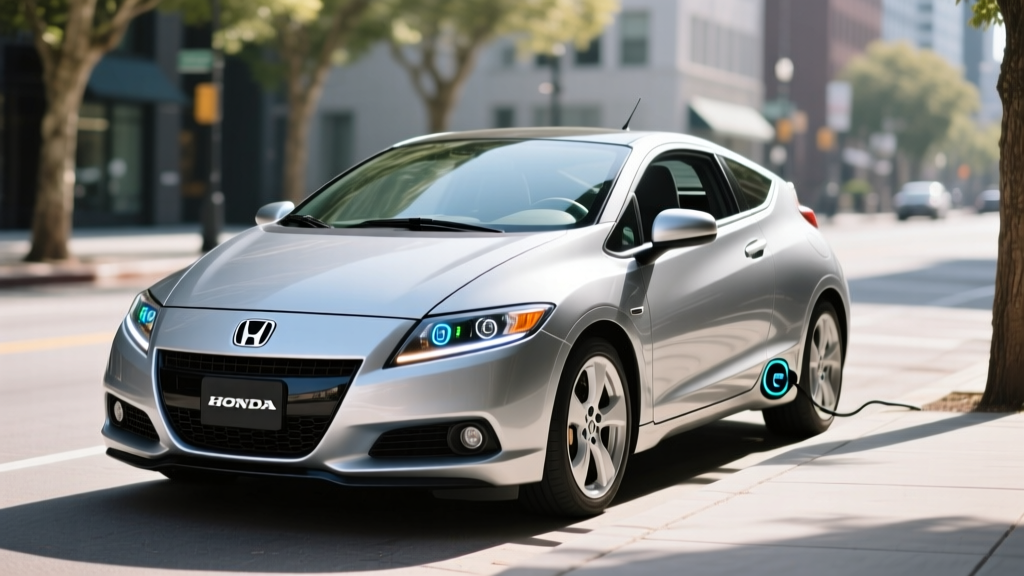
The 2011 Honda CR-Z hybrid occupies a unique space in the used-car market: it's a two-seat sport coupe that prioritized driving engagement over maximum efficiency. Honda's Integrated Motor Assist (IMA) system pairs a 1.5-liter four-cylinder engine with a small electric motor to deliver 122 combined horsepower — modest by today's standards, but enough to make the CR-Z genuinely fun on a back road while returning an EPA-estimated 36 MPG combined.
If you're shopping for a used hybrid in 2026 and want something with character rather than a Prius-shaped appliance, the CR-Z deserves a look. But its age means battery health, IMA system reliability, and the reality of owning a 15-year-old hybrid need careful evaluation. This guide covers every number that matters.
2011 Honda CR-Z Hybrid: EPA MPG and Real-World Fuel Economy
Fuel economy is the first question any hybrid buyer asks. The 2011 CR-Z was offered with two transmissions, and the EPA ratings differ between them.
| Transmission | City MPG | Highway MPG | Combined MPG |
|---|---|---|---|
| CVT (Continuously Variable) | 36 | 39 | 37 |
| 6-Speed Manual | 31 | 39 | 34 |
Source: fueleconomy.gov
Real-World MPG vs. EPA Sticker
The CR-Z's real-world fuel economy depends heavily on driving style — more so than most hybrids. The IMA system provides a modest electric assist, but this isn't a Toyota-style full hybrid capable of electric-only low-speed crawling. The electric motor adds only 14 hp and 58 lb-ft of torque, primarily filling in the torque gap at low RPMs.
Owner-reported data on Fuelly and similar platforms consistently shows CVT-equipped CR-Z drivers averaging 35–40 MPG combined in mixed driving, with some hypermilers pushing past 45 MPG on flat commuter routes. The manual transmission variant tends to return 32–36 MPG in real-world use, because enthusiastic driving — which is the whole point of choosing the stick — defeats the hybrid system's efficiency gains.
Cold-weather note: Expect a 5–10% MPG reduction in winter months (roughly 32–34 MPG combined for the CVT). The IMA battery is less efficient at low temperatures, and the engine runs richer during cold starts. This is typical for all hybrids and is not a CR-Z-specific issue.
Powertrain Specs: IMA Hybrid System Explained
The CR-Z uses Honda's Integrated Motor Assist (IMA), a parallel hybrid architecture where a thin electric motor is sandwiched between the gasoline engine and the transmission. Unlike Toyota's Hybrid Synergy Drive, which can propel the car on electric power alone at low speeds, IMA always requires the engine to be running when the car is moving (with brief idle-stop exceptions).
| Specification | Value |
|---|---|
| Gasoline Engine | 1.5L i-VTEC inline-4 |
| Engine HP (standalone) | 111 hp @ 6,000 rpm |
| Electric Motor Output | 14 hp (10 kW) / 58 lb-ft torque |
| Combined System HP | 122 hp @ 6,000 rpm |
| Combined Torque | 128 lb-ft (CVT) / 127 lb-ft (MT) @ 1,000–1,750 rpm |
| Hybrid Battery | Nickel-Metal Hydride (NiMH), ~0.5 kWh usable |
| 0–60 mph | ~9.7 seconds (CVT) / ~9.1 seconds (MT) |
| Curb Weight | 2,824–2,868 lbs |
| Drivetrain | Front-wheel drive |
How IMA Differs from Full Hybrids
The IMA system's ~0.5 kWh NiMH battery is tiny compared to the 1–2 kWh packs in modern conventional hybrids (like the current Toyota Prius) and the 13–18 kWh packs in PHEVs. This means:
- No electric-only driving: The CR-Z cannot move on electric power alone.
- Limited regenerative braking: The small battery fills up quickly on downhill grades, reducing regen effectiveness.
- Idle stop is the primary efficiency feature: The engine shuts off at red lights and restarts seamlessly, saving fuel in city traffic.
- Sport mode boost: Honda's 3-mode drive system (Sport, Normal, Econ) adjusts throttle response and IMA assist levels. Sport mode maximizes electric torque fill for punchier acceleration.
Hybrid Battery Health: Lifespan, Warranty & Replacement Cost
How Long Does the CR-Z IMA Battery Last?
NiMH batteries in Honda's IMA system have a mixed longevity record. Many CR-Z owners report the original IMA battery lasting 120,000–160,000 miles or 10–14 years before degradation triggers a check-engine light or IMA warning. However, some units have failed as early as 80,000 miles, particularly in hot climates where under-hood temperatures accelerate cell degradation.
Unlike the larger NiMH packs in Toyota Prius models — which often exceed 200,000 miles — the CR-Z's smaller battery works harder relative to its capacity, leading to more frequent cycling and potentially faster wear.
IMA Battery Replacement Cost in 2026
| Option | Parts Cost | Labor | Total Estimate |
|---|---|---|---|
| OEM Honda (dealer) | $2,000–$2,500 | $300–$500 | $2,300–$3,000 |
| Aftermarket / remanufactured | $1,000–$1,600 | $300–$500 | $1,300–$2,100 |
| Individual cell replacement (DIY/specialist) | $200–$500 | $200–$400 | $400–$900 |
The individual-cell repair route is viable because the IMA pack is composed of discrete NiMH sub-cells. A hybrid specialist can test and replace only the degraded cells rather than swapping the entire pack. This is a cost-effective option if you find a qualified shop.
Pre-purchase tip: Before buying any 2011 CR-Z, have a mechanic scan for IMA-related diagnostic trouble codes (DTCs) and check the battery's state of health through the OBD-II port. Apps like OBD Fusion or a Honda-specific scan tool can reveal cell voltage imbalance — a leading indicator of impending failure.
Reliability Record: What CR-Z Owners Report
The 2011 CR-Z benefits from Honda's generally strong reliability reputation, and the 1.5L i-VTEC engine (shared with the Fit/City platform) is known to exceed 200,000 miles with basic maintenance. The IMA system adds complexity but fewer failure points than a full hybrid like the Prius, which has a more powerful electric motor, a larger battery, and a planetary gearset.
Common issues reported on NHTSA and owner forums include:
- IMA battery degradation (most significant — see above)
- 12V battery drain: The CR-Z's conventional 12V accessory battery can drain if the car sits for extended periods, since the IMA system relies on the 12V battery to boot up the hybrid system. A dead 12V battery = a car that won't start, even if the IMA pack is fully charged.
- A/C compressor noise: Some units develop a whining A/C compressor around 80,000–100,000 miles.
- CVT judder: Early CVT models occasionally exhibit shudder during low-speed acceleration. A transmission fluid drain-and-fill (using Honda HMMF fluid) often resolves this.
Overall, the CR-Z is a moderately reliable used hybrid — not bulletproof like a Prius, but simpler and cheaper to maintain than many European alternatives. The key variable is IMA battery condition.
Hybrid vs PHEV vs Full EV: Does the CR-Z Still Make Sense?
Shopping for an electrified vehicle in 2026 means choosing among three fundamentally different architectures. Here's how the CR-Z stacks up against modern alternatives:
| Factor | HEV (CR-Z / Prius) | PHEV (RAV4 Prime, etc.) | BEV (Model Y, Ioniq 5) |
|---|---|---|---|
| Plug-in charging needed? | No | Recommended | Required |
| Electric-only range | 0 mi | 20–45 mi | 250–350+ mi |
| Home charger needed? | No | Yes (Level 2 ideal) | Yes (Level 2 essential) |
| Fuel cost per mile | ~$0.09–$0.11 | ~$0.04–$0.10 | ~$0.03–$0.06 |
| Used price range (2026) | $5,000–$10,000 | $25,000–$45,000 | $18,000–$50,000+ |
| Federal tax credit (new) | None | Up to $7,500 (§30D) | Up to $7,500 (§30D) |
Choose the CR-Z If:
- You want a fun, affordable used hybrid under $10,000.
- You lack access to home or workplace charging (apartment, street parking).
- Your commute is short-to-moderate and you don't need rear seats.
- You want hybrid fuel savings without plug-in complexity.
Choose a PHEV or Full EV If:
- You have Level 2 charging access at home and want lower per-mile fuel costs.
- You need four doors, more cargo space, or modern safety tech (the CR-Z lacks automatic emergency braking, lane-keeping, and adaptive cruise).
- You want to qualify for federal or state electrification incentives (the CR-Z, purchased used, does not qualify for the §30D federal tax credit — that credit applies only to new PHEVs and BEVs meeting current battery-sourcing and MSRP requirements per IRS guidelines).
2011 Honda CR-Z Hybrid: Pros and Cons
Pros
- Genuine sport-coupe styling and handling — rare in the hybrid segment
- 36–37 MPG combined (CVT) with no plug-in hassle
- Lightweight (2,824 lbs) makes it agile and fun on curvy roads
- 6-speed manual available — one of the last hybrid manual transmissions ever sold
- Low used-car pricing ($5,000–$10,000 depending on mileage and condition)
- Simple IMA system means fewer hybrid-specific failure points vs. full hybrids
Cons
- Only two seats — impractical as a primary family vehicle
- 122 hp combined feels sluggish by 2026 standards (0–60 in ~9.7 sec)
- IMA battery replacement ($1,300–$3,000) can total the car's value
- No modern ADAS features (no AEB, lane-keep, blind-spot monitoring)
- Tiny rear cargo area (25.1 cu ft behind seats with rear shelf removed)
- Hybrid efficiency gains are modest vs. a modern non-hybrid Honda Fit
- No federal tax credit eligibility on used purchase
Pricing in 2026: What You'll Pay for a Used CR-Z
The 2011 Honda CR-Z hybrid has depreciated significantly from its original MSRP of $19,950–$23,310 (depending on trim and transmission). In the 2026 used market:
- Fair condition (120,000+ miles, IMA issues): $4,000–$6,000
- Good condition (80,000–120,000 miles, IMA healthy): $6,500–$9,000
- Excellent condition (under 80,000 miles, documented maintenance): $9,000–$12,000
At these prices, the CR-Z competes with used Honda Fits, Toyota Yaris models, and older Scion tCs. The hybrid fuel savings over a gas-only Fit (which gets about 30–33 MPG combined) amount to roughly $150–$250 per year at 12,000 miles driven and $3.50/gallon fuel. That savings is real but modest — it won't offset an IMA battery replacement.
Tax credit note: The used EV credit (§25E) provides up to $4,000 for qualifying pre-owned electric vehicles and PHEVs, but conventional hybrids like the CR-Z do not qualify. Only BEVs and PHEVs with sufficient battery capacity are eligible. See IRS §25E guidelines for details.
Frequently Asked Questions
How many MPG does the 2011 Honda CR-Z hybrid get?
The EPA rates the CVT-equipped 2011 CR-Z at 36 city / 39 highway / 37 combined MPG. The 6-speed manual version rates 31 city / 39 highway / 34 combined. Real-world averages from owners typically fall between 35–40 MPG for the CVT and 32–36 MPG for the manual, depending on driving style and conditions.
Can the 2011 CR-Z drive on electric power only?
No. The CR-Z is a conventional hybrid (HEV), not a plug-in hybrid. Its IMA system cannot propel the car without the gasoline engine running. The electric motor provides supplemental torque only — there is zero electric-only range.
Is the 2011 Honda CR-Z hybrid reliable?
Moderately reliable. The 1.5L engine and Honda build quality are solid, but the IMA battery is the weak link. Expect potential battery replacement between 120,000–160,000 miles at a cost of $1,300–$3,000. The 12V battery, CVT fluid, and A/C compressor also require attention at higher mileage.
Does the 2011 Honda CR-Z qualify for any tax credit?
No. The CR-Z is a conventional hybrid and has never qualified for the federal §30D new clean vehicle credit or the §25E used clean vehicle credit. These credits are reserved for plug-in vehicles (BEVs and PHEVs) with qualifying battery capacity. Some states historically offered small rebates for hybrids, but most of those programs have ended or shifted to plug-in vehicles exclusively.
What is the IMA battery replacement cost?
An OEM replacement through a Honda dealer runs $2,300–$3,000 including labor. Aftermarket or remanufactured packs cost $1,300–$2,100 installed. Individual cell repair by a hybrid specialist can be as low as $400–$900. Given the car's used value, the aftermarket or cell-repair route is usually the most economically sensible.
Is the CR-Z a good first hybrid to buy used?
It can be — if you go in with eyes open about the IMA battery risk and get a pre-purchase inspection. The CR-Z is cheap to buy, fun to drive, and returns solid MPG without any charging infrastructure. But if you need four seats, modern safety tech, or the lowest possible running costs, a used Toyota Prius or a newer PHEV may serve you better.