Quick Verdict: The Sport-Hybrid That Chose Style Over Substance
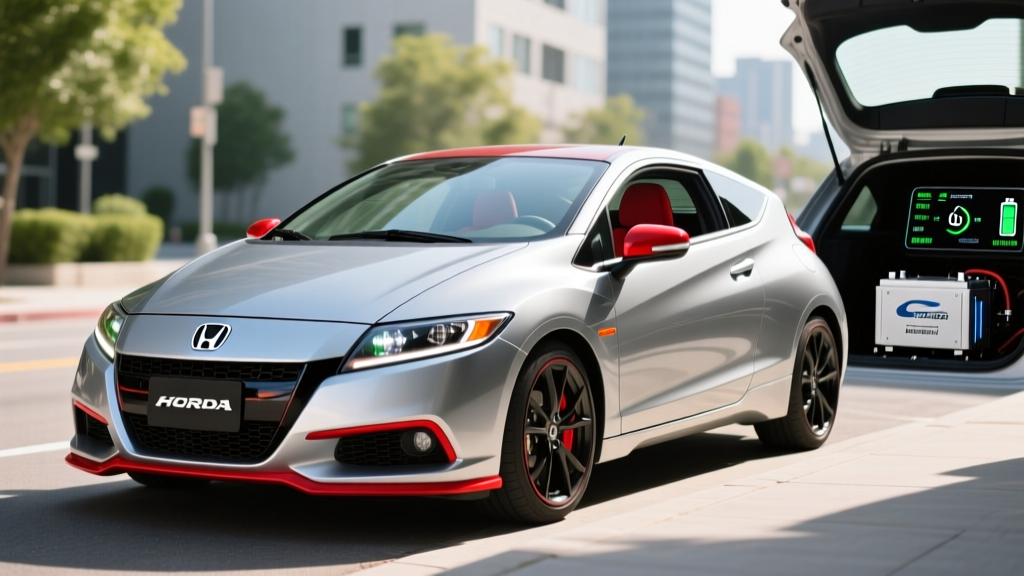
The 2011 Honda CR-Z hybrid occupies a strange corner of the used-car market. It's a two-seat, manual-transmission-available coupe that Honda marketed as a "sport hybrid" — a spiritual successor to the CRX. The reality is more nuanced. With an EPA-rated 36 MPG city / 39 MPG highway (37 combined) on the CVT model, it delivers respectable but not exceptional fuel economy by modern hybrid standards. The 1.5-liter i-VTEC engine paired with Honda's Integrated Motor Assist (IMA) system produces just 122 combined horsepower, making it adequate rather than quick.
For 2026 buyers shopping the used market, the CR-Z is less about saving money at the pump and more about owning a distinctive, lightweight, affordable hybrid coupe. This guide covers everything you need to know about real-world fuel economy, the aging IMA battery, replacement costs, and whether a 15-year-old hybrid still makes financial sense compared to newer PHEVs or full EVs.
Powertrain and Performance Specifications
The CR-Z uses Honda's Integrated Motor Assist (IMA) system — a parallel hybrid architecture where a thin electric motor sits between the engine and transmission, providing supplemental torque rather than standalone electric propulsion. Unlike Toyota's Hybrid Synergy Drive (which can move the car on electric power alone at low speeds), the IMA motor always works in tandem with the gasoline engine.
| Specification | Value |
|---|---|
| Engine | 1.5L i-VTEC inline-4 |
| Gas Engine Output | 111 hp @ 6,000 rpm / 106 lb-ft torque |
| Electric Motor Output | 13 hp / 58 lb-ft torque |
| Combined System Power | 122 hp @ 6,000 rpm |
| Hybrid Battery | Nickel-Metal Hydride (NiMH), ~0.67 kWh (usable ~0.2 kWh) |
| Transmission | 6-speed manual or CVT |
| 0–60 mph | ~9.7 seconds (CVT) / ~9.1 seconds (6MT) |
| Curb Weight | ~2,765 lbs (CVT) |
| Drivetrain | Front-wheel drive |
The IMA system's electric motor fills in the low-RPM torque gap that small displacement engines typically suffer from. The result is a car that feels peppier off the line than its 122 hp figure suggests, but runs out of breath on highway on-ramps. The 6-speed manual — a rarity in any hybrid — lets drivers keep the engine in its powerband, which helps both engagement and, in some conditions, efficiency.
Fuel Economy: EPA Ratings vs. Real-World MPG
The 2011 CR-Z's fuel economy depends heavily on transmission choice and driving style. Here's what the EPA rated at launch:
| Configuration | City MPG | Highway MPG | Combined MPG |
|---|---|---|---|
| CVT Automatic | 35 | 39 | 37 |
| 6-Speed Manual | 31 | 37 | 33 |
The CVT-equipped CR-Z delivers the better efficiency numbers, while the manual trades roughly 4 MPG combined for a more engaging driving experience. That trade-off matters if you're buying this car for fun rather than maximum efficiency — a 2026 Toyota Prius LE returns 57 MPG combined, for context.
Hybrid Battery: Lifespan, Degradation, and Replacement Cost
This is the single biggest concern for anyone buying a 2011 CR-Z in 2026. The nickel-metal hydride (NiMH) battery pack was never designed with the longevity of modern lithium-ion packs. After 14–15 years, most original IMA batteries will have degraded significantly or failed entirely.
Signs of IMA Battery Degradation
- IMA warning light on dash — the most common failure indicator
- Reduced assist — the electric motor contributes less torque during acceleration
- More frequent engine starts — the auto-stop (idle-stop) system may deactivate
- Lower observed MPG — a degraded battery forces the engine to work harder
- Rapid state-of-charge swings — the battery gauge moves erratically between charge and assist
Replacement Cost Breakdown
If the IMA battery has failed or is near end-of-life, here's what replacement looks like:
| Option | Estimated Cost | Notes |
|---|---|---|
| OEM Honda IMA Battery (dealer) | $2,000–$2,800 (parts + labor) | Original NiMH pack; may be discontinued or backordered |
| Refurbished/Reconditioned Pack | $1,000–$1,800 | Individual cells replaced; quality varies by vendor |
| Aftermarket NiMH Replacement | $1,200–$2,000 | Third-party packs from hybrid specialists |
| DIY Cell Replacement | $300–$600 (parts only) | Requires electrical knowledge; risk of improper balancing |
Given that a well-maintained 2011 CR-Z trades for $5,000–$9,000 on the used market in 2026, a $2,000+ battery replacement represents a significant percentage of the car's value. Factor this cost into any purchase negotiation — if the IMA light is on or the seller can't confirm a recent replacement, assume you'll need to budget for one.
Reliability and Long-Term Ownership
The CR-Z benefits from Honda's generally strong reliability reputation, and the 1.5L i-VTEC engine (shared with the Fit) is a proven, low-stress powerplant. However, several age-related issues are common on 2011 examples:
- IMA battery failure — the most costly and most common hybrid-specific issue (covered above)
- 12V auxiliary battery drain — the CR-Z's small 12V battery can die if the car sits for extended periods; a dead 12V battery can prevent the IMA system from starting
- A/C compressor issues — some owners report premature A/C compressor failure, which is expensive (~$800–$1,200) to replace
- CVT shudder — high-mileage CVT examples may exhibit shuddering during low-speed acceleration; a CVT fluid drain-and-fill (Honda HCF-2 fluid) can sometimes resolve this
- Rust — rear wheel arches and undercarriage in salt-belt states; inspect carefully
The 6-speed manual transmission is generally bulletproof and avoids the CVT-related concerns entirely. If you can drive a stick, the manual is the more robust long-term ownership choice.
For safety context, the 2011 CR-Z received a "Good" rating in frontal offset and side crash tests from the IIHS, though it was not tested in the more modern small-overlap protocol introduced later. It includes standard front, side, and curtain airbags, along with stability control.
Pricing, Tax Credits, and the Used Hybrid Equation
When new, the 2011 CR-Z started at approximately $19,800 (base manual) to $23,010 (EX with navigation and CVT). In 2026, used-market pricing has settled well below those figures:
| Condition / Mileage | Approximate 2026 Price |
|---|---|
| Clean, under 80k miles, new IMA battery | $7,500–$9,500 |
| Average, 80k–120k miles | $5,500–$7,500 |
| High mileage or IMA battery needs replacement | $3,500–$5,500 |
Tax Credit Eligibility
The 2011 Honda CR-Z does not qualify for the federal §30D clean vehicle tax credit. That credit applies exclusively to new qualifying EVs and PHEVs with battery capacities of at least 7 kWh, and the CR-Z is a conventional HEV with a sub-1 kWh NiMH pack — never eligible even when new.
The federal used clean vehicle credit (up to $4,000 or 30% of sale price, whichever is less) requires the vehicle to be a qualified plug-in electric vehicle or fuel cell vehicle. Since the CR-Z has no plug and no qualifying battery capacity, it is ineligible for this credit as well.
Some states offer modest rebates for used hybrid purchases, but these vary widely and change frequently. Check your state's energy or environmental agency website for current programs.
CR-Z vs. Modern Alternatives: Which Should You Buy?
The CR-Z's value proposition in 2026 comes down to what you're optimizing for. Here's how it stacks up against realistic alternatives at similar and higher price points:
Choose the CR-Z If:
- You want an affordable, distinctive hybrid coupe under $8,000
- You prefer a manual transmission (rare in any hybrid)
- You drive mostly short-to-medium commutes and want 35+ MPG
- You value lightweight handling over straight-line speed
- You have access to a trusted mechanic for IMA battery service
Look Elsewhere If:
- You need more than two seats
- You want modern safety tech (AEB, lane-keeping, BSM)
- You want 50+ MPG (get a 2023+ Prius)
- You want electric-only driving (get a PHEV like the Prius Prime)
- You want to avoid potential $2,000 battery replacement costs
HEV vs. PHEV vs. Full EV — What Fits Your Situation?
| Factor | Conventional Hybrid (HEV) | Plug-In Hybrid (PHEV) | Battery Electric (BEV) |
|---|---|---|---|
| Plug-in charging needed? | No | Optional but recommended | Yes — required |
| Electric-only range | None (motor assist only) | 20–45 miles typical | 200–400+ miles |
| Fuel cost per mile | ~$0.09–$0.12 | ~$0.03–$0.05 (electric) / $0.09 (gas) | ~$0.03–$0.05 |
| Federal tax credit | None | Up to $7,500 (new, if eligible) | Up to $7,500 (new, if eligible) |
| Best for | No home charging, budget buyers | Home charging + road trips | Home charging, daily commuting |
The CR-Z makes sense as a low-cost entry into hybrid ownership for someone who can't install a home charger, doesn't need back seats, and values driving feel over maximum efficiency. If you can charge at home, a used Chevrolet Bolt EV ($12,000–$16,000) or a new base Prius ($29,000+) will deliver dramatically lower running costs and modern safety equipment.
Frequently Asked Questions
How many MPG does the 2011 Honda CR-Z hybrid get?
The CVT-equipped 2011 CR-Z is EPA-rated at 35 city / 39 highway / 37 combined MPG. The 6-speed manual drops to 31 city / 37 highway / 33 combined. Real-world owner reports cluster around 34–38 MPG combined for the CVT and 30–34 MPG for the manual, with cold weather reducing those figures by 5–8%.
Can the 2011 Honda CR-Z drive on electric power only?
No. The CR-Z is a conventional hybrid (HEV) with Honda's IMA system. The electric motor assists the gasoline engine but cannot propel the car on its own. There is no EV mode, no plug, and no electric-only range. If you want electric-only driving, you need a PHEV (like the Prius Prime, ~44 miles electric-only) or a full BEV.
Is the 2011 CR-Z hybrid reliable?
The mechanical components (engine, manual transmission, suspension) are Honda-reliable. The main risk is the aging NiMH IMA battery, which is now 14–15 years old and likely at or past end-of-life if it hasn't been replaced. Budget $1,200–$2,800 for battery replacement if it hasn't been done. Other known issues include A/C compressor failures and CVT shudder at high mileage.
How much does it cost to replace the 2011 CR-Z hybrid battery?
An OEM dealer replacement runs $2,000–$2,800 including labor. Refurbished or aftermarket NiMH packs cost $1,000–$2,000 installed. DIY cell replacement is possible for $300–$600 in parts but requires hybrid electrical knowledge. Given the car's $5,000–$9,000 used-market value, the battery replacement is a significant percentage of the vehicle's worth — negotiate accordingly.
Does the 2011 Honda CR-Z qualify for any tax credits?
No. The CR-Z is a conventional hybrid (HEV), not a plug-in vehicle. It does not qualify for the federal §30D new clean vehicle credit or the used clean vehicle credit (up to $4,000), both of which require plug-in electric or fuel cell vehicles. When new, it was also ineligible because its battery capacity (~0.67 kWh) fell far below the 4 kWh minimum that existed at the time. Check your state's energy office for any local hybrid incentives.
Is the 2011 CR-Z worth buying in 2026?
It depends on your priorities. As a budget-friendly, fun-to-drive, two-seat hybrid coupe, the CR-Z is genuinely unique — nothing else in the used market offers a manual transmission hybrid with this personality at this price. But if your goal is maximum fuel savings, a used Prius or a new Prius LE (57 MPG combined) will save more at the pump. If you want plug-in electric miles, look at used PHEVs or BEVs instead. The CR-Z is a buy for enthusiasts who want an affordable hybrid with character, not for pure efficiency shoppers.