Quick Verdict: A Proven Efficiency Bargain on the Used Market
The 2011 Honda Civic Hybrid sedan occupies a specific niche in 2026: it's one of the most affordable ways to access 40+ MPG combined fuel economy on the used market, typically selling for $4,500–$7,500 depending on mileage and battery condition. Honda's Integrated Motor Assist (IMA) system pairs a 1.3-liter four-cylinder engine with a small electric motor to deliver real-world efficiency that often exceeds its EPA sticker in city driving. But as a 15-year-old hybrid, the battery is the single biggest variable in ownership cost — and understanding that cost is essential before you buy.
This guide breaks down every spec that matters: EPA and real-world MPG, the IMA powertrain, battery health and replacement economics, and how this conventional hybrid (HEV) compares to modern PHEVs and full EVs for today's buyers.
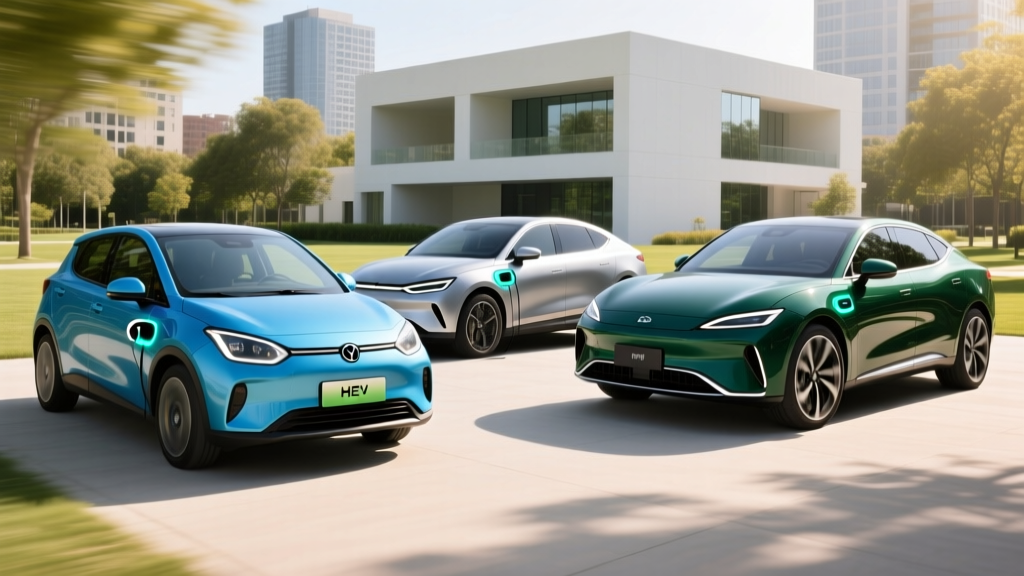
HEV vs PHEV vs EV: Where the 2011 Civic Hybrid Fits
The 2011 Civic Hybrid is a conventional hybrid (HEV) — it cannot be plugged in. It recovers energy through regenerative braking and uses its gasoline engine to charge the battery. This is fundamentally different from a plug-in hybrid (PHEV) or a battery electric vehicle (BEV).
| Feature | 2011 Civic Hybrid (HEV) | Modern PHEV (e.g., 2026 Prius Prime) | Modern BEV (e.g., 2026 Bolt EV) |
|---|---|---|---|
| Plug-in charging | No — gas only | Yes — Level 1/2 AC | Yes — AC + DC fast charge |
| Electric-only range | None (motor assists engine) | ~35–44 miles | 250–300+ miles |
| Battery size | 0.35 kWh (NiMH) | ~13.6 kWh (Li-ion) | ~65 kWh (Li-ion/NMC or LFP) |
| Fuel/energy source | Gasoline | Gasoline + electricity | Electricity only |
| Tailpipe emissions | Low (not zero) | Low (zero in EV mode) | Zero at tailpipe |
| Federal tax credit (new) | None (expired long ago) | Up to $7,500 (§30D) | Up to $7,500 (§30D) |
| Used market price (2026) | $4,500–$7,500 | $28,000–$38,000 | $14,000–$28,000 |
Key distinction: The Civic Hybrid's electric motor assists the gasoline engine — it never drives the car on electric power alone at meaningful speeds. You will never plug this car in. If you want electric-only commuting, you need a PHEV or BEV. If you want simple, plug-free efficiency with no charging infrastructure requirement, this HEV delivers.
Fuel Economy: EPA Ratings and Real-World MPG
The 2011 Honda Civic Hybrid carries the following EPA-estimated fuel economy:
| Driving Cycle | EPA Estimate | Real-World Expectation |
|---|---|---|
| City | 40 MPG | 38–44 MPG (hybrids often beat EPA in stop-and-go) |
| Highway | 43 MPG | 36–42 MPG (sustained high speed reduces regen benefit) |
| Combined | 42 MPG | 37–43 MPG |
Why city MPG often exceeds the sticker: Conventional hybrids like the Civic Hybrid rely heavily on regenerative braking and engine shut-off at stops to save fuel. City driving with frequent stops maximizes these benefits. Highway driving at 70–80 MPH is dominated by aerodynamic drag, where the hybrid system offers less advantage.
Real-world factors that reduce MPG:
- Cold weather (below 40°F): Expect a 5–10% drop as the engine runs more to heat the cabin and the NiMH battery is less efficient when cold.
- Aggressive acceleration: The IMA system prioritizes efficiency; flooring it bypasses the electric assist and runs the engine hard.
- Aging battery: A degraded IMA battery reduces regen capture and electric assist, potentially dropping real-world MPG by 2–5 MPG.
- Tire pressure and alignment: Low-pressure or worn tires add rolling resistance. Keep tires at the door-jamb sticker spec (typically 33 PSI front/rear).
Powertrain: Honda's Integrated Motor Assist (IMA) System
| Specification | 2011 Honda Civic Hybrid |
|---|---|
| Engine | 1.3L i-VTEC inline-4 |
| Engine power | 95 HP @ 6,000 RPM |
| Electric motor power | 20 HP (15 kW) |
| Combined system output | 110 HP @ 6,000 RPM |
| Combined torque | 123 lb-ft @ 1,000–2,500 RPM |
| Transmission | CVT (continuously variable) |
| Drivetrain | Front-wheel drive |
| 0–60 MPH | ~10.5 seconds |
| Battery type | Nickel-Metal Hydride (NiMH) |
| Battery capacity | 0.35 kWh (nominal) |
| Curb weight | ~2,868 lbs |
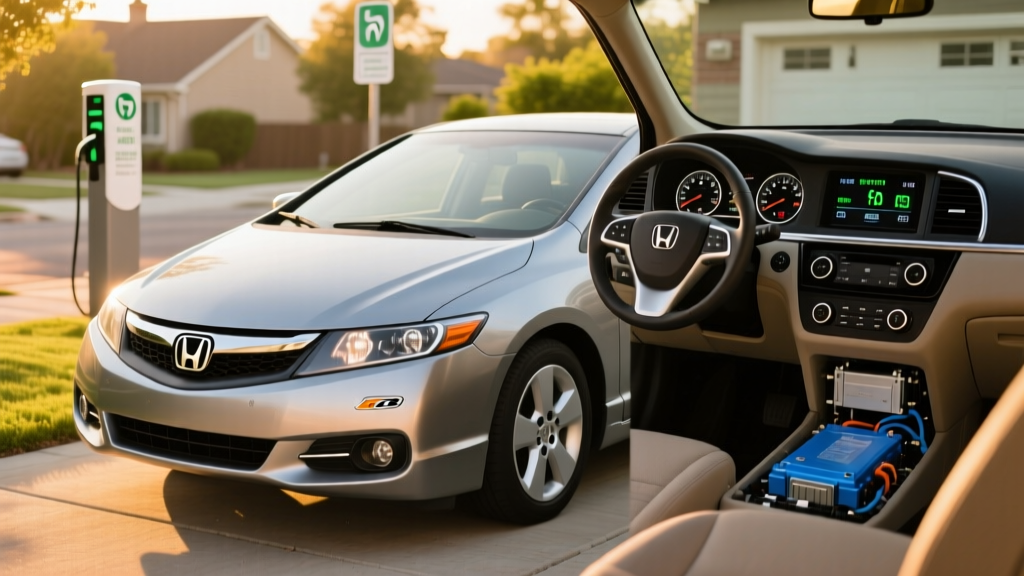
The IMA system is elegantly simple by modern standards. A thin electric motor sits between the engine and transmission, providing torque fill at low RPMs (where the 1.3L engine is weakest) and capturing energy during braking. The motor can shut off the engine at stops and during light-load cruising (cylinder deactivation also shuts down all four cylinders under certain conditions). The result is a powertrain that feels like a normal compact sedan most of the time, just one that sips fuel.
Performance reality: With 110 combined HP and a CVT, the 2011 Civic Hybrid is not quick. The 10.5-second 0–60 time means highway merging requires planning. This car rewards calm, efficient driving — and punishes lead-footed habits with both sluggishness and reduced MPG.
Battery Health, Warranty, and Replacement Cost
This is the critical ownership question for any 15-year-old hybrid: what is the battery's state of health, and what does replacement cost?
Battery Degradation and Lifespan
The NiMH battery in the 2011 Civic Hybrid is small (0.35 kWh) and operates in a narrow state-of-charge window — Honda's battery management system never fully charges or fully depletes it, which extends cycle life. Many IMA batteries have lasted 150,000–200,000+ miles before needing replacement. However, age is also a factor: NiMH chemistry degrades with time even without heavy use, and a 2011 battery is now 15 years old.
Signs of IMA battery degradation:
- IMA warning light on the dashboard
- Reduced fuel economy (3–5+ MPG drop from baseline)
- Less regenerative braking feel (the car coasts more when you lift off the accelerator)
- The battery-charge gauge on the dash rarely reaches full or drops quickly
- Diagnostic trouble codes P0A7F or similar (battery deterioration)
Replacement Cost Breakdown
| Option | Cost (parts + labor) | Warranty | Notes |
|---|---|---|---|
| New OEM Honda IMA battery | $2,500–$3,500 | 3 years / 36,000 miles | Dealership installation; availability may be limited for 2011 models |
| Refurbished/remanufactured IMA battery | $1,000–$1,800 | 1–3 years (varies by supplier) | Common choice for used hybrids; quality varies by vendor |
| Used/salvage IMA battery | $400–$800 | 30–90 days typical | Highest risk — battery age and health are unknown |
| Aftermarket NiMH pack (e.g., BumbleBee, Green Tech) | $1,200–$2,200 | 2–3 years | Third-party specialists; often good value |
Cost-benefit analysis: A new OEM battery at $3,000+ may exceed the car's value. Most used buyers opt for a refurbished pack ($1,000–$1,800 installed), which restores full hybrid function and MPG for a fraction of OEM cost. Before purchasing any 2011 Civic Hybrid, have a mechanic pull the IMA battery health data via OBD-II — this reveals remaining capacity percentage and any stored fault codes.
Pricing and Tax Credit Eligibility in 2026
The 2011 Honda Civic Hybrid originally carried an MSRP of approximately $24,200 (single trim level, well-equipped). In the 2026 used market, expect the following:
- 80,000–120,000 miles, good condition, healthy battery: $6,000–$7,500
- 120,000–160,000 miles, good condition: $5,000–$6,500
- 160,000+ miles or known battery issues: $3,500–$5,000
- Below 80,000 miles, excellent condition: $7,500–$9,000 (rare)
Tax Credits: What Applies to Used Hybrids?
The federal §30D clean vehicle credit (up to $7,500) applies only to new qualifying plug-in vehicles (BEVs and PHEVs). The 2011 Civic Hybrid is neither new nor a plug-in — it does not qualify for §30D.
The §25E used clean vehicle credit (up to $4,000 or 30% of sale price, whichever is less) applies to used BEVs and PHEVs purchased from a dealer for $25,000 or less. Because the Civic Hybrid is a conventional HEV (not a plug-in), it does not qualify for §25E either.
Bottom line: No federal tax credits apply to the 2011 Honda Civic Hybrid. Check your state's DMV or energy office for any local incentives for used fuel-efficient vehicles, but most state programs also target plug-in vehicles. The value proposition here is purely the low purchase price and low fuel cost.
Reliability, Safety, and Long-Term Ownership
Honda's eighth-generation Civic platform (2006–2011) is well-established in reliability databases. The 1.3L i-VTEC engine is under-stressed and simple — timing chain (no belt replacement), conventional fuel injection, and minimal turbo or complexity. The CVT in the hybrid is Honda's own design and is generally reliable with regular fluid changes (every 30,000–60,000 miles with Honda HMMF fluid).
Common issues beyond the IMA battery:
- CVT judder or shudder: Often resolved with a CVT fluid drain-and-fill using genuine Honda HMMF. If neglected, CVT replacement costs $2,500–$4,000.
- Engine mount wear: The hybrid-specific engine mounts absorb more vibration from the auto-stop system. Worn mounts cause vibration at idle. Replacement: $200–$400 per mount.
- 12V battery drain: Like any older car, the 12V accessory battery (separate from the IMA pack) will need replacement every 4–6 years. A dead 12V battery prevents the car from starting, even if the hybrid battery is fine.
- A/C compressor: The electric A/C compressor is hybrid-specific and more expensive to replace than a conventional belt-driven unit ($800–$1,200).
Safety: The 2011 Civic sedan earned a Good rating in the IIHS moderate overlap front test and Good for side impact (with side airbags, which are standard on the Hybrid). It received 4 stars overall in NHTSA testing. Note that this generation predates modern ADAS — there is no automatic emergency braking, lane-keeping assist, or blind-spot monitoring. You are driving a 2011 vehicle with 2011 safety technology.
Who Should Buy the 2011 Civic Hybrid — and Who Shouldn't
Choose the 2011 Civic Hybrid if:
- You need maximum MPG on a tight budget ($5,000–$7,000)
- You don't have access to home or workplace charging (no plug needed)
- You drive mostly city miles where hybrid efficiency shines
- You want simple, proven Honda reliability with cheap parts
- You want a low-cost commuter while saving for a future EV
Look elsewhere if:
- You want electric-only driving or plug-in capability
- You need modern safety features (AEB, lane-keep, blind-spot)
- You want brisk acceleration (10.5s 0–60 is leisurely)
- You drive mostly highway miles (a modern turbo-diesel or efficient gas car may match its highway MPG)
- You can't budget $1,000–$2,000 for a potential battery replacement
Decision Framework: Hybrid vs PHEV vs EV
Choose this HEV if: Your budget is under $8,000, you lack charging access, and your commute is city-heavy. Total fuel cost at 42 MPG and $3.50/gal gas is ~$0.08/mile — competitive with many EVs on public charging.
Choose a used PHEV (e.g., 2017–2020 Prius Prime) if: You have home Level 1/2 charging, your commute is under 25 miles (electric-only covers it), and your budget is $15,000–$22,000.
Choose a used BEV (e.g., 2020–2023 Chevy Bolt) if: You have reliable home charging, want zero tailpipe emissions, and your budget is $14,000–$20,000. The Bolt offers 259 miles of EPA range and qualifies for the §25E used-EV credit (up to $4,000).
Frequently Asked Questions
How many MPG does the 2011 Honda Civic Hybrid actually get?
The EPA rates it at 40 city / 43 highway / 42 combined MPG. In real-world driving, owners frequently report 38–44 MPG combined, with city driving sometimes exceeding the EPA estimate thanks to regenerative braking. Highway-only driving at 75+ MPH may drop to 36–40 MPG. A degraded IMA battery can reduce these figures by 2–5 MPG.
Does the 2011 Civic Hybrid need to be plugged in?
No. This is a conventional hybrid (HEV). The battery charges through regenerative braking and the gasoline engine. There is no plug, no charging cable, and no electric-only driving range. You fuel it exclusively with gasoline.
How much does it cost to replace the hybrid battery?
A refurbished IMA battery costs $1,000–$1,800 installed, which is the most common choice for a car at this age and value. A new OEM Honda battery runs $2,500–$3,500 but may be difficult to source for a 2011 model. A used/salvage battery costs $400–$800 but carries significant risk. Most owners report IMA batteries lasting 150,000–200,000+ miles before replacement is needed.
Is the 2011 Civic Hybrid reliable?
Yes, with one major caveat: the IMA battery. The 1.3L engine and Honda's CVT are generally reliable with proper maintenance (regular oil changes, CVT fluid service every 30,000–60,000 miles). The biggest reliability risk is the aging NiMH battery, which is now 15 years old. Budget for a potential battery replacement and have the battery health checked via OBD-II before purchase.
Does the 2011 Honda Civic Hybrid qualify for any tax credit?
No. The federal §30D new-vehicle credit and §25E used-vehicle credit both require plug-in vehicles (BEVs or PHEVs). The Civic Hybrid is a conventional HEV and does not qualify for either credit. Some states may offer minor incentives for fuel-efficient used vehicles, but most state programs also target plug-in vehicles. Check your state's energy office for current programs.
How does the Civic Hybrid compare to a modern hybrid like the Toyota Prius?
A 2026 Toyota Prius delivers 57 MPG combined (vs. 42 for the 2011 Civic Hybrid), has modern safety tech (AEB, lane-keep, adaptive cruise), and a more refined powertrain. However, a used 2026 Prius costs $25,000+, while the 2011 Civic Hybrid is $5,000–$7,500. The Civic Hybrid makes financial sense as a budget commuter where the MPG difference (~15 MPG) translates to roughly $300–$400 per year in extra fuel at 12,000 miles/year and $3.50/gallon — a gap that takes years to offset against the Prius's higher purchase price.
What should I check before buying a used 2011 Civic Hybrid?
Before purchase, verify: (1) IMA battery health via OBD-II scan — look for remaining capacity and stored fault codes; (2) CVT fluid condition and service history — dark or burnt-smelling fluid suggests neglect; (3) engine mount condition — excessive vibration at idle signals worn mounts; (4) 12V battery age — replace proactively if over 4 years old; (5) maintenance records — regular oil changes and CVT fluid service are essential for longevity.