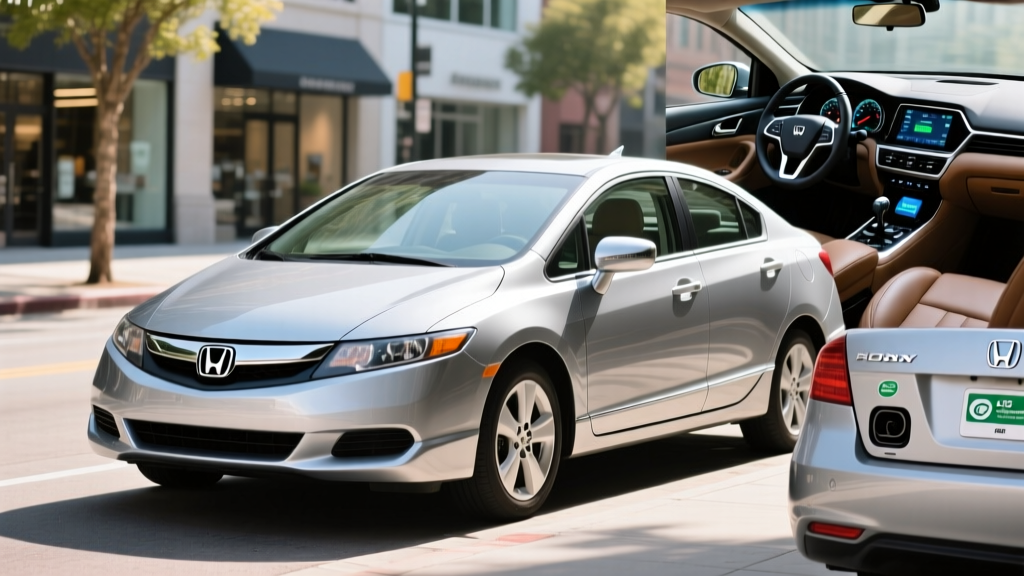
The 2011 Honda Civic Hybrid was one of the most fuel-efficient compact sedans of its era, leveraging Honda's Integrated Motor Assist (IMA) system to deliver impressive city mileage without ever needing a plug. More than a decade later, it remains a popular choice on the used market for budget-conscious commuters seeking hybrid efficiency at a fraction of a new vehicle's price. But with aging nickel-metal hydride (NiMH) batteries and evolving hybrid technology, prospective buyers need clear data before signing the title.
This guide covers the 2011 Civic Hybrid's real-world fuel economy, battery longevity and replacement costs, powertrain specs, and how it stacks up against modern hybrids, plug-in hybrids (PHEVs), and full battery-electric vehicles (BEVs) in 2026.
HEV vs PHEV: Where the 2011 Civic Hybrid Fits
The 2011 Honda Civic Hybrid is a conventional hybrid electric vehicle (HEV). It cannot be plugged in. Its small battery recharges exclusively through regenerative braking and the gasoline engine. This is fundamentally different from a plug-in hybrid (PHEV), which offers a meaningful electric-only driving range and charges from a wall outlet or public station.
| Feature | 2011 Civic Hybrid (HEV) | Typical 2026 PHEV (e.g., Toyota Prius Prime) | Full BEV (e.g., Tesla Model 3) |
|---|---|---|---|
| Plugs in? | No | Yes (Level 1/2) | Yes (Level 1/2/DC) |
| Electric-only range | 0 miles (motor assists only) | ~40 miles | 250–360 miles |
| Battery size | 0.35 kWh (NiMH) | ~13.6 kWh (Li-ion) | 50–82 kWh (Li-ion) |
| Fuel required | Yes (regular unleaded) | Yes (regular unleaded) | No |
| Federal tax credit (new) | None (expired) | Up to $7,500 (§30D) | Up to $7,500 (§30D) |
| Used EV/PHEV credit | Not eligible | Up to $4,000 (§25E) | Up to $4,000 (§25E) |
The Civic Hybrid's 0.35 kWh NiMH battery pack is roughly 1/40th the size of a modern PHEV's lithium-ion pack. It exists solely to assist the gasoline engine during acceleration and to enable brief engine-off coasting — not to propel the car on electricity alone for any meaningful distance.
Fuel Economy: EPA Ratings and Real-World MPG
The EPA rated the 2011 Honda Civic Hybrid at 40 MPG city / 43 MPG highway / 41 MPG combined when equipped with the 5-speed automatic transmission. These were among the best figures in the compact segment for the 2011 model year.
| Driving Cycle | EPA Rating | Real-World Expectation |
|---|---|---|
| City | 40 MPG | 38–45 MPG (hybrids often exceed EPA in stop-and-go) |
| Highway | 43 MPG | 36–41 MPG (sustained 70+ mph reduces regen benefit) |
| Combined | 41 MPG | 37–43 MPG (varies with driving mix and battery health) |
Real-world context: The IMA system's regenerative braking shines in city driving, where frequent stops recharge the battery and allow the engine to shut off at lights. On the highway, the electric motor provides minimal benefit at steady cruise speeds, and fuel economy drops accordingly. According to fueleconomy.gov, owner-reported averages cluster around 39–42 MPG combined, consistent with the EPA estimate.
Drivers with a degraded IMA battery may see fuel economy drop to 33–36 MPG combined, as the system relies more heavily on the gasoline engine when the battery cannot accept or deliver charge effectively.
Powertrain Specs: Honda's IMA System Explained
The 2011 Civic Hybrid pairs a 1.3-liter inline-4 i-VTEC gasoline engine with a thin electric motor sandwiched between the engine and transmission. Here's the full breakdown:
| Specification | 2011 Honda Civic Hybrid |
|---|---|
| Engine | 1.3L i-VTEC inline-4 |
| Engine horsepower | 95 hp @ 6,000 rpm |
| Electric motor output | 20 hp (15 kW) |
| Combined system output | 110 hp @ 6,000 rpm |
| Combined torque | 123 lb-ft @ 1,000–2,500 rpm |
| Transmission | CVT (continuously variable) or 5-speed manual |
| Battery type | Nickel-metal hydride (NiMH) |
| Battery capacity | 0.35 kWh (nominal) |
| Drivetrain | Front-wheel drive |
| 0–60 mph | ~10.5 seconds |
| Curb weight | ~2,868 lbs |
| Fuel tank | 13.2 gallons |
| Total range (est.) | ~540 miles |
The IMA system is classified as a mild hybrid architecture. The electric motor cannot drive the wheels independently at meaningful speeds (unlike Toyota's full hybrid system). Instead, it provides torque fill during acceleration, enables engine auto-stop at idle, and recaptures energy during braking. The result is a smoother, more efficient driving experience than a conventional gas Civic, but without the electric-only creep capability of a Toyota Prius or modern Hyundai Ioniq.
IMA Battery Life, Degradation, and Replacement Cost
Original Warranty: Honda covered the IMA battery for 10 years / 150,000 miles in CARB states (California, New York, Massachusetts, and others adopting CARB emissions standards) and 8 years / 80,000 miles in non-CARB states. For a 2011 model, both warranty periods have now expired for virtually all vehicles as of 2026.
The NiMH battery pack in the 2011 Civic Hybrid is the single most critical — and most expensive — component to evaluate on a used example. NiMH chemistry degrades with age, heat, and deep discharge cycles. Most 2011 Civic Hybrids still on the road are 14–15 years old, and battery health varies widely depending on climate and usage patterns.
Signs of IMA battery degradation:
- IMA warning light on the dashboard
- Reduced fuel economy (drop of 5+ MPG from baseline)
- Engine refusing to auto-stop at red lights
- Noticeable power loss during acceleration (motor not contributing)
- Rapid state-of-charge gauge swings
Battery replacement cost (2026 market):
- Remanufactured pack (aftermarket): $1,200–$1,800 installed
- New OEM Honda pack: $2,500–$3,500 installed (limited availability)
- Individual cell replacement (DIY/specialist): $600–$1,000
Many owners opt for aftermarket remanufactured packs from suppliers like Bumble Bee Batteries or Hybrid Automotive, which replace degraded NiMH cells with tested units. A grid charger (approximately $300) can extend battery life by periodically balancing and conditioning the cells — a popular maintenance strategy among Civic Hybrid owners.
For context on modern hybrid battery longevity, Honda's current hybrid models use lithium-ion packs with improved thermal management and degradation profiles. The manufacturer's warranty documentation on newer models reflects this evolution.
Pricing, Tax Credits, and Used Market Value
The 2011 Honda Civic Hybrid originally carried an MSRP of approximately $24,200 (including destination). It qualified for a federal tax credit of up to $2,200 when new, but that credit phased out for Honda hybrids in 2008 due to Honda hitting the 60,000-vehicle manufacturer cap.
2026 used market pricing:
- Fair condition (high mileage, battery concerns): $3,500–$5,000
- Good condition (under 120k miles, battery healthy or replaced): $5,500–$7,500
- Excellent condition (low miles, documented battery replacement): $7,500–$9,000
Tax credit eligibility in 2026: The 2011 Civic Hybrid does not qualify for the federal §30D new clean vehicle credit (it's used) nor the §25E previously owned clean vehicle credit. The §25E credit applies only to used PHEVs and BEVs with at least 4 kWh of battery capacity that meet specific model-year and sourcing requirements. As a conventional HEV with a 0.35 kWh battery, the Civic Hybrid falls outside both programs.
Some states offer modest used hybrid incentives or emissions-related rebates, but these vary by jurisdiction. Check your state's environmental or DMV agency for current programs.
2011 Civic Hybrid vs. Modern Alternatives: What Should You Buy?
The used hybrid market in 2026 offers many options. Here's how the 2011 Civic Hybrid compares to common alternatives a budget-minded buyer might consider:
2011 Honda Civic Hybrid Pros
- Low purchase price ($4k–$8k used)
- Strong city MPG (40+ achievable)
- Simple, proven IMA system
- Low insurance and registration costs
- No charging infrastructure needed
- Honda reliability for non-hybrid components
2011 Honda Civic Hybrid Cons
- Aging NiMH battery — replacement likely needed
- No electric-only driving capability
- Modest power (110 hp combined)
- Dated interior tech (no Apple CarPlay, basic infotainment)
- No federal or state tax credits available
- Highway MPG drops to mid-30s at sustained speed
Compared to a Used Toyota Prius (2010–2015)
The Prius uses a full hybrid system (Toyota HSD) with a larger battery and more robust electric-only assist. It delivers 50 MPG combined EPA and tends to have better battery longevity. Used prices run slightly higher ($6k–$12k), but the fuel savings and lower battery replacement frequency often justify the premium.
Compared to a New PHEV (e.g., 2026 Toyota Prius Prime)
A new PHEV starts around $33,000 but offers 40+ miles of electric-only range, modern safety tech, a full warranty, and eligibility for up to $7,500 in federal credits (subject to IRS §30D income and sourcing rules). For buyers with home charging access, a PHEV eliminates most gasoline use on daily commutes while retaining a gas engine for road trips.
Compared to a Full BEV (e.g., Used Chevrolet Bolt EV)
A used Bolt EV (2017–2022) can be found for $12,000–$18,000 and offers 238–259 miles of electric range, zero tailpipe emissions, and eligibility for the $4,000 §25E used EV credit. The tradeoff: you need reliable home or workplace charging, and road trips require DC fast-charging planning.
Who Should Buy the 2011 Civic Hybrid?
Choose the 2011 Civic Hybrid if:
- Your total budget is under $8,000 and you need a daily commuter
- You drive mostly in city stop-and-go traffic (where hybrid MPG shines)
- You have no access to plug-in charging at home or work
- You're comfortable budgeting $1,500–$2,500 for a potential battery replacement
- You want a simple, no-plug hybrid with minimal learning curve
Look elsewhere if:
- You drive primarily highway miles (a clean diesel or efficient gas car may match the MPG)
- You want electric-only driving or access to HOV/carpool lanes
- You need modern driver-assistance features (ADAS) or infotainment
- You want warranty coverage and tax credit eligibility — consider a new or certified-pre-owned hybrid/PHEV
- The idea of a potential $2,000 battery repair on a $6,000 car doesn't pencil out for you
Frequently Asked Questions
How many MPG does the 2011 Honda Civic Hybrid get?
The EPA rates it at 40 city / 43 highway / 41 combined MPG. Real-world owners typically report 38–43 MPG combined, with city driving often exceeding the EPA estimate thanks to regenerative braking. Highway-only driving at 75+ mph may drop to 35–37 MPG.
Does the 2011 Civic Hybrid need to be plugged in?
No. It is a conventional hybrid (HEV), not a plug-in hybrid (PHEV). The battery charges entirely through regenerative braking and the gasoline engine. There is no charging port.
Is the 2011 Honda Civic Hybrid reliable?
The mechanical components (engine, transmission, suspension) are generally reliable with proper maintenance. The primary reliability concern is the IMA battery, which degrades with age. At 14–15 years old, most examples will need or have already had a battery replacement. The rest of the vehicle follows Honda's strong reputation for durability.
What does an IMA battery replacement cost?
Expect $1,200–$1,800 for a remanufactured aftermarket pack installed, or $2,500–$3,500 for a new OEM Honda unit (if available). DIY cell-level repairs can cost $600–$1,000 but require technical skill.
Does the 2011 Civic Hybrid qualify for any tax credits in 2026?
No. The original federal hybrid tax credit for Honda phased out in 2008. As a used conventional hybrid, it does not qualify for the §30D new vehicle credit or the §25E used clean vehicle credit, both of which require plug-in capability (PHEV or BEV) with minimum battery capacity thresholds.
Hybrid vs PHEV vs EV — which is right for me?
Choose a conventional hybrid (HEV) like this Civic if you have no plug-in access and want maximum simplicity. Choose a PHEV if you can charge at home and want 30–50 miles of electric commuting with a gas backup for longer trips. Choose a full BEV if you want zero tailpipe emissions, the lowest per-mile fuel cost, and have reliable charging access. Your daily mileage, charging access, and budget determine the best fit.
Can the 2011 Civic Hybrid run on electric power alone?
Only at very low speeds for extremely short distances (a few hundred feet). The IMA system is a mild hybrid — the electric motor assists the gasoline engine but cannot independently propel the car at normal driving speeds. This differs fundamentally from full hybrids like the Toyota Prius or any PHEV/BEV.