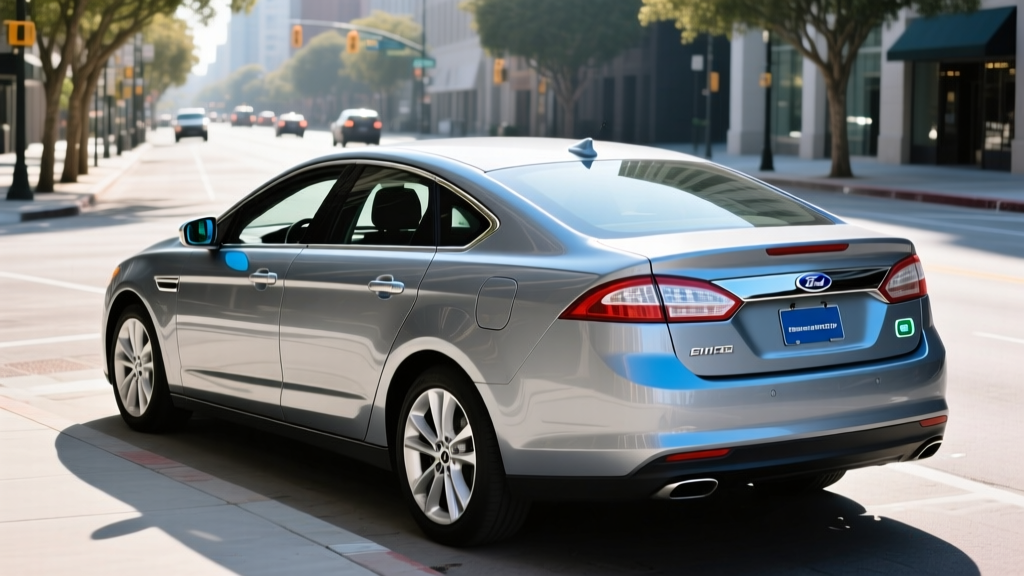
The 2011 Ford Fusion Hybrid was Ford's first serious entry into the midsize hybrid sedan segment, competing directly with the Toyota Camry Hybrid and Honda Insight. More than a decade later, it remains a popular choice on the used market for budget-conscious drivers who want hybrid fuel economy without the complexity of plug-in charging. If you're researching a 2011 Fusion Hybrid as a daily driver or commuter car in 2026, this guide covers every spec, real-world MPG figure, battery longevity concern, and ownership cost you need to evaluate before buying.
2011 Fusion Hybrid Powertrain and Key Specifications
The 2011 Fusion Hybrid uses Ford's second-generation hybrid synergy system, pairing a 2.5-liter Atkinson-cycle four-cylinder gasoline engine with an electric motor and a nickel-metal hydride (NiMH) battery pack. This is a conventional hybrid (HEV) — it charges its battery through regenerative braking and the gasoline engine. There is no plug, no electric-only driving mode of meaningful distance, and no external charging required.
| Specification | Value |
|---|---|
| Powertrain | 2.5L Atkinson-cycle I4 + electric motor (HEV) |
| Combined Horsepower | 191 hp (engine 156 hp + motor 106 hp; net system output) |
| Transmission | eCVT (electronically controlled continuously variable) |
| Battery Chemistry | Nickel-Metal Hydride (NiMH) |
| Battery Capacity | 1.4 kWh (gross) |
| Drivetrain | Front-wheel drive |
| 0–60 mph | ~8.5 seconds |
| Curb Weight | ~3,720 lbs |
| Cargo Volume | 11.8 cu ft (reduced by battery placement) |
| Original MSRP (2011) | $28,600 (single trim) |
| Used Price Range (2026) | $4,500–$8,000 depending on mileage and condition |
Unlike a plug-in hybrid (PHEV) such as the later Ford Fusion Energi, the 2011 Fusion Hybrid cannot be plugged in. Its small 1.4 kWh battery is designed for short electric-assist bursts at low speeds and to recapture energy during braking — not for standalone electric driving. If you see a Fusion with a charge port, you're looking at the 2013+ Fusion Energi PHEV, which is a fundamentally different vehicle.
Fuel Economy: EPA Ratings vs. Real-World MPG
The 2011 Fusion Hybrid carries EPA ratings that were impressive at launch and remain competitive among used hybrids today. According to fueleconomy.gov, the official figures are:
| Driving Cycle | EPA Rating |
|---|---|
| City | 41 MPG |
| Highway | 36 MPG |
| Combined | 39 MPG |
The city-highway inversion (higher city MPG than highway) is a hallmark of conventional hybrids and often surprises buyers accustomed to gas cars. If your commute is predominantly urban with frequent stops, the Fusion Hybrid will deliver its best numbers. Highway-dominant drivers may find a modern turbo-diesel or a newer hybrid with a more efficient Atkinson-cycle engine (like the 2026 Camry Hybrid at 52 MPG combined) better suited to their pattern.
HEV vs. PHEV vs. EV: Which Fits Your Driving Pattern?
The 2011 Fusion Hybrid sits in the simplest category of electrified vehicles. Here's how it compares to the alternatives a used-car buyer might consider:
| Factor | HEV (2011 Fusion Hybrid) | PHEV (e.g., Fusion Energi) | BEV (e.g., Tesla Model 3) |
|---|---|---|---|
| Plug-in Required? | No | Yes (for EV range) | Yes |
| Electric-Only Range | ~0.5 mi at low speed | 19–25 mi (model dependent) | 250–350+ mi |
| Total Range | ~680 mi (17.5-gal tank) | ~550–620 mi combined | 250–350 mi |
| Home Charging Needed? | No | Recommended (Level 1/2) | Essential (Level 2) |
| Federal Tax Credit (New) | None (expired long ago) | Was eligible; expired | Up to $7,500 (§30D) |
| Used Price (2026) | $4,500–$8,000 | $8,000–$14,000 | $15,000–$28,000 |
| Maintenance Complexity | Low (proven system) | Moderate (two systems) | Low (fewer moving parts) |
Choose a PHEV if: You have home charging, a short commute (under 25 miles), and want electric-only daily driving with gas backup for road trips.
Choose a full EV if: You have reliable Level 2 home charging, want zero tailpipe emissions, and can invest $15,000+ in a used BEV with lower per-mile fuel costs.
Battery Longevity, Warranty, and Replacement Cost
Battery lifespan is the single biggest concern for any used hybrid buyer. The 2011 Fusion Hybrid's 1.4 kWh NiMH battery pack is far smaller and less stressed than a modern EV's lithium-ion pack, which works in its favor for longevity.
Real-world battery lifespan: NiMH packs in Ford's second-generation hybrid system have demonstrated strong durability. Owner reports and fleet data suggest these batteries commonly reach 150,000–200,000 miles before significant degradation. Unlike lithium-ion EV batteries, NiMH degrades gradually — you'll notice reduced electric-assist frequency and slightly lower MPG rather than a sudden failure.
Battery replacement cost (2026):
- New OEM battery from Ford: $2,500–$3,500 (part only, availability may be limited for 2011 models)
- Refurbished/remanufactured battery: $1,200–$2,000 from aftermarket suppliers like GreenTech Automotive or Bumble Bee Batteries
- Used battery from salvage yard: $500–$900 (risky — unknown remaining life)
- Labor for installation: $300–$600 at an independent hybrid specialist; $500–$900 at a Ford dealer
For a car worth $5,000–$8,000, a $1,800–$2,500 refurbished battery replacement is economically justifiable if the rest of the vehicle is in good shape. However, it's a cost that should be factored into your purchase negotiation if the original battery has over 140,000 miles.
Reliability and Common Issues
The 2011 Fusion Hybrid earned solid reliability marks during its production run. The hybrid powertrain itself — the eCVT, electric motor, and power-split device — is mechanically simple and has few failure points. The eCVT contains no traditional belts, bands, or clutch packs; it uses a planetary gearset that is remarkably durable.
Known issues to inspect on a used 2011 Fusion Hybrid:
- Brake actuator module: Some owners report premature wear of the regenerative braking actuator, which can trigger a warning light and require a $1,200–$1,800 replacement. Test the brake pedal feel — it should be firm and consistent, not spongy or erratic during regen transitions.
- Electric power steering (EPS): Ford issued recalls for certain 2010–2012 Fusion models for EPS motor failures. Verify recall completion via NHTSA's VIN lookup.
- 12V auxiliary battery: Like all hybrids, the Fusion has a standard 12V battery that powers electronics. If it dies, the car cannot start — even with a full hybrid battery. Replace proactively every 4–5 years.
- Coolant system: The hybrid system has its own separate coolant loop. Check for leaks around the inverter coolant reservoir and ensure the coolant has been serviced per the maintenance schedule.
- Trunk space: The NiMH battery sits behind the rear seats, reducing cargo capacity to 11.8 cu ft (vs. 16.5 cu ft in the gas Fusion). This is a permanent compromise — verify it fits your needs.
Does the 2011 Fusion Hybrid Qualify for Any Tax Credits?
No. The 2011 Fusion Hybrid does not qualify for any current federal tax credit. The original federal hybrid tax credit for the Fusion Hybrid was capped at $3,400 and was only available for vehicles purchased new between 2009 and mid-2010, after which Ford hit the 60,000-unit manufacturer cap that triggered the credit phase-out under pre-§30D rules.
Under current IRS §30D rules, the clean vehicle credit applies only to new qualifying plug-in electric vehicles (BEVs and PHEVs with ≥7 kWh batteries) — conventional hybrids like the Fusion Hybrid have never been eligible under the current framework. The used EV credit (§25E, up to $4,000) also requires the vehicle to be a plug-in EV or fuel cell vehicle, so the Fusion Hybrid does not qualify there either.
Some states offer registration discounts, HOV lane access, or inspection exemptions for hybrid vehicles, but these vary by jurisdiction and many have sunset. Check your state's DMV or department of energy for current programs.
Ownership Costs: What to Budget in 2026
At a used purchase price of $4,500–$8,000, the 2011 Fusion Hybrid is one of the most affordable ways to access hybrid fuel economy. Here's a realistic annual ownership cost estimate:
| Cost Category | Annual Estimate |
|---|---|
| Fuel (39 MPG avg, $3.20/gal) | ~$985 |
| Insurance (varies by state/driver) | $900–$1,400 |
| Maintenance (oil, tires, brakes) | $400–$700 |
| Depreciation | $300–$500 |
| Estimated Total | $2,585–$3,585 |
For comparison, a 2011 Ford Fusion gas model (2.5L, 23 MPG combined) would cost roughly $1,670/year in fuel at the same mileage and price — a $685 annual fuel premium. The hybrid's fuel savings typically offset its higher purchase price within 2–3 years of average driving.
Verdict: Who Should Buy the 2011 Fusion Hybrid?
Pros
- Strong city MPG (41 EPA, often 42+ real-world)
- No plug-in charging required
- Proven, simple NiMH hybrid system
- Low used purchase price ($4,500–$8,000)
- Comfortable midsize sedan ride quality
- eCVT durability — no traditional transmission wear items
Cons
- Reduced trunk space (11.8 cu ft)
- Highway MPG drops to 32–35 at 70+ mph
- No federal or state tax credits available
- Battery warranty expired; replacement is $1,500–$3,500
- Dated infotainment (SYNC 1, no Apple CarPlay/Android Auto)
- Brake actuator repairs can be costly
The 2011 Ford Fusion Hybrid makes sense in 2026 for budget-focused commuters, rideshare drivers, or second-car buyers who want 40 MPG city efficiency without investing in home charging infrastructure. It's not the right choice if you need a large trunk, drive mostly highway miles, or want the latest infotainment technology. For those with charging access and a higher budget, a used PHEV or BEV offers lower per-mile energy costs and, in the case of newer models, active tax credit eligibility.
Frequently Asked Questions
How many MPG does the 2011 Fusion Hybrid get?
The EPA rates it at 41 city / 36 highway / 39 combined. In real-world mixed driving, most owners see 37–43 MPG. City-heavy routes with frequent stops yield the best results; sustained highway driving at 70+ mph drops efficiency to 32–35 MPG.
Can I plug in the 2011 Fusion Hybrid?
No. The 2011 Fusion Hybrid is a conventional HEV with no charge port. It charges its 1.4 kWh NiMH battery exclusively through regenerative braking and the gasoline engine. The plug-in variant, the Fusion Energi, debuted for the 2013 model year.
How far can it drive on electric power alone?
Effectively zero meaningful distance. The hybrid system can propel the car on electric-only power for roughly half a mile at speeds under 25 mph under ideal conditions. This is designed for low-speed maneuvering, not commuting. For meaningful electric-only range, you need a PHEV (20+ miles) or a BEV (250+ miles).
Is the hybrid battery reliable and what does replacement cost?
Yes — the NiMH battery in the 2011 Fusion Hybrid is proven to last 150,000–200,000 miles in typical use. The original 8-year/100,000-mile warranty has expired. A refurbished replacement battery costs $1,200–$2,000; a new OEM battery runs $2,500–$3,500 plus $300–$900 in labor.
Does the 2011 Fusion Hybrid qualify for any tax credit in 2026?
No. The original federal hybrid credit phased out for Ford in 2010. Current IRS §30D and §25E credits apply only to plug-in electric vehicles (BEVs and qualifying PHEVs), not conventional hybrids. No federal tax incentive is available for purchasing a used 2011 Fusion Hybrid.
How does the 2011 Fusion Hybrid compare to the Toyota Camry Hybrid of the same era?
The 2011 Camry Hybrid was rated at 31 city / 35 highway / 33 combined — notably lower than the Fusion Hybrid's 41/36/39. The Fusion's more advanced hybrid system gave it a clear efficiency edge. However, the Camry Hybrid's larger trunk (14.5 cu ft vs. 11.8) and Toyota's long-term parts availability may appeal to some buyers. Both use proven NiMH batteries with similar longevity expectations.
What should I check before buying a used 2011 Fusion Hybrid?
Prioritize: (1) hybrid battery health — have a hybrid specialist run a capacity test; (2) brake actuator function — test for smooth regen transitions; (3) NHTSA recall completion for electric power steering; (4) 12V battery age; (5) inverter coolant level and condition. A pre-purchase inspection at a hybrid-experienced shop ($150–$250) is strongly recommended.