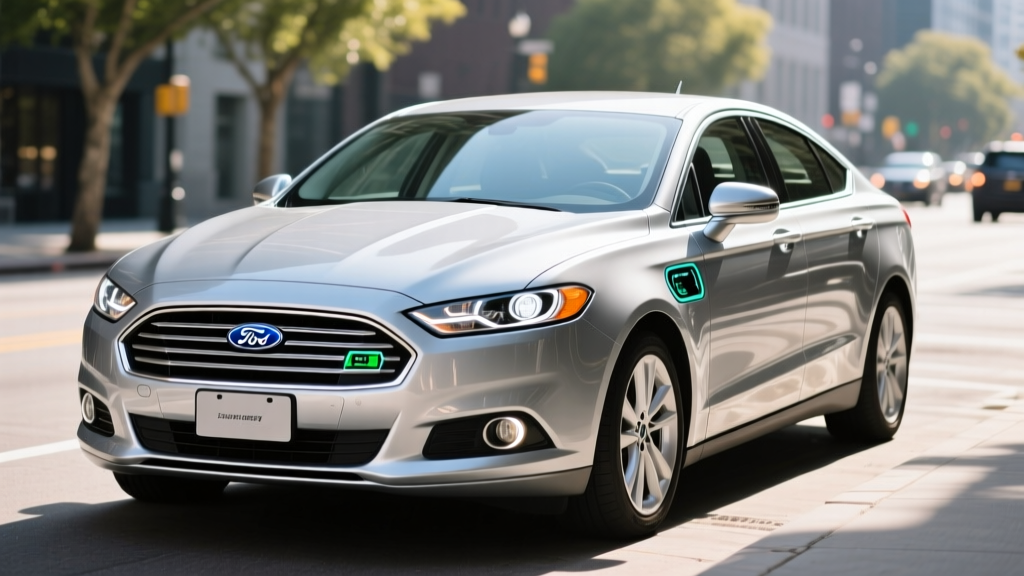
The 2011 Ford Fusion Hybrid FWD was Ford's first serious entry into the midsize hybrid sedan segment, competing directly with the Toyota Camry Hybrid and offering a compelling blend of electric assist and gasoline efficiency. More than a decade later, it remains one of the most affordable used hybrid sedans on the market — but prospective buyers need clear data on what they're actually getting, from real-world MPG to battery health concerns.
This guide covers everything a used-car buyer needs to know about the 2011 Fusion Hybrid: EPA and real-world fuel economy, powertrain specs, battery warranty and replacement costs, and whether this aging HEV still makes sense in a market now crowded with newer PHEVs and full EVs.
HEV vs PHEV: What the 2011 Fusion Hybrid Actually Is
The 2011 Ford Fusion Hybrid is a conventional hybrid (HEV), not a plug-in hybrid (PHEV). This distinction is critical for buyers cross-shopping electrified vehicles:
| Feature | 2011 Fusion Hybrid (HEV) | Plug-In Hybrid (PHEV) | Full EV (BEV) |
|---|---|---|---|
| Plug-in charging required? | No — self-charging via regen & engine | Yes — plugs into Level 1/2 | Yes — plugs into Level 1/2/DC |
| Electric-only range | ~0.5–1 mi at low speed | 20–45 mi typical | 200–400+ mi |
| Battery size | 1.4 kWh (NiMH) | 10–20 kWh (Li-ion) | 60–100+ kWh (Li-ion/NMC/LFP) |
| Fuel source | Gasoline only | Gasoline + electricity | Electricity only |
| Tax credit eligibility | None (new or used) | Up to $7,500 when new (§30D) | Up to $7,500 new; up to $4,000 used |
The Fusion Hybrid's small 1.4 kWh nickel-metal hydride (NiMH) battery cannot be plugged in. It recharges through regenerative braking and the gasoline engine. You will never need to find a charger — you simply fill it with gas and drive. The electric motor assists the engine and enables brief electric-only movement at low speeds (typically under 25 mph for short distances), but this is not a vehicle you can commute in on electricity alone.
Fuel Economy: EPA Ratings vs Real-World MPG
The 2011 Fusion Hybrid's headline number was its class-leading EPA city rating. Here's the official breakdown from fueleconomy.gov:
| Driving Cycle | EPA Rating |
|---|---|
| City | 41 MPG |
| Highway | 36 MPG |
| Combined | 39 MPG |
Why Hybrids Often Beat EPA City Estimates
Conventional hybrids like the Fusion tend to exceed their EPA city rating in real-world stop-and-go driving. The regenerative braking system recaptures kinetic energy that would otherwise be lost as heat, and the engine shuts off at stops. Owners who drive primarily in urban conditions frequently report 42–45 MPG. Highway driving, however, typically yields 33–35 MPG because the electric motor provides less benefit at sustained high speeds and the gasoline engine carries most of the load.
- City / stop-and-go: 40–45 MPG (often exceeds EPA)
- Highway (70+ mph): 32–35 MPG
- Mixed driving: 36–40 MPG
- Cold weather (below 30°F): expect 2–4 MPG reduction due to engine running longer for cabin heat and reduced battery efficiency
With a 17.5-gallon fuel tank, real-world total range is approximately 630–700 miles per tank in mixed driving — strong for a midsize sedan of this era.
Powertrain Specs: Engine, Motor, and Combined Output
| Specification | 2011 Ford Fusion Hybrid FWD |
|---|---|
| Engine | 2.5L Atkinson-cycle inline-4 |
| Engine horsepower | 156 HP @ 6,000 RPM |
| Electric motor output | ~35 HP (106 kW peak electric drive) |
| Combined system output | 191 HP |
| Transmission | CVT (e-CVT, planetary gearset) |
| Drivetrain | Front-wheel drive (FWD) |
| Battery type | NiMH (nickel-metal hydride) |
| Battery capacity | 1.4 kWh |
| 0–60 mph | ~8.7 seconds |
| Curb weight | ~3,720 lbs |
The Fusion Hybrid uses Ford's second-generation hybrid system, paired with a 2.5-liter Atkinson-cycle four-cylinder engine. Unlike a conventional Otto-cycle engine, the Atkinson cycle delays intake valve closing to improve thermal efficiency at the expense of peak power — a trade-off that makes sense because the electric motor fills in the torque gap at low RPM.
The e-CVT transmission is not a belt-and-pulley CVT like those in some Nissan models. It's a planetary gearset (similar in concept to Toyota's Hybrid Synergy Drive) that seamlessly blends engine and motor power with no fixed gear ratios. This design is proven, smooth, and has no belts or clutches to wear out.
Battery Life, Warranty, and Replacement Cost
Battery longevity is the single biggest concern for any used hybrid buyer. Here's what you need to know about the 2011 Fusion Hybrid's NiMH pack:
- Federal emissions warranty: 8 years / 80,000 miles
- California Air Resources Board (CARB) states: 10 years / 150,000 miles
- Coverage threshold: battery must retain sufficient capacity to function — typically interpreted as failure or severe degradation below ~60% capacity
As of 2026, all original 2011 models are well past warranty coverage regardless of mileage.
Real-World Battery Degradation
NiMH batteries in this generation of Ford hybrids have proven reasonably durable. Most owners report gradual capacity loss rather than sudden failure. At 13–15 years old, many original packs are still functional but with reduced electric-assist capability — you may notice the engine kicks in sooner, the EV-mode distance shrinks, and overall MPG drops by 2–4 MPG compared to new.
According to data aggregated from owner forums and repair databases, the failure rate for the 2011 Fusion Hybrid battery is moderate. NiMH chemistry is less prone to the thermal runaway concerns of early Li-ion packs, but individual cells can weaken and drag down the entire series.
Battery Replacement Cost
| Replacement Option | Estimated Cost (2026) |
|---|---|
| New OEM battery (Ford dealer) | $3,500 – $5,000 (parts + labor) |
| Remanufactured battery (specialist shop) | $2,000 – $3,200 |
| Used/salvage battery | $800 – $1,500 (risky — unknown SoH) |
| Individual cell replacement (DIY/specialist) | $400 – $900 |
Before purchasing any used 2011 Fusion Hybrid, request a battery health report. A Ford dealer or hybrid specialist can pull the State of Health (SoH) data from the battery management system. If SoH is below 70%, budget for a replacement or negotiate the purchase price downward by at least $2,000.
Used Market Pricing and Tax Credit Eligibility
The 2011 Ford Fusion Hybrid FWD is exclusively a used-market purchase in 2026. Original MSRP ranged from approximately $28,600 (base) to $33,000+ (fully loaded with leather, navigation, and sunroof).
| Condition / Mileage | Typical 2026 Used Price |
|---|---|
| Excellent, under 80k miles | $6,500 – $8,500 |
| Good, 80k–130k miles | $4,500 – $6,500 |
| Fair, 130k+ miles | $3,000 – $4,500 |
Does the 2011 Fusion Hybrid Qualify for Any Tax Credit?
No. The 2011 Fusion Hybrid does not qualify for any current federal tax credit:
- §30D New Clean Vehicle Credit: Only available for new vehicles — a 2011 model is not eligible regardless of purchase circumstances.
- §25E Used Clean Vehicle Credit: This credit (up to $4,000 or 30% of sale price, whichever is less) applies only to used EVs (BEVs) and fuel-cell vehicles. Conventional hybrids (HEVs) like the Fusion Hybrid are explicitly excluded. Only plug-in hybrids (PHEVs) and full battery-electric vehicles qualify.
- State incentives: Most state hybrid incentives expired years ago. Check your state's current programs at afdc.energy.gov, but do not count on any credit for a 2011 HEV.
This is an important cost factor: you pay full price with no federal offset. However, at $4,000–$7,000 on the used market, the Fusion Hybrid remains one of the cheapest ways to access hybrid fuel economy.
Reliability, Safety, and Common Issues
The 2011 Fusion Hybrid earned strong safety ratings for its era. The NHTSA gave it a 5-star overall crash rating, and the IIHS rated it "Good" in frontal offset and side-impact tests. Standard safety equipment includes front, side, and curtain airbags, stability control, and ABS.
Common Issues to Watch For
- Hybrid battery degradation: As discussed, 13–15-year-old NiMH packs lose capacity. Budget for replacement.
- 12V auxiliary battery: Like all hybrids, the Fusion has a conventional 12V battery that powers electronics. These fail every 4–6 years and are a cheap fix (~$150–$200).
- Brake actuator recall: Some 2010–2012 Fusion Hybrids were subject to a recall for the brake actuator assembly. Verify recall status at nhtsa.gov/recalls using the VIN.
- CVT cooling: The e-CVT is robust but can overheat under sustained heavy load (long mountain grades). Not common, but worth noting for high-mileage examples.
- Interior wear: Dashboard materials and seat bolsters show age at higher miles — cosmetic only.
Who Should Buy This Hybrid — and Who Shouldn't
- You want hybrid MPG on a tight budget (under $7,000)
- You drive primarily in city/stop-and-go conditions where hybrid efficiency shines
- You have no access to home or workplace charging (HEV requires no plug)
- You want a proven, conventional sedan with low running costs
- You want electric-only commuting range — consider a used PHEV (Chevy Volt, Prius Prime) or a BEV
- You need modern ADAS features (blind-spot monitoring, automatic emergency braking) — the 2011 Fusion lacks these
- You want to qualify for a federal tax credit — neither new nor used credits apply to HEVs
- You're concerned about battery replacement risk on a 15-year-old pack without verified SoH data
- 41 MPG city EPA — still competitive with modern hybrids
- No plug-in charging required — gas and go
- Smooth e-CVT with no belt wear
- Very affordable used pricing ($4k–$8k)
- 5-star NHTSA safety rating
- Spacious midsize cabin with usable trunk (11.8 cu ft)
- Battery is 13–15 years old — replacement likely needed
- No federal or state tax credit eligibility
- Outdated infotainment (SYNC 1st-gen, no Apple CarPlay/Android Auto)
- No modern driver-assist features (no AEB, no lane-keep)
- Highway MPG (36 EPA) trails city rating significantly
- Sluggish 0–60 (~8.7 sec) compared to modern hybrids
Frequently Asked Questions
How many MPG does the 2011 Ford Fusion Hybrid get?
The EPA rates it at 41 city / 36 highway / 39 combined MPG. In real-world driving, city MPG often reaches 42–45, while highway driving at 70+ mph typically yields 32–35 MPG. Cold weather reduces efficiency by 2–4 MPG.
Does the 2011 Fusion Hybrid need to be plugged in?
No. It is a conventional hybrid (HEV), not a plug-in hybrid. The 1.4 kWh battery charges itself through regenerative braking and the gasoline engine. You never plug it in — you only refuel with gasoline.
How far can it drive on electric power alone?
Less than 1 mile, and only at very low speeds (under ~25 mph). The electric motor primarily assists the gasoline engine rather than powering the car independently. If you want meaningful electric-only range, you need a PHEV or BEV.
What is the battery replacement cost?
A new OEM battery from a Ford dealer runs $3,500–$5,000 installed. Remanufactured packs from hybrid specialists cost $2,000–$3,200. Used/salvage packs are $800–$1,500 but carry unknown remaining life. Always check battery State of Health (SoH) before buying.
Is the 2011 Fusion Hybrid reliable?
The powertrain (engine + e-CVT) is generally reliable. The main risk is the aging NiMH hybrid battery, which is 13–15 years old by 2026 and likely near or past its useful life. Verify brake recall completion and 12V battery condition. With a healthy hybrid battery, these cars routinely reach 200,000+ miles.
Does it qualify for any tax credit?
No. As a conventional hybrid (HEV), the 2011 Fusion Hybrid does not qualify for the §30D new vehicle credit or the §25E used vehicle credit. Only BEVs and PHEVs are eligible for federal EV tax credits. Check IRS.gov for current credit rules.
Hybrid vs PHEV vs EV — which should I choose?
If you have no charging access and want simple, proven efficiency: HEV (like this Fusion). If you can charge at home and want 25–40 miles of electric commuting with gas backup: PHEV. If you can charge at home and want zero gasoline costs: BEV. For a budget under $7,000, the Fusion Hybrid remains one of the most accessible paths to 40+ MPG driving.