Quick Verdict: A Discontinued Mild-Hybrid Truck Worth Considering Used
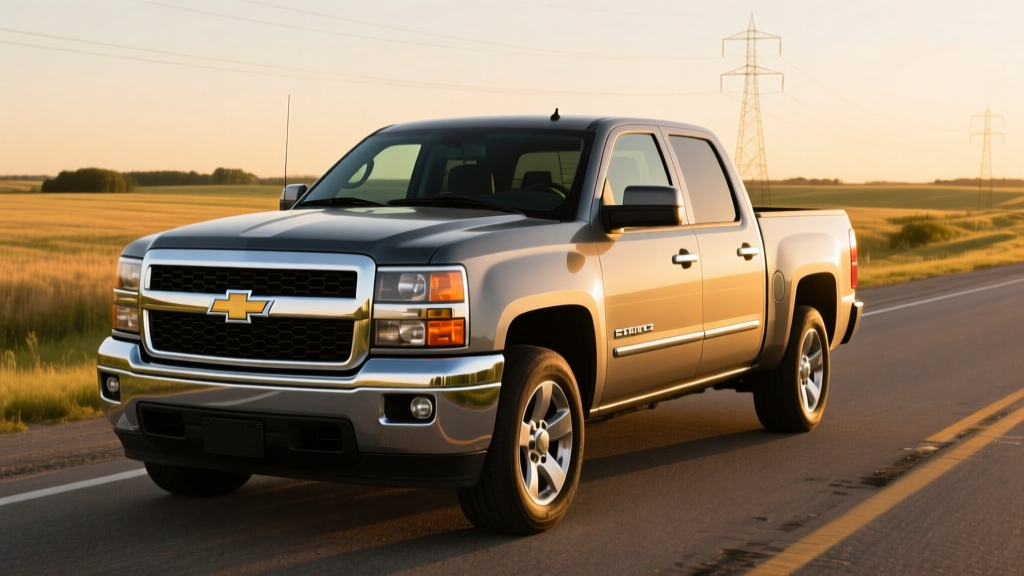
The 2011 Chevy Silverado Hybrid is a conventional hybrid electric vehicle (HEV) — not a plug-in — that pairs GM's 6.0L V8 with a two-mode hybrid system to deliver 21 MPG combined in a full-size pickup. Discontinued after the 2013 model year, it remains one of the few hybrid trucks ever sold on the used market. For buyers seeking a capable work truck with modestly improved fuel economy over the standard Silverado V8, it's a niche but viable option — provided you understand its limitations, battery age risks, and how it compares to modern hybrid trucks like the 2026 Ford F-150 PowerBoost or Toyota Tundra i-FORCE MAX.
This guide covers everything a used-truck shopper needs: exact EPA MPG figures, the two-mode hybrid powertrain, real-world fuel economy expectations, battery warranty and replacement cost, and whether this aging HEV still makes sense in an era of far more advanced electrified trucks.
HEV vs PHEV: What the 2011 Silverado Hybrid Actually Is
Before diving into specs, it's essential to understand what you're buying. The 2011 Silverado Hybrid is a conventional hybrid (HEV). It does not plug in. It has no electric-only driving range. The battery charges exclusively through regenerative braking and the gasoline engine.
| Feature | HEV (2011 Silverado Hybrid) | PHEV (e.g., modern plug-in truck) | Full BEV |
|---|---|---|---|
| Plug-in charging? | No — self-charging | Yes — plug in for electric range | Yes — plug in only |
| Electric-only range | None (motor assists engine) | 20–50 mi typical | 200–400+ mi |
| Battery size | ~1.8 kWh (NiMH) | 12–25 kWh (Li-ion) | 60–130+ kWh (Li-ion) |
| Primary fuel | Gasoline | Gasoline + electricity | Electricity only |
| Federal tax credit (new) | None | Up to $7,500 (§30D) | Up to $7,500 (§30D) |
The Silverado's two-mode hybrid system, co-developed with BMW and Chrysler (then DaimlerChrysler), uses two electric motors integrated into the transmission housing. These motors assist the V8 during acceleration, enable engine stop-start at idle, and capture energy during braking. At very low speeds (under ~30 mph in light-load conditions), the truck can creep on electric power alone for brief distances — but this is not meaningful electric-only range. Think of it as a torque-assist system, not an EV mode.
Fuel Economy: EPA Ratings and Real-World MPG
The headline number for the 2011 Silverado Hybrid is its EPA rating — a meaningful improvement over the standard 5.3L or 6.2L V8 Silverados of the same era.
| Metric | 2011 Silverado Hybrid (2WD) | 2011 Silverado Hybrid (4WD) | 2011 Silverado 5.3L V8 (2WD) |
|---|---|---|---|
| City MPG | 20 | 20 | 15 |
| Highway MPG | 23 | 23 | 21 |
| Combined MPG | 21 | 21 | 17 |
Source: EPA fueleconomy.gov
Real-World MPG vs EPA Sticker
Hybrid vehicles, particularly those using older two-mode or mild-hybrid systems, tend to perform close to their EPA ratings in mixed driving. However, real-world results vary significantly by driving style and conditions:
- City driving (stop-and-go): This is where the hybrid system shines. Expect 19–21 MPG. The engine shuts off at stops, and regenerative braking recaptures energy frequently. Some owners report slightly exceeding the EPA city figure in heavy traffic.
- Highway cruising (70+ mph): Expect 20–22 MPG. The hybrid system provides minimal benefit at sustained highway speeds since there's little braking to recapture energy and the engine runs continuously. The aerodynamic drag of a full-size truck dominates.
- Towing and hauling: Fuel economy drops sharply to 12–15 MPG when towing near the 5,800-lb max rating. The hybrid system's assist is negligible under heavy load.
- Cold weather: Expect a 1–2 MPG reduction in winter. The engine runs more often to maintain cabin heat, and the NiMH battery is less efficient at low temperatures.
Compared to the standard 5.3L V8 Silverado (17 MPG combined), the hybrid delivers roughly a 24% improvement in combined driving — meaningful for a truck that sees daily commuting duty, but not transformative.
Powertrain Specs: The Two-Mode Hybrid System
| Specification | 2011 Chevy Silverado Hybrid |
|---|---|
| Engine | 6.0L V8 (Vortec, cylinder deactivation) |
| Engine horsepower | 332 hp @ 5,100 rpm |
| Engine torque | 367 lb-ft @ 4,100 rpm |
| Electric motors | Two 60-kW motors (integrated in transmission) |
| Combined system output | 379 hp |
| Transmission | Electrically Variable Transmission (EVT), two-mode |
| Battery type | Nickel-Metal Hydride (NiMH) |
| Battery capacity | ~1.8 kWh (gross) |
| Drivetrain | RWD or 4WD |
| 0–60 mph | ~7.8 seconds (estimated) |
| Towing capacity | 5,800 lbs (max, properly equipped) |
| Payload capacity | ~1,400 lbs |
The 6.0L V8 features GM's Active Fuel Management (cylinder deactivation), which shuts down four cylinders under light load. Combined with the hybrid system's electric assist and engine stop-start, this creates a three-layer efficiency approach: electric assist off the line, four-cylinder mode during cruising, and regenerative braking during deceleration.
The EVT is not a conventional CVT. It uses a planetary gearset with two fixed mechanical gears and two electrically variable modes. The result is smooth acceleration without the rubber-band feel of some CVTs, though the transmission is heavier and more complex than a standard 6-speed automatic.
Battery Lifespan, Warranty, and Replacement Cost
Original Hybrid Battery Warranty
GM covered the 2011 Silverado Hybrid's NiMH battery pack for 8 years / 100,000 miles (whichever came first) under the emissions-component warranty. In California Air Resources Board (CARB) states, coverage extended to 10 years / 150,000 miles.
As of 2026, all original battery warranties have expired. Any 2011 Silverado Hybrid you purchase today is entirely out of factory battery coverage unless an extended warranty was purchased and transferred.
How Long Does the Battery Actually Last?
NiMH batteries in GM's two-mode hybrid system have proven reasonably durable. Owner reports and mechanic surveys suggest:
- Typical lifespan: 120,000–180,000 miles before significant capacity loss or cell failure
- Age degradation: NiMH cells degrade with time regardless of mileage. A 2011 model is now 15 years old — even a low-mileage example may have battery degradation from calendar aging
- Failure symptoms: Reduced fuel economy (loss of regen/assist), dashboard "Service Hybrid System" warning, reduced acceleration performance
Battery Replacement Cost
If the hybrid battery fails, owners face several options:
- OEM replacement (GM dealer): $3,000–$5,000 for the battery pack plus labor. Given the vehicle's age and residual value (~$6,000–$12,000 depending on condition), this is rarely economical.
- Aftermarket/remanufactured pack: $1,500–$3,000 from hybrid-battery specialists. This is the most common route for owners who want to keep the truck running.
- Individual cell replacement: Some hybrid shops can replace failed NiMH cells for $500–$1,200, though this requires specialized diagnostics and isn't available everywhere.
- Disable the hybrid system: Some owners choose to bypass or disconnect the hybrid system entirely, running the 6.0L V8 as a conventional (albeit heavy) truck. Fuel economy drops to roughly 14–16 MPG combined, but the truck remains drivable.
Who Should Buy the 2011 Silverado Hybrid — And Who Shouldn't
Pros
- 24% better combined MPG than the standard V8 Silverado
- Strong V8 power (379 hp combined) for passing and merging
- Smooth stop-start and low-speed electric creep
- Conventional HEV — no plug, no charging infrastructure needed
- Lower used prices than modern hybrid trucks
Cons
- 15-year-old hybrid battery is a financial risk
- All original warranties expired — no safety net
- Towing fuel economy is poor (12–15 MPG)
- No electric-only range — not a PHEV
- Complex EVT transmission is costly to repair if it fails
- Outdated interior tech and safety features vs 2026 trucks
- No federal tax credit available (used HEV)
This Truck Makes Sense If:
- You need a full-size truck for occasional hauling but commute daily in stop-and-go traffic
- You're comfortable buying a 15-year-old vehicle and budgeting for potential battery or transmission repairs
- You want hybrid fuel economy without ever plugging in
- You find a well-maintained example with a documented battery health check
Look Elsewhere If:
- You tow frequently — the hybrid system adds weight without meaningful towing MPG gains
- You want warranty protection — consider a certified pre-owned 2022+ Toyota Tundra Hybrid or Ford F-150 PowerBoost
- You want electric-only commuting — you need a PHEV or BEV, not an HEV
- You prioritize modern safety tech (automatic emergency braking, lane-keeping) — the 2011 Silverado predates these features
Hybrid vs PHEV vs EV: Which Electrified Truck Fits You?
The 2011 Silverado Hybrid exists in a very different market than 2026's electrified trucks. Here's how it compares conceptually to modern options:
| Use Case | Best Fit | Example |
|---|---|---|
| Budget truck commuter, no plug access | Used HEV (like the 2011 Silverado Hybrid) | 2011–2013 Chevy Silverado Hybrid |
| Daily electric commute + weekend towing | PHEV truck | 2026 Ford F-150 PHEV (if available) / upcoming Ramcharger EREV |
| Maximum fuel savings, home charging available | Full BEV truck | 2026 Ford F-150 Lightning, Rivian R1T, Chevy Silverado EV |
| Reliable new hybrid truck with warranty | Modern HEV truck | 2026 Toyota Tundra i-FORCE MAX, Ford F-150 PowerBoost |
For most buyers shopping in 2026, a modern hybrid truck like the Toyota Tundra i-FORCE MAX (20 MPG combined, new-vehicle warranty, modern safety tech) or the Ford F-150 PowerBoost (24 MPG combined) is a more rational purchase than a 15-year-old Silverado Hybrid. The used 2011 model only makes sense at a significant price discount and for buyers willing to accept repair risk.
Tax Credits and Incentives: What Applies to a Used 2011 HEV?
The short answer: no federal tax credits apply to the 2011 Chevy Silverado Hybrid, whether purchased new (credits expired long ago) or used.
- Federal §30D New EV Credit: Only applies to new plug-in vehicles (PHEVs and BEVs) meeting battery-sourcing, MSRP, and buyer income requirements. The Silverado Hybrid is neither new nor a plug-in. Not eligible.
- Federal Used EV Credit (§25E): Provides up to $4,000 (30% of sale price, capped) for used plug-in vehicles. Again, the Silverado Hybrid is an HEV — it doesn't plug in. Not eligible.
- State incentives: Most state-level hybrid incentives expired years ago or were limited to plug-in vehicles. Check your state's current energy office or DMV website for any remaining programs, but expect nothing for a 2011 HEV purchase.
For current federal incentive rules, refer to the IRS clean vehicle credit page.
Pre-Purchase Checklist: What to Inspect on a Used 2011 Silverado Hybrid
If you're seriously considering this truck, take these steps before handing over cash:
- Hybrid battery health scan: Have a hybrid-qualified mechanic pull battery cell voltage data. All cells should read within 0.2V of each other. Wide variance indicates impending failure.
- Regenerative braking test: During a test drive, the truck should slow noticeably when you lift off the accelerator. If regen feels weak or absent, the battery may be degraded.
- Stop-start function: The engine should shut off smoothly at red lights and restart instantly when you press the brake. Rough restarts or failure to shut off signal hybrid-system issues.
- Transmission behavior: The EVT should shift seamlessly. Any clunking, hesitation, or shuddering during mode transitions is a red flag — EVT repairs cost $3,000–$5,000+.
- Service records: Ask whether the hybrid battery has ever been replaced or serviced. A documented battery replacement is actually a positive — it means the big-ticket item is done.
- Rust and frame inspection: The 2011 Silverado generation is prone to frame rust, especially in salt-belt states. Inspect the frame, rocker panels, and wheel wells carefully.
Frequently Asked Questions
How many MPG does the 2011 Chevy Silverado Hybrid get?
The EPA rates the 2011 Silverado Hybrid at 20 city / 23 highway / 21 combined MPG for both 2WD and 4WD models. Real-world results typically range from 18–22 MPG combined depending on driving conditions. Towing drops this to 12–15 MPG.
Does the 2011 Silverado Hybrid plug in?
No. It is a conventional hybrid (HEV), not a plug-in hybrid (PHEV). The battery charges through regenerative braking and the gasoline engine. You never plug it in, and it has no meaningful electric-only driving range.
How far can the 2011 Silverado Hybrid go on electric only?
Effectively zero miles. The electric motors assist the V8 engine and can move the truck at very low speeds for short distances (a few hundred yards at most), but there is no usable electric-only range. This is not a PHEV.
Is the 2011 Silverado Hybrid reliable?
The 6.0L V8 and conventional truck components are generally reliable with proper maintenance. The hybrid-specific components — the NiMH battery pack and the EVT transmission — are the primary risk factors on a 15-year-old vehicle. Battery failure is likely if the original pack is still in the truck, and replacement costs $1,500–$5,000 depending on the source. The EVT is robust but expensive if it fails.
What does it cost to replace the hybrid battery?
OEM dealer replacement runs $3,000–$5,000. Remanufactured aftermarket packs cost $1,500–$3,000. Individual cell repair is possible for $500–$1,200 at specialized hybrid shops. Given the truck's used value of roughly $6,000–$12,000, a full OEM replacement rarely makes financial sense.
Does the 2011 Silverado Hybrid qualify for any tax credit?
No. Federal clean vehicle credits (§30D for new, §25E for used) apply only to plug-in vehicles — PHEVs and BEVs. As a conventional HEV, the Silverado Hybrid does not qualify for any federal purchase incentive. State-level hybrid incentives have largely expired.
How does the 2011 Silverado Hybrid compare to modern hybrid trucks?
Modern hybrid trucks significantly outperform it. The 2026 Ford F-150 PowerBoost Hybrid delivers 24 MPG combined with 430 hp, a 12,000-lb towing capacity, and a full new-vehicle warranty. The Toyota Tundra i-FORCE MAX achieves 20–22 MPG combined with modern safety tech. The 2011 Silverado Hybrid is only competitive on used price — typically $6,000–$12,000 versus $45,000+ for new hybrid trucks.
Should I buy a 2011 Silverado Hybrid or a standard used Silverado V8?
If you find a well-maintained hybrid with a recently replaced battery at a comparable price, the hybrid's 24% fuel economy improvement (roughly 4 MPG combined) saves about $400–$600 per year in fuel at 15,000 miles/year and $3.30/gallon. That savings takes 2–4 years to offset a potential battery replacement cost. For high-mileage commuters, the hybrid can pay off. For low-mileage or towing-heavy use, a standard V8 is simpler and cheaper to maintain.
For official EPA fuel economy data, see fueleconomy.gov. For federal tax credit rules, consult the IRS clean vehicle credits page. Always verify a used vehicle's history through a service like Carfax or AutoCheck before purchase.