Quick Verdict: A Discontinued Mild-Hybrid Truck Worth Considering on the Used Market
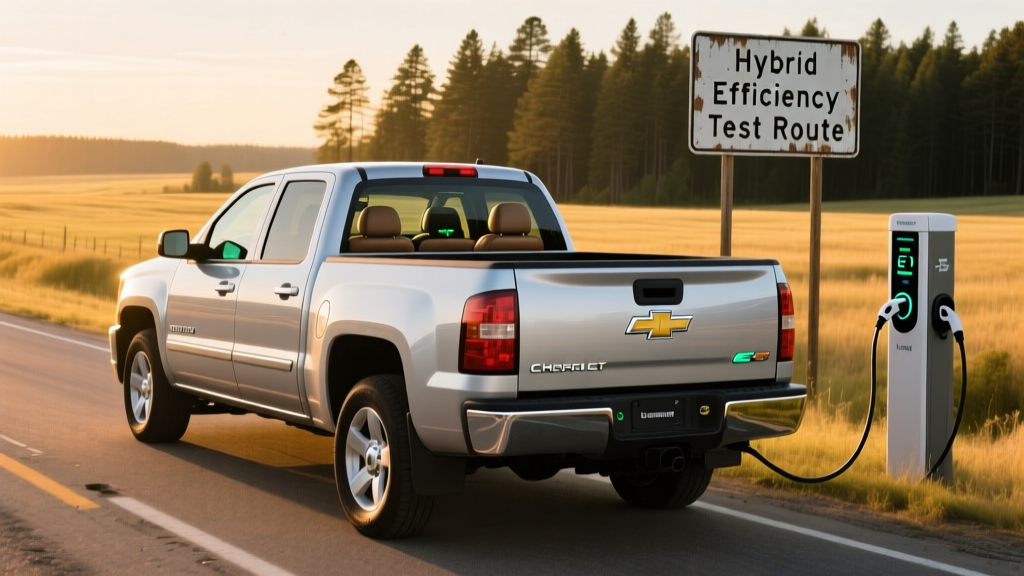
The 2011 Chevrolet Silverado 1500 Hybrid occupies a rare niche: a full-size pickup with a genuine two-mode hybrid powertrain that delivers measurable fuel savings without sacrificing towing capability. Chevy discontinued the Silverado Hybrid after the 2013 model year, so every example on the road today is a used vehicle — most with well over 100,000 miles. For buyers who need truck utility but want better fuel economy than a conventional V8, this generation remains one of the few hybrid pickups from its era that actually moved the needle on efficiency.
This is a conventional hybrid (HEV), not a plug-in hybrid (PHEV). You never plug it in. The 300V nickel-metal hydride battery pack charges exclusively through regenerative braking and engine power. If you're looking for electric-only driving range, this isn't it — but if you want 20+ MPG combined in a body-on-frame truck that can tow 6,100 pounds, the 2011 Silverado Hybrid still makes a compelling case on the used market.
HEV vs PHEV: Understanding What the Silverado Hybrid Is (and Isn't)
Before diving into specs, it's critical to understand the distinction between hybrid types, because the Silverado 1500 Hybrid is frequently confused with plug-in systems.
| Feature | 2011 Silverado 1500 Hybrid (HEV) | Plug-In Hybrid (PHEV) Example |
|---|---|---|
| Plug-in charging required? | No — self-charging via regen + engine | Yes — requires Level 1 or Level 2 charging |
| Electric-only range | ~0.5 miles at low speed (crawl only) | Typically 20–50 miles (model dependent) |
| Battery size | 1.8 kWh (300V NiMH pack) | 12–25 kWh (lithium-ion typical) |
| Fuel economy boost mechanism | Engine shut-off at stop, electric assist, regen braking, cylinder deactivation | All of the above + substantial electric-only driving |
| Federal tax credit (new) | Did not qualify (HEV) | Up to $7,500 under §30D if eligible |
| Best for | Drivers without home charging access who want better MPG | Drivers with home/work charging who want EV-like daily commutes |
The Silverado's two-mode hybrid system — co-developed by GM, BMW, and DaimlerChrysler (the "Global Hybrid Cooperation") — is far more sophisticated than a simple belt-alternator-starter system. It uses two electric motors integrated into the transmission, enabling pure electric drive at low speeds, engine-only cruising, or combined power delivery. This is a full hybrid system, meaning the truck can move under electric power alone at parking-lot speeds (roughly up to 25 mph for very short distances), unlike mild hybrids that only assist the engine.
Fuel Economy: EPA Ratings and Real-World MPG
The headline number for the 2011 Silverado 1500 Hybrid is its EPA-rated fuel economy, which represented a significant improvement over the conventional 5.3L V8 models of the same year.
| Configuration | City MPG | Highway MPG | Combined MPG |
|---|---|---|---|
| 2011 Silverado 1500 Hybrid (2WD) | 20 | 23 | 21 |
| 2011 Silverado 1500 Hybrid (4WD) | 20 | 22 | 21 |
| 2011 Silverado 1500 5.3L V8 (2WD, non-hybrid) | 15 | 21 | 17 |
| 2011 Silverado 1500 6.2L V8 (2WD, non-hybrid) | 13 | 18 | 15 |
Source: EPA Fuel Economy Guide
Hybrid trucks, like most hybrids, tend to exceed their EPA city rating in stop-and-go driving because regenerative braking recovers energy that a conventional truck wastes as heat. Owners frequently report 21–23 MPG in mixed suburban driving. Highway mileage at sustained 70–75 mph typically drops to 18–20 MPG because the aerodynamic drag of a full-size truck overwhelms the hybrid system's efficiency advantage at speed. Towing a trailer will push combined MPG into the 13–16 range — similar to a non-hybrid V8 under load.
Powertrain: The Two-Mode Hybrid System Explained
The 2011 Silverado Hybrid pairs a 6.0L Vortec V8 (LFA engine code) with GM's two-mode hybrid transmission and a 300-volt nickel-metal hydride battery pack located under the rear seats. Here's the full powertrain breakdown:
| Specification | Detail |
|---|---|
| Engine | 6.0L V8 Vortec (LFA), aluminum block, Active Fuel Management (cylinder deactivation) |
| Engine horsepower | 332 hp @ 5,100 rpm |
| Engine torque | 367 lb-ft @ 4,100 rpm |
| Electric motors | Two 60-kW AC permanent-magnet motors (integrated in transmission) |
| Combined system output | 379 hp |
| Transmission | Electrically Variable Transmission (EVT) — two-mode, no fixed gears in hybrid mode |
| Battery pack | 1.8 kWh (usable), 300V Nickel-Metal Hydride (NiMH) |
| 0–60 mph | ~7.8 seconds (estimated, Motor Trend era testing) |
| Max towing capacity | 6,100 lbs (2WD), 5,900 lbs (4WD) |
| Payload capacity | ~1,400 lbs (varies by configuration) |
| Drivetrain | Rear-wheel drive or part-time 4WD with low range |
The two-mode system operates in two distinct modes: Mode 1 is optimized for low-speed, city driving — the truck can launch on electric power alone, the engine shuts off at stops, and the electric motors handle regenerative braking. Mode 2 engages at higher speeds and under load, where the system locks into fixed gear ratios for efficient highway cruising and towing. This dual-mode architecture is what gave the Silverado Hybrid its credibility: unlike simpler hybrid systems, it didn't fall apart under heavy load.
One detail worth noting: the 6.0L V8 features Active Fuel Management (AFM), GM's cylinder-deactivation system that shuts down four cylinders under light load. Combined with the hybrid system's ability to shut off the engine entirely at stops, the Silverado Hybrid achieves its city MPG advantage through multiple overlapping efficiency strategies.
Reliability, Battery Lifespan, and Replacement Costs
For a 15-year-old hybrid truck, reliability is the central question. Here's what the data and owner experience tell us.
GM covered the hybrid battery pack and related hybrid-system components for 8 years / 100,000 miles (whichever came first). This warranty has expired on all 2011 models unless a certified replacement battery was installed and the remaining warranty was transferred.
Hybrid Battery Longevity
The NiMH battery pack in the Silverado Hybrid has proven reasonably durable, but it's not immortal. Most owner reports and mechanic surveys indicate the pack typically lasts 120,000 to 180,000 miles before significant capacity loss triggers hybrid-system warnings. Unlike modern lithium-ion packs, NiMH chemistry degrades more gradually — you'll notice reduced electric-assist capability and declining MPG before the system fails entirely.
Battery replacement cost: A refurbished or remanufactured NiMH pack for the 2011 Silverado Hybrid runs approximately $2,500–$4,000 installed, depending on the supplier and shop. A brand-new OEM pack from GM (if still available through parts channels) was historically quoted around $5,000–$6,500 installed. Third-party hybrid-battery specialists like Green Bean Battery and Dorman offer remanufactured units with 3–5 year warranties.
Common Reliability Concerns
- Active Fuel Management (AFM) lifter failure: The 6.0L Vortec V8's cylinder-deactivation system is known for premature lifter wear, which can lead to misfires and, in severe cases, engine damage. Many owners have installed AFM-disabling devices (e.g., Range Technology RA003) to keep all eight cylinders active at all times — a $200 fix that sacrifices a small amount of fuel economy for significantly improved engine longevity.
- Hybrid transmission cooling: The EVT transmission relies on dedicated cooling. Trucks used for frequent towing in hot climates have shown accelerated wear on the hybrid transmission cooling lines and fluid.
- Electric power steering: The 2011 Silverado uses an electric power steering system that, while not unique to the hybrid, has a higher failure rate on high-mileage trucks across the platform.
- Brake actuator assembly: The hybrid's regenerative braking system uses a specialized brake actuator that can develop faults past 130,000 miles. Replacement runs $800–$1,500.
Overall, the hybrid-specific components (battery, electric motors, EVT) have been more reliable than skeptics predicted, but the 6.0L V8's AFM-related issues are the truck's mechanical Achilles' heel. A well-maintained example with AFM disabled and a verified battery health check can be a solid used-truck proposition.
Tax Credits, Pricing, and Used-Market Value
Original Pricing (2011 MSRP)
When new, the 2011 Silverado 1500 Hybrid carried a significant price premium over conventional models:
- Base MSRP (new, 2011): ~$39,760 (2WD crew cab)
- Hybrid premium over equivalent 5.3L V8: ~$4,000–$5,500
- Federal tax credit (when new): The Silverado Hybrid did not qualify for the federal plug-in EV tax credit under §30D because it is a conventional HEV, not a plug-in vehicle. A modest $500–$1,200 alternative-fuel credit was available for some hybrid vehicles in 2011 under older IRS provisions, but this has long since expired.
Current Used-Market Pricing (2026 Estimates)
As of early 2026, the 2011 Silverado 1500 Hybrid trades on the used market in a wide range depending on mileage, condition, and battery health:
- 120,000–160,000 miles, good condition: $7,000–$10,000
- 80,000–120,000 miles, excellent condition: $10,000–$14,000
- Under 80,000 miles (rare): $14,000–$18,000
Buyers should budget an additional $2,000–$4,000 for a potential hybrid battery replacement if the truck has over 140,000 miles and the battery hasn't been serviced. Factor this into your total purchase cost.
No Current Tax Credits Apply
The federal §30D plug-in vehicle tax credit applies only to new and qualifying used plug-in electric vehicles (BEVs and PHEVs). As a conventional HEV, the 2011 Silverado Hybrid does not qualify for any current federal tax credit. The IRS used-EV credit (up to $4,000 under §25E) also requires a plug-in vehicle. State-level incentives for conventional hybrids are virtually nonexistent in 2026.
Who Should Buy This Hybrid vs. a Full EV or Gas Truck
- You need a body-on-frame truck for towing (up to 6,100 lbs) or hauling
- You drive a mix of city and highway miles and want 20+ MPG combined
- You don't have access to home or workplace EV charging
- You're on a used-truck budget ($8,000–$15,000) and want better efficiency than a standard V8
- You prefer the simplicity of a self-charging system — no plugs, no charging apps, no range planning
- You have reliable home Level 2 charging
- Your daily driving is under 250 miles and you rarely tow heavy loads
- You want the lowest per-mile "fuel" cost and minimal drivetrain maintenance
- You qualify for used-EV tax credits (up to $4,000 under §25E)
- You want the lowest upfront purchase price on the used market
- You primarily drive highway miles at sustained speed (where the hybrid advantage is smallest)
- You want to avoid any hybrid-specific repair risk as the truck ages
Pros and Cons at a Glance
- 21 MPG combined — roughly 4 MPG better than the non-hybrid 5.3L V8
- Genuine 6,100-lb towing capacity with hybrid system engaged
- 379 combined hp provides confident acceleration and passing power
- No plug-in charging required — works with existing fueling habits
- Strong regenerative braking extends brake pad life significantly
- Relatively simple NiMH battery (no complex thermal management like modern Li-ion packs)
- 15-year-old hybrid system with battery replacement likely needed
- AFM lifter issues on the 6.0L V8 are a known and costly failure point
- No federal or state tax credits available
- Limited availability on the used market — few were sold, fewer remain in good condition
- Highway MPG advantage is modest (~2 MPG over non-hybrid at 70 mph)
- NiMH battery is heavier and less energy-dense than modern lithium-ion packs
- Discontinued platform — no dealer hybrid-system support in many regions
Frequently Asked Questions
How many MPG does the 2011 Chevrolet Silverado 1500 Hybrid get?
The EPA rates the 2011 Silverado 1500 Hybrid at 20 city / 23 highway / 21 combined MPG (2WD). Real-world mixed driving typically yields 21–23 MPG, with city driving sometimes exceeding the EPA rating thanks to regenerative braking. Highway-only driving at 70+ mph drops to 18–20 MPG. Towing reduces combined economy to roughly 13–16 MPG.
How far can the Silverado Hybrid drive on electric power alone?
Effectively zero miles at meaningful speed. The two-mode hybrid system can propel the truck on electric power alone at very low speeds (under ~25 mph) for distances of a few hundred yards — useful for creeping through a parking lot or a drive-through. This is not a plug-in hybrid, and it was never designed for electric-only commuting. The battery's 1.8 kWh capacity simply doesn't support sustained electric driving.
Is the 2011 Silverado Hybrid reliable, and what does battery replacement cost?
The hybrid system itself (battery, electric motors, EVT transmission) has proven moderately reliable, with NiMH battery packs lasting 120,000–180,000 miles. Battery replacement with a remanufactured unit costs approximately $2,500–$4,000 installed. The bigger reliability concern is the 6.0L V8's Active Fuel Management system, which is prone to lifter failure. Many owners disable AFM to prevent this. Overall, a well-maintained example is a reasonable used-truck bet, but budget for potential hybrid-battery service.
Does the 2011 Silverado Hybrid qualify for any tax credit?
No. The 2011 Silverado 1500 Hybrid is a conventional HEV, not a plug-in vehicle, so it does not qualify for the federal §30D new-vehicle credit, the §25E used-EV credit, or any current state EV incentive. When new, a small alternative-fuel credit was available under older tax provisions, but that has long expired. Check IRS.gov for current credit rules.
Can I plug in the 2011 Silverado Hybrid to charge it?
No. The 2011 Silverado 1500 Hybrid has no charging port. The battery charges exclusively through regenerative braking (converting kinetic energy back to electricity when you brake or decelerate) and by drawing power from the gasoline engine. You fuel it like any conventional truck — with gasoline at a gas station.
How does the Silverado Hybrid compare to modern hybrid trucks?
Modern hybrid trucks like the Ford F-150 PowerBoost (3.5L V6 hybrid) and Toyota Tundra i-FORCE MAX achieve 22–24 MPG combined with more advanced lithium-ion battery packs, more powerful electric assist, and current manufacturer support. The 2011 Silverado Hybrid was ahead of its time, but a 2024+ hybrid truck will deliver better efficiency, better technology, and full warranty coverage — at a significantly higher purchase price. If your budget allows $45,000+, a newer hybrid truck is the better long-term choice.
What should I check before buying a used 2011 Silverado Hybrid?
Prior to purchase, have a qualified mechanic (ideally one with GM hybrid experience) perform these checks: (1) hybrid battery state-of-health scan via OBD-II — look for voltage imbalance across modules, (2) AFM system inspection — listen for ticking or misfire codes that indicate lifter wear, (3) EVT transmission fluid condition and cooling-line inspection, (4) brake actuator diagnostic scan for stored fault codes. Budget $300–$500 for a thorough pre-purchase inspection specific to the hybrid system.