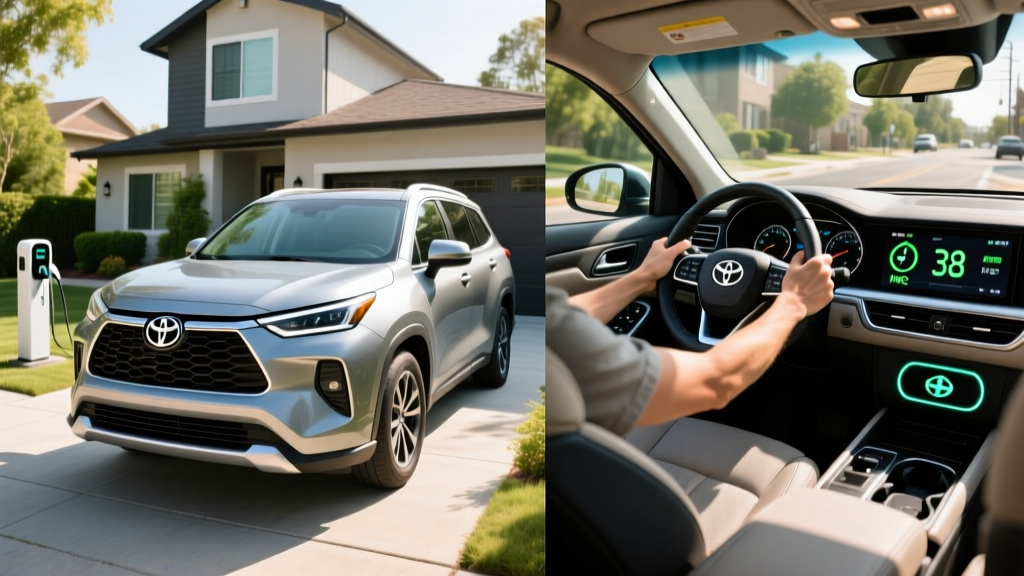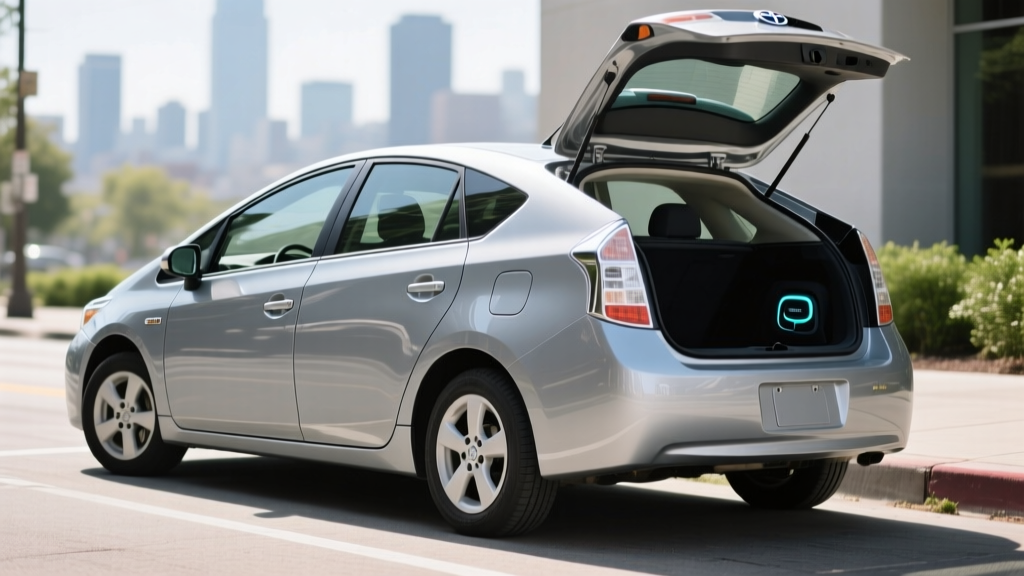
The 2010 Toyota Prius hybrid hatchback launched the third generation (XW30) of the vehicle that defined the modern hybrid segment. With an EPA-estimated 50 MPG combined, a larger 1.8-liter Atkinson-cycle engine, and a redesigned Hybrid Synergy Drive system, the 2010 Prius set a fuel-economy benchmark that many newer hybrids still struggle to match. In 2026, it remains one of the most cost-effective used hybrid purchases available — if you know what to look for in a 16-year-old battery pack.
This guide covers the exact specs, real-world fuel economy, battery longevity data, and ownership economics you need to evaluate a 2010 Prius today.
HEV vs PHEV: Where the 2010 Prius Fits
The 2010 Toyota Prius is a conventional hybrid electric vehicle (HEV), not a plug-in hybrid (PHEV). This is a critical distinction that many used-car shoppers confuse:
| Feature | HEV (2010 Prius) | PHEV (e.g., Prius Prime) |
|---|---|---|
| Plugs in to charge? | No — regenerates via braking & engine | Yes — Level 1/Level 2 charging |
| Electric-only driving | ~1 mile at low speed (EV mode) | 25-44 miles EPA (model-dependent) |
| Battery capacity | 1.3 kWh (NiMH) | 8.8-13.6 kWh (Li-ion) |
| Federal tax credit (new) | None | Up to $7,500 under §30D (if eligible) |
| Fuel required | Regular unleaded (87 octane) | Regular unleaded (87 octane) |
The 2010 Prius never needs to be plugged in. Its nickel-metal hydride (NiMH) traction battery recharges through regenerative braking and the gasoline engine. Toyota introduced the Prius Plug-in Hybrid (later renamed Prius Prime) as a separate model starting with the 2012 model year.
Fuel Economy: EPA Ratings vs Real-World MPG
The 2010 Prius carries one of the highest EPA fuel-economy ratings of any non-plug-in vehicle ever sold in the United States. Here are the official numbers from fueleconomy.gov:
| Driving Cycle | EPA Rating | Real-World Expectation |
|---|---|---|
| City | 51 MPG | 48-55 MPG (hybrids often exceed EPA in city) |
| Highway | 48 MPG | 42-47 MPG (aerodynamic drag at 75+ mph) |
| Combined | 50 MPG | 46-52 MPG depending on driving mix |
Why real-world city MPG often beats the EPA sticker: Hybrids recapture energy through regenerative braking, which is maximized in stop-and-go traffic. The engine shuts off at stops and during low-load coasting. In contrast, sustained highway driving at 75+ mph forces the gasoline engine to work continuously against aerodynamic drag, reducing the hybrid advantage.
Cold-weather impact: Expect a 5-10% fuel-economy reduction in winter conditions (below 40°F). The engine runs more frequently to maintain cabin heat and bring the catalytic converter to operating temperature. Owners in northern climates typically report 44-47 MPG combined in January versus 50-53 MPG in summer.
At a national average of $3.15 per gallon (regular unleaded, early 2026), driving 12,000 miles per year at 50 MPG costs approximately $756 annually in fuel. A comparable 30 MPG gas-only compact would cost $1,260 — a savings of roughly $504 per year with the Prius.
Powertrain Specs: 1.8L Hybrid Synergy Drive
The 2010 model year brought a significant powertrain upgrade. Toyota replaced the prior 1.5-liter engine with a larger 1.8-liter Atkinson-cycle four-cylinder, improving both power and efficiency.
| Specification | 2010 Toyota Prius |
|---|---|
| Engine | 1.8L Atkinson-cycle inline-4 |
| Engine horsepower | 98 hp @ 5,200 rpm |
| Electric motor output | 80 hp (60 kW) |
| Net combined system power | 134 hp |
| Torque (combined) | 153 lb-ft |
| Transmission | eCVT (planetary gearset, not a belt CVT) |
| 0-60 mph | ~9.8 seconds |
| Drivetrain | Front-wheel drive |
| Traction battery | 1.3 kWh NiMH (201.6V nominal) |
| Fuel tank capacity | 11.9 gallons |
| Total driving range | ~595 miles (EPA combined) |
| Curb weight | 3,042 lbs |
| Cargo volume (rear seats up) | 21.6 cu ft |
| Cargo volume (rear seats folded) | 39.6 cu ft |
The eCVT in the Prius is not a conventional continuously variable transmission with a steel belt and pulleys. It uses a planetary gearset that seamlessly blends engine and motor power. This design has proven exceptionally durable — there are no belts to wear, no clutches to burn out, and no fixed gear ratios to create shift shock.
Battery Longevity, Warranty & Replacement Cost
Battery lifespan is the single biggest concern for any used hybrid buyer. Here is what the data shows for the 2010 Prius NiMH pack:
| Battery Parameter | Detail |
|---|---|
| Chemistry | Nickel-Metal Hydride (NiMH) |
| Usable capacity | ~0.9 kWh (of 1.3 kWh total; Toyota buffers ~40% to prevent deep cycling) |
| Original warranty | 8 years / 100,000 miles (10 yr / 150,000 mi in CARB states) |
| Warranty coverage | Defects and capacity loss below ~60% of original |
| Expected lifespan (typical) | 150,000-200,000+ miles with gradual degradation |
| Gen 3 failure rate | Low — NiMH is less prone to sudden failure vs early Li-ion packs |
Real-world degradation pattern: Unlike lithium-ion batteries in full EVs, the NiMH pack in the 2010 Prius degrades gradually. Most owners notice a 1-3 MPG decline over 100,000 miles as the battery's ability to accept and deliver charge diminishes. Complete failure (where the car throws a hybrid system warning and limits performance) is relatively rare before 180,000 miles, but it does happen — particularly in hot climates where heat accelerates cell degradation.
Battery replacement cost in 2026:
- OEM new Toyota battery pack: $2,200-$2,800 (parts) + $500-$800 (labor) = approximately $2,700-$3,600 total at a dealership
- Refurbished/reconditioned pack: $1,000-$1,800 installed at an independent hybrid specialist
- Individual module replacement: $300-$600 if only 1-2 of the 28 NiMH modules have failed (a common repair for Gen 3 Prius)
Key inspection tip for used buyers: Use an OBD-II scanner with hybrid-specific capabilities (such as a Toyota Techstream-compatible tool or Dr. Prius app with a Bluetooth adapter) to check individual battery module voltages. A healthy pack shows all 28 modules within 0.2V of each other at rest. A spread greater than 0.3V signals impending failure. This test takes 10 minutes and can save you thousands.
Reliability & Common Issues Beyond the Battery
The 2010 Prius earns strong reliability marks overall, but the third-generation model has a few known issues that buyers should verify:
- Head gasket (EGR-related): The most significant Gen 3 issue. A clogged Exhaust Gas Recirculation (EGR) valve and cooler can cause localized overheating and head gasket failure, typically between 120,000-180,000 miles. Repair cost: $1,800-$2,500. Preventive fix: EGR circuit cleaning every 80,000-100,000 miles (~$200-$350 at an independent shop).
- Oil consumption: Some 2010-2012 1.8L engines consume oil at higher rates (1 quart per 1,000-2,000 miles). Check the dipstick at every fill-up and keep records. Toyota issued a technical service bulletin but not a recall for this.
- Brake actuator recall: NHTSA recall 10V017000 addressed the brake accumulator/actuator assembly. Confirm this recall was performed — check the VIN at nhtsa.gov/recalls.
- Inverter coolant pump: The electric water pump for the inverter cooling circuit can fail (recall 11V134000). Verify completion. Symptoms include the hybrid system warning light.
- 12V auxiliary battery: Located in the rear cargo area, this AGM battery typically lasts 4-6 years. A dead 12V battery prevents the car from starting even if the traction battery is fully charged. Replacement: $200-$280.
Tax Credits, Pricing & Used Market Value
The 2010 Toyota Prius does not qualify for any federal tax credit in 2026. The IRS §30D new clean vehicle credit applies only to new plug-in vehicles meeting battery-sourcing, MSRP cap, and buyer income requirements. As a used conventional hybrid, the 2010 Prius is ineligible for both the new-vehicle credit and the up-to-$4,000 used clean vehicle credit (which requires a plug-in EV or fuel-cell vehicle).
Some states offer minimal incentives for used hybrid purchases, but these vary by jurisdiction and change frequently — check your state's energy office or department of revenue for current programs.
2026 used-market pricing (based on condition and mileage):
- Fair condition (160,000+ miles, cosmetic wear): $3,500-$5,000
- Good condition (100,000-150,000 miles, maintained): $5,000-$7,500
- Excellent condition (under 100,000 miles, documented service): $7,500-$10,000
At the "good condition" median of ~$6,000 with 50 MPG, the Prius delivers a compelling total cost of ownership. Annual fuel ($756) plus estimated maintenance ($400-$600/year for an older hybrid) puts yearly running costs around $1,150-$1,350 — well below most gas-only compacts.
Who Should Buy the 2010 Prius vs a Full EV or Gas Car
Strengths
- 50 MPG combined — still among the best of any vehicle sold
- No plug-in required — works for apartment dwellers and street parkers
- Proven, simple NiMH battery with affordable module-level repair
- Hatchback cargo versatility (39.6 cu ft with seats folded)
- Low annual fuel cost (~$756 at 12,000 mi/yr)
- Strong parts availability and independent hybrid-shop support
Limitations
- 9.8-second 0-60 — noticeably slow for highway merging
- No plug-in capability or electric-only commuting range
- Gen 3 head gasket risk requires proactive EGR maintenance
- 16-year-old vehicle — expect wear items (suspension, AC compressor)
- No modern ADAS (no automatic emergency braking, no lane-keeping)
- 12V battery can strand you if neglected
Hybrid vs PHEV vs EV: Which Powertrain Fits You?
Choosing between a used HEV like the 2010 Prius, a newer PHEV, or a full battery-electric vehicle depends on your driving pattern, charging access, and budget:
| Factor | HEV (2010 Prius) | PHEV (e.g., Prius Prime) | Full EV (e.g., Bolt, Model 3) |
|---|---|---|---|
| Best for | No home charging; high-mileage commuters | Short commutes + occasional long trips | Home charging available; predictable routes |
| Home charging needed? | No | Recommended (120V minimum) | Essential (Level 2 strongly preferred) |
| Fuel cost per mile | ~$0.063 | ~$0.04 electric / $0.06 gas | ~$0.03-$0.05 (varies by electricity rate) |
| Upfront cost (2026) | $3,500-$10,000 (used) | $20,000-$35,000 (used/new) | $12,000-$45,000 (used/new) |
| Maintenance cost | Moderate (engine + hybrid system) | Moderate (engine + larger battery) | Low (no engine, fewer fluids) |
| Tax credit eligible? | No | Yes if new & §30D requirements met | Yes if new & §30D requirements met |
Choose the 2010 Prius HEV if: You lack home charging access, want the lowest possible purchase price, drive a mix of city and highway miles, and need a vehicle that works everywhere without infrastructure dependency.
Choose a PHEV if: You can install a Level 2 charger at home, your daily commute is under 30 miles (electric-only covers it), but you need gas-engine range for road trips without charging-planning.
Choose a full EV if: You have reliable home charging, want the lowest per-mile energy cost, prefer minimal maintenance, and your typical trips fall within the vehicle's real-world range.
Frequently Asked Questions
How many MPG does the 2010 Toyota Prius get?
The EPA rates the 2010 Prius at 51 MPG city, 48 MPG highway, and 50 MPG combined. In real-world driving, owners typically report 46-52 MPG combined depending on driving mix, tire condition, and climate. City driving with frequent stops often yields the best numbers thanks to regenerative braking.
How far can the 2010 Prius drive on electric power only?
The 2010 Prius is a conventional HEV, not a plug-in hybrid. It has an "EV Mode" button that allows roughly 0.5-1 mile of electric-only driving at speeds below 25 mph under light load. This is not a practical commuting mode — it exists primarily for quiet, zero-emission movement in garages or residential areas. For meaningful electric-only range (25-44 miles), you would need a Prius Prime (PHEV).
Is the 2010 Prius reliable, and what does a battery replacement cost?
The 2010 Prius is generally reliable with proper maintenance. The NiMH traction battery typically lasts 150,000-200,000+ miles. When replacement is needed, expect $2,700-$3,600 for a new OEM pack at a dealer or $1,000-$1,800 for a refurbished pack at an independent hybrid shop. Individual module repair can cost as little as $300-$600. The main mechanical risk is head gasket failure related to EGR system clogging — preventive EGR cleaning every 80,000-100,000 miles is strongly recommended.
Does the 2010 Prius qualify for any tax credit?
No. The 2010 Toyota Prius is a conventional hybrid (HEV), not a plug-in vehicle. It does not qualify for the federal §30D new clean vehicle credit or the used clean vehicle credit. The IRS limits these credits to plug-in electric vehicles and fuel-cell vehicles meeting specific battery-sourcing, MSRP, and buyer-income requirements. Some states may offer minor incentives for hybrid purchases — check your state energy office for current programs.
What should I check before buying a used 2010 Prius?
Prioritize these five inspections: (1) Hybrid battery health — scan module voltages with an OBD-II tool; all 28 modules should be within 0.2V. (2) EGR system — confirm the EGR valve and cooler have been cleaned or replaced. (3) Recall completion — verify the brake actuator (10V017000) and inverter coolant pump (11V134000) recalls were performed at nhtsa.gov/recalls. (4) Oil consumption — check for blue exhaust smoke and review oil-change records. (5) 12V auxiliary battery age — replace proactively if over 5 years old.
How does the 2010 Prius compare to a modern hybrid like the 2026 Prius?
The 2026 Toyota Prius produces 194 hp (vs 134 hp), achieves an EPA 57 MPG combined (vs 50 MPG), and includes standard Toyota Safety Sense 3.0 with automatic emergency braking and lane-keeping. However, a new 2026 Prius starts at approximately $28,550 MSRP. The 2010 model costs 70-85% less upfront while delivering only ~12% lower fuel economy — making it an exceptionally strong value proposition for budget-conscious buyers who can accept the older safety technology and higher maintenance risk.