Quick Verdict: A Proven Hybrid SUV With Staying Power
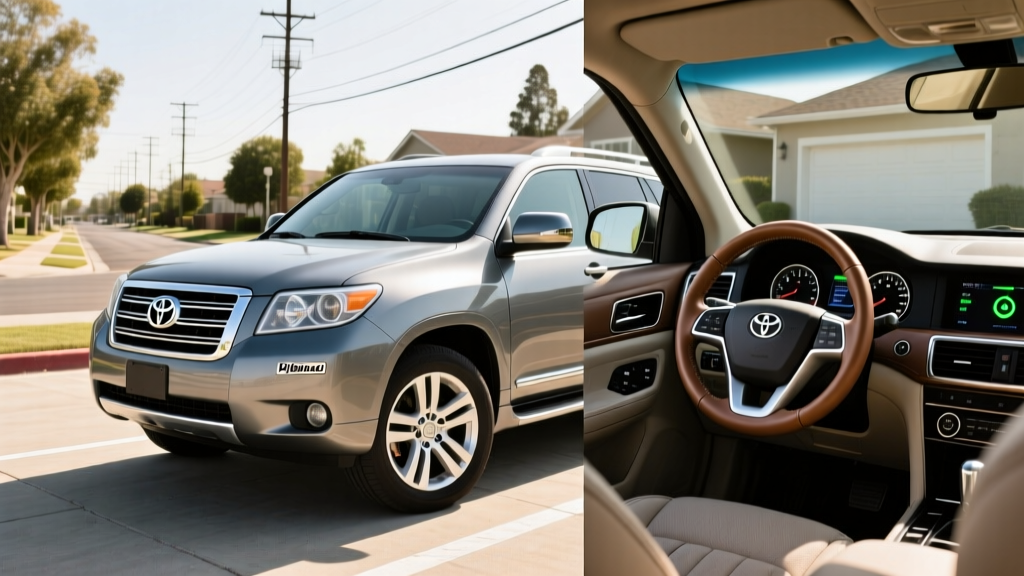
The 2010 Toyota Highlander Hybrid Limited remains one of the most dependable three-row hybrid SUVs on the used market. Built on Toyota's second-generation Hybrid Synergy Drive system, it pairs a 3.3-liter V6 with electric motors for a combined 280 horsepower and an EPA-estimated 26 MPG combined. For buyers who need family hauling capability without the fuel penalty of a conventional V6 SUV — and who aren't ready to commit to a full battery-electric vehicle — this 16-year-old hybrid still makes a compelling case.
But buying a used hybrid with potentially 150,000+ miles on the odometer requires careful evaluation of battery health, maintenance history, and realistic ownership costs. This guide breaks down everything you need to know before purchasing a 2010 Highlander Hybrid Limited in 2026.
Understanding the Powertrain: HEV, Not PHEV
Critical distinction: The 2010 Toyota Highlander Hybrid is a conventional hybrid electric vehicle (HEV), not a plug-in hybrid (PHEV). This means:
- No plug required: The 2.4 kWh nickel-metal hydride (NiMH) battery charges exclusively through regenerative braking and the gasoline engine. You never plug it in.
- No electric-only range to speak of: The Highlander Hybrid can creep at very low speeds (under ~25 mph) on electric power alone for roughly 1-2 miles, but this is not a meaningful EV mode for commuting.
- No federal tax credit: The §30D federal tax credit applies only to plug-in vehicles (BEVs and PHEVs) with batteries ≥7 kWh. Conventional hybrids like this one qualify for no federal incentive.
If you're looking for a plug-in Toyota SUV with meaningful electric-only range, you'd need to look at newer models like the current RAV4 Prime (42 miles EV range) or the Highlander Hybrid's modern successor — neither of which exists as a PHEV variant as of the 2026 model year.
Fuel Economy: EPA Ratings vs. Real-World MPG
| Driving Condition | EPA Estimate | Real-World Expectation |
|---|---|---|
| City | 27 MPG | 26-29 MPG (hybrids often beat EPA in city) |
| Highway | 25 MPG | 23-26 MPG (hybrid advantage shrinks at sustained speed) |
| Combined | 26 MPG | 24-27 MPG |
Source: fueleconomy.gov
Why real-world MPG varies: The 2010 Highlander Hybrid's Atkinson-cycle V6 and electric motor combo excels in stop-and-go traffic where regenerative braking recaptures energy. City driving often yields MPG at or above the EPA estimate. Highway cruising above 70 mph, however, reduces the hybrid system's advantage — expect 23-25 MPG on long road trips.
Cold weather also impacts efficiency. In sub-freezing temperatures, the engine runs more frequently to provide cabin heat and maintain battery temperature, potentially dropping combined MPG to 22-24. This is normal hybrid behavior, not a defect.
Powertrain Specifications
| Specification | Detail |
|---|---|
| Engine | 3.3L V6 Atkinson-cycle |
| Engine Output | 208 hp @ 5,600 rpm / 212 lb-ft @ 4,400 rpm |
| Electric Motors | Front motor: 123 kW; Rear motor: 50 kW |
| Combined Net Horsepower | 280 hp |
| Hybrid Battery | 2.4 kWh NiMH (nominal), ~288V system |
| Drivetrain | eCVT (electronically controlled continuously variable transmission) |
| AWD System | Electronic on-demand AWD (rear electric motor, no mechanical driveshaft) |
| 0-60 mph | ~7.8 seconds |
| Towing Capacity | 3,500 lbs (when properly equipped) |
| Curb Weight | ~4,500 lbs |
| EPA Combined MPG | 26 MPG |
The electronic AWD system deserves special mention. Unlike traditional AWD SUVs with a mechanical driveshaft to the rear axle, the Highlander Hybrid uses a dedicated 50 kW rear electric motor that engages only when slip is detected or under hard acceleration. This eliminates drivetrain parasitic loss, contributing to the hybrid's efficiency advantage over the non-hybrid Highlander V6 AWD of the same era.
Battery Health, Warranty & Replacement Cost
Original hybrid battery warranty: 8 years / 100,000 miles (10 years / 150,000 miles in California and states adopting CARB emissions standards).
Warranty status in 2026: All 2010 Highlander Hybrid batteries are now outside factory warranty coverage, regardless of mileage.
How long do these batteries actually last? Toyota's NiMH hybrid batteries from this generation have proven remarkably durable. Many 2010 Highlander Hybrids still operate on their original battery packs at 150,000-200,000+ miles. However, capacity degradation is inevitable. Expect a 15-year-old NiMH pack to have lost 15-30% of its original capacity, which manifests as:
- More frequent engine cycling (the gas engine kicks on sooner)
- Slightly reduced fuel economy (1-3 MPG drop from new)
- Less electric-only assist during light acceleration
Replacement cost in 2026:
- New OEM Toyota battery: $3,000-$4,500 installed at a dealership
- Refurbished/remanufactured battery: $1,500-$2,500 installed (from suppliers like GreenBean, Dorman)
- Individual module replacement: $800-$1,500 if only a few cells have failed (requires a qualified hybrid technician)
Pre-purchase inspection tip: Have a hybrid-savvy mechanic perform a battery health scan using Toyota's Techstream diagnostic software or an aftermarket OBD-II hybrid scanner. This reveals individual module voltages and identifies weak cells before they cause a full pack failure. A healthy pack should show module voltages within 0.2V of each other under load.
What the Limited Trim Gets You
The Limited was the top trim for the 2010 Highlander Hybrid, and it came well-equipped. Standard features include:
- Leather-trimmed heated front seats
- Power liftgate
- JBL premium audio with 6-disc CD changer and Bluetooth
- Automatic dual-zone climate control
- Smart Key with push-button start
- 19-inch alloy wheels
- Power tilt/slide moonroof
- Towing prep package (3,500 lb capacity)
Available options on the Limited included a navigation system with a rear-seat DVD entertainment system and a backup camera. The backup camera is highly recommended for a vehicle this size — if the example you're considering doesn't have one, budget $200-$400 for an aftermarket unit.
Used Pricing in 2026
Pricing for a 2010 Toyota Highlander Hybrid Limited varies significantly based on mileage, condition, battery health, and region:
- High mileage (150,000+ miles), fair condition: $5,500-$7,500
- Average mileage (100,000-140,000 miles), good condition: $7,500-$10,000
- Lower mileage (under 100,000 miles), excellent condition: $10,000-$13,000
These prices reflect private-party and dealer retail values as of early 2026. The Highlander Hybrid holds value well compared to non-hybrid competitors of the same vintage, largely due to Toyota's reliability reputation and the scarcity of three-row hybrid SUVs from this era.
Tax credit eligibility: The 2010 Highlander Hybrid does not qualify for the federal §30D clean vehicle credit. Per IRS guidelines, only plug-in electric vehicles (BEVs and PHEVs) with battery capacities of at least 7 kWh are eligible. Conventional hybrids with sub-3 kWh batteries have never qualified for the modern credit structure. Some states may offer minimal used-vehicle rebates, but these are rare for 16-year-old vehicles — check your state's energy office for specifics.
Hybrid vs. PHEV vs. EV: Which Fits Your Needs?
The 2010 Highlander Hybrid occupies a specific niche. Here's how it compares to the alternatives:
| Factor | 2010 Highlander Hybrid (HEV) | Modern PHEV SUV (e.g., Toyota Grand Highlander Hybrid) | Full EV SUV (e.g., Tesla Model X) |
|---|---|---|---|
| Plug-in Required? | No | Yes (for EV range) | Yes |
| Electric-Only Range | ~1 mile (negligible) | 30-45 miles typical | 300-350 miles (EPA) |
| Fuel Cost per Mile | ~$0.12-0.15 | ~$0.05-0.10 (blended) | ~$0.04-0.08 |
| Home Charging Needed? | No | Recommended (Level 2) | Required (Level 2) |
| Upfront Cost (2026) | $6,000-$13,000 (used) | $48,000-$58,000 (new) | $75,000-$95,000 (new) |
| Federal Tax Credit | $0 | Up to $7,500 (§30D) | Up to $7,500 (§30D) |
| Maintenance Cost | Low-moderate | Low-moderate | Very low |
Choose the 2010 Highlander Hybrid if:
- You need three rows and AWD on a budget under $15,000
- You can't charge at home (apartment, no garage, street parking)
- You want proven reliability with widely available parts
- You drive 10,000-15,000 miles/year and want fuel savings without a large upfront investment
Choose a modern PHEV if: You have home charging access, want 30+ miles of electric commuting, and can spend $45,000+.
Choose a full EV if: You have reliable Level 2 home charging, drive under 300 miles between charges, want minimal maintenance, and can invest $70,000+.
Common Issues & Reliability Notes
The 2010 Highlander Hybrid is generally very reliable, but a few known issues deserve attention:
- Inverter coolant pump: Some units experience premature failure of the hybrid inverter coolant pump. Listen for unusual whining from the engine bay and check for coolant leaks near the inverter. Replacement: $400-$800.
- Brake actuator: The regenerative braking system's actuator can develop issues at high mileage, causing a firm pedal or warning lights. Replacement: $1,200-$2,000 at a dealer.
- Power steering: Electric power steering racks from this era can develop leaks or electronic faults. Budget $800-$1,500 for replacement if needed.
- Standard wear items: Suspension components (struts, bushings), water pump, and ignition coils are all standard maintenance items at 120,000-180,000 miles.
Check the NHTSA recall database for any open recalls on the specific VIN you're considering. Toyota has issued service campaigns for various hybrid system components over the years, and some may still be addressable at no cost.
Pros
- Proven 280-hp hybrid powertrain with strong acceleration
- 26 MPG combined in a 4,500-lb three-row SUV
- No plug-in charging required — works like a gas car
- Electronic AWD with no mechanical drivetrain losses
- Limited trim is well-equipped with luxury features
- 3,500-lb towing capacity
- Extensive Toyota dealer network for service
- NiMH battery packs often last 150,000-200,000+ miles
Cons
- All examples are out of factory warranty
- Hybrid battery replacement costs $1,500-$4,500 when needed
- No meaningful electric-only driving range
- Dated infotainment by 2026 standards (no Apple CarPlay/Android Auto)
- Brake actuator repairs are expensive
- Fuel economy advantage over non-hybrid is modest (~5 MPG)
- No federal or state tax credits available
Frequently Asked Questions
How many MPG does the 2010 Toyota Highlander Hybrid get?
The EPA rates it at 27 city / 25 highway / 26 combined MPG. In real-world driving, city MPG often reaches 27-29 thanks to regenerative braking, while highway cruising above 70 mph may return 23-25 MPG. Cold weather can reduce combined MPG to 22-24.
Can I plug in the 2010 Highlander Hybrid to charge it?
No. This is a conventional hybrid (HEV), not a plug-in hybrid (PHEV). The battery charges entirely through regenerative braking and the gasoline engine. There is no charging port and no plug-in capability.
How far can it go on electric power alone?
Effectively zero meaningful distance. The hybrid system can propel the vehicle at very low speeds (under ~25 mph) for about 1-2 miles on battery alone under ideal conditions, but this is not a usable EV mode. The gasoline engine handles the vast majority of propulsion.
Is the hybrid battery reliable and what does replacement cost?
Toyota's NiMH hybrid batteries from this generation are among the most reliable in the industry. Many original packs last 150,000-200,000+ miles with gradual capacity loss. When replacement is needed, a new OEM battery costs $3,000-$4,500 installed, while refurbished packs run $1,500-$2,500. Individual cell module repairs can be done for $800-$1,500 by qualified hybrid specialists.
Does the 2010 Highlander Hybrid qualify for any tax credit?
No. Per IRS §30D rules, the federal clean vehicle credit applies only to plug-in electric vehicles (BEVs and PHEVs) with battery capacities of at least 7 kWh. The Highlander Hybrid's 2.4 kWh NiMH battery disqualifies it. No used-EV credit applies either, as that credit also requires a plug-in vehicle. Some states offer minimal incentives for hybrids, but these are rare for vehicles of this age.
How does the 2010 Highlander Hybrid compare to the non-hybrid V6?
The non-hybrid 2010 Highlander V6 AWD gets 17 city / 23 highway / 19 combined MPG with 270 hp. The hybrid trades 10 hp less from the engine alone but gains electric motor assist for 280 combined hp, plus a 7 MPG combined improvement. Over 15,000 miles per year at $3.50/gallon, the hybrid saves roughly $500-$600 annually in fuel.
What should I check before buying a used 2010 Highlander Hybrid?
Prioritize a hybrid battery health scan (module voltage balance), check for inverter coolant pump operation, inspect for brake actuator warning signs, verify maintenance records, and confirm no open NHTSA recalls on the VIN. A pre-purchase inspection by a Toyota dealer or hybrid specialist is strongly recommended — budget $150-$250 for this service.