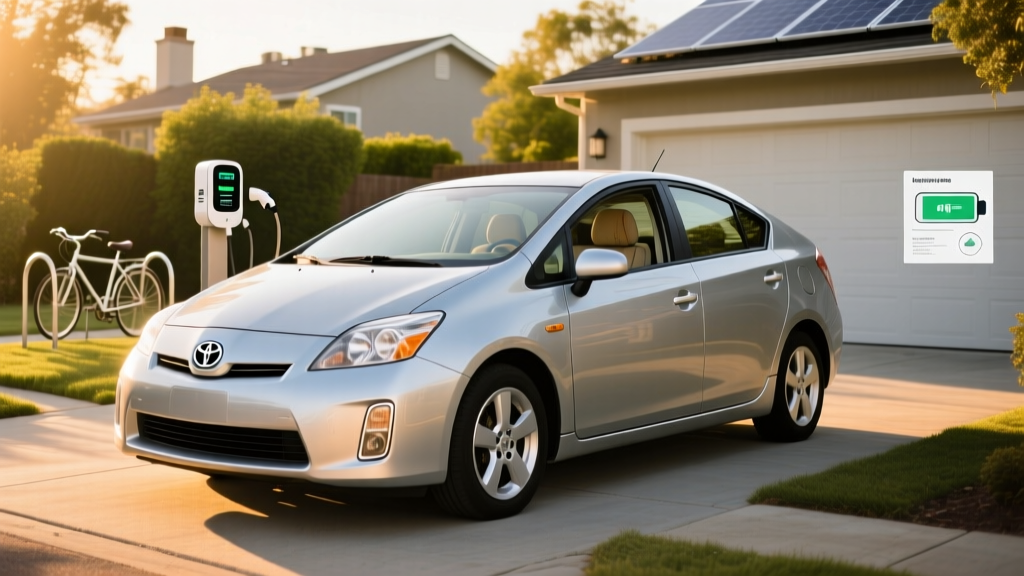
The third-generation Toyota Prius (model code ZVW30) debuted for the 2010 model year and quickly became the benchmark for hybrid efficiency. More than 15 years later, the 2010 Prius remains one of the most searched used hybrids on the market. Buyers want to know: does the 2010 Prius hybrid MPG figure of 50 combined still hold up in real-world driving, and is the aging nickel-metal hydride battery a dealbreaker? This guide breaks down the exact fuel economy numbers, powertrain specs, battery longevity data, and ownership economics you need before buying a used 2010 Prius in 2026.
2010 Prius Hybrid MPG: Official EPA Numbers vs. Real-World Results
The EPA rated the 2010 Toyota Prius at 51 mpg city, 48 mpg highway, and 50 mpg combined. These figures made it the most fuel-efficient non-plug-in vehicle sold in the United States at the time, and they remain remarkably competitive against 2026 model-year hybrids.
| Driving Cycle | EPA Rating | Real-World Expectation (2026) |
|---|---|---|
| City | 51 MPG | 48–54 MPG |
| Highway | 48 MPG | 42–47 MPG |
| Combined | 50 MPG | 45–50 MPG |
According to aggregated owner data on fueleconomy.gov, drivers of the 2010 Prius report an average real-world combined fuel economy of approximately 48 mpg, with a spread from roughly 42 mpg (aggressive highway-heavy driving) to over 55 mpg (hypermiling in moderate city conditions). A well-maintained example with a healthy hybrid battery will typically deliver 46–50 mpg in mixed driving in 2026.
Powertrain Specs: Engine, Motor, and Combined Output
The 2010 Prius uses Toyota's Hybrid Synergy Drive (HSD) system, which pairs a gasoline engine with two electric motor-generators through a planetary gearset acting as a continuously variable transmission (eCVT). This is a conventional hybrid (HEV), meaning it charges its battery solely through regenerative braking and engine operation — there is no plug and no external charging.
| Specification | Value |
|---|---|
| Engine | 1.8L inline-4, Atkinson cycle (2ZR-FXE) |
| Engine Power | 98 hp @ 5,200 rpm |
| Electric Motor (MG2) | 80 hp (60 kW) |
| Net Combined System Power | 134 hp |
| Transmission | eCVT (planetary gearset) |
| Hybrid Battery | 1.3 kWh nominal, NiMH (nickel-metal hydride) |
| Battery Voltage | 201.6V (168 cells × 1.2V) |
| 0–60 mph | ~9.8 seconds |
| Drivetrain | Front-wheel drive |
| Curb Weight | ~3,042 lbs |
| Fuel Tank | 11.9 gallons |
| Total Driving Range | ~595 miles (at 50 mpg combined) |
The 2010 model year marked the switch from the second-generation's 1.5L engine to the 1.8L 2ZR-FXE. The larger displacement improved highway drivability and reduced engine strain at higher speeds, which is part of why the 2010 Prius achieved better highway MPG than its predecessor despite being a larger, heavier car.
HEV vs. PHEV: Why the 2010 Prius Is a Conventional Hybrid
It is critical to understand that the 2010 Prius is a conventional hybrid electric vehicle (HEV), not a plug-in hybrid (PHEV). Toyota did not introduce the Prius Plug-in (later renamed Prius Prime) until the 2012 model year. Here is the distinction that matters for buyers:
| Feature | Conventional Hybrid (HEV) — 2010 Prius | Plug-In Hybrid (PHEV) — e.g., 2026 Prius Prime |
|---|---|---|
| Plug-in Charging | No — never plugs in | Yes — Level 1/Level 2 AC charging |
| Electric-Only Range | ~1 mile at low speed (EV mode) | 40–45 miles (2026 Prius Prime SE) |
| Battery Capacity | 1.3 kWh (NiMH) | 13.6 kWh (lithium-ion, 2026 Prime) |
| DC Fast Charging | No | No (Prius Prime); some PHEVs offer DC |
| Federal Tax Credit | Not eligible | Up to $3,750 (§30D, subject to sourcing rules) |
| Fuel Source | Gasoline only (regen supplements) | Electricity + gasoline |
The 2010 Prius's EV mode button allows electric-only driving for roughly one mile at speeds under 25 mph, but the 1.3 kWh NiMH battery is far too small to serve as a meaningful electric vehicle. Its role is to buffer energy between the engine and the road, enabling the engine to shut off at stops and assist during acceleration.
Battery Longevity, Degradation, and Replacement Costs
The hybrid battery is the single biggest concern for any used 2010 Prius buyer. Toyota's NiMH pack is robust but not immortal. Here is what the data shows after 15+ years of real-world operation:
Expected battery lifespan: Data from fleet operators and owner surveys indicates that 2010 Prius NiMH batteries typically last 150,000–200,000 miles before significant degradation triggers a check-hybrid-system warning. Many examples reach 200,000+ miles on the original pack, particularly in moderate climates. Heat is the primary degradation accelerant — Prius examples from Arizona, Texas, and Southern California tend to see earlier battery failure than those from cooler regions.
Battery replacement cost in 2026:
| Option | Cost Range | Warranty | Notes |
|---|---|---|---|
| New OEM Toyota battery | $2,200–$2,800 (parts + labor) | 3 years / unlimited miles | Available through Toyota dealers; part # G9510-47031 |
| Remanufactured battery | $1,200–$1,800 (parts + labor) | 1–3 years depending on supplier | Rebuilt with tested/reconditioned cells; quality varies by vendor |
| Used/salvage battery | $500–$900 (parts + labor) | 30–90 days typical | From a wrecked Prius; unpredictable remaining life |
| Individual module replacement | $300–$600 (parts + labor) | Varies | Replace only failed modules; requires cell balancing expertise |
Signs of impending hybrid battery failure: Watch for a noticeable drop in MPG (5+ mpg below your baseline), the engine running more frequently at stops, a "Check Hybrid System" warning on the dash, or the battery state-of-charge gauge cycling rapidly between full and near-empty. An OBD-II scanner with hybrid-specific software (such as Toyota's Techstream or the aftermarket Dr. Prius app) can read individual module voltages and identify weak cells before a complete failure.
Reliability Record and Common Issues Beyond the Battery
The 2010 Prius earns strong reliability marks overall, but a few known issues deserve attention when inspecting a used example:
- Head gasket / EGR clogging (high mileage): The 2ZR-FXE engine is susceptible to EGR (exhaust gas recirculation) valve and cooler clogging above 120,000 miles. If left unaddressed, carbon buildup can cause head gasket failure — a $2,500–$4,000 repair. Preventive EGR cleaning every 80,000–100,000 miles is strongly recommended.
- Brake actuator assembly: The 2010 Prius uses an electro-hydraulic brake actuator that can fail, producing a firm brake pedal and multiple dashboard warnings. Replacement runs $1,200–$1,800. This was the subject of a NHTSA service campaign.
- Oil consumption: Some 2010–2014 Prius engines consume oil at a rate of 1 quart per 1,000–2,000 miles, particularly if oil changes were infrequent. Check the dipstick at every fuel fill-up on high-mileage examples.
- 12V auxiliary battery: The small 12V AGM battery in the trunk powers the electronics that boot the hybrid system. It typically lasts 4–6 years and costs $180–$250 to replace. A dead 12V battery will prevent the car from starting, even if the hybrid pack is fully charged.
- Inverter coolant pump: The inverter cooling system has its own electric water pump that can fail silently. Check for turbulence in the inverter coolant reservoir (under the hood) when the car is in Ready mode — a smooth, still surface indicates pump failure.
Despite these items, the 2010 Prius's overall drivetrain — the planetary eCVT, motor-generators, and power electronics — is among the most reliable in the automotive industry. The eCVT has no belts, chains, or friction clutches to wear, which is why Prius examples routinely exceed 200,000 miles without transmission service.
2010 Prius Used Pricing and Tax Credit Eligibility
As of early 2026, a used 2010 Toyota Prius in average condition (130,000–170,000 miles) trades for approximately $5,500–$8,500 depending on trim level, mileage, condition, and whether the hybrid battery has been replaced. Low-mileage, well-maintained examples with a new OEM battery can command $9,000–$11,000.
| Trim | Original 2010 MSRP | 2026 Used Price (avg.) |
|---|---|---|
| Prius II (base) | $22,800 | $5,500–$7,500 |
| Prius III | $24,050 | $6,000–$8,000 |
| Prius IV | $25,800 | $6,500–$8,500 |
| Prius V (top trim) | $27,270 | $7,000–$9,500 |
Federal tax credit: The 2010 Prius does not qualify for any federal tax credit. The IRS §30D Clean Vehicle Credit applies only to new qualifying plug-in vehicles (BEVs and PHEVs) and, separately, the §25E credit applies to used plug-in vehicles meeting specific criteria. A conventional hybrid (HEV) like the 2010 Prius is ineligible for both. No state-level hybrid-specific incentives remain active for this model year either.
Who Should Buy the 2010 Prius — And Who Should Look Elsewhere
Pros
- 50 mpg combined EPA — still class-leading among non-plug-in used cars
- Proven, simple NiMH hybrid system with wide aftermarket support
- Low annual fuel cost: ~$900/year at 12,000 miles and $3.50/gallon
- eCVT is virtually maintenance-free (no belt, no fluid changes required)
- Hatchback cargo versatility (39.6 cu ft with rear seats folded)
- Strong parts availability and independent mechanic familiarity
Cons
- Hybrid battery replacement likely needed if original pack remains ($1,200–$2,800)
- EGR/head gasket risk above 120,000 miles if maintenance was deferred
- Modest 134 hp — slow acceleration, especially at highway merge speeds
- 2010-era infotainment: no Apple CarPlay, Android Auto, or modern safety tech
- No EV-only range to speak of; not eligible for any tax credit
- Brake actuator replacement is expensive if it fails
Decision Framework: Is the 2010 Prius Right for You?
Choose the 2010 Prius if: You need an ultra-low-cost daily commuter, drive mostly in city/suburban traffic where regenerative braking maximizes MPG, have access to a mechanic familiar with Toyota hybrids, and want to spend under $10,000 total (purchase + any needed battery replacement).
Choose a newer PHEV (e.g., 2024+ Prius Prime) if: You have home charging access, want 40+ miles of electric-only commuting, qualify for the §30D federal tax credit (up to $3,750 for qualifying PHEVs), and want modern ADAS features like Toyota Safety Sense.
Choose a full BEV (e.g., 2026 Hyundai Ioniq 6, Chevrolet Equinox EV) if: You have reliable home Level 2 charging, your daily commute is under 250 miles round-trip, you want zero tailpipe emissions and minimal drivetrain maintenance, and you can absorb a higher purchase price offset by lower per-mile energy cost (~$0.04/mile on home electricity vs. ~$0.08/mile on gas at 50 mpg).
Ownership Cost: 2010 Prius vs. Average Gas Car in 2026
The strongest argument for a used 2010 Prius in 2026 is total operating cost. Here is a five-year projection assuming 12,000 miles/year, $3.50/gallon regular unleaded, and typical maintenance:
| Cost Category | 2010 Prius (50 MPG) | Avg. Gas Sedan (28 MPG) |
|---|---|---|
| Fuel | $4,200 | $7,500 |
| Maintenance (oil, brakes, tires) | $2,800 | $3,200 |
| Hybrid battery reserve | $1,500 (if not yet replaced) | $0 |
| Insurance (avg.) | $4,500 | $5,100 |
| Total 5-Year Operating Cost | ~$13,000 | ~$15,800 |
Even budgeting for a potential hybrid battery replacement, the 2010 Prius saves approximately $2,800 over five years compared to an average gasoline sedan — and that gap widens further if gas prices rise above $3.50/gallon. The Prius's regenerative braking also extends brake pad life significantly; many owners report 80,000+ miles on original front brake pads.
Frequently Asked Questions
How many MPG does the 2010 Prius actually get in real driving?
The EPA rates the 2010 Prius at 51 city / 48 highway / 50 combined. In real-world 2026 driving, most owners see 46–50 mpg combined. City driving often yields 48–54 mpg thanks to regenerative braking, while sustained highway driving at 75+ mph drops to 42–46 mpg. Cold weather and aggressive acceleration will reduce these figures by 5–15%.
Does the 2010 Prius need to be plugged in?
No. The 2010 Prius is a conventional hybrid (HEV). It charges its 1.3 kWh NiMH battery entirely through regenerative braking and the gasoline engine. There is no charging port and no plug. You fuel it exclusively with gasoline.
How long does the 2010 Prius hybrid battery last?
The original NiMH battery typically lasts 150,000–200,000 miles or 12–18 years, depending heavily on climate. Hot-weather states see earlier degradation. If the original battery is still in a 2010 Prius you are considering, budget $1,200–$2,800 for a replacement (remanufactured or new OEM) within the next few years.
What does it cost to replace the hybrid battery in a 2010 Prius?
A new OEM Toyota battery costs $2,200–$2,800 installed at a dealer. A quality remanufactured battery runs $1,200–$1,800 installed at an independent hybrid specialist. Used/salvage batteries start around $500 but carry significant risk. Individual module replacement is possible for $300–$600 if only a few cells have failed.
Does the 2010 Prius qualify for any federal or state tax credit?
No. The IRS §30D Clean Vehicle Credit and the §25E Used Clean Vehicle Credit apply only to plug-in electric vehicles (BEVs and PHEVs) with sufficient battery capacity. The 2010 Prius is a conventional hybrid (HEV) with a 1.3 kWh NiMH battery and no plug, making it ineligible for any federal EV tax credit.
Is the 2010 Prius more reliable than a comparable gas car?
Overall, yes — with caveats. The eCVT transmission and motor-generators are exceptionally reliable with no wearable friction components. The 1.8L engine is durable if the EGR system is maintained. The hybrid battery is the main wear item that a gas car does not have, but its replacement cost ($1,200–$2,800) is comparable to a transmission rebuild on a conventional vehicle. According to data aggregated by IIHS and owner surveys, the 2010 Prius has below-average rates of major powertrain failure for its age class.
2010 Prius vs. a modern hybrid like the 2026 Prius — is the upgrade worth it?
The 2026 Toyota Prius (LE AWD) starts at approximately $29,450 MSRP and achieves 57 mpg combined EPA — 7 mpg better than the 2010 model. It also includes Toyota Safety Sense 3.0 (automatic emergency braking, lane-keeping, adaptive cruise), Apple CarPlay/Android Auto, and a lithium-ion hybrid battery with a 10-year/150,000-mile warranty. If your budget allows a $30,000 purchase, the 2026 Prius is objectively superior in efficiency, safety, and technology. The 2010 Prius's advantage is purely financial: a $6,000–$9,000 entry price versus $29,000+, making it the choice for budget-constrained buyers who prioritize low operating cost over modern features.