The 2010 Hybrid Lexus SUV Lineup: What Buyers Need to Know in 2026
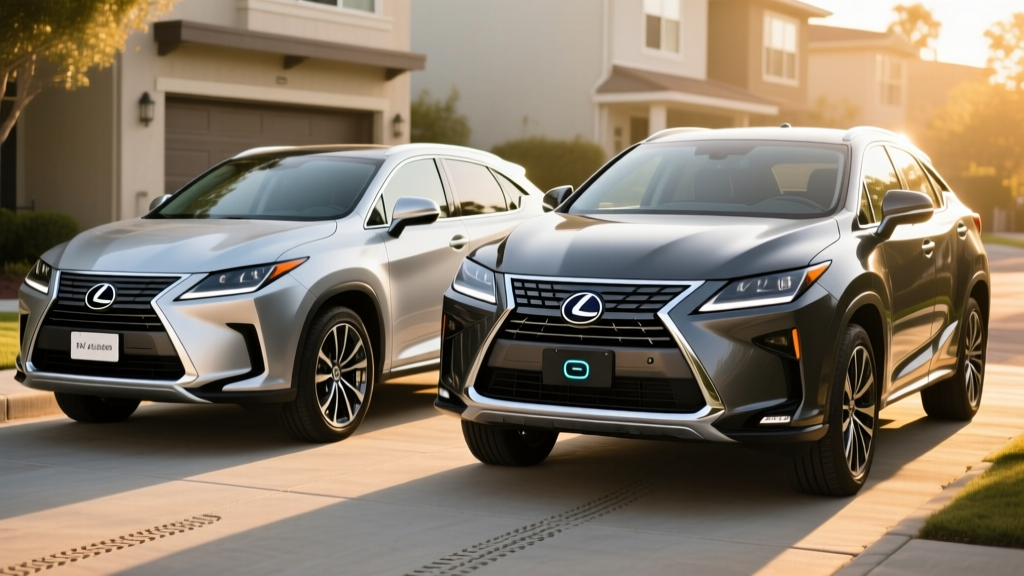
If you're searching for a 2010 hybrid Lexus SUV, you're almost certainly looking at the Lexus RX 450h — the second-generation hybrid crossover that debuted for the 2010 model year as the successor to the RX 400h (2006–2008). The RX 450h paired a 3.5-liter V6 with Toyota's proven Hybrid Synergy Drive system, delivering luxury-crossover comfort with fuel economy that still holds up respectably against modern competitors. A small number of 2010 RX 350 (gas-only) models also exist on the used market, but the hybrid RX 450h is the electrified option that draws today's budget-conscious buyers.
This guide breaks down the real-world ownership picture for the 2010 RX 450h in 2026: EPA fuel economy versus what you'll actually see at the pump, hybrid battery longevity and replacement costs, powertrain specs, and whether this 16-year-old hybrid still makes financial sense versus a newer PHEV or full EV.
HEV vs. PHEV — Critical Distinction for This Model Year
The 2010 Lexus RX 450h is a conventional hybrid electric vehicle (HEV). It does not plug in. The hybrid battery (approximately 1.9 kWh gross, ~1.3 kWh usable) recharges exclusively through regenerative braking and the gasoline engine. There is no electric-only driving range of any meaningful distance — the electric motor assists the engine and enables brief low-speed electric-only movement, but this is not a plug-in hybrid (PHEV). Lexus did not offer a PHEV SUV until the 2026 TX 550h+ and NX 450h+. If you want plug-in capability from Lexus, you'll need a 2022 or newer model.
2010 Lexus RX 450h Fuel Economy: EPA vs. Real-World MPG
The EPA rated the 2010 RX 450h at 30 MPG combined (32 city / 28 highway) for the front-wheel-drive model and 29 MPG combined (30 city / 28 highway) for the all-wheel-drive variant, per fueleconomy.gov. These figures were genuinely impressive for a 4,700-pound luxury crossover in 2010 and remain competitive with many non-hybrid midsize SUVs sold today.
| Drivetrain | City MPG | Highway MPG | Combined MPG |
|---|---|---|---|
| FWD | 32 | 28 | 30 |
| AWD (AWD-i) | 30 | 28 | 29 |
Real-World MPG: What Owners Actually Report
Like most Toyota/Lexus hybrids, the RX 450h tends to meet or slightly exceed its EPA city estimate in stop-and-go driving, where regenerative braking recovers the most energy. Real-world city driving in the 30–34 MPG range is common. Highway driving is a different story: at sustained 70–75 MPH speeds, expect 25–27 MPG due to the vehicle's weight and aerodynamic profile. Cold-weather operation (below 40°F) can reduce combined fuel economy by 10–15%, as the engine runs more frequently to maintain cabin heat and battery temperature.
Over a full tank (17.2-gallon capacity), most owners report 420–480 miles of real-world range depending on driving mix — a practical advantage for road trips where charging infrastructure is irrelevant.
Powertrain and Performance Specifications
The 2010 RX 450h uses Toyota's Hybrid Synergy Drive system, combining a naturally aspirated 3.5-liter V6 (2GR-FXE, Atkinson-cycle variant) with two electric motor-generators and an electronically controlled continuously variable transmission (eCVT). The AWD-i model adds a third electric motor on the rear axle for on-demand all-wheel drive without a mechanical driveshaft.
| Engine | 3.5L V6 Atkinson-cycle (2GR-FXE) |
| Engine Horsepower | 245 hp @ 6,000 RPM |
| Combined System Horsepower | 295 hp |
| Front Electric Motor | 123 kW (165 hp) |
| Rear Electric Motor (AWD-i) | 50 kW (67 hp) |
| Hybrid Battery | NiMH, ~1.9 kWh gross / ~1.3 kWh usable |
| Transmission | eCVT (planetary gearset) |
| 0–60 MPH | 7.4 seconds (FWD), 7.8 seconds (AWD) |
| Curb Weight | ~4,740 lbs (FWD), ~4,855 lbs (AWD) |
| Towing Capacity | 3,500 lbs |
| Fuel Tank | 17.2 gallons (premium recommended) |
The 295 combined system horsepower delivers confident acceleration and highway passing power — this is no economy-car hybrid. The eCVT provides seamless, shift-free power delivery, though some drivers note the characteristic "drone" under hard acceleration that Toyota/Lexus hybrids of this era are known for.
Hybrid Battery Longevity, Warranty, and Replacement Cost
Original Battery Warranty
When new, Lexus warranted the 2010 RX 450h hybrid battery for 8 years / 100,000 miles (10 years / 150,000 miles in California Air Resources Board states). As of 2026, every original warranty has expired. Battery condition on any used 2010 RX 450h is now entirely dependent on age, mileage, climate exposure, and maintenance history.
How Long Do These Batteries Actually Last?
The nickel-metal hydride (NiMH) battery pack in the RX 450h has a strong track record for longevity. Toyota/Lexus NiMH hybrid batteries from this generation commonly last 150,000–200,000 miles before significant capacity loss triggers a hybrid system warning. Many RX 450h examples have exceeded 200,000 miles on the original battery. Key factors affecting lifespan:
- Climate: Hot climates (Arizona, Texas, Southern California) accelerate NiMH degradation. Battery cooling ducts behind the rear seats must remain unobstructed.
- Usage pattern: Regular driving keeps the battery conditioned. Long periods of sitting (weeks without driving) are more harmful than high mileage.
- State of charge management: The hybrid system's built-in charge buffer (never fully charging or fully depleting the pack) is the primary reason these batteries outlast early EV batteries of similar age.
Battery Replacement Cost in 2026
If the hybrid battery fails, owners have three options:
- New OEM battery from Lexus: Approximately $3,500–$5,000 including parts and dealer labor.
- Refurbished/remanufactured battery: $1,500–$2,800 installed through independent hybrid specialists. Several reputable companies offer 3-year warranties on rebuilt packs.
- Individual module replacement: A skilled technician can test and replace only the failed NiMH modules for $500–$1,200, though this is a temporary fix if the remaining modules are also aging.
For a used 2010 RX 450h purchase, budgeting $2,000–$3,000 for a potential battery replacement within the first few years of ownership is prudent. A pre-purchase hybrid battery health scan (checking individual module voltages for imbalance) is strongly recommended.
2010 RX 450h vs. Gas RX 350: Is the Hybrid Premium Worth It?
The 2010 RX 350 (gas-only, 3.5L V6, 275 hp) was rated at 20 MPG combined (18 city / 24 highway) for AWD — a substantial 9–10 MPG gap versus the hybrid. At $3.50/gallon premium fuel and 12,000 miles/year, the RX 450h saves approximately $600–$750 annually in fuel costs over the RX 350. On the used market, the RX 450h typically commands a $1,500–$3,000 premium over a comparable RX 350, meaning the hybrid premium pays for itself in roughly 3–5 years of average driving.
| Model | Combined MPG | Gallons/Year | Annual Fuel Cost |
|---|---|---|---|
| 2010 RX 450h AWD | 29 | 414 | $1,449 |
| 2010 RX 350 AWD | 20 | 600 | $2,100 |
| Annual Hybrid Savings | ~$651 | ||
Tax Credits and Incentives: What Applies in 2026?
The 2010 Lexus RX 450h does not qualify for the federal §30D new clean vehicle tax credit — that credit applies only to new vehicle purchases. As a used vehicle, the RX 450h could theoretically qualify for the §25E used clean vehicle credit (up to $4,000 or 30% of sale price, whichever is less), but only if purchased from a licensed dealer and the buyer meets income thresholds (modified AGI ≤ $75,000 single / $150,000 joint). However, the §25E credit requires the vehicle's original MSRP to have been ≤ $25,000 when new — the 2010 RX 450h had an MSRP of approximately $42,000–$48,000, which disqualifies it from the used EV credit. See IRS.gov §25E guidelines for full rules.
Bottom line: expect no federal tax credit for purchasing a used 2010 RX 450h. Some states offer separate incentives for used hybrid purchases — check your state's energy office or DMV for current programs.
Who Should Buy the 2010 RX 450h — And Who Should Look Elsewhere
Pros
- Proven, durable hybrid powertrain with 200K+ mile battery lifespan common
- Strong fuel economy (29–30 MPG combined) for a luxury midsize SUV
- 295 hp provides confident acceleration; 3,500-lb towing capacity
- Lexus reliability and build quality; excellent resale value retention
- No charging infrastructure needed — works anywhere with a gas station
- Lower used purchase price than comparable 2015+ hybrids
Cons
- Hybrid battery warranty expired; $1,500–$5,000 replacement cost risk
- No electric-only driving range — not a PHEV
- Premium fuel recommended adds to operating cost
- Dated infotainment (no Apple CarPlay/Android Auto, outdated navigation)
- No modern ADAS features (no automatic emergency braking, no lane-keeping assist)
- Higher insurance and repair costs as a 16-year-old luxury vehicle
Hybrid vs. PHEV vs. EV: Which Fits Your Situation?
Choose the 2010 RX 450h if: You want luxury-crossover comfort with strong fuel economy, you lack access to home or workplace charging, you drive a mix of city and highway miles, and you're comfortable budgeting for potential hybrid battery replacement. This is a pragmatic choice for buyers who want to reduce fuel consumption without changing their refueling habits.
Consider a PHEV (like a 2023+ Lexus NX 450h+ or Toyota RAV4 Prime) if: You have reliable home Level 2 charging, most daily trips fall under 30–40 miles (covering your commute on electricity alone), and you want the option of electric-only driving for daily use with gas backup for longer trips. PHEVs require behavioral change — you need to plug in regularly to capture their efficiency advantage.
Consider a full EV (like a Tesla Model Y, Hyundai Ioniq 5, or Lexus RZ 450e) if: You can install a Level 2 home charger, your daily driving is under 250 miles, you want to eliminate gasoline entirely, and you're prepared for a higher upfront purchase price offset by dramatically lower per-mile energy costs and near-zero drivetrain maintenance.
Pre-Purchase Checklist for a Used 2010 RX 450h
Before committing to a 2010 RX 450h in 2026, verify these items:
- Hybrid battery health scan: Have a Toyota/Lexus dealer or hybrid specialist run a diagnostic checking individual module voltage spread. A spread greater than 0.3V between modules indicates imbalance and impending failure.
- Inverter coolant pump: The 2010 RX 450h had a recall for the hybrid inverter coolant pump (potential failure leading to hybrid system shutdown). Confirm the recall was performed — check the VIN on NHTSA.gov.
- Brake actuator condition: Toyota/Lexus hybrids of this era are known for expensive brake actuator failures ($1,500–$2,500). Test for unusual brake pedal feel or warning lights.
- Hybrid battery cooling fan: Located behind the rear passenger seat. Ensure it's clean and operational — a clogged fan accelerates battery degradation.
- Service history: Prioritize examples with documented transmission fluid (ATF WS) changes and inverter coolant service.
Frequently Asked Questions
How many MPG does the 2010 Lexus RX 450h get?
The EPA rates the 2010 RX 450h at 32 city / 28 highway / 30 combined MPG (FWD) or 30 city / 28 highway / 29 combined MPG (AWD). Real-world driving typically yields 27–32 MPG combined depending on conditions, with city driving often exceeding EPA estimates and highway driving falling 2–3 MPG short.
Can the 2010 RX 450h drive on electric power only?
Only at very low speeds (under ~25 MPH) for brief distances (a few hundred yards). The 1.9 kWh NiMH battery is far too small to provide meaningful electric-only range. This is a conventional hybrid — it does not plug in and is not designed for electric-only commuting.
Is the 2010 RX 450h hybrid reliable?
Yes. The 2GR-FXE V6 hybrid powertrain and Toyota Hybrid Synergy Drive system are among the most proven and reliable hybrid systems ever produced. The main risk on a 2010 model is hybrid battery age (NiMH cells degrade over time regardless of mileage) and the known brake actuator issue. With proper maintenance, 200,000+ mile service life is well-documented.
What does it cost to replace the hybrid battery?
A new OEM Lexus battery costs approximately $3,500–$5,000 installed. Refurbished batteries from reputable specialists run $1,500–$2,800 with a 3-year warranty. Individual module repair costs $500–$1,200 but may not be a lasting fix on an aged pack.
Does the 2010 RX 450h qualify for any tax credit?
No federal tax credit applies. The §30D new vehicle credit is only for new purchases. The §25E used vehicle credit requires the original MSRP to have been $25,000 or less — the RX 450h's original MSRP of ~$42,000–$48,000 disqualifies it. Check your state for any local used-hybrid incentives.
What's the difference between the RX 400h and RX 450h?
The RX 400h (2006–2008) used a 3.3L V6 with 270 combined hp and was rated at 28 MPG combined. The RX 450h (2010–2015) upgraded to a 3.5L V6 with 295 combined hp, improved fuel economy (30 MPG combined), and a more refined hybrid system. The 450h is the more capable and efficient vehicle.
Does the 2010 RX 450h require premium fuel?
Lexus recommends premium unleaded (91 octane or higher) for optimal performance and fuel economy. Running regular (87 octane) may cause the engine to pull timing, slightly reducing power and fuel efficiency, though the engine management system prevents damage.