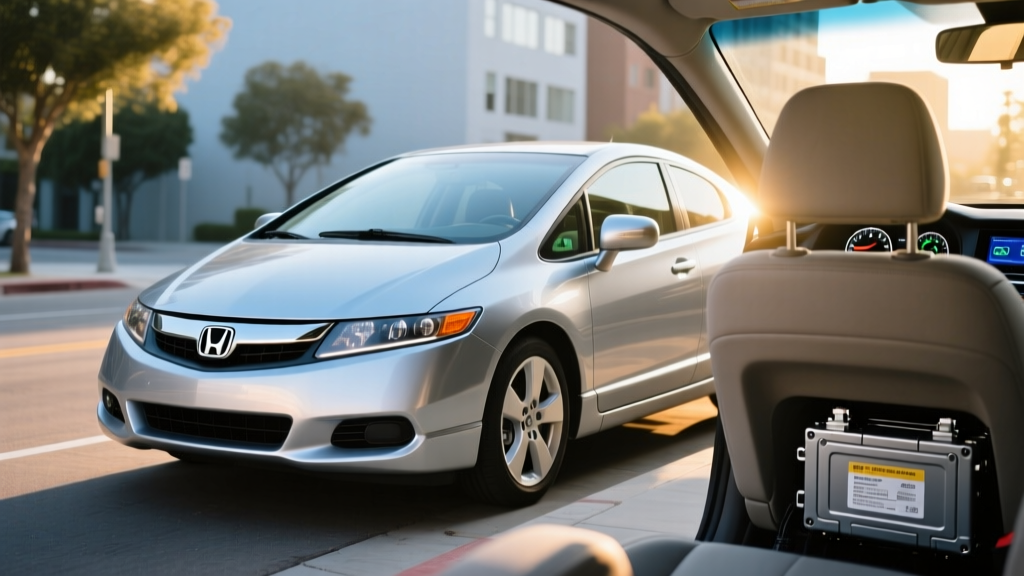
The 2010 Honda Insight was Honda's second attempt at a dedicated hybrid nameplate — a compact liftback built to undercut the Toyota Prius on price while delivering comparable fuel economy. Over a decade later, it remains a fixture on the used-hybrid market, often changing hands for $4,000–$8,000 depending on mileage and condition. For budget-minded drivers who want hybrid efficiency without a plug, the Insight is still worth a serious look — but only if you understand the Integrated Motor Assist (IMA) system's quirks, battery replacement economics, and where it falls short of modern hybrids.
This guide covers the 2010 Insight's real-world fuel economy, powertrain specs, battery longevity, ownership costs, and how it stacks up against both newer hybrids and full EVs in 2026.
2010 Honda Insight: Quick Specs at a Glance
| Spec | Value |
|---|---|
| Powertrain Type | Conventional Hybrid (HEV) — no plug |
| Gasoline Engine | 1.3L i-VTEC inline-4, 98 hp @ 5,800 rpm |
| Electric Motor (IMA) | 10 kW (13 hp), integrated between engine and CVT |
| Combined System Output | ~110 hp (combined, not additive peak) |
| Transmission | Continuously Variable Transmission (CVT) |
| EPA MPG (City / Hwy / Combined) | 40 / 43 / 41 MPG |
| Fuel Tank Capacity | 10.6 gallons |
| Total Driving Range (EPA est.) | ~435 miles |
| Hybrid Battery | ~0.5 kWh NiMH (nickel-metal hydride), 84 cells |
| 0–60 mph | ~10.5 seconds |
| Curb Weight | ~2,735 lbs |
| Cargo Volume (rear seats up / down) | 15.9 / 31.5 cu ft |
| Original MSRP (2010) | $19,800 (LX) – $23,100 (EX with Navi) |
| Typical 2026 Used Price | $4,000 – $8,000 |
EPA MPG vs. Real-World Fuel Economy
The 2010 Insight carries an EPA rating of 40 city / 43 highway / 41 combined MPG, according to fueleconomy.gov. These numbers were competitive at launch, trailing the 2010 Prius (51/48/50) but beating most conventional compacts by a wide margin.
- City driving (stop-and-go): 38–44 MPG — regen braking and idle-stop help here
- Highway (65–75 mph): 38–45 MPG — the CVT keeps revs low, but aero drag limits efficiency at higher speeds
- Cold weather (below 35°F): Expect a 10–15% drop, roughly 34–37 MPG combined, as the engine runs longer for cabin heat and the NiMH battery is less efficient
- Aggressive driving / hilly terrain: 33–38 MPG — the 1.3L engine works hard under load
The Insight achieves its best numbers in moderate-temperature city driving where idle-stop and regen braking maximize the IMA system's contribution. Unlike Toyota's Hybrid Synergy Drive, the Insight's IMA cannot propel the car in EV-only mode at low speeds — the gas engine is always mechanically connected to the wheels. This is the fundamental trade-off of a mild-hybrid architecture: lower complexity and cost, but less electric assist than a full parallel hybrid like the Prius.
Understanding the IMA Powertrain: HEV, Not PHEV
A critical distinction for buyers: the 2010 Honda Insight is a conventional hybrid (HEV), not a plug-in hybrid (PHEV). It has no charge port, no electric-only driving range, and no external charging capability. The small NiMH battery charges exclusively through regenerative braking and engine-driven generation.
| Feature | HEV (2010 Insight) | PHEV (e.g., 2026 RAV4 Prime) | BEV (e.g., 2026 Model Y) |
|---|---|---|---|
| Plug-in charging? | No | Yes (Level 1/2) | Yes (Level 1/2/DC) |
| Electric-only range | 0 miles | 25–42 miles typical | 250–350 miles typical |
| Gas engine? | Yes (primary) | Yes (backup) | No |
| Home charging needed? | No | Recommended | Essential |
| Federal tax credit (§30D)? | No | Up to $7,500 (if eligible) | Up to $7,500 (if eligible) |
| Best for | No plug access, budget buyers | Short commutes + road trips | Home charging + low running costs |
If you have access to home or workplace charging and a commute under 35 miles, a modern PHEV or BEV will deliver far lower per-mile energy costs. But if you park on the street, live in an apartment without charging infrastructure, or simply want hybrid efficiency with zero behavioral change, a conventional HEV like the Insight still makes practical sense.
IMA Battery Longevity, Warranty & Replacement Cost
The 2010 Insight uses a nickel-metal hydride (NiMH) battery pack rated at approximately 0.5 kWh — a fraction of the capacity in modern PHEVs or BEVs. This pack contains 84 individual D-cell-sized NiMH modules arranged in a series pack mounted behind the rear seats.
- Original Honda warranty: 8 years / 100,000 miles (10 years / 150,000 miles in CARB states like California, New York, Massachusetts)
- Real-world lifespan: Most IMA packs last 120,000–180,000 miles before significant degradation triggers an IMA warning light. Some fail earlier; some last beyond 200,000 miles.
- Degradation symptoms: Reduced fuel economy (2–5 MPG drop), IMA system warning lamp, reduced regen braking, occasional recalibration cycles visible on the dash charge indicator
Replacement costs in 2026:
- New OEM IMA battery (Honda dealer): $2,000–$3,000 including labor — often exceeds the car's value
- Refurbished/remanufactured pack: $800–$1,500 installed from hybrid battery specialists (e.g., BumbleBee Batteries, Hybrid Automotive)
- Individual cell replacement / grid charger reconditioning: $200–$500 DIY or $400–$800 at a specialist — extends pack life by 30,000–60,000 miles in many cases
The Insight's IMA battery is one of the more affordable hybrid batteries to address because the pack is small and accessible. Many owners install an aftermarket grid charger (~$150–$300) that periodically balances and conditions the NiMH cells, which can extend pack life significantly. This is a well-documented practice in the Insight and Civic Hybrid owner communities.
Reliability, Common Issues & Ownership Costs
The 2010 Insight is generally a reliable vehicle, but it has a few known trouble spots that used buyers should inspect:
Common Issues
- IMA battery degradation: The most significant long-term cost. At 150,000+ miles, budget $800–$2,000 for battery work.
- 12V auxiliary battery drain: The Insight's 12V battery is smaller than conventional cars and can die if the car sits unused for 2+ weeks. A dead 12V battery can prevent the IMA system from starting.
- CVT shudder at low speeds: Some units develop a subtle vibration between 15–30 mph. Honda issued software updates; a CVT fluid drain-and-fill (HMMF fluid) often helps.
- A/C compressor wear: The electric A/C compressor can fail around 120,000–160,000 miles. Replacement runs $800–$1,200.
- Brake actuator: The regenerative brake system uses an electric actuator that can develop issues past 130,000 miles. Symptoms include a firm pedal and reduced regen. Replacement: $600–$1,000.
5-Year Ownership Cost Estimate (Used, ~100,000 miles)
| Category | Estimated 5-Year Cost |
|---|---|
| Purchase price (2026 used market) | $5,000–$7,000 |
| Fuel (12,000 mi/yr @ 40 MPG, $3.40/gal avg) | ~$5,100 |
| Insurance (avg, varies by state/driver) | ~$4,500–$6,000 |
| Maintenance (oil, tires, brakes, fluids) | ~$2,000–$3,000 |
| IMA battery reserve (if needed) | $0–$2,000 |
| Estimated 5-year total | $16,600–$23,100 |
At 40 MPG, the Insight's fuel cost is roughly $0.085/mile at $3.40/gallon — about half the per-mile fuel cost of a comparable non-hybrid compact getting 28 MPG. Over 60,000 miles, that's a savings of approximately $3,000 in fuel versus a gas-only equivalent.
Does the 2010 Insight Qualify for Any Tax Credit?
No. The 2010 Honda Insight does not qualify for the federal §30D clean vehicle tax credit. That credit applies only to new plug-in electric vehicles (PHEVs and BEVs) meeting current battery-sourcing, MSRP, and buyer-income requirements as outlined on IRS.gov. Conventional hybrids like the Insight have not qualified for any federal purchase incentive since the original hybrid tax credit phased out for Honda in 2008.
Some states offer minimal incentives for used hybrid purchases, and certain utilities provide rebates for any electrified vehicle — check your state's energy office and local utility for current programs. However, the primary financial appeal of a used 2010 Insight is its low purchase price and strong fuel economy, not government incentives.
2010 Insight vs. Modern Alternatives: What Has Changed
The hybrid landscape has shifted dramatically since 2010. Here's how the Insight compares to vehicles a used buyer might cross-shop in 2026:
| Vehicle | EPA Combined MPG | Used Price (2026) | Battery Type | Key Advantage |
|---|---|---|---|---|
| 2010 Honda Insight | 41 MPG | $4,000–$8,000 | NiMH (0.5 kWh) | Lowest entry price |
| 2012–2015 Toyota Prius | 50 MPG | $7,000–$13,000 | NiMH (1.3 kWh) | Proven reliability, higher MPG |
| 2019–2022 Honda Insight (3rd gen) | 52 MPG | $16,000–$22,000 | Li-ion (1.2 kWh) | Modern styling, far better MPG |
| 2020–2023 Toyota Corolla Hybrid | 52 MPG | $17,000–$23,000 | NiMH (1.3 kWh) | Newer safety tech, strong MPG |
The 2010 Insight's main advantage is price. If your budget is under $8,000 and you want a hybrid, it's one of the cheapest options available. However, the 3rd-generation Honda Insight (2019–2022) is a fundamentally superior vehicle — it uses a two-motor i-MMD system with 52 MPG combined, modern Honda Sensing safety features, and a lithium-ion battery. If you can stretch to $16,000+, the newer Insight is the smarter long-term investment.
Pros & Cons of the 2010 Honda Insight
Pros
- Strong real-world MPG (38–42 combined)
- Very affordable on the used market ($4K–$8K)
- Hatchback utility with 31.5 cu ft cargo space
- No plug required — zero behavior change
- Lightweight (~2,735 lbs) means less tire and brake wear
- IMA battery is small and relatively inexpensive to replace
- Eco Assist coaching display encourages efficient driving
Cons
- Mild hybrid — no EV-only mode, less electric assist than Prius
- Slow acceleration (10.5 sec 0–60, underpowered on highway merges)
- Road noise and firm ride quality
- No modern ADAS (no auto emergency braking, lane keep, adaptive cruise)
- IMA battery likely needs attention if original and 130K+ miles
- Plasticky interior with basic infotainment
- Rear visibility compromised by split window design
Who Should Buy the 2010 Insight — And Who Shouldn't
Choose the 2010 Honda Insight if:
- Your budget is under $8,000 and you want hybrid fuel economy
- You lack access to plug-in charging (apartment, street parking)
- You drive 10,000–15,000 miles/year and want to minimize fuel costs
- You're comfortable budgeting $800–$2,000 for a potential IMA battery service
- You need a hatchback for cargo flexibility
Look elsewhere if:
- You can stretch to $16,000+ for a 3rd-gen Insight or newer Prius (far better MPG, modern safety)
- You have home charging access and a short commute (a PHEV or BEV will cost less per mile)
- You prioritize acceleration, ride comfort, or modern tech features
- The car you're considering has 150,000+ miles with no documented IMA battery service — factor the replacement cost into your offer
Frequently Asked Questions
How many MPG does the 2010 Honda Insight actually get?
The EPA rates it at 40 city / 43 highway / 41 combined. Most owners report 38–42 MPG combined in real-world mixed driving. City driving with frequent stops maximizes the IMA system's regen braking benefit. Cold weather and aggressive driving can drop it to the low-to-mid 30s.
Does the 2010 Honda Insight need to be plugged in?
No. The 2010 Insight is a conventional hybrid (HEV), not a plug-in. The small NiMH battery charges through regenerative braking and the gasoline engine. You fuel it like any other car — just fill up at the gas station.
How long does the IMA battery last, and what does replacement cost?
Most IMA packs last 120,000–180,000 miles. A new OEM replacement runs $2,000–$3,000 at a Honda dealer, but refurbished packs from hybrid specialists cost $800–$1,500 installed. Grid charger conditioning ($150–$300 for the equipment) can extend pack life and is a popular maintenance practice among Insight owners.
Is the 2010 Honda Insight reliable?
Mechanically, the 1.3L engine and CVT are durable with regular maintenance. The main reliability concern is the IMA battery, which is a wear item at this vehicle's age. The brake actuator and A/C compressor are secondary concerns past 130,000 miles. Overall, it's an average-to-good reliability record for a 15-year-old hybrid.
Hybrid vs. PHEV vs. EV — which should I choose?
If you have no plug access and want maximum simplicity, a conventional HEV like the Insight is the right call. If you can charge at home and commute under 35 miles, a PHEV gives you electric-only daily driving with a gas engine for longer trips. If you have reliable home charging and want the lowest per-mile cost, a BEV eliminates gas entirely. The EPA's comparison tool lets you compare fuel costs across all three categories for your specific driving profile.
Does the 2010 Insight qualify for any federal tax credit?
No. The federal §30D clean vehicle credit applies only to new plug-in vehicles (PHEVs and BEVs). Conventional hybrids have not been eligible for federal purchase incentives since the original hybrid credits phased out over a decade ago. Check your state and utility for any local programs, but don't count on incentives for this purchase.
Sources: EPA fueleconomy.gov, IRS Clean Vehicle Credits, NHTSA safety data.