Quick Verdict: A Proven Mild-Hybrid Bargain With a Battery Caveat
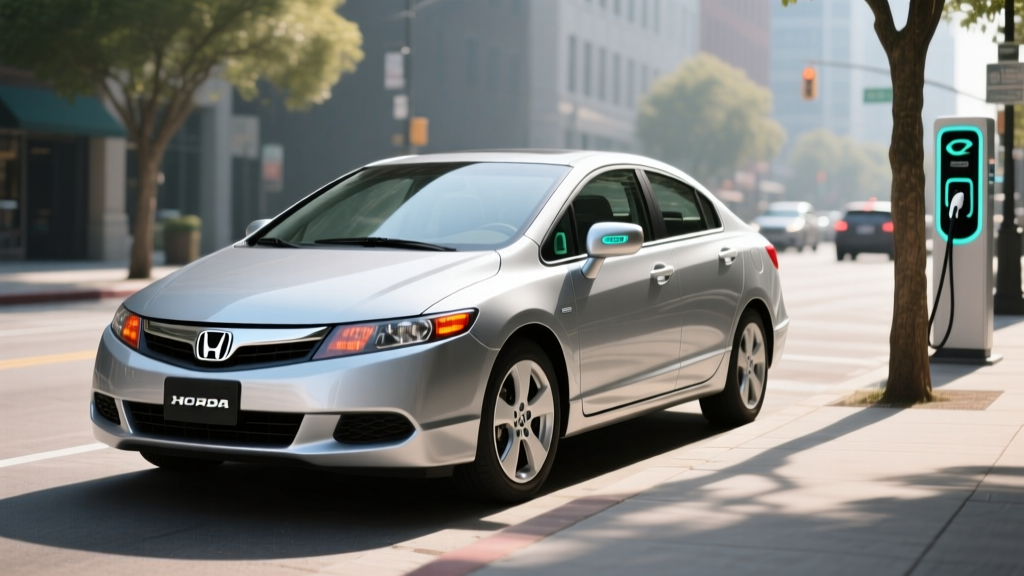
The 2010 Honda Civic Hybrid occupies a specific niche in the used-car market: a compact sedan that delivers genuine fuel savings without requiring any plug-in infrastructure. Powered by Honda's Integrated Motor Assist (IMA) system — a mild-hybrid setup pairing a 1.3L gasoline engine with a small electric motor — this car was designed for one job: sipping fuel in city traffic. In 2026, with used examples frequently listed between $4,000 and $7,500 depending on mileage and condition, the Civic Hybrid remains one of the cheapest entry points into electrified driving. But prospective buyers need to understand exactly what they're getting, especially regarding the nickel-metal hydride (NiMH) battery pack that now has 16 years of age on it.
Fuel Economy: EPA Ratings vs Real-World MPG
The 2010 Civic Hybrid's headline number has always been its fuel efficiency. Here's the official EPA breakdown according to fueleconomy.gov:
| Metric | Value |
|---|---|
| City MPG | 40 MPG |
| Highway MPG | 43 MPG |
| Combined MPG | 42 MPG |
| Fuel Tank Capacity | 12.3 gallons |
| Estimated Total Range | ~516 miles |
Real-World MPG: What Owners Actually Report
The IMA system's mild-hybrid design means the electric motor assists the engine rather than driving the wheels independently. In practice, this yields some interesting real-world patterns:
- City driving: Many owners report 38–44 MPG in stop-and-go traffic, where regenerative braking and engine auto-stop are most active. The EPA city figure of 40 MPG is generally achievable.
- Highway driving: Expect 38–42 MPG at 70+ mph. Unlike full-hybrid systems (like Toyota's HSD), the Civic's electric motor provides minimal highway assist, so the gasoline engine does most of the work.
- Cold weather penalty: In sub-40°F conditions, expect a 5–10% drop (roughly 36–39 MPG combined) as the engine runs longer to maintain cabin heat and the NiMH battery operates less efficiently.
- Battery degradation effect: A weakened IMA battery reduces fuel economy by 2–5 MPG because the electric assist diminishes, forcing the engine to compensate.
Powertrain: How the IMA System Works
Honda's Integrated Motor Assist is fundamentally different from the power-split hybrid systems found in the Toyota Prius. Here's the hardware:
| Component | Specification |
|---|---|
| Gasoline Engine | 1.3L i-VTEC 4-cylinder (98 hp) |
| Electric Motor | 15 kW (20 hp) permanent-magnet |
| Combined System Output | 110 hp @ 6,000 rpm / 123 lb-ft torque |
| Transmission | CVT (continuously variable) |
| Battery Type | NiMH (nickel-metal hydride) |
| Battery Capacity | ~0.5 kWh (nominal) |
| Drivetrain | Front-wheel drive |
| 0–60 mph | ~10.5 seconds |
The IMA motor is sandwiched between the engine and the CVT, providing torque fill during acceleration and capturing energy during braking. Unlike Toyota's system, the IMA cannot propel the car on electric power alone at any meaningful speed. The engine's cylinders do shut off under deceleration (Variable Cylinder Management), which is where a meaningful chunk of the fuel savings come from.
IMA Battery Lifespan, Warranty & Replacement Cost
How Long Does the IMA Battery Last?
This is the single most important question for a 2026 buyer. The NiMH battery in the 8th-generation Civic Hybrid has a well-documented track record:
- Typical lifespan: 8–12 years or 100,000–150,000 miles before noticeable degradation triggers an IMA warning light.
- Failure pattern: Unlike a sudden death, the battery usually degrades gradually. You'll first notice reduced electric assist, slightly lower MPG, and eventually an IMA system warning on the dash.
- The car still drives with a degraded battery: The gasoline engine continues to operate, but fuel economy drops and acceleration feels sluggish without motor assist.
Battery Replacement Options & Costs
| Option | Cost Range | Warranty |
|---|---|---|
| Honda OEM new battery (dealer) | $2,500–$3,500 installed | 1–3 years |
| Aftermarket refurbished pack | $1,200–$2,000 installed | 1–3 years |
| DIY refurbished pack (BumbleBee, etc.) | $700–$1,200 (parts only) | 1 year typical |
| Individual cell rebuild (advanced DIY) | $200–$500 (parts only) | None |
Cost-benefit reality: A $2,500+ OEM replacement on a car worth $5,000 is hard to justify financially. Most savvy buyers either confirm the battery has been recently replaced (with documentation), budget for an aftermarket pack, or negotiate the purchase price down by the replacement cost.
Reliability & Common Issues Beyond the Battery
The 2010 Civic Hybrid's gasoline powertrain is fundamentally robust — the 1.3L i-VTEC and Honda's CVT are well-proven. However, owners and mechanics consistently flag a few model-specific concerns:
- IMA battery failure (covered above — the #1 issue by frequency and cost)
- CVT shudder/judder: Some examples develop a low-speed vibration. Honda issued service bulletins for CVT fluid flushes that often resolve this. Verify the CVT fluid has been changed per schedule.
- Engine mounts: The active engine mount (designed to reduce vibration during auto-stop) can fail around 100,000+ miles, causing noticeable idle vibration. Replacement: ~$300–$500.
- 12V battery drain: Like all hybrids, the Civic has a conventional 12V battery for accessories. If the car sits for weeks, this battery can die, preventing the car from starting even though the IMA pack is fine.
- Brake actuator: The regenerative braking system uses a specialized actuator. If it fails (uncommon but documented), replacement runs $800–$1,400.
For reliability data, the 2010 Civic Hybrid generally scores well in NHTSA records, with no major systemic safety recalls beyond standard Honda campaigns. Check any specific VIN on NHTSA's site before purchase.
HEV vs PHEV vs EV: Is the Civic Hybrid Right for You?
| Factor | 2010 Civic Hybrid (HEV) | Used PHEV (e.g., Prius Prime) | Used BEV (e.g., Leaf, Bolt) |
|---|---|---|---|
| Used Price Range | $4,000–$7,500 | $14,000–$22,000 | $10,000–$18,000 |
| Combined MPG / MPGe | 42 MPG | 54 MPG + 25 mi EV | 111–120 MPGe |
| Requires Home Charging? | No | Recommended | Essential |
| Federal Tax Credit (Used) | None | Up to $4,000 (§25E)* | Up to $4,000 (§25E)* |
| Road-Trip Friendly? | Yes — gas & go | Yes — gas engine backup | Requires DC fast-charging planning |
| Battery Replacement Risk | $1,200–$3,500 | $2,500–$5,000+ | $5,000–$15,000+ |
*The IRS §25E used clean vehicle credit applies to qualified used EVs and PHEVs sold for $25,000 or less through a licensed dealer, offering 30% of the sale price up to $4,000. The 2010 Civic Hybrid does NOT qualify as it is a conventional HEV, not a plug-in vehicle.
- Choose the 2010 Civic Hybrid if: You want the cheapest possible entry into fuel-efficient driving, have no home charging access, drive mostly in the city, and can budget $1,000–$2,000 for a potential battery replacement.
- Choose a used PHEV if: You have home charging, want electric-only commuting (20–40 miles), and can spend $14,000+ for a newer vehicle that may still qualify for the $4,000 used-EV tax credit.
- Choose a used BEV if: You have reliable home charging, drive under 150 miles daily, want zero tailpipe emissions, and want to eliminate gas station visits entirely.
Pricing & What to Look for When Buying
As of early 2026, the 2010 Honda Civic Hybrid trades in the following ranges on the used market:
- High-mileage (150,000+ mi), original battery: $3,000–$4,500 — assume a battery replacement is needed
- Moderate mileage (90,000–140,000 mi), unknown battery: $4,500–$6,000
- Lower mileage (under 90,000 mi) or new aftermarket battery: $6,000–$7,500
Pre-Purchase Checklist
- Check for IMA warning lights — turn the key to "ON" (without starting) and verify all dash lights illuminate, then extinguish after starting. An IMA light that stays on = immediate negotiation leverage or walk away.
- Pull battery health data — a Honda dealer or a shop with Honda diagnostic software can read the IMA battery's State of Health (SoH). Ask for the "battery tap voltage" readings across all cells.
- Verify CVT service history — Honda's CVT fluid should be changed every 30,000–60,000 miles. An unserviced CVT at 120,000+ miles is a risk.
- Check for recalls — enter the VIN at NHTSA.gov/recalls to confirm all campaigns have been completed.
- Test the auto-stop feature — at a stoplight, the engine should shut off silently and restart instantly when you lift off the brake. If it doesn't, the IMA system may be compromised.
Pros & Cons at a Glance
Pros
- 42 MPG combined — genuinely excellent for a 2010 vehicle
- No plug-in charging required — works with any gas station
- Very low purchase price ($4K–$7.5K)
- Honda reliability for the gasoline powertrain
- Low insurance costs
- Regenerative braking extends brake pad life
Cons
- IMA battery likely near end-of-life if original
- No electric-only driving capability
- Modest 110 hp — slow acceleration (10.5s 0–60)
- Does NOT qualify for any federal tax credit (new or used)
- CVT can feel sluggish and rubber-bandy
- No modern safety tech (no AEB, lane-keep, blind-spot)
- NiMH battery chemistry is outdated vs modern lithium-ion
Frequently Asked Questions
How many MPG does the 2010 Civic Hybrid get?
The EPA rates it at 40 city / 43 highway / 42 combined MPG. Real-world owners typically achieve 38–44 MPG depending on driving style and battery health. Highway-heavy driving at speeds above 70 mph tends to yield 38–41 MPG, while city stop-and-go driving can push toward 44 MPG when the IMA system is healthy.
Does the 2010 Civic Hybrid need to be plugged in?
No. The 2010 Civic Hybrid is a conventional hybrid (HEV), not a plug-in hybrid. The small NiMH battery charges exclusively through regenerative braking and the gasoline engine. You fuel it exactly like any other gas car — just less often.
Is the 2010 Civic Hybrid reliable?
The gasoline engine and overall vehicle are very reliable by 2010 standards. The primary reliability concern is the IMA battery pack, which typically requires replacement between 100,000 and 150,000 miles. The CVT transmission is generally durable if its fluid has been serviced regularly. Beyond the battery, repair costs are comparable to a standard Civic.
How much does it cost to replace the IMA battery?
An OEM Honda replacement runs $2,500–$3,500 installed at a dealer. Aftermarket refurbished packs cost $1,200–$2,000 installed at independent shops. DIY refurbished packs are available for $700–$1,200. Given the car's value, most owners opt for aftermarket or refurbished options.
Does the 2010 Civic Hybrid qualify for any tax credit?
No. The federal §30D new vehicle credit and the §25E used clean vehicle credit both require plug-in capability (PHEV or BEV). The Civic Hybrid is a conventional HEV and has never qualified for the current federal EV tax credits. Some states historically offered rebates for hybrids, but most of those programs have ended or shifted exclusively to plug-in vehicles. Check your state's current incentive programs for any remaining hybrid benefits.
Can I still get parts for the 2010 Civic Hybrid?
Yes. Honda still supports the 8th-generation Civic with OEM parts, and the aftermarket ecosystem is extensive. IMA battery packs (OEM and refurbished) remain available through dealers and specialty hybrid shops. Standard Civic maintenance parts (filters, brakes, suspension) are widely available and inexpensive.
Is the 2010 Civic Hybrid worth buying in 2026?
It depends on your budget and expectations. If you need a sub-$7,000 commuter car that gets 40+ MPG and you can budget for a potential $1,500 battery replacement, it's a rational choice. If you can stretch to $15,000–$20,000, a newer used PHEV like a 2017–2019 Prius Prime offers electric-only commuting, modern safety features, and potential eligibility for the $4,000 used-EV tax credit — making the total cost proposition more compelling.