Quick Verdict: The 2010 Civic Hybrid in 2026
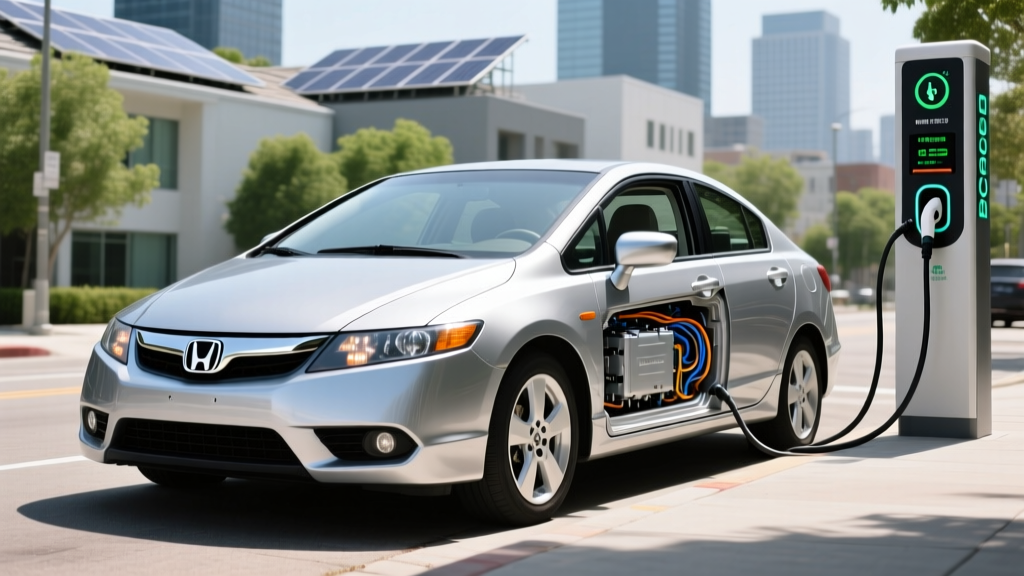
The 2010 Honda Civic Hybrid is a conventional hybrid electric vehicle (HEV) — meaning it never plugs in and has no electric-only driving range. In 2026, it remains one of the most fuel-efficient used cars available for under $6,000, delivering an EPA-estimated 40 city / 43 highway / 42 combined MPG. For budget-conscious commuters who want maximum fuel savings without the complexity of plug-in charging, this 16-year-old hybrid still makes a compelling case — provided you go in with eyes open about the age of its nickel-metal hydride (NiMH) IMA battery.
Powertrain and Hybrid System Specs
The 2010 Civic Hybrid uses Honda's Integrated Motor Assist (IMA) system — a parallel hybrid architecture that pairs a small electric motor sandwiched between the engine and transmission with a 1.3-liter i-VTEC inline-4 gasoline engine.
| Specification | Detail |
|---|---|
| Engine | 1.3L i-VTEC inline-4 (gasoline) |
| Engine HP / Torque | 95 hp @ 6,000 rpm / 89 lb-ft @ 1,000 rpm |
| Electric Motor | IMA permanent-magnet motor, 15 kW (20 hp) / 76 lb-ft |
| Combined System Output | 110 hp @ 6,000 rpm / 123 lb-ft @ 1,000–2,500 rpm |
| Transmission | CVT (continuously variable) |
| IMA Battery | NiMH, ~0.5 kWh total capacity |
| Drivetrain | Front-wheel drive |
| Curb Weight | ~2,853 lbs |
The IMA system is fundamentally different from the series-parallel hybrid system Toyota uses in the Prius. Honda's IMA cannot drive the car on electric power alone — the electric motor assists the gas engine during acceleration and enables engine-off coasting and idle-stop. This means you won't get the silent electric-only crawling that Prius owners enjoy in stop-and-go traffic, but the system is mechanically simpler with fewer failure points.
Fuel Economy: EPA Ratings vs Real-World MPG
Fuel economy is the entire reason this car exists. According to fueleconomy.gov, the 2010 Honda Civic Hybrid carries the following EPA estimates:
| Driving Cycle | EPA Estimate | Real-World Expectation |
|---|---|---|
| City | 40 MPG | 38–45 MPG (hybrids often exceed EPA in city) |
| Highway | 43 MPG | 39–44 MPG |
| Combined | 42 MPG | 38–44 MPG |
| Annual Fuel Cost* | ~$1,150 | Varies with local gas prices |
*EPA estimate based on 15,000 miles/year at $3.20/gallon regular unleaded.
Real-world insight: Like most hybrids, the Civic Hybrid tends to perform better in city driving where regenerative braking and idle-stop maximize the electric motor's contribution. Owner-reported data on Fuelly and similar platforms shows a combined average around 39–41 MPG, with some careful hypermilers reporting 46+ MPG on flat city routes. Highway driving at 75+ MPH will drop efficiency to the mid-to-upper 30s — the IMA motor provides minimal assist at sustained high speeds, and the 1.3L engine works harder.
Cold-weather note: Expect a 5–10% MPG reduction in sub-40°F conditions. The engine runs longer to maintain cabin heat and battery temperature, and the NiMH battery's charge/discharge efficiency drops in cold weather.
IMA Battery: Lifespan, Failure Signs, and Replacement Cost
The single biggest concern for any used hybrid buyer is battery health. The 2010 Civic Hybrid uses a nickel-metal hydride (NiMH) IMA battery pack mounted behind the rear seat. Unlike modern lithium-ion packs, NiMH chemistry degrades more predictably but is also more susceptible to "memory effect" if the battery is repeatedly cycled within a narrow state-of-charge band.
Signs of IMA Battery Degradation
- IMA warning light illuminated on the dash (the most direct indicator)
- Reduced assist — sluggish acceleration from stops as the motor contributes less
- Frequent recalibration — you see the battery gauge drop and recharge repeatedly
- Lower MPG — a failing IMA battery forces the gas engine to do all the work, dropping fuel economy to 30–34 MPG
- 12V battery drain — a degraded IMA pack can parasitically drain the auxiliary 12V battery
Replacement Options and Costs (2026 Pricing)
| Option | Cost Range | Notes |
|---|---|---|
| New OEM Honda battery | $2,200 – $3,500 (installed) | Best longevity; may be hard to source for a 2010 model |
| Aftermarket / refurbished NiMH pack | $1,100 – $2,000 (installed) | Popular choice for older hybrids; 1–3 year warranty typical |
| DIY individual cell replacement | $200 – $500 (parts only) | Requires technical skill; replaces only failed cells in the pack |
| Grid charger / reconditioning | $100 – $300 | Can restore mild degradation; not a fix for hard-failed cells |
Expert take: For a car worth $3,500–$5,500 in 2026, spending $2,500+ on an OEM battery rarely makes financial sense. Most owners opt for a quality refurbished pack ($1,200–$1,600 installed at an independent hybrid specialist) or use a grid charger to extend the original battery's life. The IMA system is simple enough that independent shops familiar with Honda hybrids can handle replacements without dealer involvement.
Pricing, Tax Credits, and Total Cost of Ownership
The 2010 Honda Civic Hybrid has fully depreciated and exists entirely on the used market. As of early 2026, expect the following pricing based on condition and mileage:
- Fair condition (120k+ miles, original battery): $2,500 – $3,800
- Good condition (80k–120k miles, battery replaced): $4,000 – $5,500
- Excellent condition (under 80k miles, documented battery replacement): $5,500 – $7,000
5-Year Ownership Cost Snapshot
Here's what budgeting for a 2010 Civic Hybrid looks like compared to a comparable 2010 Civic gas model (non-hybrid, 1.8L, automatic) and a 2026 Toyota Prius (new):
| Cost Category | 2010 Civic Hybrid (used) | 2010 Civic 1.8L Gas (used) | 2026 Toyota Prius LE (new) |
|---|---|---|---|
| Purchase Price | $4,500 | $4,000 | $29,450 |
| Fuel (75k miles) | $5,750 (42 MPG) | $8,820 (29 MPG) | $4,960 (57 MPG) |
| IMA Battery Replacement | $1,400 | $0 | $0 (warranty) |
| Insurance (5 yr) | $4,500 | $4,500 | $7,500 |
| Maintenance & Repairs | $3,000 | $2,500 | $1,500 |
| 5-Year Total | ~$19,150 | ~$19,820 | ~$43,410 |
The 2010 Civic Hybrid's fuel savings over the gas Civic are meaningful — roughly $3,000 over 5 years — but the IMA battery replacement cost nearly erases that advantage. The real value proposition is the low entry price: you get a 42 MPG car for under $5,000. Compared to a new 2026 Prius, the used Civic Hybrid saves you over $24,000 in purchase price alone, even though the Prius is more efficient and comes with a full warranty.
Reliability and Known Issues Beyond the Battery
The 8th-generation Civic platform (2006–2011) is generally regarded as one of Honda's more reliable eras. However, there are several known issues specific to the hybrid variant that buyers should inspect before purchase:
- CVT transmission: The CVT in the Civic Hybrid is generally reliable but can develop shudder or judder if the CVT fluid was never changed. At 16 years old, verify that CVT fluid was replaced at least once (Honda recommends every 30,000–60,000 miles under severe conditions).
- Engine block cracking: Some 2006–2009 1.3L engines in the Civic Hybrid were subject to a class-action lawsuit over engine block cracking. The 2010 model year is generally outside the affected range, but check for coolant leaks or unexplained coolant loss.
- Motor mount wear: The additional torque from the IMA system accelerates wear on engine/transmission mounts. A clunk or vibration at idle or during acceleration often points to worn mounts ($200–$400 to replace).
- Electric power steering: The EPS system can develop intermittent failures. A flashing EPS light on the dash indicates a fault — repairs can run $800–$1,200.
- A/C compressor: The hybrid uses an electric A/C compressor (to enable idle-stop with climate control). Replacement is more expensive than a belt-driven compressor: $600–$900.
For general reliability data, NHTSA's vehicle safety page lists all recalls and technical service bulletins. The 2010 Civic Hybrid had minimal recalls — primarily related to airbag inflators (the Takata recall), which should be verified as completed.
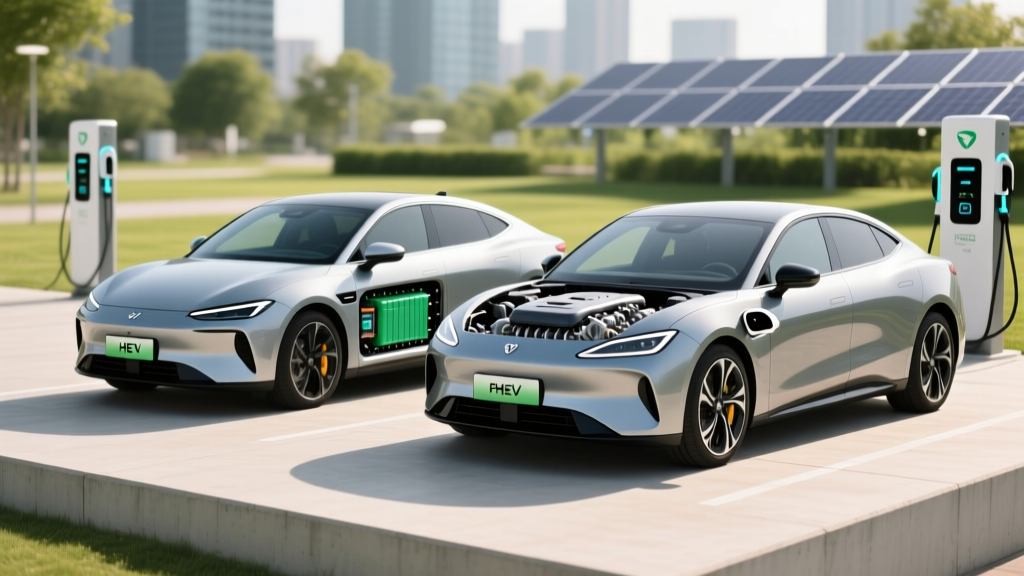
Hybrid vs PHEV vs EV: Which Powertrain Fits You?
If you're cross-shopping a used 2010 Civic Hybrid, you're likely weighing it against other used hybrids, a newer PHEV, or a budget EV. Here's a decision framework:
Choose the 2010 Civic Hybrid (HEV) if:
- Your budget is under $6,000
- You have no access to plug-in charging (apartment, street parking)
- You want a simple car with no charging routine
- Your commute is 15–40 miles round-trip in mixed city/highway driving
- You're comfortable budgeting $1,000–$1,500 for a potential battery replacement
Choose a Used PHEV (e.g., 2017–2021 Prius Prime) if:
- Your budget is $12,000–$20,000
- You can install a Level 2 home charger or have workplace charging
- Your daily driving is under 25 miles (covering most trips on electric only)
- You want to reduce gasoline use by 60–80% without range anxiety
- You want eligibility for the used-EV tax credit (up to $4,000 under §25E)
Choose a Used BEV (e.g., 2018–2021 Bolt, Leaf) if:
- Your budget is $10,000–$18,000
- You have reliable home Level 2 charging
- Your daily driving is under 150 miles
- You want the lowest per-mile energy cost (~$0.04/mi vs $0.08/mi for this hybrid)
- You want zero tailpipe emissions and minimal drivetrain maintenance
Pros and Cons at a Glance
Pros
- 42 MPG combined — still excellent in 2026
- Very low purchase price ($3,000–$6,000)
- No plug-in charging required — just add gas
- Simple IMA hybrid system with fewer failure points than series-parallel hybrids
- Honda build quality; strong parts availability
- Lightweight (2,853 lbs) contributes to tire and brake longevity
Cons
- IMA battery likely near end-of-life if original; replacement is $1,200–$3,500
- No electric-only driving mode — engine always runs
- 110 combined HP feels underpowered for highway merging
- No modern safety tech (no AEB, lane-keep, blind-spot monitoring)
- No federal or state tax credit eligibility
- CVT can feel sluggish and noisy under hard acceleration
- Interior materials and infotainment are dated by 2026 standards
Frequently Asked Questions
How many MPG does the 2010 Honda Civic Hybrid actually get?
The EPA rates it at 40 city / 43 highway / 42 combined MPG. In real-world driving, most owners report 38–44 MPG combined. City driving with frequent stops maximizes regenerative braking and can push efficiency above the EPA city estimate. Sustained highway driving at 75+ MPH typically drops to 37–40 MPG.
Does the 2010 Civic Hybrid need to be plugged in?
No. This is a conventional hybrid (HEV), not a plug-in hybrid (PHEV). The small NiMH battery charges through regenerative braking and the gasoline engine. You fuel it exactly like a normal gas car — there is no plug, no charging port, and no electric-only driving range.
Is the IMA battery replacement worth it on a 2010 Civic Hybrid?
It depends on the car's overall condition. If the vehicle is mechanically sound with under 120,000 miles and no major issues, a $1,200–$1,600 refurbished battery replacement extends the car's useful life by another 5–8 years and preserves the 42 MPG fuel economy. If the car has other major issues (transmission, engine, suspension), the battery investment may not be justified.
How long does the IMA battery last?
Original NiMH IMA batteries typically lasted 100,000–150,000 miles or 10–15 years. In 2026, most 2010 Civic Hybrids are 16 years old. If the battery is original, it is at or past its expected lifespan. Refurbished replacement packs typically last 60,000–100,000 miles depending on quality and driving habits.
Does the 2010 Honda Civic Hybrid qualify for any tax credit?
No. The federal §30D new clean vehicle credit and the §25E used clean vehicle credit both require the vehicle to be a BEV (battery electric) or PHEV (plug-in hybrid) with a minimum battery capacity. Conventional hybrids (HEVs) like the Civic Hybrid are excluded from all current federal EV tax incentives. Honda's original hybrid purchase incentive for this model expired in 2009. Some states may offer minimal incentives — check your state energy office.
How does the 2010 Civic Hybrid compare to a 2010 Toyota Prius?
The 2010 Prius (3rd generation) is rated at 51 city / 48 highway / 50 combined MPG — roughly 8 MPG better than the Civic Hybrid. The Prius also has a more advanced series-parallel hybrid system that enables brief electric-only driving at low speeds. However, the Prius typically commands a $1,500–$3,000 premium on the used market, and its more complex hybrid system can be costlier to repair. The Civic Hybrid's IMA system is simpler but less efficient.
What should I check before buying a used 2010 Civic Hybrid?
Key pre-purchase inspection items: (1) IMA battery health — ask for a scan tool readout of battery state-of-health or take it to a hybrid specialist; (2) CVT fluid service history; (3) Takata airbag recall completion; (4) motor mount condition; (5) A/C compressor function (expensive to replace); (6) 12V battery age (a weak 12V can mask or worsen IMA issues). A pre-purchase inspection at a Honda dealer or hybrid-specialist shop ($100–$200) is strongly recommended.
Sources: U.S. EPA fueleconomy.gov, NHTSA Vehicle Safety, IRS Clean Vehicle Credits.