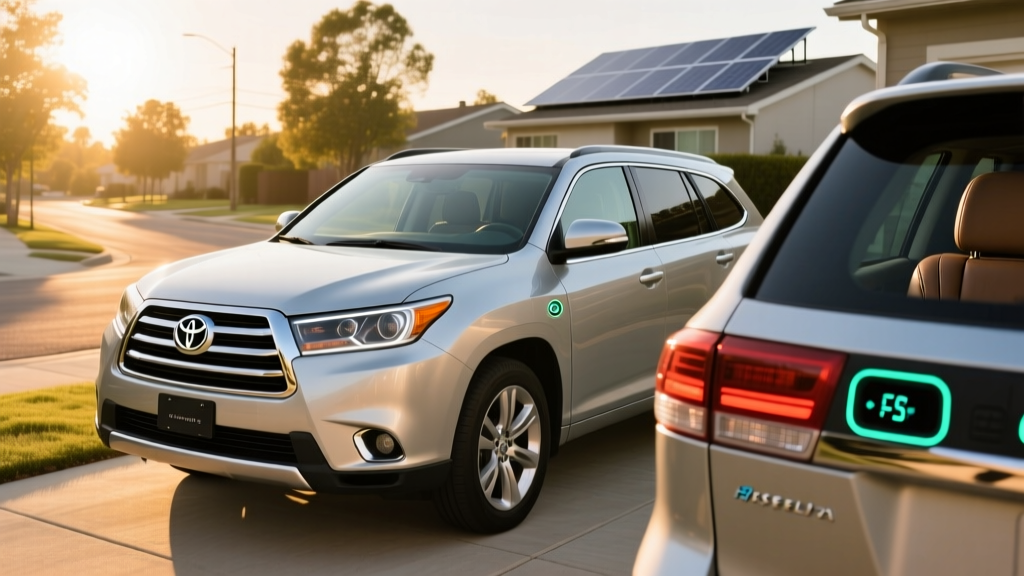
The 2010 Toyota Highlander Hybrid occupies a unique spot in the used-SUV market: a three-row family hauler that delivers midsize-sedan fuel economy with a track record of extraordinary powertrain longevity. Over a decade after it left the showroom, this second-generation hybrid SUV remains one of the most dependable electrified vehicles you can buy on a budget — provided you understand what you're getting and what to inspect before signing the check.
This guide breaks down the 2010 Highlander Hybrid's real-world efficiency, hybrid battery health, ownership costs, and how it compares to modern hybrids and EVs in 2026. Whether you're cross-shopping used hybrids or evaluating whether to replace an aging battery, here's the data you need.
HEV vs PHEV: What the 2010 Highlander Hybrid Actually Is
The 2010 Highlander Hybrid is a conventional hybrid electric vehicle (HEV). It is not a plug-in hybrid (PHEV) and does not have a charging port. The high-voltage battery charges exclusively through regenerative braking and the gasoline engine — you never plug it in.
| Feature | 2010 Highlander Hybrid (HEV) | Modern PHEV (e.g., 2026 RAV4 Prime) | Full EV (e.g., 2026 Ioniq 5) |
|---|---|---|---|
| Plug-in charging | No | Yes (Level 1/2) | Yes (Level 1/2/DC) |
| Electric-only range | ~1 mile at low speed | 42 miles EPA | 300+ miles EPA |
| Battery capacity | ~1.9 kWh (NiMH) | 18.1 kWh (Li-ion) | 77.4 kWh (Li-ion) |
| Fuel required | Yes (87 octane) | Yes (87 octane) | No |
| Tax credit eligible | No | Up to $7,500 (§30D) | Up to $7,500 (§30D) |
The distinction matters for used buyers: if you want plug-in electric driving, you'll need to look at a PHEV or BEV. The Highlander Hybrid's advantage is simplicity — no charging infrastructure, no range anxiety, and a nickel-metal hydride (NiMH) battery chemistry known for durability.
Fuel Economy: EPA Ratings vs Real-World MPG
The 2010 Highlander Hybrid carries EPA ratings that remain competitive with many modern non-hybrid SUVs. Here's the official breakdown from fueleconomy.gov:
| Driving Condition | EPA MPG | Real-World Expectation |
|---|---|---|
| City | 27 MPG | 26–30 MPG (hybrids often exceed EPA in stop-and-go) |
| Highway | 25 MPG | 23–26 MPG (aerodynamic drag reduces hybrid advantage) |
| Combined | 26 MPG | 24–27 MPG |
Why real-world city MPG can beat the sticker: Toyota's Hybrid Synergy Drive relies heavily on electric motor assist at low speeds, where regenerative braking recaptures the most energy. Owners who drive primarily in urban traffic frequently report 28–30 MPG. Highway-heavy commutes push the figure toward 23–24 MPG, since the 3.3-liter V6 must do more work at sustained speeds and the SUV's boxy profile creates significant drag.
Cold-weather note: Expect a 5–10% MPG reduction in freezing temperatures. The engine runs more frequently to maintain cabin heat and battery temperature, reducing electric-only operation. This penalty is smaller than what most EVs face in winter but is worth budgeting for in northern climates.
Powertrain Specs: V6 Hybrid System
| Specification | Value |
|---|---|
| Engine | 3.3L V6 (3MZ-FE) |
| Engine output | 208 hp @ 5,600 rpm |
| Electric motor output | 120 kW (front), 50 kW (rear) |
| Combined net horsepower | 270 hp |
| Transmission | eCVT (electronically controlled) |
| Drivetrain | AWD-i (electronic on-demand rear motor) |
| Battery type | NiMH (nickel-metal hydride) |
| Battery capacity | ~1.9 kWh (usable) |
| 0–60 mph | ~7.8 seconds |
| Towing capacity | 3,500 lbs (with tow prep package) |
| Curb weight | ~4,500 lbs |
The 270 combined horsepower figure was genuinely quick for a three-row SUV in 2010, and it still provides confident highway merging and passing. The eCVT is not a belt-and-pulley CVT — it's a planetary gearset with no friction clutches or bands to wear out, which is a major reason these powertrains routinely exceed 200,000 miles with basic maintenance.
The AWD-i system uses a separate rear electric motor rather than a mechanical driveshaft. There's no center differential or prop shaft to service. The rear motor engages automatically when the front wheels slip, providing traction without the parasitic loss of a full-time AWD system.
Hybrid Battery Longevity, Warranty & Replacement Cost
Original warranty: Toyota covered the 2010 Highlander Hybrid battery for 8 years / 100,000 miles (10 years / 150,000 miles in California and states adopting CARB emissions standards). This warranty has expired for all 2010 models.
Real-world battery lifespan: Data from owner forums and repair databases show the NiMH battery pack in the 2010 Highlander Hybrid typically lasts 150,000–250,000 miles before significant degradation triggers a check-engine light or reduced performance. Many examples exceed 200,000 miles on the original pack.
Replacement Options and Costs
If the hybrid battery fails, you have three paths:
- New OEM Toyota battery: $2,500–$3,500 for the part alone; $3,500–$5,000 installed at a dealership. This restores full performance and comes with a 3-year/unlimited-mile warranty on the replacement.
- Refurbished/remanufactured battery: $1,200–$2,200 installed. Several reputable vendors (Green Bean Battery, Dorman) offer reconditioned NiMH packs with 1–3 year warranties. Quality varies — check reviews and warranty terms carefully.
- Individual module replacement: $300–$800 if only 1–2 of the 30 NiMH modules have failed. Requires a technician with hybrid battery diagnostic equipment. This is a temporary fix; remaining modules may fail within 12–24 months.
Inspection tip for buyers: Before purchasing any 2010 Highlander Hybrid, request a hybrid battery health report from a Toyota dealer or independent hybrid specialist. The scan tool reads individual module voltages — a spread greater than 0.3V between modules signals impending failure. Also check for the "Check Hybrid System" warning on startup and verify the battery cooling fan (located behind the rear seat) is free of dust and debris, as overheating accelerates degradation.
Pricing & Tax Credit Eligibility in 2026
The 2010 Highlander Hybrid originally started at approximately $34,700 MSRP. In the 2026 used market, pricing varies heavily by mileage, condition, and battery health:
- High-mileage (160,000+ mi), fair condition: $5,500–$7,500
- Average (100,000–140,000 mi), good condition: $8,000–$11,000
- Low-mileage (under 90,000 mi), excellent condition: $11,000–$14,000
Federal Tax Credit Status
The 2010 Highlander Hybrid does not qualify for any federal tax credit. The IRS §30D new clean vehicle credit applies only to new vehicle purchases, and the used EV credit (§25E, up to $4,000) applies exclusively to battery electric vehicles and plug-in hybrids — not conventional HEVs. There is no federal incentive for purchasing a used conventional hybrid.
Some states offer registration discounts or HOV lane access for hybrid vehicles, but these programs have largely sunset for older models. Check your state's DMV for any remaining benefits.
Reliability & Ownership Costs
The 2010 Highlander Hybrid's powertrain is among the most proven in Toyota's lineup. The 3MZ-FE V6 is a timing-belt engine (replacement interval: ~90,000 miles, ~$600–$900), and the eCVT has no wearable friction components. According to NHTSA records, the model has few systemic complaints beyond age-typical wear items.
Common Issues to Watch
- Hybrid battery cooling fan clogging: Dust and pet hair block the intake filter, causing overheating. Clean every 10,000 miles.
- Brake actuator assembly: The electro-hydraulic brake booster can fail around 120,000–150,000 miles. Replacement runs $1,200–$1,800. Symptoms include a stiff pedal or ABS warning light.
- Inverter coolant pump: A $200–$400 part that occasionally fails and should be inspected if the "Check Hybrid System" light illuminates.
- Timing belt: Must be replaced at 90,000-mile intervals. If the seller can't provide documentation, budget $800 immediately.
Annual Ownership Cost Estimate
Based on 15,000 miles/year at $3.20/gallon (2026 national average) and 26 MPG combined, annual fuel cost is approximately $1,846. A comparable non-hybrid V6 SUV averaging 19 MPG would cost roughly $2,526/year — a savings of about $680 annually with the hybrid.
Insurance averages $1,100–$1,500/year depending on state and driving record. Maintenance costs are moderate: expect $600–$900/year for oil changes, brake inspections (regen braking extends pad life to 60,000–80,000 miles), and fluid services.
Pros
- Proven 270 hp hybrid powertrain with 200k+ mile lifespan
- Three rows of seating with 26 MPG combined
- AWD without mechanical drivetrain complexity
- Strong regenerative braking extends brake pad life
- Low annual fuel cost vs non-hybrid V6 SUVs
- No plug-in charging required — works anywhere
Cons
- Original hybrid battery warranty has expired
- $2,500–$5,000 battery replacement if pack fails
- Dated interior tech (no Apple CarPlay/Android Auto)
- No federal tax credit eligibility
- Timing belt requires periodic $800 service
- Brake actuator replacement is costly if it fails
2010 Highlander Hybrid vs Modern Alternatives
If you're weighing a used 2010 Highlander Hybrid against newer electrified options, here's how the numbers compare:
| Vehicle | Combined MPG/MPGe | Approx. Price (2026) | Electric Range | Tax Credit |
|---|---|---|---|---|
| 2010 Highlander Hybrid (used) | 26 MPG | $8,000–$12,000 | N/A (HEV) | None |
| 2026 Toyota Highlander Hybrid (new) | 35 MPG | $42,000+ | N/A (HEV) | None |
| 2026 Toyota RAV4 Prime (PHEV) | 94 MPGe / 38 MPG | $46,000+ | 42 mi EV | Up to $7,500* |
| 2026 Hyundai Ioniq 5 (EV) | 114 MPGe | $44,000+ | 303 mi EV | Up to $7,500* |
*§30D credit subject to MSRP caps, buyer income limits, and battery sourcing requirements. Verify eligibility at irs.gov before purchase.
The 2010 model's advantage is pure affordability: you can own a reliable three-row hybrid SUV for under $12,000 with no charging requirements. The trade-offs are older safety tech (no automatic emergency braking or lane-keeping), a less refined ride, and the looming battery replacement risk.
Who Should Buy the 2010 Highlander Hybrid?
Choose the 2010 Highlander Hybrid if:
- You need three rows and AWD on a sub-$15,000 budget
- You lack access to home or workplace EV charging
- You drive 10,000–15,000 miles/year in mixed city/highway conditions
- You value proven reliability over modern infotainment
- You're comfortable budgeting $2,000–$4,000 for a potential battery replacement
Look at a newer PHEV or EV instead if:
- You have Level 2 home charging and want electric-only commuting
- You want modern ADAS features (automatic emergency braking, blind-spot monitoring)
- You drive under 40 miles daily and want to eliminate fuel use entirely (PHEV)
- You qualify for the §30D tax credit and can absorb a higher monthly payment
- You want a new-vehicle battery warranty (8–10 years of coverage)
Frequently Asked Questions
How many MPG does the 2010 Highlander Hybrid get?
The EPA rates it at 27 city / 25 highway / 26 combined MPG. Real-world results range from 23–30 MPG depending on driving mix. City-heavy drivers often exceed the EPA city figure thanks to frequent regenerative braking.
Is the 2010 Highlander Hybrid a plug-in?
No. It is a conventional hybrid (HEV). The battery charges through regenerative braking and the gasoline engine. There is no charging port, and you cannot plug it in.
How long does the hybrid battery last?
The NiMH battery pack typically lasts 150,000–250,000 miles. Many owners report 200,000+ miles on the original pack with proper cooling fan maintenance. The original 8-year/100,000-mile warranty has expired on all 2010 models.
How much does it cost to replace the hybrid battery?
A new OEM Toyota battery costs $3,500–$5,000 installed. Refurbished aftermarket batteries run $1,200–$2,200 installed. Individual module repair costs $300–$800 but may not be a lasting fix.
Does the 2010 Highlander Hybrid qualify for any tax credit?
No federal tax credit applies. The §30D new vehicle credit and §25E used EV credit do not cover conventional hybrids. Some states may offer minor registration benefits, but most have expired for this model year.
Is the 2010 Highlander Hybrid reliable?
Yes. The 3MZ-FE V6 and eCVT powertrain are among Toyota's most durable. Key maintenance items include timing belt replacement every 90,000 miles, hybrid battery cooling fan cleaning, and monitoring the brake actuator assembly for premature wear.
Can it tow?
Yes — 3,500 lbs with the factory tow prep package. The hybrid system handles towing loads without strain, though expect fuel economy to drop to 18–20 MPG while towing.
Sources: EPA fuel economy data from fueleconomy.gov; safety and complaint records from NHTSA; IRS clean vehicle credit rules at irs.gov.