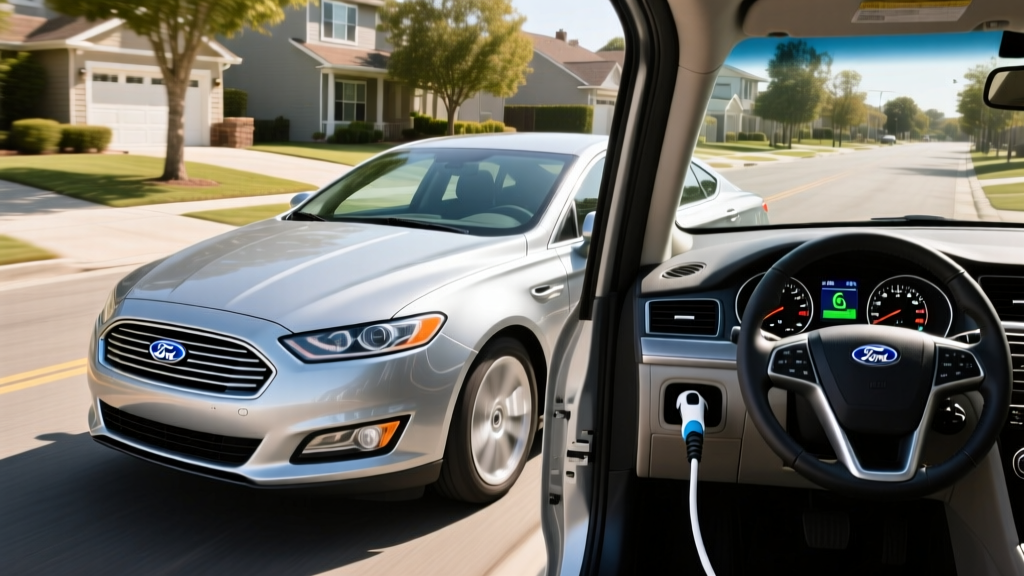
The 2010 Ford Fusion Hybrid was Ford's first serious entry into the midsize hybrid sedan segment, arriving at a time when the Toyota Camry Hybrid dominated the conversation. More than 15 years later, this car remains a fixture on the used market, prized for its strong city fuel economy and conventional-hybrid simplicity. If you're researching the 2010 Ford Fusion Hybrid MPG before buying one today, this guide covers the EPA numbers, what you'll actually see at the pump, battery longevity, and whether this aging hybrid still makes financial sense in 2026.
2010 Ford Fusion Hybrid MPG: The Official EPA Numbers
The EPA rated the 2010 Ford Fusion Hybrid at a combined 39 MPG, with a notable split favoring city driving — a hallmark of conventional hybrid powertrains that rely heavily on regenerative braking and electric-motor assist at low speeds.
| Metric | Value |
|---|---|
| City MPG | 41 MPG |
| Highway MPG | 36 MPG |
| Combined MPG | 39 MPG |
| Fuel Type | Regular Unleaded (87 octane) |
| Fuel Tank Capacity | 16.5 gallons |
| EPA Estimated Range | ~644 miles (combined) |
The 41 MPG city figure was class-leading for 2010, beating the contemporary Toyota Camry Hybrid's 33 MPG city rating by a substantial margin. The trade-off: highway efficiency drops to 36 MPG because the 2.5L Atkinson-cycle engine must work harder at sustained speeds, where electric-motor assist contributes less.
Real-World MPG: What Owners Actually Report
EPA stickers are a starting point, not a guarantee. For the 2010 Fusion Hybrid, real-world results vary based on driving style, climate, and — critically — the age and health of the hybrid battery pack.
- City driving (healthy battery): 36–42 MPG — many owners match or slightly exceed the EPA city figure in stop-and-go traffic
- Highway driving: 33–37 MPG — consistent with the EPA highway rating
- Mixed/combined: 35–39 MPG in temperate weather
- Cold weather (below 35°F): Expect a 5–10% drop (roughly 32–36 MPG combined) as the engine runs more to heat the cabin and the battery's chemical efficiency drops
- Degraded battery (15+ years old): 28–34 MPG — if the NiMH pack has lost significant capacity, the gasoline engine compensates, eroding fuel economy
The single biggest variable for a 2010 model in 2026 is battery state of health (SoH). A well-maintained original pack may still deliver 80–85% of its original capacity, but many 16-year-old NiMH packs will have degraded substantially. Before purchasing, ask for a hybrid system diagnostic from a Ford dealer or independent hybrid specialist to measure actual battery capacity.
Powertrain Breakdown: Engine, Motor, and Combined Output
The 2010 Fusion Hybrid pairs a gasoline four-cylinder with an electric motor in a full-parallel hybrid configuration. Unlike a plug-in hybrid (PHEV), this system charges its battery exclusively through regenerative braking and engine-driven generation — there is no plug, no charging port, and no electric-only driving range to speak of beyond very low-speed, short-distance creep.
| Component | Specification |
|---|---|
| Gasoline Engine | 2.5L Atkinson-cycle inline-4 |
| Engine Power | 156 HP @ 6,000 RPM |
| Engine Torque | 136 lb-ft @ 2,250 RPM |
| Electric Motor | Permanent-magnet AC synchronous |
| Electric Motor Power | 106 HP (78 kW) |
| Combined System Output | 191 HP |
| Transmission | Electronically controlled CVT (eCVT — planetary gearset) |
| Hybrid Battery | NiMH (Nickel-Metal Hydride), ~1.4 kWh total capacity |
| Battery Location | Behind rear seats (reduces trunk space to 11.8 cu ft) |
| Drivetrain | Front-wheel drive |
| 0–60 MPH | ~8.4 seconds (period testing) |
The 191 combined horsepower was competitive for 2010 and gives the Fusion Hybrid adequate passing power. The eCVT — which is mechanically a planetary gearset, not a belt-driven CVT — is known for durability and smoothness. This is the same type of power-split device Toyota uses, and Ford's implementation has proven robust.
HEV vs PHEV vs EV: Where Does the 2010 Fusion Hybrid Fit?
If you're cross-shopping electrified vehicles in 2026, it's essential to understand the fundamental differences between the three main categories:
Conventional Hybrid (HEV)
Example: 2010 Ford Fusion Hybrid
- No plug — charges via regen and engine
- No electric-only range (low-speed EV mode only)
- 39 MPG combined (EPA)
- Lower upfront cost, no charging infrastructure needed
Plug-In Hybrid (PHEV)
Example: 2026 Toyota RAV4 Prime
- Plug-in capable — 18.1 kWh battery
- 42 miles electric-only range
- 38 MPG combined on gas after battery depletes
- Higher cost, needs home charging for max benefit
Battery Electric (BEV)
Example: 2026 Hyundai Ioniq 6
- All-electric — 77.4 kWh battery
- 361 miles EPA range
- No gasoline, no oil changes
- Requires reliable charging access; higher upfront cost
The 2010 Fusion Hybrid is a conventional HEV. It cannot be plugged in. It has no meaningful electric-only range. Its value proposition is straightforward: significantly better fuel economy than a gas-only midsize sedan with zero change to your fueling habits. You simply fill it with gas and drive.
Hybrid Battery Lifespan, Warranty, and Replacement Cost
Current Status (2026): All original factory battery warranties have expired. Any replacement is at the owner's expense.
The 2010 Fusion Hybrid's NiMH battery pack was engineered for longevity, and many examples have exceeded 150,000 miles on the original pack. However, at 16 years old, chemical degradation is inevitable. Here's what 2026 buyers should budget for:
| Option | Cost Range | Notes |
|---|---|---|
| New OEM Ford Battery | $2,800 – $3,800 | Full pack from Ford dealer; includes labor |
| Refurbished / Reconditioned Pack | $1,200 – $2,000 | Replaced cells within existing casing; 1–3 year warranty typical |
| Used Salvage Pack | $500 – $1,000 | From a wrecked/low-mile Fusion Hybrid; gamble on remaining life |
| Individual Cell Replacement | $400 – $900 | Requires a hybrid specialist; only viable if a few cells are weak |
Key reliability insight: The 2010 Fusion Hybrid ranks well for overall powertrain durability. The eCVT has no belts or clutches to wear, and the Atkinson-cycle engine is lightly stressed. The primary age-related concern is the hybrid battery. Owners report that the battery's state-of-health decline is usually gradual — you'll notice declining MPG and more frequent engine starts before the car throws a hybrid-system warning. NHTSA records show relatively few battery-related complaints for this model year compared to early hybrids from other manufacturers.
Pricing in 2026 and Tax Credit Eligibility
The 2010 Ford Fusion Hybrid originally started at approximately $27,950 MSRP. In the 2026 used market, examples typically sell for:
- High-mileage (130,000+ mi): $3,500 – $5,000
- Average condition (80,000–130,000 mi): $5,000 – $7,500
- Low-mileage, excellent condition (under 80,000 mi): $7,500 – $9,500
Federal tax credit status: The original $650–$1,300 federal hybrid tax credit (which applied when the car was new) expired long ago for Ford, which hit its 60,000-vehicle hybrid credit phase-out cap. Under current IRS §30D rules, the used-EV credit of up to $4,000 applies only to battery-electric and plug-in hybrid vehicles — conventional hybrids like the 2010 Fusion Hybrid do not qualify for any federal tax credit. No state-level hybrid-specific incentives currently apply to this model either.
Pros and Cons of Buying a 2010 Fusion Hybrid Today
Pros
- Strong city MPG (up to 41) — still competitive with newer hybrids in stop-and-go driving
- No plug required — zero infrastructure investment
- Proven, durable eCVT powertrain with low maintenance needs
- Low used-car entry price ($3,500–$9,500)
- Spacious midsize sedan interior with comfortable ride
- Regular unleaded fuel — no premium required
Cons
- Hybrid battery warranty expired — replacement is an out-of-pocket risk ($1,200–$3,800)
- Trunk space reduced to 11.8 cu ft due to battery placement
- Highway MPG (36) is unremarkable by 2026 standards
- No EV mode for meaningful electric-only driving
- Outdated infotainment and no modern ADAS features (no automatic emergency braking, no lane-keeping)
- No federal or state tax credits available
Who Should Buy This Hybrid — And Who Should Look Elsewhere
Choose the 2010 Ford Fusion Hybrid if:
- You drive primarily in the city or suburbs with frequent stop-and-go traffic (where its 41 MPG city rating shines)
- You want a low-cost, no-plug hybrid and don't have access to home or workplace charging
- Your budget is under $8,000 and you need a reliable daily commuter
- You can budget $1,500–$3,000 for a potential hybrid battery replacement within your ownership window
Look at a newer PHEV or BEV instead if:
- You have home Level 2 charging access and want electric-only commuting (consider a used 2021+ Toyota RAV4 Prime or 2022+ Ford Escape PHEV)
- You drive mostly highway miles — a modern diesel, turbo-gas, or BEV will match or beat the Fusion Hybrid's 36 MPG highway
- You want current safety technology (AEB, blind-spot monitoring, adaptive cruise) — unavailable on the 2010 model
- You want to claim a federal tax credit — the IRS §30D credit applies only to new qualifying BEVs and PHEVs, and the used clean-vehicle credit (up to $4,000) excludes conventional HEVs
Frequently Asked Questions
How many MPG does the 2010 Ford Fusion Hybrid get?
The EPA rates it at 41 MPG city, 36 MPG highway, and 39 MPG combined. Real-world combined driving in 2026 typically yields 35–39 MPG with a healthy battery, dropping to 28–34 MPG if the NiMH pack has degraded significantly.
Does the 2010 Ford Fusion Hybrid need to be plugged in?
No. This is a conventional hybrid (HEV), not a plug-in hybrid (PHEV). The battery charges through regenerative braking and the gasoline engine. There is no charging port on the vehicle.
How far can the 2010 Fusion Hybrid drive on electric power alone?
Effectively zero meaningful miles. The hybrid system can propel the car on electric-only power at very low speeds (under ~25 MPH) for short distances on flat ground, but this is measured in fractions of a mile, not practical EV range. If you need electric-only commuting, you need a PHEV or BEV.
Is the 2010 Ford Fusion Hybrid reliable?
Overall, yes. The powertrain — particularly the eCVT and Atkinson-cycle engine — has a strong reliability record. The primary concern at 16 years old is hybrid battery degradation. NHTSA complaint data shows no systemic pattern of major failures beyond normal aging. Regular maintenance (oil changes, coolant flushes for the hybrid system) is essential.
What does it cost to replace the hybrid battery?
In 2026, a new OEM replacement runs $2,800–$3,800 installed. Refurbished packs cost $1,200–$2,000, and individual cell replacement by a hybrid specialist can be as low as $400–$900. Many owners report the original battery lasting 150,000+ miles before needing replacement.
Does the 2010 Ford Fusion Hybrid qualify for any tax credit?
No. The original federal hybrid tax credit for this model phased out years ago when Ford exceeded its 60,000-unit cap. Under current IRS rules, neither the new-vehicle §30D credit nor the used clean-vehicle credit (§25E) applies to conventional hybrids — only BEVs and PHEVs qualify.
How does the 2010 Fusion Hybrid compare to a 2026 hybrid?
Modern hybrids like the 2026 Toyota Camry Hybrid (52 MPG combined) or 2026 Hyundai Sonata Hybrid (47 MPG combined) significantly outperform the Fusion Hybrid's 39 MPG combined. However, those new vehicles cost $28,000–$35,000. On a pure cost-per-MPG basis, a $6,000 used Fusion Hybrid at 37 real-world MPG can be the more economical choice for budget-conscious buyers who don't need the latest technology.