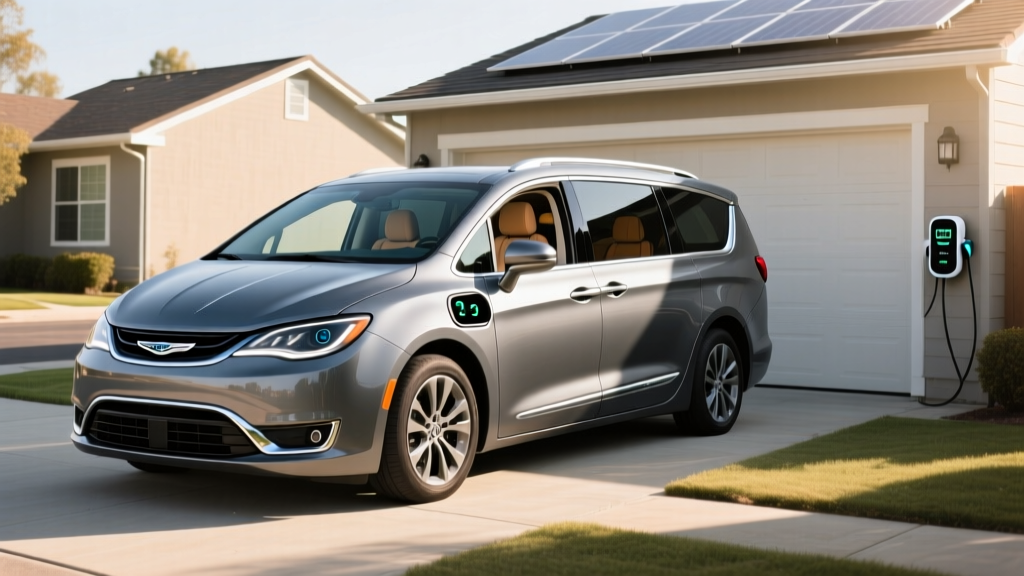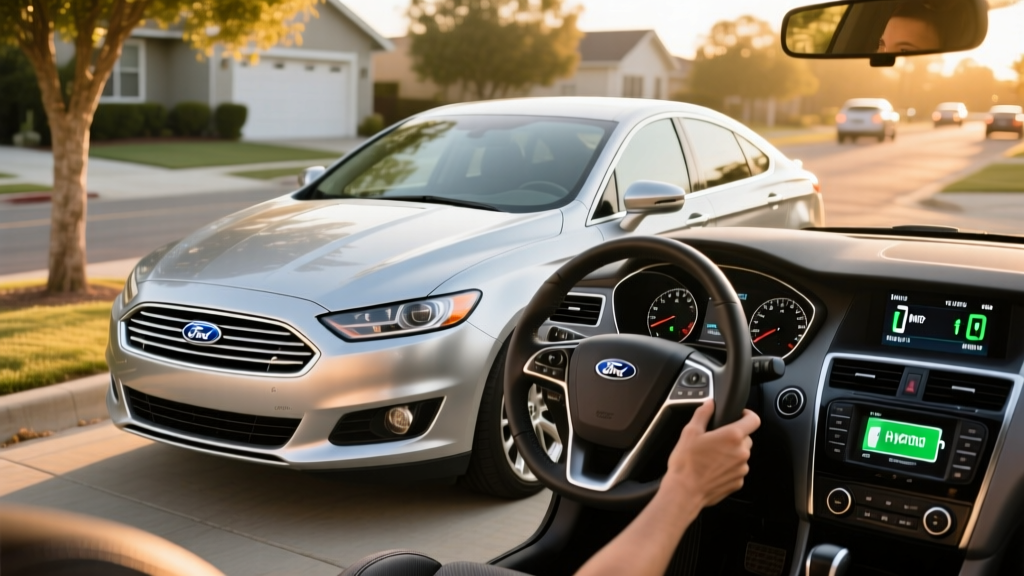
The 2010 Ford Fusion Hybrid was Ford's first serious entry into the midsize hybrid sedan segment, going head-to-head with the Toyota Camry Hybrid at a time when electrified vehicles were still a novelty on American roads. More than a decade and a half later, this conventional hybrid (HEV) remains a fixture on the used-car market, often selling between $4,000 and $8,000 depending on mileage and condition. For budget-conscious commuters, it raises a practical question: can a 16-year-old hybrid still deliver on its fuel-economy promises, and what are the real ownership risks?
This guide breaks down the 2010 Fusion Hybrid's powertrain, EPA and real-world MPG, battery longevity, replacement costs, and how it compares to modern hybrids, PHEVs, and full EVs for today's buyer.
2010 Ford Fusion Hybrid: Powertrain and Key Specs
The 2010 Fusion Hybrid pairs a 2.5-liter Atkinson-cycle four-cylinder gasoline engine with an electric motor integrated into Ford's eCVT (electronically controlled continuously variable transmission). This is a conventional hybrid (HEV) — it cannot be plugged in. The battery recharges through regenerative braking and the gasoline engine.
| Spec | Value |
|---|---|
| Engine | 2.5L Atkinson-cycle I4 |
| Engine Output | 156 hp / 136 lb-ft torque |
| Electric Motor | AC synchronous permanent-magnet |
| Combined System Output | 191 hp |
| Transmission | eCVT (planetary gearset) |
| Hybrid Battery | 1.4 kWh NiMH (nickel-metal hydride) |
| Drivetrain | Front-wheel drive |
| Curb Weight | ~3,720 lbs |
| 0-60 mph | ~8.5 seconds |
| EPA MPG (City / Hwy / Combined) | 41 / 36 / 39 |
| Fuel Tank | 16.5 gallons |
| Estimated Total Range | ~640 miles |
The 1.4 kWh NiMH battery is small by modern standards — it's not designed for meaningful electric-only driving. You'll get brief EV-mode bursts at low speeds (under ~47 mph, typically less than a mile), but the system is optimized for blended operation where the electric motor assists the gas engine during acceleration and the engine shuts off at stops.
Fuel Economy: EPA vs Real-World MPG
The EPA rates the 2010 Fusion Hybrid at 41 mpg city, 36 mpg highway, and 39 mpg combined. These were impressive numbers in 2010, and they still hold up against many modern non-hybrid sedans.
| Driving Cycle | EPA Rating | Real-World Expectation |
|---|---|---|
| City | 41 MPG | 38–43 MPG |
| Highway | 36 MPG | 33–37 MPG |
| Combined | 39 MPG | 36–40 MPG |
Why real-world MPG can exceed EPA in the city: Hybrids thrive in stop-and-go traffic where regenerative braking recaptures energy and the engine shuts off at idle. Many owners report beating the EPA city estimate on commute routes heavy with traffic lights. Highway driving is the opposite story — the gasoline engine does most of the work at sustained speeds, and the hybrid advantage shrinks.
Factors that reduce MPG in a 2010 Fusion Hybrid today:
- Battery aging: A degraded NiMH pack reduces the motor's assist capability, forcing the engine to work harder. Expect 2–5 mpg loss on a unit with significant degradation.
- Cold weather: Below 40°F, expect a 5–10% fuel economy drop as the engine runs more frequently for cabin heat and battery warming.
- Tire condition: Under-inflated or non-LRR (low rolling resistance) tires can cost 1–3 mpg.
- Driving style: Aggressive acceleration defeats the hybrid system's efficiency optimizations.
According to fueleconomy.gov, the 2010 Fusion Hybrid's combined 39 MPG translates to an estimated annual fuel cost of roughly $1,350 at 15,000 miles/year and $3.50/gallon — a figure that still compares favorably to many new gas-only sedans.
HEV vs PHEV vs EV: Understanding What the Fusion Hybrid Is (and Isn't)
The 2010 Fusion Hybrid is a conventional hybrid (HEV). It has no plug, no electric-only range of consequence, and no ability to charge from the grid. Ford did later introduce the Fusion Energi (a PHEV) starting in the 2013 model year, but the 2010 model was HEV-only.
| Feature | HEV (2010 Fusion Hybrid) | PHEV (e.g., modern RAV4 Prime) | BEV (e.g., Tesla Model 3) |
|---|---|---|---|
| Plug-in Charging | No | Yes | Yes |
| Electric-Only Range | ~0.5 mi at low speed | 25–42 mi typical | 250–400+ mi |
| Battery Size | 1.4 kWh (NiMH) | 13–20 kWh (Li-ion) | 50–100 kWh (Li-ion/LFP) |
| DC Fast Charging | N/A | Rare (some models) | Yes |
| Gasoline Engine | Yes (primary) | Yes (backup) | No |
| Federal Tax Credit (§30D) | No | Up to $7,500 (new, if eligible) | Up to $7,500 (new, if eligible) |
| Used EV Credit (§25E) | No | Up to $4,000 (if eligible) | Up to $4,000 (if eligible) |
Key distinction: A conventional hybrid like the 2010 Fusion Hybrid never needs to be plugged in. If you see a listing claiming "plug-in" capability for a 2010 model, it's either mislabeled or confused with a later Fusion Energi. The 2010 model year had no PHEV variant.
Battery Longevity, Replacement Cost, and Warranty
The NiMH battery pack in the 2010 Fusion Hybrid was originally covered under Ford's hybrid component warranty: 8 years / 100,000 miles (extended to 10 years / 150,000 miles in California and states that adopted CARB emissions standards). By 2026, all original factory warranties have expired.
| Option | Cost Range | Notes |
|---|---|---|
| New OEM Pack (Ford dealer) | $3,000–$4,500 | Full replacement, includes labor |
| Remanufactured Pack | $1,500–$2,800 | Rebuilt with tested cells; common for older hybrids |
| Used/Salvage Pack | $500–$1,200 | Risky — unknown remaining life |
| Individual Cell Replacement | $300–$800 | Specialty shops can replace failed cells; requires diagnostic equipment |
Signs of battery degradation to watch for when buying used:
- Dashboard "Check Hybrid System" or battery warning light
- Noticeably reduced fuel economy (below 32–33 mpg combined)
- Engine running constantly, even at stops or low speeds
- Rapid state-of-charge gauge swings on the dashboard display
A pre-purchase inspection at a hybrid-experienced shop ($100–$200) is strongly recommended. They can pull battery health data through an OBD-II scan tool to assess remaining capacity.
Is the 2010 Fusion Hybrid Reliable?
The 2010 Fusion Hybrid earned a reputation for solid reliability, particularly compared to some early competitors. The eCVT transmission — which uses a planetary gearset rather than traditional belts or clutches — is one of the most durable transmissions in any vehicle, gas or hybrid. There are no gears to grind, no torque converter to fail, and no clutch material to wear.
Common issues reported by owners and mechanics:
- Hybrid battery degradation (age/mileage-dependent — see above)
- A/C compressor failures — the electric A/C compressor is expensive to replace ($1,200–$1,800) and is a known weak point on high-mileage examples
- 12V battery drain — the auxiliary 12V battery can drain if the car sits for extended periods; a dead 12V battery prevents the hybrid system from starting
- Brake actuator recalls — Ford issued recalls for the regenerative braking system on some 2010–2012 Fusion Hybrids; verify recall status via NHTSA's VIN lookup
- Interior wear — standard for a 16-year-old vehicle; seat bolsters, dashboard soft-touch materials, and infotainment are dated
With proper maintenance, the powertrain (engine + eCVT + hybrid system) is capable of 200,000+ miles. The biggest financial risk for a used buyer is the hybrid battery — budget $1,500–$3,000 for a potential replacement within your first few years of ownership if the pack is already showing age.
Tax Credits and Incentives: What Applies in 2026?
The 2010 Fusion Hybrid does not qualify for any current federal tax credit. Here's why:
- §30D New Vehicle Credit: Only applies to new plug-in vehicles (PHEVs and BEVs). The Fusion Hybrid is a conventional HEV with no plug — it was never eligible.
- §25E Used EV Credit: This credit (up to $4,000 or 30% of sale price) applies to used plug-in vehicles (PHEVs and BEVs) priced under $25,000. Conventional hybrids are excluded. Per IRS guidelines, the vehicle must have a plug and meet battery capacity thresholds.
- State incentives: Some states offer minor incentives for used hybrids (reduced registration fees, HOV lane access in certain jurisdictions), but these vary widely. Check your state's DMV or energy office for specifics.
The used Fusion Energi (PHEV, 2013+ model years) would potentially qualify for the §25E used credit if it meets the price cap, age requirement (at least 2 model years old), and buyer income limits ($75,000 single / $150,000 joint). If federal incentives are a priority, the Energi is worth considering over the HEV — but it commands a higher used price.
Who Should Buy the 2010 Fusion Hybrid — and Who Shouldn't
Choose This Hybrid If:
- You want a cheap, fuel-efficient commuter on a tight budget ($4K–$8K)
- Your commute is city-heavy with frequent stops (where hybrids shine)
- You have no access to home or workplace charging
- You want hybrid efficiency without range anxiety or plug-in complexity
- You drive 10,000–15,000 miles/year and want to minimize fuel spend
Look Elsewhere If:
- You want electric-only driving or plug-in capability
- You want federal tax credits (consider a used PHEV or BEV instead)
- You want modern safety tech (automatic emergency braking, lane-keep — not available on this model)
- You drive mostly highway miles (the hybrid advantage is smaller)
- You need a warranty — everything on a 2010 model is sold as-is from private sellers
The budget math: At $6,000 purchase price and 39 MPG combined, you're spending roughly $0.09/mile on fuel (at $3.50/gal). A comparable gas-only 2010 Fusion (26 MPG combined) costs ~$0.13/mile. Over 15,000 miles/year, the hybrid saves approximately $600/year in fuel — meaning the hybrid premium over a gas model pays for itself in 1–2 years, even before accounting for the hybrid's typically higher resale value.
2010 Fusion Hybrid vs Modern Alternatives
How does a 2010 HEV compare to what you can buy today?
| Vehicle | Type | EPA Combined | Used/Starting Price | Tax Credit Eligible |
|---|---|---|---|---|
| 2010 Ford Fusion Hybrid | HEV | 39 MPG | $4,000–$8,000 | No |
| 2025 Toyota Camry Hybrid | HEV | 52 MPG | $30,000+ (new) | No |
| 2025 Toyota RAV4 Prime | PHEV | 94 MPGe / 38 MPG gas | $45,000+ (new) | §30D (if eligible) |
| 2025 Hyundai Tucson PHEV | PHEV | 80 MPGe / 35 MPG gas | $39,000+ (new) | §30D (if eligible) |
| Used Tesla Model 3 (2019) | BEV | 141 MPGe | $16,000–$22,000 | §25E (if eligible) |
| Used Chevy Volt (2017) | PHEV | 106 MPGe / 42 MPG gas | $12,000–$16,000 | §25E (if eligible) |
The 2010 Fusion Hybrid still holds up as a fuel-sipper, but modern hybrids like the current Camry Hybrid have pulled significantly ahead (52 vs 39 combined MPG). The trade-off is price: a new Camry Hybrid costs 4–5x more than a used 2010 Fusion Hybrid. If your budget is firm under $10,000, the Fusion Hybrid remains one of the most efficient vehicles available in that price range.
Frequently Asked Questions
How many MPG does the 2010 Ford Fusion Hybrid get?
The EPA rates it at 41 mpg city, 36 mpg highway, and 39 mpg combined. Real-world city driving often matches or slightly exceeds the EPA city figure thanks to regenerative braking. Highway driving typically returns 33–37 mpg. Expect 36–40 mpg combined in mixed driving with a healthy battery.
Can the 2010 Fusion Hybrid drive on electric power only?
Only in very limited circumstances — at speeds under approximately 47 mph, for less than a mile, with a fully charged battery and light throttle input. The 1.4 kWh NiMH pack is far too small for meaningful EV-only driving. This is a blended hybrid, not a plug-in.
Is the hybrid battery expensive to replace?
A remanufactured NiMH pack runs $1,500–$2,800 installed. A new OEM pack from Ford costs $3,000–$4,500. Some specialty shops can replace individual failed cells for $300–$800, which is a cost-effective option if only a few cells are degraded.
Does the 2010 Fusion Hybrid qualify for any tax credit?
No. It is a conventional hybrid (HEV) with no plug-in capability. The federal §30D and §25E credits are reserved for plug-in vehicles (PHEVs and BEVs). No state currently offers a meaningful purchase incentive for used conventional hybrids.
Is the 2010 Fusion Hybrid better than a used EV?
It depends on your situation. If you lack home charging access, drive long distances regularly, or live in an area with sparse public charging infrastructure, the Fusion Hybrid is more practical. If you can charge at home and your daily driving is under 80 miles, a used EV like a 2017–2019 Chevy Bolt or Nissan Leaf will cost far less per mile to operate and may qualify for the $4,000 §25E used EV credit.
What should I check before buying a used 2010 Fusion Hybrid?
Get a pre-purchase inspection from a hybrid-experienced mechanic. Key items: hybrid battery state-of-health via OBD-II scan, A/C compressor operation, brake actuator recall status (check your VIN at nhtsa.gov/recalls), 12V battery age, and eCVT fluid condition. Budget $100–$200 for this inspection — it's the best money you'll spend on a used hybrid purchase.