Quick Verdict: The 2010 Fusion Hybrid in 2026
The 2010 Ford Fusion Hybrid was Ford's first serious entry into the midsize hybrid sedan segment, competing directly with the Toyota Camry Hybrid and Honda Accord Hybrid. Over a decade later, it remains a popular used-car choice for buyers seeking proven hybrid fuel economy without plug-in complexity. With an EPA-estimated 41 city / 36 highway / 39 combined MPG, the Fusion Hybrid delivers real-world efficiency that still holds up against modern non-plug-in hybrids — and it does so with a naturally aspirated 2.5-liter four-cylinder paired with an electric motor through Ford's eCVT planetary gearset.
This guide covers everything a 2026 used-car buyer needs to know: exact fuel economy data, battery longevity expectations, replacement costs, powertrain specs, and whether this first-generation Fusion Hybrid still makes financial sense versus a newer hybrid, PHEV, or full EV.
HEV vs PHEV vs EV: Where the 2010 Fusion Hybrid Fits
Important distinction: The 2010 Ford Fusion Hybrid is a conventional hybrid (HEV) — it does not plug in. Ford did not introduce a plug-in hybrid Fusion (the Fusion Energi) until the 2013 model year. There is no 2010 Fusion PHEV.
| Feature | HEV (2010 Fusion Hybrid) | PHEV (e.g., Fusion Energi) | BEV (e.g., Tesla Model 3) |
|---|---|---|---|
| Plugs in? | No — self-charging | Yes — Level 1/2 | Yes — Level 1/2/DC |
| Electric-only range | ~1-2 mi at low speed | 20-42 mi (model dependent) | 250-360 mi |
| Gas engine | 2.5L I4 + electric motor | 2.0L I4 + electric motor | None |
| Fuel/energy cost per mile | ~$0.08 (gas) | ~$0.04 (electric) / $0.08 (gas) | ~$0.03-$0.05 (electric) |
| Federal tax credit (new) | None (expired) | Up to $7,500 (expired) | Up to $7,500 (§30D) |
| Home charging needed? | No | Yes, for EV range | Yes, essential |
For buyers who lack access to home or workplace charging, a conventional HEV like the 2010 Fusion Hybrid eliminates that barrier entirely. You fuel it like any gas car and the regenerative braking system manages battery state of charge automatically.
Fuel Economy: EPA Ratings and Real-World MPG
| Driving Cycle | EPA Estimate | Real-World Expectation (2026) |
|---|---|---|
| City | 41 MPG | 38-44 MPG (hybrids often exceed EPA in stop-and-go) |
| Highway | 36 MPG | 33-38 MPG (aerodynamic drag limits regen benefit) |
| Combined | 39 MPG | 36-41 MPG |
Source: fueleconomy.gov — 2010 Ford Fusion Hybrid FWD
The 2010 Fusion Hybrid's city-heavy MPG advantage is a hallmark of Toyota/Ford-style power-split hybrid systems. At low speeds, the electric motor handles more propulsion duty, and regenerative braking recaptures energy that would otherwise be lost as heat. In real-world driving, owners frequently report exceeding the EPA city estimate in urban traffic with frequent stops. Highway efficiency is less impressive — at sustained 70+ MPH speeds, the gasoline engine carries most of the load with minimal regenerative benefit.
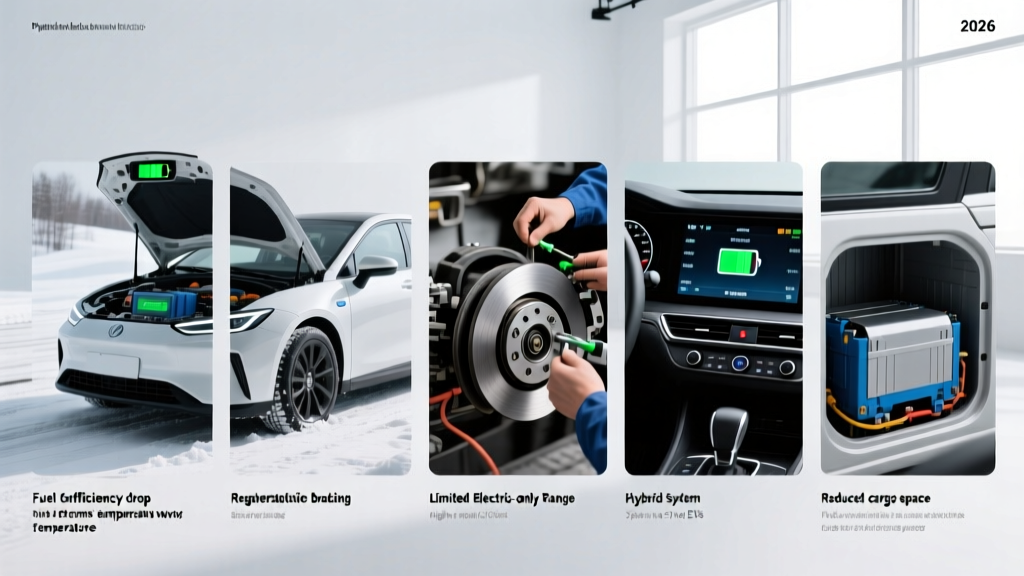
Cold-weather note: Expect a 5-10% MPG reduction in winter months. The engine runs more frequently to provide cabin heat (no heat pump in this generation), and the NiMH battery operates less efficiently at low temperatures.
Powertrain Specs: Engine, Motor, and Combined Output
| Specification | 2010 Ford Fusion Hybrid |
|---|---|
| Engine | 2.5L Atkinson-cycle I4 |
| Engine horsepower | 156 HP @ 6,000 RPM |
| Electric motor | Permanent-magnet AC synchronous |
| Motor output | 106 HP (79 kW) |
| Combined system output | 191 HP |
| Transmission | eCVT (planetary gearset, not belt-driven) |
| Drivetrain | Front-wheel drive |
| Hybrid battery | 1.4 kWh NiMH (nickel-metal hydride) |
| Battery location | Behind rear seat (trunk intrusion) |
| 0-60 MPH | ~8.5 seconds (estimated) |
| Curb weight | ~3,720 lbs |
| Fuel tank | 16.5 gallons |
| Total range (est.) | ~640 miles |
The Atkinson-cycle engine sacrifices low-end torque for thermal efficiency, while the electric motor fills in the torque gap during acceleration. Ford's eCVT uses a planetary gearset to blend power from both sources seamlessly — there are no fixed gear ratios and no traditional belt or chain. This design has proven highly durable, with few mechanical failure points compared to conventional automatic transmissions.
Hybrid Battery Longevity, Warranty, and Replacement Cost
Original Battery Warranty
When new: Ford covered the hybrid battery for 8 years / 100,000 miles (extended to 10 years / 150,000 miles in California and states adopting CARB emissions standards).
In 2026: All original factory battery warranties on 2010 models have expired based on age (16 years old), regardless of mileage.
How Long Do These Batteries Actually Last?
The NiMH battery pack in the 2010 Fusion Hybrid has demonstrated strong longevity in fleet and owner data. Many examples have exceeded 150,000-200,000 miles on the original pack. NiMH chemistry degrades more gracefully than early lithium-ion — capacity loss is gradual rather than sudden, and individual cell failures can sometimes be addressed without full-pack replacement.
That said, at 16 years old, any surviving 2010 Fusion Hybrid is on borrowed battery time if the pack has not been replaced. Expect diminished electric-assist capability and slightly lower MPG as the pack ages.
Battery Replacement Cost
- Remanufactured pack (aftermarket): $1,500 - $2,500 installed
- OEM new pack (Ford dealer): $3,000 - $4,500 installed (availability may be limited for 2010 MY)
- Individual cell/module repair: $500 - $1,200 (specialist hybrid shops)
Several aftermarket suppliers offer remanufactured NiMH packs with 3-year warranties. For a vehicle with a current market value of $4,000-$8,000 depending on condition and mileage, a battery replacement can still be economically justified if the rest of the car is in good shape — the Fusion Hybrid's powertrain and body are generally robust.
Pricing and Tax Credit Eligibility in 2026
The 2010 Ford Fusion Hybrid originally carried an MSRP starting around $27,950. In the 2026 used market, expect to pay:
- Fair condition (150k+ mi): $3,500 - $5,000
- Good condition (80k-130k mi): $5,000 - $7,000
- Excellent condition (under 80k mi): $7,000 - $9,500
Tax Credit Status
The 2010 Fusion Hybrid does not qualify for any current federal tax credit. The federal hybrid vehicle tax credit (§30D) for conventional HEVs expired years ago, and even the plug-in hybrid credits that existed for later Fusion Energi models have been restructured under current IRS rules. The used EV credit (§25E, up to $4,000) applies only to battery-electric and plug-in hybrid vehicles — not conventional hybrids.
Check IRS.gov — Credits for New Clean Vehicles for current rules, and consult a tax professional for personal eligibility.
Reliability and Common Issues
The 2010 Fusion Hybrid benefits from Ford's collaboration with Toyota on the power-split hybrid system (licensed from Toyota's Aisin-designed transaxle). This gives it a reliability pedigree similar to the Camry Hybrid of the same era.
Strengths
- eCVT planetary gearset is extremely durable — no belts, clutches, or bands to wear
- Atkinson-cycle 2.5L engine is under-stressed and long-lived
- Regenerative braking reduces wear on friction brake pads (many owners report 80,000+ miles on original pads)
- No turbocharger, no direct injection complexity
Known Issues to Check
- Brake actuator module: Some owners report failures of the electrohydraulic brake actuator ($1,200-$2,000 replacement). Listen for unusual brake pedal feel or warning lights.
- Electric power steering (EPS): The 2010-2012 Fusion had EPS issues in some units. Check for steering assist warnings or stiff steering.
- A/C compressor: The electric A/C compressor can fail, and replacement runs $800-$1,400.
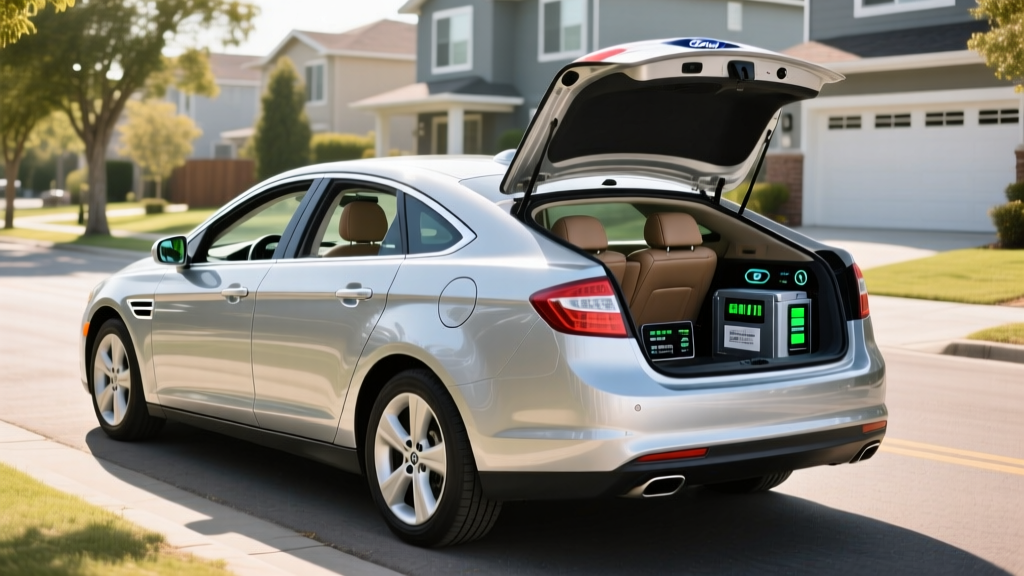
- Trunk space: The NiMH battery pack intrudes into the trunk, reducing cargo volume to ~11.8 cubic feet vs 16.5 in the gas Fusion.
Pros
- Strong city MPG (38-44 real-world)
- Smooth, quiet hybrid operation
- No plug-in required — ideal for apartment/no-garage buyers
- Proven power-split hybrid durability
- Low brake wear from regen
- Competitive used pricing ($4k-$9k)
Cons
- Highway MPG lags behind city (33-38 real)
- Reduced trunk space from battery
- All factory warranties expired
- 16-year-old NiMH battery may need replacement
- No DC fast charging or plug-in capability
- Modest acceleration (8.5s 0-60)
Who Should Buy the 2010 Fusion Hybrid — And Who Shouldn't
Choose the 2010 Fusion Hybrid if:
- You drive primarily in city/suburban traffic where hybrid efficiency shines
- You cannot charge at home (apartment, street parking, no garage outlet)
- Your budget is under $8,000 and you want maximum MPG per dollar
- You want a proven, simple hybrid with no plug-in learning curve
- You commute under 40 miles daily and rarely road-trip
Look elsewhere if:
- You drive mostly highway miles (a modern turbo-diesel or newer hybrid may match its MPG)
- You want electric-only driving — consider a used PHEV like the Fusion Energi or Prius Prime
- You need cargo space — the battery eats trunk room
- You want warranty coverage — budget for potential battery replacement
- You qualify for the used EV credit (§25E) — a used BEV or PHEV could net you up to $4,000 back
2010 Fusion Hybrid vs. Alternatives
| Model | EPA Combined MPG | Used Price Range (2026) | Battery Type |
|---|---|---|---|
| 2010 Ford Fusion Hybrid | 39 MPG | $3,500 - $9,500 | 1.4 kWh NiMH |
| 2010 Toyota Camry Hybrid | 34 MPG | $4,000 - $8,500 | 1.6 kWh NiMH |
| 2010 Honda Insight | 41 MPG | $3,000 - $6,500 | 0.6 kWh NiMH |
| 2013+ Ford Fusion Energi (PHEV) | 38 MPG + 19 mi EV | $7,000 - $14,000 | 7.6 kWh Li-ion |
| 2018+ Toyota Camry Hybrid | 52 MPG | $16,000 - $24,000 | 1.6 kWh Li-ion |
The 2010 Fusion Hybrid holds its own against same-year competitors. The 2010 Camry Hybrid actually rates lower in EPA combined MPG due to its less refined hybrid system of that generation. The Honda Insight matches or slightly beats the Fusion on paper but is a much smaller, less refined vehicle. If your budget allows, a 2018+ Camry Hybrid (52 MPG combined) represents a significant generational leap — but at 2-3x the price.
Frequently Asked Questions
How many MPG does the 2010 Ford Fusion Hybrid get?
The EPA rates it at 41 city / 36 highway / 39 combined MPG. In real-world driving, city MPG often reaches 42-44 in stop-and-go traffic, while sustained highway driving at 70+ MPH typically yields 33-38 MPG. Cold weather reduces efficiency by roughly 5-10%.
Does the 2010 Fusion Hybrid plug in?
No. The 2010 Fusion Hybrid is a conventional self-charging hybrid (HEV). It has no plug, no charging port, and no meaningful electric-only range. Ford did not offer a plug-in Fusion (the Energi) until 2013. You simply fill it with gasoline and the hybrid system manages everything else.
How far can it drive on electric power alone?
Effectively zero miles at normal speeds. The 1.4 kWh NiMH battery can propel the car at very low speeds (under ~25 MPH) for roughly one mile in ideal conditions, but the gasoline engine engages almost immediately under any meaningful acceleration or load. This is normal for conventional hybrids — the battery assists the engine rather than replacing it.
Is the 2010 Fusion Hybrid reliable?
Yes, with caveats. The power-split hybrid powertrain (licensed from Toyota/Aisin) is among the most durable automatic transmissions ever built. The 2.5L Atkinson-cycle engine is under-stressed. Main concerns at this age are the electrohydraulic brake actuator, electric A/C compressor, and the inevitable degradation of a 16-year-old NiMH battery. With proper maintenance, these cars regularly exceed 200,000 miles.
What does a replacement hybrid battery cost?
Expect $1,500-$2,500 for a remanufactured NiMH pack installed at an independent hybrid specialist, or $3,000-$4,500 for an OEM pack at a Ford dealer (if still available). Some specialists can replace individual failed modules for $500-$1,200. Given the car's current market value, budget carefully before purchasing a unit with a known battery issue.
Does it qualify for any tax credit in 2026?
No. Conventional hybrids (HEVs) are not eligible for the federal §30D clean vehicle credit or the §25E used EV credit. Those credits apply only to plug-in vehicles (BEVs and PHEVs). Some states or municipalities may offer registration discounts or HOV lane access for hybrid vehicles, but these programs vary widely — check your local DMV or AFDC state law database for specifics.
Hybrid vs PHEV vs EV — which should I choose?
If you cannot charge at home and drive mostly in the city, a conventional HEV like the Fusion Hybrid is the simplest, lowest-risk option. If you have home charging and a short commute, a used PHEV (like a Fusion Energi or Prius Prime) lets you drive most days on electricity while keeping a gas tank for longer trips. If you have reliable home charging, a predictable daily range, and want the lowest per-mile cost, a used BEV (like a Nissan Leaf or Chevy Bolt) offers the most savings — and may qualify for the $4,000 used EV tax credit under §25E, subject to income limits and vehicle eligibility per IRS.gov.