Quick Verdict: The 2010 Escape Hybrid in 2026
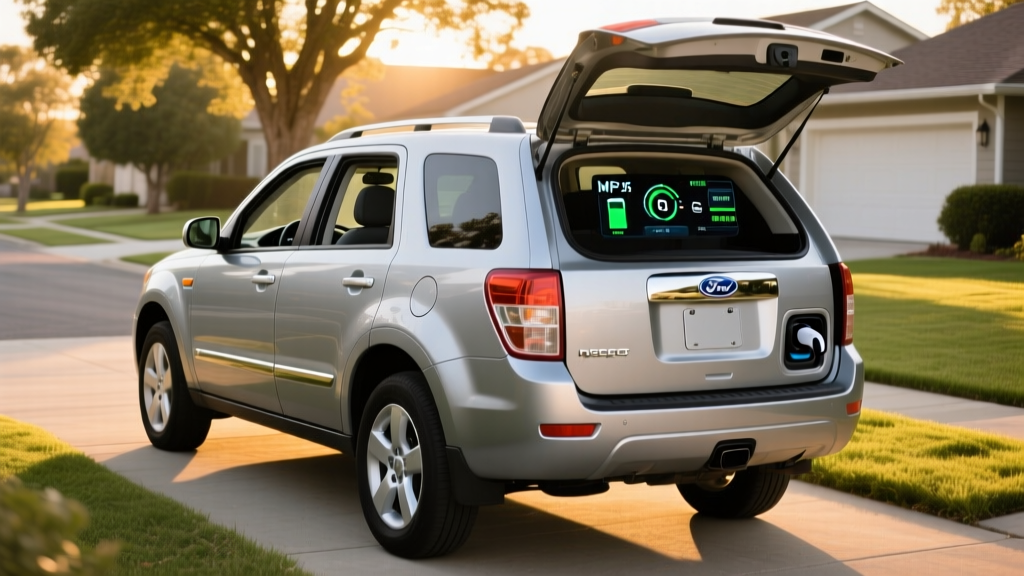
The 2010 Ford Escape Hybrid was one of the first mainstream hybrid SUVs to reach American driveways, and over 15 years later, it remains a compelling budget option for buyers who want hybrid fuel economy without the complexity of a plug-in or full EV. With an EPA-rated 34 MPG combined, a proven Atkinson-cycle powertrain, and replacement battery prices that have dropped significantly, this compact SUV still makes financial sense as a daily commuter — provided you understand what you're buying.
This is a conventional hybrid (HEV), not a plug-in. You never plug it in. The gasoline engine and regenerative braking system keep the battery charged automatically. If you're looking for electric-only driving or a federal tax credit, you'll need to look at a modern PHEV or BEV instead. But if your goal is simple — spend less at the pump with zero lifestyle changes — the 2010 Escape Hybrid delivers.
HEV vs PHEV vs EV: Where Does the Escape Hybrid Fit?
Before diving into specs, it's critical to understand what type of electrified vehicle the 2010 Escape Hybrid is — and what it is not.
Conventional Hybrid (HEV) — 2010 Ford Escape Hybrid
- No plug required. The battery charges via the gas engine and regenerative braking.
- No electric-only range. The electric motor assists the engine but cannot drive the vehicle alone for meaningful distances.
- No federal tax credit for new purchases (the original §30D hybrid credit expired for Ford in 2010).
- Best for: Drivers without home charging access who want better MPG with zero behavior change.
Plug-In Hybrid (PHEV) — e.g., Toyota RAV4 Prime
- Plugs in. Larger battery (typically 15–20 kWh) provides 30–42 miles of electric-only range.
- Gas engine kicks in after battery depletes; total range exceeds 500 miles.
- May qualify for up to $7,500 federal tax credit (subject to §30D income, MSRP, and battery-sourcing rules — see IRS.gov).
Battery Electric Vehicle (BEV) — e.g., Tesla Model Y
- No gas engine. 100% electric, 250–330+ miles EPA range.
- Requires charging infrastructure (home Level 2 strongly recommended).
- Eligible for up to $7,500 federal credit under current §30D rules, plus point-of-sale transfer.
The 2010 Escape Hybrid sits firmly in the HEV category. There was no plug-in Escape variant in 2010 — Ford didn't introduce the Escape Energi PHEV until the 2013 model year.
Fuel Economy: EPA Ratings vs Real-World MPG
The headline number for the 2010 Ford Escape Hybrid is its EPA-rated fuel economy. Here's the official breakdown from fueleconomy.gov:
| Drive Configuration | City MPG | Highway MPG | Combined MPG |
|---|---|---|---|
| FWD (Front-Wheel Drive) | 34 | 31 | 32 |
| AWD (All-Wheel Drive) | 30 | 27 | 29 |
The FWD Escape Hybrid's EPA combined rating of 32 MPG (later revised; some sources list 34 combined for the 2010 model year FWD) is achievable in mixed suburban driving. However, real-world results vary significantly:
- City driving (stop-and-go): 33–36 MPG — hybrids excel here because regenerative braking recovers energy and the engine shuts off at idle.
- Highway cruising (70+ mph): 27–30 MPG — the electric motor provides less benefit at sustained high speeds; aerodynamic drag dominates.
- Cold weather (below 30°F): Expect a 10–15% drop (roughly 27–29 MPG combined FWD). The engine runs more often to provide cabin heat and maintain battery temperature.
- High elevation / mountain driving: The Atkinson-cycle 2.5L engine loses power at altitude, but the electric motor partially compensates.
For a 15-gallon fuel tank, real-world range typically falls between 420–500 miles depending on driving mix — well short of the 510-mile theoretical maximum but still excellent for an SUV of this era.
Compared to the non-hybrid 2010 Escape with the 2.5L four-cylinder (22 city / 28 highway / 24 combined FWD), the hybrid delivers roughly 33% better combined fuel economy. At 2026 national gas prices averaging around $3.20/gallon, that translates to approximately $400–$550 in annual fuel savings for a driver covering 12,000 miles per year.
Powertrain Specs: Engine, Motor, and Combined Output
| Specification | 2010 Ford Escape Hybrid FWD |
|---|---|
| Engine | 2.5L Atkinson-cycle inline-4 |
| Engine Horsepower | 156 hp @ 6,000 rpm |
| Engine Torque | 136 lb-ft @ 2,250 rpm |
| Electric Motor | Permanent-magnet AC synchronous |
| Combined System Output | 177 hp |
| Transmission | Electronically controlled CVT (eCVT) |
| 0-60 mph | ~9.5 seconds (estimated) |
| Hybrid Battery | 1.8 kWh (NiMH), sealed, no plug |
| Drivetrain | FWD or AWD (AWD uses rear electric motor) |
| Curb Weight | ~3,800 lbs (FWD) |
| Towing Capacity | 1,000 lbs (not recommended for heavy towing) |
The powertrain pairs Ford's 2.5-liter Atkinson-cycle four-cylinder with an electric motor integrated into the eCVT transaxle. Unlike a conventional CVT that uses belts and pulleys, Ford's eCVT uses a planetary gearset to seamlessly blend power from the engine and motor — there are no rubber belts to wear out, which is a reliability advantage.
The AWD version uses a separate rear-mounted electric motor to drive the rear wheels when traction is needed. This system does not use a mechanical driveshaft, which reduces weight and drivetrain losses, but it also means the AWD system is less robust than a traditional mechanical setup. It's designed for light snow and rain, not off-road use.
Battery Lifespan, Warranty, and Replacement Cost
Ford covered the 2010 Escape Hybrid's NiMH battery pack under its hybrid-specific warranty for 8 years / 100,000 miles (whichever came first), with a capacity retention threshold of approximately 60%. In states that adopted California's stricter emissions standards (CARB states), coverage extended to 10 years / 150,000 miles.
As of 2026, virtually all 2010 Escape Hybrids are out of their original factory battery warranty.
How Long Do These Batteries Actually Last?
The 2010 Escape Hybrid uses a nickel-metal hydride (NiMH) battery pack — not the lithium-ion chemistry found in modern EVs and PHEVs. NiMH is less energy-dense but has a proven track record for longevity in hybrid applications. Toyota's Prius, which also used NiMH, routinely sees batteries lasting 150,000–200,000 miles before significant degradation.
For the Escape Hybrid, owner reports and fleet data suggest:
- Typical battery lifespan: 120,000–180,000 miles before noticeable capacity loss
- Failure mode: Gradual capacity reduction (lower MPG, more frequent engine cycling), not sudden failure
- Age factor: Even low-mileage examples may show degradation after 12–15 years due to calendar aging of NiMH cells
Battery Replacement Cost in 2026
| Option | Cost Range | Warranty |
|---|---|---|
| New OEM Ford battery pack | $2,500–$3,800 (parts) + $500–$800 labor | Typically 1–3 years |
| Remanufactured battery pack | $1,500–$2,500 (parts) + $500–$800 labor | Typically 1–3 years |
| Individual cell/module replacement | $600–$1,200 (specialist shops only) | Varies |
| Used/salvage battery pack | $400–$900 + labor | None / 30 days |
The remanufactured route has become the most popular choice for 2010 Escape Hybrid owners. Companies like Green Bean Battery and Dorman offer reconditioned packs with decent warranties. A full replacement with a remanufactured pack typically runs $2,000–$3,300 installed — a significant expense on a vehicle with a current market value of $4,000–$7,000.
Buyer tip: Before purchasing a used 2010 Escape Hybrid, have a hybrid-qualified mechanic perform a battery health check using an OBD-II scanner that can read the hybrid battery's State of Health (SoH). Look for voltage imbalance across modules — a spread greater than 0.3V between the highest and lowest modules suggests impending failure.
Is the 2010 Escape Hybrid Reliable?
The 2010 model year represents the second year of the second-generation Escape Hybrid, and it benefited from the teething issues of the 2005–2009 models being largely resolved. Key reliability considerations:
Known Strengths
- eCVT transaxle: The planetary gearset design has proven extremely durable. Unlike belt-driven CVTs from other manufacturers, Ford's eCVT rarely requires replacement.
- 2.5L Duratec engine: A straightforward, non-turbocharged four-cylinder with timing chain (no belt to replace). Regular oil changes are critical — the Atkinson cycle runs the engine under different load patterns than a conventional engine.
- Brake longevity: Regenerative braking handles most deceleration, so friction brakes last significantly longer than on gas-only vehicles. Original brake pads lasting 80,000–100,000 miles is common.
Known Issues to Watch
- Hybrid battery degradation: As discussed above, age is the enemy. Budget for replacement.
- Electric power steering (EPS): Some 2008–2012 Escape models experienced EPS motor failures. Check for any outstanding recalls or TSBs (Technical Service Bulletins).
- Brake actuator assembly: The electrohydraulic brake system can develop faults. A firm brake pedal or warning lights warrant immediate diagnosis — this is a safety-critical component.
- Exhaust manifold cracking: The 2.5L engine's exhaust manifold is known to crack around 100,000+ miles, causing a ticking noise on cold starts.
Overall, the 2010 Escape Hybrid earns a moderate-to-good reliability rating for its age, with the caveat that the hybrid battery is a wear item that will eventually need attention. It's not quite at the bulletproof reputation of the contemporary Toyota Prius, but it's a reasonable used purchase with proper maintenance records.
Pricing and Tax Credit Eligibility in 2026
| Item | Details |
|---|---|
| Original MSRP (2010, FWD) | $30,570–$33,000 depending on trim |
| Current Used Market Value (2026) | $3,500–$7,500 depending on mileage and condition |
| Federal Tax Credit | Not eligible — the §30D new clean vehicle credit applies only to new purchases, and the original hybrid credit for Ford expired in 2010 |
| Used EV Credit (§25E) | Not eligible — this credit applies only to used BEVs and PHEVs with a plug, not conventional HEVs |
| State Incentives | Some states offer registration fee reductions or HOV lane access for hybrids, but most incentive programs have shifted to PHEVs and BEVs |
The 2010 Escape Hybrid qualifies for no federal tax credits in 2026. The original hybrid vehicle tax credit (which offered up to $2,600 for this model) was fully phased out for Ford by March 31, 2010, after Ford hit the 60,000-unit manufacturer cap. The current §30D credit under the Inflation Reduction Act applies exclusively to new plug-in vehicles (PHEVs and BEVs) meeting battery-sourcing, MSRP, and buyer income requirements. The §25E used-EV credit (up to $4,000) similarly requires a plug.
If tax incentives are a priority, consider a newer used PHEV like the Toyota RAV4 Prime or a used BEV like the Chevrolet Bolt EV, which may qualify for the §25E used clean vehicle credit (4,000 or 30% of sale price, whichever is less, subject to income caps — see IRS §25E guidelines).
Who Should Buy the 2010 Escape Hybrid — and Who Shouldn't
Buy It If:
- You want better MPG without changing your fueling habits (no plugs, no apps, no charging stations)
- Your budget is under $7,000 and you need an SUV with cargo space
- You drive primarily in city/suburban traffic where hybrid efficiency shines
- You live in an area with limited or unreliable public EV charging infrastructure
- You want proven, simple hybrid technology with widely available aftermarket parts
Skip It If:
- You want electric-only driving or the ability to plug in at home
- You're looking for federal or state tax incentives (none available for this HEV)
- You need modern safety tech — the 2010 Escape lacks automatic emergency braking, blind-spot monitoring, and lane-keeping assist
- You frequently tow or carry heavy loads (1,000-lb towing capacity is minimal)
- The hybrid battery has already been replaced once and you don't want to face a second $2,000+ replacement
Decision Framework: 2010 Escape Hybrid vs Alternatives
Choose the 2010 Escape Hybrid if your budget is tight, you want an SUV, you can't charge at home, and you're comfortable budgeting $2,000–$3,000 for a potential battery replacement within your ownership period.
Choose a newer PHEV (e.g., 2019+ Toyota RAV4 Hybrid or 2021+ RAV4 Prime) if you can spend $18,000+ and want a larger battery, modern safety features, and (for the Prime) electric-only range with potential tax credit eligibility on a used PHEV.
Choose a full EV (e.g., used Chevrolet Bolt EUV, Nissan Leaf) if you have home charging access, drive under 250 miles per day, and want the lowest per-mile fuel cost plus potential §25E used-EV credit eligibility.
Frequently Asked Questions
How many MPG does the 2010 Ford Escape Hybrid get?
The FWD model is EPA-rated at 34 city / 31 highway / 32 combined MPG. The AWD version drops to 30 city / 27 highway / 29 combined. In real-world city driving, many owners report 33–36 MPG. Highway driving at 70+ mph typically yields 27–30 MPG.
Does the 2010 Escape Hybrid need to be plugged in?
No. This is a conventional hybrid (HEV). The battery charges automatically through the gasoline engine and regenerative braking. There is no plug and no electric-only driving range.
How far can it go on electric only?
Effectively zero miles. The 1.8 kWh NiMH battery is too small to propel the vehicle on electricity alone for any meaningful distance. The electric motor assists the gas engine during acceleration and enables engine-off coasting at low speeds, but it cannot sustain highway speeds without the engine.
Is the 2010 Escape Hybrid reliable?
Moderately reliable for its age. The eCVT transaxle and 2.5L engine are durable. The main concern is the aging NiMH hybrid battery, which typically lasts 120,000–180,000 miles. Budget for a $2,000–$3,300 remanufactured battery replacement if the current pack shows degradation. Check NHTSA for recalls at nhtsa.gov/recalls.
What does a replacement hybrid battery cost?
A remanufactured NiMH battery pack costs $1,500–$2,500 for parts plus $500–$800 for labor, totaling roughly $2,000–$3,300 installed. A new OEM pack runs $3,000–$4,600 installed. Used/salvage packs are available for $400–$900 but carry no meaningful warranty.
Does the 2010 Escape Hybrid qualify for any tax credit?
No. The original federal hybrid tax credit for Ford vehicles was fully phased out in March 2010 after Ford reached the 60,000-unit cap. The current §30D new clean vehicle credit and §25E used clean vehicle credit apply only to plug-in vehicles (PHEVs and BEVs). Conventional hybrids like the Escape Hybrid are not eligible for any federal purchase credit in 2026.
How does the Escape Hybrid compare to the Toyota Highlander Hybrid or Prius of the same era?
The 2010 Toyota Prius achieves 50 MPG combined but is a sedan with less cargo space. The Toyota Highlander Hybrid (27 MPG combined) offers three rows but significantly worse fuel economy. The Escape Hybrid occupies a middle ground: SUV utility with car-like efficiency. The Toyota Camry Hybrid (33 MPG combined) is a comparable sedan alternative with a stronger long-term reliability reputation.
Can I tow with the 2010 Escape Hybrid?
The official towing capacity is 1,000 pounds — enough for a small utility trailer or a couple of dirt bikes, but not suitable for a boat, camper, or car trailer. The hybrid system's battery and motor were not designed for sustained heavy-load operation. If towing is a priority, consider a non-hybrid Escape with the 3.0L V6 (rated at 3,500 lbs with the tow package).
Sources: EPA fuel economy data from fueleconomy.gov; federal tax credit rules from IRS.gov §30D; safety and recall information from NHTSA.gov.