Quick Verdict: A Pioneer That Still Commutes
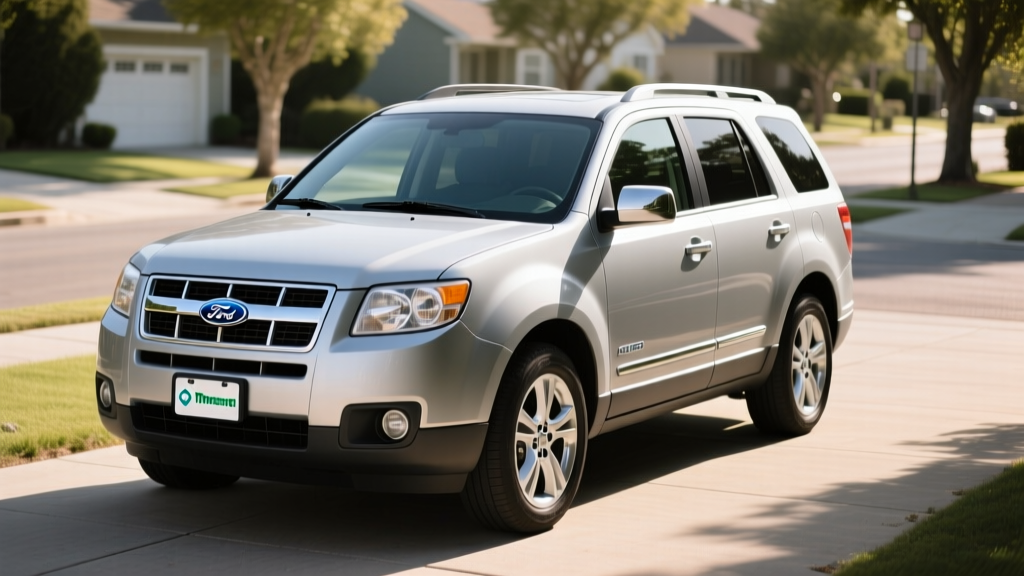
The 2010 Ford Escape Hybrid was one of the first mainstream hybrid SUVs to reach American driveways, pairing a 2.5-liter Atkinson-cycle four-cylinder with an electric motor and a nickel-metal hydride (NiMH) battery pack. As a conventional hybrid (HEV), it never plugs in — it generates all its electricity through regenerative braking and the gasoline engine. More than 15 years after its debut, this compact crossover remains a relevant used-car option for budget-conscious commuters who want hybrid fuel savings without the complexity or cost of a plug-in vehicle or full EV.
With an EPA-rated 34 MPG city, 31 MPG highway, and 33 MPG combined (FWD), the Escape Hybrid still holds its own against many modern non-hybrid compact SUVs. But prospective used buyers need to weigh aging NiMH battery health, outdated infotainment, and the absence of modern driver-assistance features against rock-low purchase prices and proven powertrain durability.
HEV vs. PHEV: Understanding What the Escape Hybrid Is (and Isn't)
The 2010 Ford Escape Hybrid is a conventional hybrid electric vehicle (HEV). It has no plug, no external charging port, and no electric-only driving range to speak of. The small NiMH battery assists the gas engine during acceleration, captures energy during braking, and enables brief low-speed electric-only movement (typically under 25 mph for short distances), but the gasoline engine does the vast majority of the work.
| Feature | 2010 Escape Hybrid (HEV) | Modern PHEV (e.g., Ford Escape PHEV) | Full EV (e.g., Ford Mustang Mach-E) |
|---|---|---|---|
| Plugs in? | No | Yes (Level 1/2 AC) | Yes (Level 2 + DC fast) |
| Electric-only range | ~0.5 mi at low speed | 30–40 mi (typical modern PHEV) | 230–320 mi (EPA) |
| Battery size | ~1.8 kWh (NiMH) | 14.4 kWh (Li-ion) | 70–91 kWh (Li-ion) |
| Fueling | Gasoline only | Gasoline + electricity | Electricity only |
| Federal tax credit (new) | None (expired long ago) | Up to $3,750 (§30D, if eligible) | Up to $7,500 (§30D, if eligible) |
| Used EV credit (§25E) | Not eligible (HEV) | Not eligible (PHEV) | Up to $4,000 if qualifying |
If you're comparing this to the current-generation Ford Escape PHEV, that's a fundamentally different vehicle with a 37-mile electric-only range, a lithium-ion battery, and a plug. The 2010 Escape Hybrid is simpler: put gas in it, drive it, and let the hybrid system handle the rest.
Fuel Economy: EPA Ratings vs. Real-World MPG
The EPA rated the 2010 Ford Escape Hybrid FWD at 34 MPG city / 31 MPG highway / 33 MPG combined. The AWD variant drops slightly to 31/29/30 MPG combined. According to fueleconomy.gov, these figures were competitive for a compact SUV in 2010 and remain respectable against many 2026 gas-only crossovers.
| Configuration | City MPG | Highway MPG | Combined MPG |
|---|---|---|---|
| FWD (2.5L Hybrid) | 34 | 31 | 33 |
| AWD (2.5L Hybrid) | 31 | 29 | 30 |
Real-World MPG: What Owners Actually Report
Like most hybrids, the Escape Hybrid tends to outperform its EPA city rating in stop-and-go traffic, where regenerative braking and electric assist do the most work. Real-world owner reports on Fuelly and similar tracking platforms cluster around 29–33 MPG combined, with city-heavy commuters sometimes hitting 35–36 MPG. Highway-dominant driving, especially above 70 mph, pushes the figure closer to 28–30 MPG as the gasoline engine carries the full load with less regen opportunity.
Cold weather reduces fuel economy by roughly 5–10% due to extended engine warm-up cycles and reduced battery efficiency — typical for NiMH packs. Expect around 28–30 MPG combined in winter conditions for FWD models.
Powertrain Specs: Engine, Motor, and Combined Output
| Specification | 2010 Ford Escape Hybrid (FWD) |
|---|---|
| Engine | 2.5L Atkinson-cycle I4 |
| Engine horsepower | 153 hp @ 6,000 rpm |
| Electric motor | AC synchronous permanent-magnet |
| Combined system output | 177 hp |
| Transmission | eCVT (planetary gearset, no fixed gears) |
| Battery type | Nickel-Metal Hydride (NiMH) |
| Battery capacity | ~1.8 kWh (gross) |
| 0–60 mph | ~9.5 seconds (est.) |
| Drivetrain | FWD (AWD optional) |
| Fuel tank | 16.5 gallons |
| Total range (FWD, est.) | ~545 miles |
The 2.5L Atkinson-cycle engine sacrifices some peak power for thermal efficiency, running a late intake-valve closing cycle that extracts more energy from each combustion event. The electric motor fills in torque gaps at low RPM, giving the Escape Hybrid reasonably brisk off-the-line acceleration for a 2010 compact SUV. The eCVT is not a belt-and-pulley CVT like those in some competitors — it's a Toyota-derived planetary gearset (Ford licensed Toyota's hybrid synergy technology for this generation) that is mechanically simple and extremely durable.
Battery Health, Lifespan, and Replacement Cost
Original Battery Warranty
When new, the 2010 Escape Hybrid's NiMH battery pack was covered by Ford's hybrid component warranty: 8 years / 100,000 miles (10 years / 150,000 miles in California and states adopting CARB emissions standards). As of 2026, all original warranty coverage has expired for every 2010 model.
How Long Does the NiMH Battery Last?
NiMH batteries in the Escape Hybrid have proven surprisingly durable. Many examples have reached 150,000–200,000 miles on the original pack. Unlike the lithium-ion batteries in modern EVs and PHEVs, NiMH cells degrade more gradually and are less susceptible to catastrophic capacity loss. The most common failure mode is individual cell imbalance rather than total pack death.
However, at 16+ years old, any 2010 Escape Hybrid you find today is living on borrowed battery time if the pack hasn't been replaced or reconditioned. Heat is the primary enemy of NiMH longevity — vehicles that spent their lives in hot southern states are at higher risk of degraded packs.
Battery Replacement Cost
If the hybrid battery fails or degrades significantly, replacement options include:
- OEM Ford replacement pack: $2,500–$3,500 (parts) plus $500–$800 labor at a dealership
- Aftermarket/remanufactured pack: $1,200–$2,000 plus labor from an independent hybrid specialist
- Individual cell reconditioning: $400–$800 at a hybrid battery shop (replaces only failed cells)
- Junkyard pull: $300–$600 for a used pack — risky given age, but some buyers accept the gamble
A failing hybrid battery typically triggers a dashboard warning light and a noticeable drop in fuel economy (often into the low-to-mid 20s MPG) as the system relies more heavily on the gasoline engine. The vehicle remains drivable, but efficiency degrades substantially.
Is the 2010 Escape Hybrid Reliable?
The powertrain — particularly the eCVT planetary gearset and the Atkinson-cycle engine — has an excellent reliability record. The hybrid system adds complexity (inverter, motor, battery) but eliminates the conventional automatic transmission, which is itself a common failure point in gas-only vehicles. NHTSA records show no widespread powertrain-related recalls specific to the hybrid system.
Common non-hybrid complaints include aging suspension components (struts, sway bar links), power steering issues (the 2010 model uses electric power steering), and typical 15-year-old-vehicle wear items like corroded brake lines and worn bushings. Budget $1,000–$2,000 for deferred maintenance when purchasing any 2010 model.
Pricing, Tax Credits, and Used Market Value
The 2010 Ford Escape Hybrid originally started around $30,000 MSRP when new. In the 2026 used market, examples typically sell for $3,500–$7,500 depending on mileage, condition, battery health, and regional demand. Well-maintained, low-mileage examples with documented battery replacements command premiums at the top of that range.
Does the 2010 Escape Hybrid Qualify for Any Tax Credit?
No. The 2010 Escape Hybrid does not qualify for the federal §30D new clean vehicle credit (it was sold long before current rules) nor the §25E used EV credit, which applies only to battery electric vehicles (BEVs) and plug-in hybrids (PHEVs) — not conventional hybrids. Some states offer minimal incentives for used hybrid purchases, but these are rare and vary by jurisdiction. Check your state's energy office or department of environmental quality for any local programs.
The financial case for the Escape Hybrid rests entirely on fuel savings, not incentives. At $3.50/gallon gas and 12,000 miles/year, the 33-MPG combined Escape Hybrid costs roughly $1,273/year in fuel, compared to $1,680/year for a gas-only compact SUV averaging 25 MPG — a savings of about $407/year. That's modest but meaningful at this price point.
Who Should Buy This Hybrid (and Who Shouldn't)
Pros
- Proven, durable eCVT powertrain with Toyota-derived hybrid tech
- Strong city MPG (often exceeds EPA in stop-and-go driving)
- No plug-in infrastructure needed — works anywhere gas is sold
- Low purchase price ($3,500–$7,500 used)
- SUV cargo versatility with 67.2 cu ft max cargo volume
- AWD available for snow-belt buyers
Cons
- 16+ year-old NiMH battery likely near end of life
- No modern ADAS (no AEB, lane-keep, blind-spot monitoring)
- Dated interior with no Apple CarPlay/Android Auto
- Modest 177 hp — slow highway merging and passing
- No federal or most state tax credits available
- Highway MPG unremarkable vs. modern hybrids
Choose the 2010 Escape Hybrid If:
- You need a cheap, fuel-efficient compact SUV for city commuting
- You have no access to home or workplace charging (ruling out PHEVs and EVs)
- You're comfortable with a 15-year-old vehicle and can budget for maintenance
- You want hybrid simplicity — no plug, no range anxiety, just gas and go
Look Elsewhere If:
- You want modern safety tech (automatic emergency braking, lane centering)
- You have charging access and want electric-only driving (consider a used Escape PHEV or a BEV like the Chevy Bolt EUV)
- You can't absorb a potential $1,500–$3,500 battery replacement
- You do mostly highway driving, where the hybrid advantage shrinks
Frequently Asked Questions
How many MPG does the 2010 Ford Escape Hybrid get?
The EPA rates the FWD model at 34 city / 31 highway / 33 combined MPG. The AWD model is rated at 31/29/30 MPG. Real-world city driving often yields 34–36 MPG, while sustained highway driving above 70 mph drops to 28–30 MPG.
Does the 2010 Escape Hybrid need to be plugged in?
No. This is a conventional hybrid (HEV). It charges its battery entirely through regenerative braking and the gasoline engine. There is no charging port.
How far can it drive on electric power alone?
Under a mile, and only at very low speeds (typically under 25 mph). The NiMH battery is too small (~1.8 kWh) to provide meaningful electric-only range. The electric motor's primary role is assisting the gas engine and smoothing acceleration.
Is the hybrid battery expensive to replace?
An OEM replacement runs $3,000–$4,300 installed at a dealer. Remanufactured aftermarket packs cost $1,500–$2,800 installed at an independent shop. Cell-level reconditioning can be done for $400–$800. Given the vehicle's used value of $3,500–$7,500, a full OEM replacement often doesn't make financial sense — a remanufactured pack is the pragmatic choice.
Hybrid vs. PHEV vs. EV — which should I buy?
If you have reliable home charging and a daily commute under 30 miles, a PHEV or used BEV will save more on fuel and offer a smoother, quieter driving experience. If you live in an apartment without charging access, drive long distances frequently, or want the lowest upfront cost, a conventional hybrid like the Escape Hybrid eliminates range and charging concerns entirely. The 2010 Escape Hybrid makes sense specifically for budget buyers who need SUV utility without charging infrastructure.
Does it qualify for any federal tax credit?
No. The §30D credit applies to new clean vehicles, and the §25E used EV credit applies only to BEVs and PHEVs — not conventional hybrids. No federal tax incentive is available for purchasing a used 2010 Escape Hybrid. Check IRS.gov for current credit rules.
Is the eCVT transmission reliable?
Yes. The planetary gearset eCVT (licensed from Toyota's Hybrid Synergy Drive architecture) has no belts, no clutches, and no torque converter. It is one of the most durable transmissions ever put in a consumer vehicle. Failures are exceedingly rare when basic maintenance (fluid checks) is performed.
What should I check before buying a used 2010 Escape Hybrid?
Have a hybrid-qualified mechanic perform a battery state-of-health test (checking individual cell voltages and internal resistance). Verify that the hybrid system warning light is off. Check for transmission fluid service history, brake condition (regen braking extends pad life, but calipers can seize from infrequent use), and standard 15-year wear items like suspension bushings, brake lines, and the water pump.