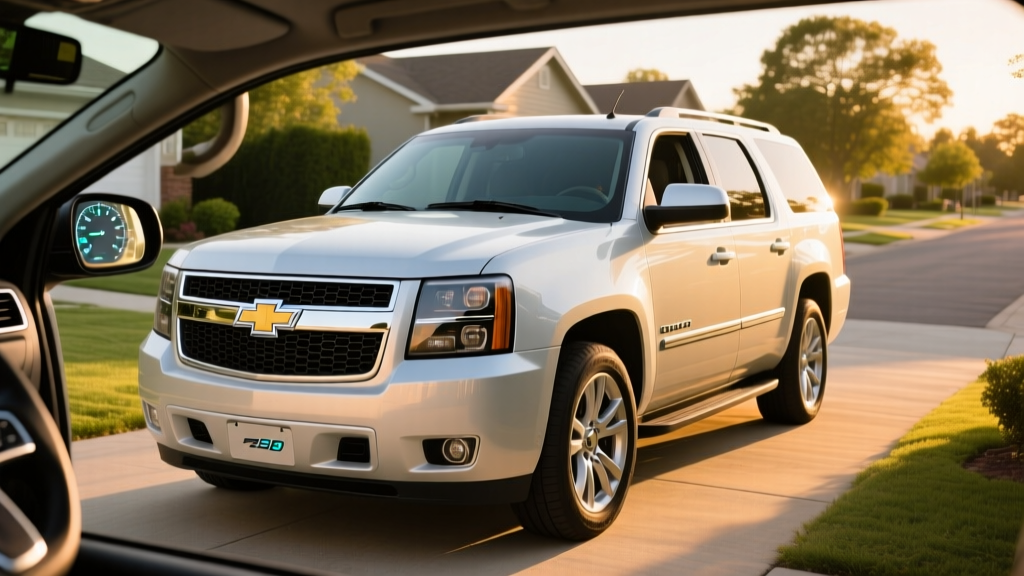
The 2010 Chevrolet Tahoe Hybrid was a bold experiment: a full-size, body-on-frame SUV with a two-mode hybrid system that delivered meaningful fuel savings without sacrificing towing or passenger space. More than a decade and a half later, it remains one of the most capable used hybrid SUVs on the market — and a cautionary tale about battery longevity in early hybrid trucks.
If you're researching a used 2010 Chevy Tahoe Hybrid in 2026, this guide covers everything you need to know: EPA and real-world MPG, the hybrid powertrain specs, battery health and replacement costs, and whether this HEV still makes sense versus a modern hybrid, PHEV, or full EV.
HEV vs PHEV: What the 2010 Tahoe Hybrid Actually Is
Before diving into specs, it's critical to understand what type of hybrid the 2010 Tahoe is — and what it isn't.
Conventional Hybrid (HEV) vs Plug-In Hybrid (PHEV)
| Feature | HEV (2010 Tahoe Hybrid) | PHEV (e.g., 2026 RAV4 Prime) |
|---|---|---|
| Plug-in charging? | No — charges via engine & regen | Yes — Level 1/2 charging |
| Electric-only range | None (EV assist only at low speed) | 30–42 miles typical |
| Battery size | ~1.8 kWh (NiMH) | 13–20 kWh (Li-ion) |
| Federal tax credit | None (expired) | Up to $7,500 if eligible |
| Primary benefit | Better MPG, no behavior change | Gas-free daily commuting + gas engine backup |
The 2010 Tahoe Hybrid is a conventional hybrid (HEV). It never plugs in. Its nickel-metal hydride (NiMH) battery charges through regenerative braking and the gasoline engine. There is no electric-only driving mode for highway speeds — the electric motors assist the V8 at low speeds and during acceleration, then seamlessly hand off to the engine. This is fundamentally different from a PHEV like the Toyota RAV4 Prime or Chrysler Pacifica Hybrid, which can drive 30+ miles on battery alone before the engine engages.
Fuel Economy: EPA Ratings and Real-World MPG
The headline number for the 2010 Tahoe Hybrid was always its fuel economy advantage over the gas-only Tahoe. Here's the EPA breakdown according to fueleconomy.gov:
| Configuration | City MPG | Highway MPG | Combined MPG |
|---|---|---|---|
| 2010 Tahoe Hybrid (2WD) | 21 | 22 | 21 |
| 2010 Tahoe Hybrid (4WD) | 20 | 22 | 21 |
| 2010 Tahoe Gas (5.3L V8, 2WD) | 15 | 21 | 17 |
| 2010 Tahoe Gas (5.3L V8, 4WD) | 14 | 20 | 16 |
The hybrid delivers roughly a 24–31% improvement in combined fuel economy over the conventional V8 Tahoe. The gains are most pronounced in city driving, where the two-mode system's electric assist and regenerative braking shine. Highway MPG is closer between hybrid and gas models because the engine dominates at sustained speeds.
Real-World MPG: What Owners Actually Report
Hybrids often exceed their EPA city ratings in stop-and-go traffic thanks to regen braking. On the highway, results depend heavily on speed and terrain. Based on owner-reported data from Fuelly and enthusiast forums, expect:
- City / suburban driving: 19–22 MPG (some owners report slightly above EPA in heavy traffic)
- Highway (70 mph, flat): 19–21 MPG
- Highway (75+ mph or mountainous): 17–19 MPG
- Towing (5,000+ lbs): 11–14 MPG
The hybrid advantage shrinks significantly under heavy towing loads, where the 6.0L V8 is doing most of the work regardless of the electric motors.
Powertrain and Performance Specs
The 2010 Tahoe Hybrid uses GM's Two-Mode Hybrid system, co-developed with BMW and DaimlerChrysler. It pairs a 6.0-liter Vortec V8 with two electric motors inside a specialized automatic transmission.
| Specification | 2010 Chevy Tahoe Hybrid |
|---|---|
| Engine | 6.0L Vortec V8 (VVT, Active Fuel Management) |
| Engine HP / Torque | 332 hp @ 5,100 rpm / 367 lb-ft @ 4,100 rpm |
| Electric Motors | Two 60-kW motors (combined) |
| Combined System HP | 379 hp |
| Transmission | Two-mode hybrid CVT (electrically variable) |
| Battery | ~1.8 kWh NiMH (300V pack) |
| Drivetrain | 2WD or 4WD available |
| 0–60 mph | ~8.0 seconds (est.) |
| Towing Capacity | 5,800 lbs (4WD) / 6,000 lbs (2WD) |
| Curb Weight | ~5,880 lbs (4WD) |
| Seating | 7 passengers (standard) |
| Cargo (behind 3rd row) | 16.9 cu ft |
The two-mode transmission is the engineering highlight. In Mode 1 (low speed / city), the electric motors handle most propulsion, with the V8 shutting down via Active Fuel Management (cylinder deactivation) when not needed. In Mode 2 (highway / towing), the system locks into a more direct mechanical path for efficiency under load. The result is a full-size SUV that can tow nearly 6,000 pounds while sipping fuel at stoplights.
Battery Health, Warranty, and Replacement Cost
For any used hybrid buyer — especially one looking at a 16-year-old vehicle — battery condition is the single biggest financial risk.
Original Battery Warranty
GM warranted the 2010 Tahoe Hybrid's NiMH battery pack for 8 years / 100,000 miles (10 years / 150,000 miles in CARB states). This warranty has expired for all original batteries unless an extended coverage plan was purchased.
Battery Degradation and Real-World Longevity
NiMH batteries degrade differently than modern lithium-ion packs. Rather than a gradual capacity loss, NiMH cells tend to develop individual cell failures that reduce overall pack performance. Symptoms of a failing hybrid battery in the 2010 Tahoe include:
- Reduced fuel economy (dropping to 15–17 MPG)
- "Check Hybrid System" or "Service Hybrid System" dashboard warning
- Reduced regenerative braking feel
- Engine running more frequently at stoplights
Many original 2010 Tahoe Hybrid batteries have already failed or been replaced. The NiMH chemistry in this generation was less durable than the lithium-ion packs in modern hybrids.
Battery Replacement Cost (2026 Estimates)
| Option | Cost Range | Notes |
|---|---|---|
| New OEM GM battery pack | $3,500 – $5,000 | Full replacement at dealer; may be discontinued |
| Remanufactured battery pack | $1,800 – $3,000 | Third-party suppliers (e.g., GreenTec Auto); most common choice |
| Used/salvage battery | $800 – $1,500 | Risky — unknown remaining life |
| Individual cell reconditioning | $500 – $1,200 | Specialty hybrid shops; temporary fix in some cases |
Most used buyers opt for a remanufactured pack from a reputable hybrid battery supplier, typically with a 1–3 year warranty. Factor this into your purchase negotiation — if the seller hasn't replaced the battery, budget $2,000–$3,000 for the likely near-term replacement.
Pricing, Tax Credits, and Used Market Value
The 2010 Tahoe Hybrid originally carried an MSRP of approximately $52,975 (2WD) to $55,810 (4WD), a significant premium over the gas-only Tahoe LT (~$40,000). That hybrid premium was partially offset by a $2,200 federal tax credit available at the time of purchase — but that credit expired long ago.
Current Tax Credit Eligibility
The 2010 Tahoe Hybrid does not qualify for any current federal tax credit. Under current IRS §30D rules, the federal clean vehicle credit applies only to new EVs and PHEVs that meet battery sourcing, MSRP cap, and buyer income requirements. Conventional hybrids (HEVs) have never been eligible for the §30D credit. The now-expired Qualified Hybrid Motor Vehicle credit that applied to the 2010 Tahoe at purchase is no longer available.
Used Market Pricing (2026)
Based on current used-vehicle market data, a 2010 Chevy Tahoe Hybrid typically sells for:
- Fair condition (high miles, original battery): $5,000 – $7,000
- Good condition (moderate miles, battery replaced): $8,000 – $11,000
- Excellent condition (low miles, documented battery replacement): $11,000 – $14,000
At these prices, the Tahoe Hybrid is a value proposition for buyers who need three rows, towing capability, and better-than-average fuel economy — but the battery replacement cost can represent 20–40% of the vehicle's value.
Who Should Buy the 2010 Tahoe Hybrid (and Who Shouldn't)
Pros
- 24–31% better fuel economy than gas Tahoe
- Full towing capacity (~5,800–6,000 lbs)
- 7-passenger seating with genuine cargo space
- Smooth, quiet hybrid operation in city driving
- Low used-market entry price
Cons
- NiMH battery likely needs replacement ($2,000–$3,000)
- No electric-only driving capability
- No modern ADAS features (no auto emergency braking, lane keep)
- Outdated infotainment (no Apple CarPlay / Android Auto)
- High curb weight (nearly 6,000 lbs) affects braking and tire wear
- Parts availability declining as GM discontinued the hybrid Tahoe after 2013
The Decision Framework
Choose the 2010 Tahoe Hybrid if: You need a full-size, three-row SUV with towing capability on a tight budget ($8,000–$12,000 all-in), do mostly city/suburban driving where the hybrid system saves the most fuel, and are prepared for a potential battery replacement cost.
Choose a modern hybrid (e.g., 2026 Toyota Grand Highlander Hybrid) if: You can spend $42,000+ and want current safety tech, warranty coverage, modern infotainment, and 35+ MPG combined with a lithium-ion battery that will last the life of the vehicle.
Choose a PHEV (e.g., 2026 Chrysler Pacifica Hybrid) if: Your daily commute is under 32 miles round-trip, you have home Level 2 charging, and you want gas-free weekday driving with gas-engine flexibility for road trips. PHEVs also may qualify for the up to $7,500 federal tax credit if income, MSRP, and sourcing requirements are met.
Choose a full EV (e.g., 2026 Kia EV9) if: You have reliable home charging, don't need to tow more than 5,000 lbs, and want zero tailpipe emissions with minimal maintenance.
2010 Tahoe Hybrid vs Modern Alternatives
| Spec | 2010 Tahoe Hybrid | 2026 Grand Highlander Hybrid | 2026 Pacifica PHEV |
|---|---|---|---|
| Type | HEV | HEV | PHEV |
| Combined MPG / MPGe | 21 MPG | 36 MPG | 30 MPG / 82 MPGe |
| EV-only range | None | None | 32 miles |
| Combined HP | 379 hp | 362 hp | 260 hp |
| Towing | 5,800 lbs | 5,000 lbs | 3,600 lbs |
| Seating | 7 | 7–8 | 7 |
| Battery warranty | Expired | 10 yr / 150k mi | 10 yr / 150k mi |
| Starting price (2026) | $5k–$14k (used) | ~$42,095 | ~$51,095 |
| Federal credit | None | None (HEV) | Up to $7,500* |
*PHEV credit subject to IRS §30D income, MSRP, and battery-sourcing requirements. Verify at fueleconomy.gov before purchase.
The efficiency gap is stark. Toyota's modern hybrid system delivers 71% better combined MPG than the 2010 Tahoe's two-mode system, thanks to advances in lithium-ion battery density, motor efficiency, and vehicle aerodynamics. However, neither the Grand Highlander nor the Pacifica matches the Tahoe's towing capacity or body-on-frame durability for heavy-duty use.
Buying Checklist: Inspecting a Used 2010 Tahoe Hybrid
If you're seriously considering one, here's what to verify before handing over cash:
- Battery health: Have a hybrid-specialist shop run a diagnostic scan on the 300V NiMH pack. Ask for individual cell voltage readings — any cell more than 0.3V below the pack average signals imminent failure.
- Hybrid system codes: Check for stored or pending diagnostic trouble codes (DTCs) in the hybrid control module, even if no warning light is currently illuminated.
- Service records: Documentation of a battery replacement (remanufactured or OEM) is a strong positive — it means the biggest expense is behind you.
- Transmission behavior: The two-mode hybrid transmission should shift smoothly between modes. Grinding, hesitation, or clunking during mode transitions is a red flag.
- Active Fuel Management: The V8 deactivates four cylinders under light load. Listen for unusual tapping or roughness that could indicate AFM lifter issues — a known problem on GM V8s of this era.
- Rust and frame: Body-on-frame SUVs in salt-belt states can suffer frame corrosion. Inspect the frame rails and suspension mounting points.
Frequently Asked Questions
How many MPG does the 2010 Chevy Tahoe Hybrid get?
The EPA rates the 2010 Tahoe Hybrid at 21 MPG city / 22 MPG highway / 21 MPG combined for both 2WD and 4WD models. Real-world results typically range from 17–22 MPG depending on driving conditions, with city driving often at or slightly above the EPA rating and highway driving slightly below.
Does the 2010 Tahoe Hybrid need to be plugged in?
No. The 2010 Tahoe Hybrid is a conventional hybrid (HEV). It charges its battery entirely through regenerative braking and the gasoline engine. There is no plug, no charging cable, and no electric-only driving range.
Is the 2010 Tahoe Hybrid reliable?
The powertrain (V8 + two-mode transmission) is generally robust, but the NiMH hybrid battery is the weak point. Most original batteries have failed by now. With a replaced or reconditioned battery, the vehicle can be reliable for daily use, but parts availability for hybrid-specific components is declining as the model ages.
How much does a replacement hybrid battery cost for the 2010 Tahoe?
Expect to pay $1,800–$3,000 for a remanufactured NiMH battery pack from a reputable third-party supplier, or $3,500–$5,000 for an OEM replacement (if still available). Used/salvage packs are cheaper ($800–$1,500) but carry significant risk.
Does the 2010 Tahoe Hybrid qualify for any tax credit in 2026?
No. The federal hybrid tax credit that applied when the vehicle was new expired long ago. Under current IRS rules, only new plug-in electric vehicles and PHEVs are eligible for federal credits. The 2010 Tahoe Hybrid, as a conventional HEV, does not qualify for any federal or typical state EV incentive.
Hybrid vs PHEV vs EV — which should I choose?
If you need a full-size SUV on a budget under $15,000, the 2010 Tahoe Hybrid is one of few options with towing capability and hybrid efficiency. If you can spend more, a modern hybrid like the Toyota Grand Highlander delivers far better MPG with a full warranty. If you have home charging and a short commute, a PHEV gives you the best of both worlds — electric weekdays, gas-engine weekends. A full EV makes sense if you have reliable charging access and don't need heavy towing.