Quick Verdict: A Pioneer That Still Saves Fuel, If You Know the Risks
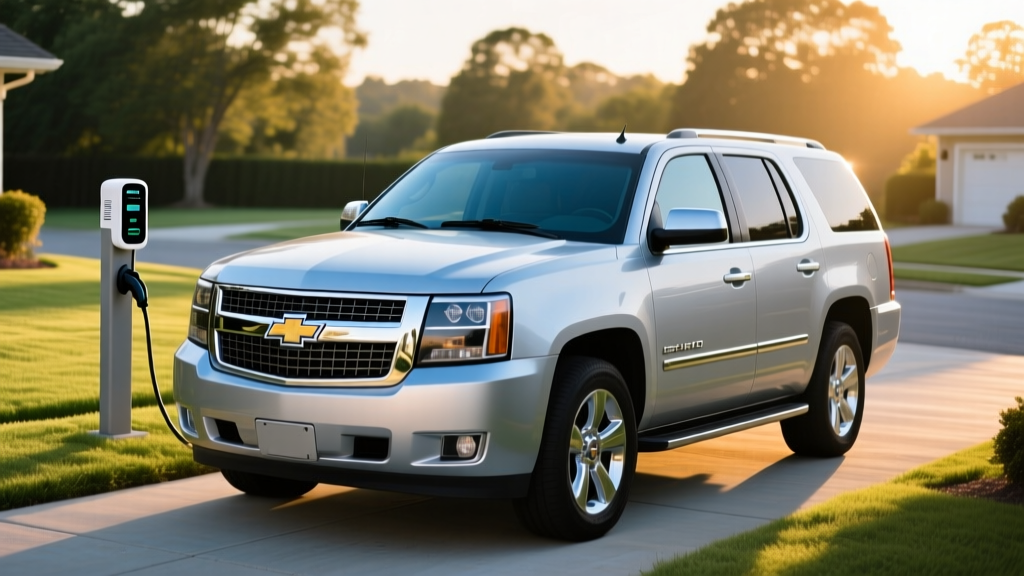
The 2010 Chevrolet Tahoe Hybrid was GM's bold attempt to make a body-on-frame, 5,800-pound SUV sip fuel like a midsize sedan. Using the innovative two-mode hybrid system co-developed with BMW and Mercedes-Benz, it delivered an EPA-estimated 21 MPG combined — a remarkable figure for a three-row, 8-passenger SUV of its era. In 2026, with used examples trading between $5,000 and $11,000, the Tahoe Hybrid resurfaces as a budget-friendly option for families needing serious towing capacity without V8 fuel bills.
But this is a conventional hybrid (HEV), not a plug-in. You never plug it in — the 300V nickel-metal hydride (NiMH) battery recharges through regenerative braking and the gasoline engine. That simplicity is an advantage for used buyers who lack home charging access, but the 15-year-old hybrid battery is now the single biggest financial wildcard in ownership.
| Spec | Value |
|---|---|
| Powertrain | 6.0L V8 + 2 electric motors (Two-Mode Hybrid) |
| Combined Horsepower | 379 hp (net system) |
| Engine | 6.0L Vortec V8, 332 hp / 367 lb-ft (with Active Fuel Management) |
| Electric Motors | Two 60-kW motors inside the 2-Mode CVT |
| Hybrid Battery | ~1.8 kWh NiMH (300V), self-charging |
| EPA MPG (City / Hwy / Combined) | 21 / 22 / 21 (2WD) — 20 / 20 / 20 (4WD) |
| 0–60 mph | ~8.0 seconds |
| Towing Capacity | 5,800 lbs (2WD) / 5,600 lbs (4WD) |
| Curb Weight | ~5,840 lbs |
| Original MSRP (2010) | $52,965 (Hybrid trim) |
| Current Used Price Range (2026) | $5,000 – $11,000 |
| Hybrid Component Warranty (Original) | 8 years / 100,000 miles |
How Many MPG Does the 2010 Tahoe Hybrid Get?
The EPA rated the 2010 Tahoe Hybrid 2WD at 21 city / 22 highway / 21 combined MPG. The 4WD variant drops slightly to 20/20/20. For context, the conventional 5.3L V8 Tahoe of the same year managed just 15/21/17 — the hybrid delivered roughly a 24% improvement in combined fuel economy.
| Model | City MPG | Highway MPG | Combined MPG |
|---|---|---|---|
| Tahoe Hybrid 2WD | 21 | 22 | 21 |
| Tahoe Hybrid 4WD | 20 | 20 | 20 |
| Tahoe 5.3L V8 (gas) | 15 | 21 | 17 |
| Tahoe 6.2L V8 (gas) | 12 | 18 | 14 |
Real-World MPG vs. EPA Sticker
Unlike conventional gas vehicles that often fall short of EPA estimates, the Tahoe Hybrid's two-mode system actually tends to meet or slightly exceed its city rating in stop-and-go driving. The electric motors handle low-speed propulsion (up to ~25 mph under light load), and Active Fuel Management deactivates four cylinders at steady cruise. Owner-reported averages on Fuelly cluster around 19–22 MPG combined, with city-heavy commuters occasionally reporting 23–24 MPG.
Highway driving at 75+ mph erodes the advantage. Aerodynamic drag dominates at speed, and the heavy NiMH battery adds dead weight once the electric assist window closes. Expect 18–20 MPG on sustained interstate runs — still better than a gas V8 Tahoe, but the gap narrows.
At $3.20/gallon (2026 national average), a driver covering 15,000 miles/year at 21 MPG spends roughly $2,286/year on fuel, compared to $2,824 for the gas 5.3L V8 at 17 MPG — a savings of about $538 annually.
Two-Mode Hybrid Powertrain: How GM's System Works
The 2010 Tahoe Hybrid uses GM's Two-Mode Hybrid system, an engineering collaboration with BMW (which used it in the X6 ActiveHybrid) and the Chrysler/Daimler side of the former DaimlerChrysler alliance. It is not a simple parallel hybrid like a Toyota Camry Hybrid. Instead, it employs a compound-split transmission with two integrated 60-kW electric motors and four fixed mechanical gear ratios in addition to two continuously variable "modes."
Mode 1 (low-speed): Operates like a conventional series-parallel hybrid. The Tahoe can launch on electric power alone at very low speeds, with the V8 dormant. This is where the city MPG gains are largest.
Mode 2 (high-speed / towing): Engages at roughly 25–30 mph or under heavy load. One electric motor continues to assist while the other handles gear-ratio management. This mode allows the Tahoe Hybrid to tow 5,800 lbs — a feat most hybrids of the era could not match.
Active Fuel Management (AFM) further aids efficiency by shutting down four of the eight cylinders during light-load cruising. The 6.0L Vortec V8 effectively becomes a 3.0L four-cylinder on the highway, reducing pumping losses.
The combined system output is 379 net horsepower, providing confident acceleration for a vehicle of this mass. The 0–60 mph time of approximately 8.0 seconds is on par with the conventional 5.3L V8 Tahoe despite the hybrid's additional 300+ lbs of battery and motor hardware.
HEV vs. PHEV vs. Full EV: Where Does the Tahoe Hybrid Fit?
| Feature | HEV (2010 Tahoe Hybrid) | PHEV (e.g., modern PHEV SUV) | BEV (e.g., Rivian R1S, Tesla Model X) |
|---|---|---|---|
| Plug-in Required? | No — self-charging | Yes — Level 2 recommended | Yes — Level 2 essential, DCFC for trips |
| Electric-Only Range | None (EV assist only at low speed) | 25–50 miles typical | 250–400+ miles total |
| City MPG / MPGe | 21 MPG | 30–50 mi electric, then 20–28 MPG | 100+ MPGe |
| Towing Capacity | 5,800 lbs | 3,500–7,500 lbs (model-dependent) | 5,000–7,700 lbs |
| Home Charging Needed? | No | Highly recommended | Mandatory |
| Federal Tax Credit (2026) | None (used HEV) | Up to $7,500 if new & §30D-eligible | Up to $7,500 if new & §30D-eligible |
| Used Price (2026) | $5,000–$11,000 | $25,000–$55,000 | $25,000–$80,000+ |
The 2010 Tahoe Hybrid is a conventional hybrid (HEV). It generates all its electricity internally — you never plug it in. This makes it ideal for buyers who lack a garage or driveway with a 240V outlet, or who live in apartments where installing a charger is impractical.
A modern plug-in hybrid (PHEV) SUV like the Jeep Grand Cherokee 4xe or the discontinued Chrysler Pacifica Hybrid offers 25–50 miles of electric-only driving for daily commutes, then switches to hybrid mode for longer trips. But PHEVs command significantly higher prices on the used market and require regular plug-in charging to realize their efficiency advantage.
A full battery-electric SUV eliminates fuel costs entirely but requires reliable charging infrastructure, carries a much higher purchase price, and may not match the Tahoe's towing capability without range penalties.
Battery Health, Warranty, and Replacement Costs
Original Hybrid Battery Warranty
GM warranted the 2010 Tahoe Hybrid's battery pack and hybrid-specific components for 8 years / 100,000 miles. In states adopting California emissions standards (CARB states), the warranty extended to 10 years / 150,000 miles.
As of 2026, all original factory hybrid warranties have expired. Any battery failure is now an out-of-pocket expense for the owner.
NiMH Battery Longevity at 15+ Years
The Tahoe Hybrid's ~1.8 kWh nickel-metal hydride (NiMH) pack is far smaller than a modern EV battery, and NiMH chemistry is inherently robust. Toyota's Prius — which also used NiMH — regularly exceeds 200,000 miles on original battery packs. The Tahoe's pack operates within a narrow state-of-charge window (roughly 40–60%), which minimizes degradation stress.
That said, NiMH batteries degrade with age regardless of mileage. At 15–16 years old, most surviving Tahoe Hybrids will show some capacity loss, which manifests as reduced electric-only assist at low speeds and slightly lower city MPG. Complete failure is less common than gradual weakening.
Battery Replacement Cost
If the hybrid battery fails, replacement options include:
- Remanufactured battery pack: $2,000–$3,500 (most common route for used-vehicle owners; available from specialist hybrid shops)
- Used/salvage battery: $800–$1,500 (risky — unknown remaining life)
- New OEM battery (if still available from GM): $4,000–$5,500 plus labor
- Individual cell/module replacement: $500–$1,200 (viable if only one or two modules are weak; requires a technician with hybrid-battery diagnostic tools)
Labor adds $500–$1,000 at most shops. The total realistic cost for a remanufactured pack installed is $2,500–$4,500 — a significant sum relative to the vehicle's $5,000–$11,000 market value. Factor this into your purchase negotiation.
Reliability and Common Issues Beyond the Battery
The GMT900-platform Tahoe (2007–2014) is generally regarded as one of GM's more durable full-size SUVs, and the hybrid variant shares most of its mechanical components with conventional models. However, used buyers should be aware of several known trouble spots:
- Active Fuel Management (AFM) lifter failure: The cylinder-deactivation system on the 6.0L V8 (engine code LFA) has been associated with collapsed lifters and excessive oil consumption at higher mileages. This is not hybrid-specific — it affects conventional GM V8s with AFM as well — but it's the most expensive potential repair ($2,500–$4,000 if it leads to cam damage).
- Two-mode hybrid transmission: The EVT (electrically variable transmission) is complex and expensive to replace ($4,000–$7,000). Fortunately, failures are relatively rare when the transmission fluid has been changed at recommended intervals (~50,000 miles).
- Power steering pump: The electro-hydraulic power steering system, unique to the hybrid, can develop leaks or pump failures at higher mileage.
- Standard GMT900 issues: Dashboard cracking, door handle breakage, and intermittent electrical gremlins are well-documented across the platform.
Before purchasing, insist on a pre-purchase inspection by a shop experienced with GM two-mode hybrids. A hybrid-system diagnostic scan can reveal battery module imbalance or motor temperature codes that a standard OBD-II reader will miss.
Does the 2010 Tahoe Hybrid Qualify for Any Tax Credit?
No. The 2010 Tahoe Hybrid does not qualify for any current federal tax credit in 2026. Here is why:
- The federal IRS §30D Clean Vehicle Credit (up to $7,500) applies only to new qualifying plug-in electric vehicles (BEVs and PHEVs with ≥7 kWh battery packs). The Tahoe Hybrid is a conventional HEV with a ~1.8 kWh NiMH battery — it was never eligible for the plug-in credit, even when new.
- The Used Clean Vehicle Credit (§25E, up to $4,000) applies only to used BEVs and PHEVs purchased from a dealer for $25,000 or less. Conventional hybrids are excluded.
- The original hybrid-vehicle tax credit that existed pre-2010 (a separate, now-expired provision) was phased out for GM vehicles after the automaker sold its 60,000-unit cap around 2008–2009.
Some states offer registration incentives or HOV-lane access for hybrids, but these programs typically target newer vehicles. Check your state's DMV or energy office for current programs.
Who Should Buy the 2010 Tahoe Hybrid — and Who Shouldn't
Pros
- 21 MPG combined in a 5,800-lb, 8-passenger SUV with 5,800-lb towing
- No plug-in charging required — works with any lifestyle
- Proven GMT900 platform with widely available parts
- Low used entry price ($5K–$11K) for a full-size SUV
- Strong low-speed torque from electric motors aids city driving
Cons
- 15-year-old hybrid battery is a $2,500–$4,500 risk
- No electric-only driving range — always burns gas
- AFM lifter issues on the 6.0L V8 can be costly
- No federal or state tax credits available
- Dated interior tech (no Apple CarPlay, basic infotainment)
- Two-mode transmission is expensive to repair if it fails
Buy the 2010 Tahoe Hybrid If:
- You need a 3-row, tow-capable SUV on a tight budget (under $12,000).
- You drive mostly in the city or suburbs where the hybrid system delivers its best MPG gains.
- You cannot install a home EV charger and don't want to rely on public charging.
- You have a trusted mechanic who can inspect the hybrid system before purchase.
- You plan to drive 3–5 more years and can absorb a potential battery replacement.
Look Elsewhere If:
- You want electric-only commuting (consider a used PHEV like the Chrysler Pacifica Hybrid or a used BEV).
- You plan to keep the vehicle 10+ years — the age and repair costs may not justify the fuel savings.
- You mostly drive highway miles, where the hybrid advantage narrows to 1–3 MPG over a gas V8.
- You cannot budget $3,000–$5,000 for a potential hybrid-battery replacement within the first two years of ownership.
Frequently Asked Questions
How many MPG does the 2010 Chevrolet Tahoe Hybrid get in real-world driving?
Owners typically report 19–22 MPG combined, with city-heavy drivers sometimes reaching 23–24 MPG thanks to the electric motor's low-speed assist. Highway-only driving at 75+ mph drops to around 18–20 MPG. The EPA sticker of 21 combined (2WD) is generally achievable in mixed driving.
Do I need to plug in the 2010 Tahoe Hybrid?
No. This is a conventional hybrid (HEV), not a plug-in hybrid (PHEV). The battery recharges automatically through regenerative braking and the gasoline engine. There is no plug, no charging cable, and no electric-only driving range.
How far can the 2010 Tahoe Hybrid drive on electric power alone?
The Tahoe Hybrid cannot sustain electric-only driving. The electric motors assist at very low speeds (roughly under 25 mph with gentle throttle input), but the V8 engine engages almost immediately under any meaningful acceleration. There is no measurable electric-only range — this is an assist hybrid, not a plug-in.
Is the 2010 Tahoe Hybrid reliable, and what does a battery replacement cost?
The GMT900 platform is generally durable, and the hybrid system has proven more robust than early critics feared. The main reliability concern at this age is the NiMH battery pack, which costs $2,500–$4,500 to replace with a remanufactured unit. Active Fuel Management lifter issues on the 6.0L V8 are the other costly risk. A pre-purchase hybrid-system diagnostic is essential.
Does the 2010 Tahoe Hybrid qualify for any federal tax credit in 2026?
No. The federal §30D credit applies only to new plug-in vehicles (BEVs and qualifying PHEVs). The §25E used-EV credit covers only used plug-in vehicles. Conventional hybrids like the Tahoe Hybrid are not eligible for any current federal tax incentive. Check your state's energy office for any local programs.
How does the 2010 Tahoe Hybrid compare to a modern hybrid SUV?
Modern hybrid SUVs like the Toyota Grand Highlander Hybrid (35–36 MPG combined) or the Ford Explorer Hybrid (23–24 MPG combined) significantly outperform the Tahoe Hybrid on efficiency while offering updated safety tech and infotainment. However, a 2025 Grand Highlander Hybrid starts above $45,000 — the used Tahoe Hybrid costs a fraction of that. The trade-off is older tech, higher fuel consumption, and age-related repair risk.
Can the 2010 Tahoe Hybrid tow a trailer or boat?
Yes. The two-mode hybrid system was specifically designed to maintain towing capability. The 2WD Tahoe Hybrid is rated for 5,800 lbs of towing, and the 4WD version for 5,600 lbs. This is slightly less than a properly equipped gas V8 Tahoe (up to 8,500 lbs with the max tow package) but competitive for the class. Expect fuel economy to drop to 12–15 MPG when towing.
Sources: EPA Fuel Economy — 2010 Chevrolet Tahoe Hybrid, IRS Clean Vehicle Credits