Quick Verdict: The 2009 Highlander Hybrid in 2026
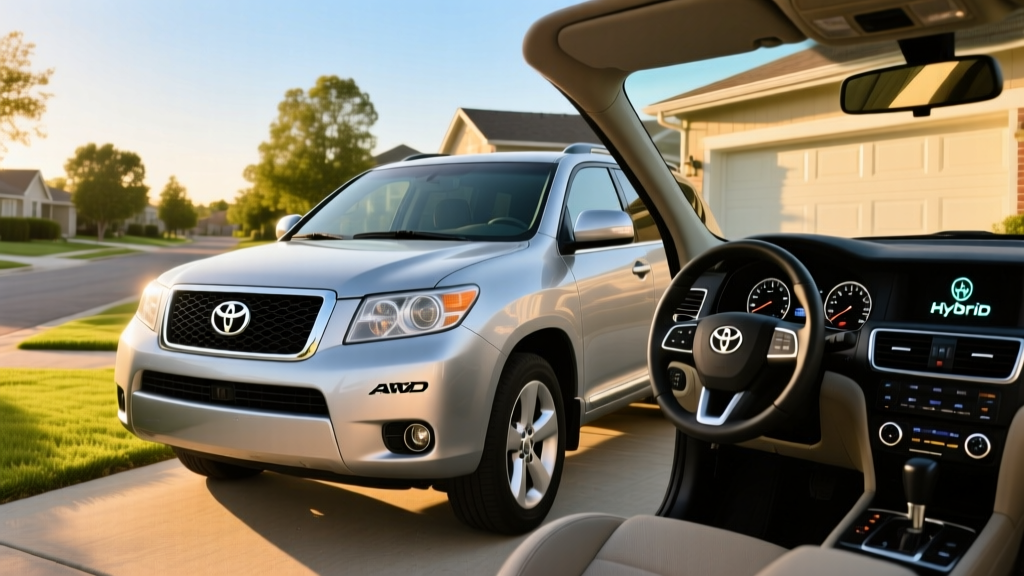
If you're searching for a 2009 Toyota Highlander Hybrid AWD on the used market in 2026, you're likely looking at a 17-year-old three-row SUV priced between $4,500 and $8,500 depending on mileage and condition. That raises the core question every used-hybrid buyer must answer: does the fuel savings justify the risk of an aging high-voltage battery?
The short answer is yes — but only if the hybrid battery is healthy. The 2009 Highlander Hybrid pairs a 3.3-liter V6 with Toyota's proven Synergy Drive system to deliver 270 combined horsepower and an EPA-estimated 26 MPG combined. That's a meaningful improvement over the gas-only V6 Highlander's 21 MPG combined, and Toyota's hybrid reliability track record from this era is among the best in the industry. But at 17 years old, the original NiMH traction battery is living on borrowed time — and that's the single variable that makes or breaks this purchase.
2009 Toyota Highlander Hybrid AWD: Full Specifications
| Specification | Value |
|---|---|
| Powertrain | 3.3L V6 + 2 electric motors (Synergy Drive) |
| Combined Horsepower | 270 hp (net system) |
| Engine Output | 208 hp @ 5,600 rpm |
| Front Electric Motor | 123 kW (165 hp) |
| Rear Electric Motor (AWD) | 50 kW (67 hp) |
| Transmission | eCVT (electronically controlled) |
| Drivetrain | Electronic on-demand AWD (AWD-i) |
| EPA MPG (City / Highway / Combined) | 27 / 25 / 26 |
| Fuel Tank | 17.2 gallons |
| Total Driving Range | ~447 miles |
| Battery Type | NiMH (Nickel-Metal Hydride), sealed |
| Battery Voltage | 288V nominal |
| 0-60 mph | ~8.0 seconds |
| Curb Weight | ~4,500 lbs |
| Seating | 7 passengers |
| Cargo (behind 3rd row) | 10.0 cu ft |
| Cargo (3rd row folded) | 44.6 cu ft |
| Towing Capacity | 3,500 lbs |
How Many MPG Does the 2009 Highlander Hybrid Actually Get?
The EPA rates the 2009 Toyota Highlander Hybrid AWD at 27 city / 25 highway / 26 combined MPG, according to fueleconomy.gov. For context, the conventional gas V6 Highlander AWD from the same year achieves 17 city / 23 highway / 20 combined — making the hybrid roughly 30% more efficient overall.
Owner-reported data and long-term tests suggest the 2009 Highlander Hybrid typically achieves 24-27 MPG combined in real-world driving. City-heavy commuters often see 27-28 MPG because the hybrid system recovers more energy through regenerative braking in stop-and-go traffic. Highway-only driving at 75+ mph drops efficiency to around 23-24 MPG as the gasoline engine carries a heavier load. Cold climates (below 30°F) reduce MPG by 2-4 points due to increased engine warm-up cycles and cabin heating demands.
This pattern — hybrids exceeding EPA city estimates while falling slightly short on the highway — is characteristic of Toyota's Synergy Drive system. The electric motor handles low-speed propulsion where gasoline engines are least efficient, then the V6 takes over at cruising speeds.
HEV vs. PHEV vs. EV: Understanding What the 2009 Highlander Hybrid Is
The 2009 Highlander Hybrid is a conventional hybrid electric vehicle (HEV), not a plug-in hybrid (PHEV) or battery electric vehicle (BEV). This distinction matters enormously for buyers unfamiliar with hybrid taxonomy:
HEV (This Vehicle)
- No plug — charges via regen braking and engine
- Small battery (~1.5 kWh usable equivalent)
- Electric-only driving limited to ~1 mile at low speed
- Never range-anxious; gas station refueling
PHEV
- Plugs in for 20-45 miles electric-only range
- Larger battery (10-20 kWh)
- Gas engine kicks in after battery depletes
- Example: 2026 Toyota RAV4 Prime
BEV (Full EV)
- 100% electric, no gas engine
- Large battery (60-100+ kWh)
- 250-400+ mile range
- Example: Tesla Model Y, Hyundai Ioniq 5
The 2009 Highlander Hybrid's NiMH battery pack stores roughly 1.5 kWh of energy. You never plug it in. The system automatically manages charge through regenerative braking and the gasoline engine. The electric motors assist during acceleration and can propel the vehicle at very low speeds (under 25 mph for short distances), but this is not a vehicle you can drive on electricity alone for meaningful distances.
Hybrid Powertrain: How the AWD-i System Works
Toyota's AWD-i (intelligent all-wheel drive) on the 2009 Highlander Hybrid is entirely different from a conventional mechanical AWD system. There is no driveshaft connecting the front and rear axles. Instead:
- Front axle: Driven by the 3.3L V6 engine and a 123 kW electric motor through an eCVT planetary gearset
- Rear axle: Driven independently by a separate 50 kW electric motor
- Control logic: The rear motor engages automatically when front-wheel slip is detected, during hard acceleration, or at low speeds for traction
The result is a combined system output of 270 horsepower — more than the gas-only V6 Highlander's 230 hp — with superior fuel economy. The eCVT has no traditional gears or belts; it uses a planetary gearset to seamlessly blend engine and motor power, which is why Toyota hybrids from this era rarely suffer transmission failures.
Battery Reliability, Lifespan, and Replacement Cost
Toyota originally warranted the 2009 Highlander Hybrid's NiMH battery for 8 years / 100,000 miles (10 years / 150,000 miles in California Air Resources Board states: CA, CT, ME, MA, NJ, NY, OR, RI, VT, WA). As of 2026, the original warranty has expired on all examples of this model year.
The NiMH battery in the 2009 Highlander Hybrid has proven remarkably durable. Toyota's second-generation hybrid systems (which include this era) routinely see batteries lasting 150,000 to 200,000+ miles before significant degradation. However, at 17 years old, age-related degradation is the primary concern regardless of mileage. NiMH cells lose capacity over time even when the vehicle sits unused.
Battery Replacement Cost Breakdown
| Option | Cost Range | Notes |
|---|---|---|
| New OEM Toyota battery | $2,500 – $3,500 (parts + labor) | Dealership; full warranty |
| Remanufactured battery | $1,500 – $2,200 (parts + labor) | Companies like Green Bean Battery; typically 1-3 year warranty |
| Used/salvage battery | $500 – $1,000 (parts + labor) | Risky; unknown remaining life; junkyard source |
| Individual cell replacement | $300 – $800 | Requires specialist; replaces only failed modules |
Before purchasing any 2009 Highlander Hybrid, demand a hybrid battery health check. A Toyota dealer can read the battery's state-of-health (SoH) via the OBD-II diagnostic port. Look for a battery voltage delta (difference between highest and lowest cell blocks) under 0.3V at rest — anything wider suggests uneven cell degradation and impending failure.
Signs of a Failing Hybrid Battery
- Dramatic MPG drop (below 20 MPG combined with no change in driving habits)
- The gasoline engine runs constantly, even at stops
- Battery state-of-charge indicator fluctuates rapidly between full and near-empty
- Check engine light with codes P0A80 (replace hybrid battery pack) or P0A7F (hybrid battery pack deterioration)
- Reduced regenerative braking feel
Does the 2009 Highlander Hybrid Qualify for Tax Credits?
No. The 2009 Toyota Highlander Hybrid does not qualify for the federal §30D new clean vehicle credit — that credit applies only to new vehicle purchases meeting current-year battery sourcing, MSRP caps, and buyer income limits as defined by the IRS.
For used vehicles, the §25E Used Clean Vehicle Credit offers up to $4,000 (30% of sale price, capped at $4,000) — but only for plug-in electric vehicles (PHEVs and BEVs) with at least 7 kWh of battery capacity. Since the 2009 Highlander Hybrid is a conventional HEV with a small NiMH battery and no plug-in capability, it does not qualify for §25E either.
Some states and local utilities offer rebates for hybrid purchases, but these are increasingly targeted at PHEVs and BEVs. Check your state's energy office or utility provider for current programs. Do not count on any tax credit when budgeting for this vehicle.
Who Should Buy the 2009 Highlander Hybrid AWD?
✓ Choose This Hybrid If
- You need a 3-row SUV on a tight budget ($5K-$8K)
- You want ~26 MPG without changing refueling habits
- You drive a mix of city and highway miles
- You value Toyota's proven hybrid reliability
- You live in a snowy region and need AWD without the fuel penalty
- You're not ready to deal with EV charging infrastructure
✗ Skip This Hybrid If
- The hybrid battery shows signs of failure and replacement isn't budgeted
- You want electric-only driving or plug-in capability
- You need modern ADAS features (blind-spot monitor, automatic emergency braking — unavailable on 2009 models)
- You want Apple CarPlay, Android Auto, or a modern infotainment system
- You're concerned about safety — the 2009 model predates modern crash-test standards
- You can stretch your budget to a newer hybrid or PHEV
For buyers with a larger budget ($25,000+), a 2026 Toyota Highlander Hybrid delivers 35-36 MPG combined, modern safety tech (Toyota Safety Sense 3.0), and a fresh 10-year/150,000-mile hybrid battery warranty. If plug-in capability appeals, the Toyota Grand Highlander Hybrid MAX or the RAV4 Prime PHEV (42 miles electric-only) represent more modern electrified options.
Ownership Costs: 2009 Highlander Hybrid vs. Gas V6 vs. Newer Hybrid
| Factor | 2009 Hybrid AWD | 2009 Gas V6 AWD | 2026 Highlander Hybrid (new) |
|---|---|---|---|
| Purchase Price | $5,000–$8,500 | $4,000–$7,000 | $42,000–$55,000 |
| EPA Combined MPG | 26 | 20 | 36 |
| Annual Fuel Cost (12K mi/yr, $3.40/gal) | $1,569 | $2,040 | $1,133 |
| 5-Year Fuel Cost | $7,846 | $10,200 | $5,667 |
| Battery Replacement Risk | $1,500–$3,500 | None | Under warranty |
| Insurance (avg annual) | $1,200–$1,600 | $1,100–$1,500 | $1,600–$2,200 |
| Tax Credits | None | None | None (HEV) |
The 2009 hybrid saves roughly $471 per year in fuel compared to the gas V6 — meaning a $2,355 fuel savings over five years. That's meaningful, but it can be erased entirely by a single hybrid battery replacement. The math works best when you can verify battery health before purchase or negotiate a lower price to account for a potential replacement.
Frequently Asked Questions
How long will a 2009 Toyota Highlander Hybrid battery last?
Most original NiMH batteries in this model last 150,000–200,000 miles or 12–18 years. At 17 years old in 2026, many examples have already had a battery replacement or are approaching one. A pre-purchase hybrid health scan is essential.
Can you drive the 2009 Highlander Hybrid on electric power only?
Only at very low speeds (under ~25 mph) for less than a mile. This is a conventional HEV — there is no plug and no meaningful electric-only range. The electric motor primarily assists the gasoline engine during acceleration and captures energy during braking.
Is the AWD system always active?
No. Toyota's AWD-i is an on-demand system. Under normal dry-road cruising, only the front wheels are driven. The rear electric motor engages when slip is detected, during hard acceleration, or at low speeds in slippery conditions. This on-demand approach is key to the hybrid's efficiency advantage.
What's the most common problem with the 2009 Highlander Hybrid?
The most expensive potential issue is hybrid battery degradation. Other common complaints include power steering pump failures (this model uses an electric power steering pump specific to the hybrid), inverter coolant pump failures, and worn brake actuators. The eCVT transmission itself is highly reliable.
Is the 2009 Highlander Hybrid good for towing?
It's rated for 3,500 lbs when properly equipped — adequate for a small boat or utility trailer, but not a large travel trailer. Towing significantly reduces fuel economy, typically dropping it to 18–20 MPG combined. The hybrid system's added low-end torque from the electric motors actually helps with initial trailer pull-away.
Should I buy a 2009 Highlander Hybrid or a newer model?
If your budget is under $10,000 and you can verify the hybrid battery is healthy, the 2009 model offers strong value — a three-row AWD SUV at 26 MPG for the price of a used compact car. If you can spend $25,000+, a 2020+ Highlander Hybrid provides 35+ MPG, Toyota Safety Sense, modern infotainment, and a remaining factory hybrid warranty.
Sources: EPA fueleconomy.gov, IRS §30D / §25E credit rules, NHTSA. Tax credit rules are current as of 2026 and subject to change. Consult a tax professional for eligibility.