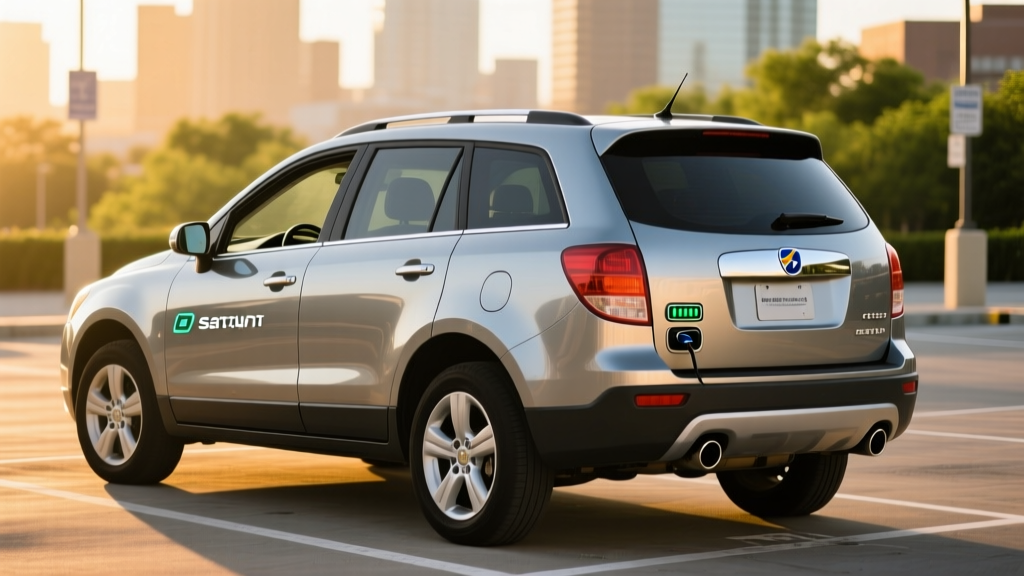
Quick Verdict: What the 2009 Saturn Vue Hybrid SUV Actually Is
The 2009 Saturn Vue Hybrid SUV is a mild-hybrid crossover built during General Motors' first wave of electrification experimentation. Unlike the full-hybrid systems found in the Toyota Highlander Hybrid or Ford Escape Hybrid of the same era, the Vue Hybrid uses GM's belt-alternator-starter (BAS) system — a setup that provides modest fuel economy gains through regenerative braking, engine stop-start, and light electric assist, but cannot propel the vehicle on electric power alone.
Saturn itself was discontinued by GM in 2010, making this a discontinued-model purchase. For used-car shoppers in 2026 evaluating a 2009 Saturn Vue Hybrid SUV, the key questions center on whether the mild-hybrid system still delivers meaningful efficiency gains after 17 years of service, what battery replacement costs look like, and how it compares to modern hybrid and EV alternatives.
Conventional Hybrid (HEV): Uses a battery and electric motor alongside a gas engine. Battery recharges via regenerative braking and the engine — no plug needed. Examples: Toyota RAV4 Hybrid, Honda CR-V Hybrid.
Plug-in Hybrid (PHEV): Larger battery that charges from a wall outlet or charger, offering 20-50 miles of electric-only driving before the gas engine kicks in. Examples: Toyota RAV4 Prime, Jeep Wrangler 4xe.
Mild Hybrid (MHEV): Small battery and motor that assist the gas engine and enable stop-start but cannot drive the wheels independently. The 2009 Saturn Vue Hybrid uses this type.
Fuel Economy: EPA MPG and Real-World Numbers
The 2009 Saturn Vue Hybrid is equipped with a 2.4-liter four-cylinder engine paired with GM's BAS mild-hybrid system. According to fueleconomy.gov, the EPA-rated fuel economy breaks down as follows:
| Metric | Value |
|---|---|
| City MPG | 25 |
| Highway MPG | 32 |
| Combined MPG | 28 |
| Annual Fuel Cost (est.) | ~$2,250 (based on 15,000 mi/yr) |
| Fuel Type | Regular unleaded (87 octane) |
For comparison, the non-hybrid 2009 Saturn Vue with the same 2.4L four-cylinder and automatic transmission was rated at 19 city / 26 highway / 22 combined. The mild-hybrid system therefore adds roughly 6 MPG combined — a meaningful improvement, particularly in stop-and-go city driving where the engine stop-start and regenerative braking contribute most.
Real-World MPG vs EPA Sticker
Mild hybrids tend to perform close to their EPA city rating in real-world urban driving, because the stop-start system eliminates idling fuel consumption and regenerative braking recaptures energy that conventional vehicles waste as heat. On the highway, the BAS system provides less benefit — the electric motor's assist is minimal at sustained cruising speeds, and the aerodynamic profile of a compact SUV limits efficiency.
Expect real-world combined fuel economy of approximately 25-28 MPG in mixed driving. Owners who do predominantly city driving with frequent stops may see numbers at or slightly above the 25 MPG city rating. Highway-heavy commuters should expect figures closer to 28-30 MPG, slightly below the EPA highway estimate, particularly at speeds above 70 mph or in hilly terrain.
Powertrain Specs: Engine, Motor, and Drivetrain
| Specification | Detail |
|---|---|
| Engine | 2.4L Ecotec inline-4 (DOHC, 16-valve) |
| Engine Horsepower | 172 hp @ 6,200 rpm |
| Engine Torque | 167 lb-ft @ 4,800 rpm |
| Electric Motor | Belt-alternator-starter (BAS), ~5 kW |
| Combined System Output | ~172 hp (motor provides assist, not additive peak power) |
| Transmission | 4-speed automatic |
| Drivetrain | Front-wheel drive (FWD) |
| Hybrid Battery | 36V nickel-metal hydride (NiMH), ~0.5 kWh |
| 0-60 mph (est.) | ~9.5 seconds |
| Towing Capacity | 1,500 lbs |
The BAS system in the 2009 Saturn Vue Hybrid SUV is fundamentally different from the full-hybrid powertrains used by competitors like the 2009 Ford Escape Hybrid (which used a planetary gearset to blend engine and motor power, achieving 34 MPG combined). The Vue's electric motor cannot move the vehicle from a stop on electric power alone — it smooths the engine stop-start transition, provides a small torque boost during acceleration, and captures energy during braking.
The 36-volt NiMH battery pack is mounted under the cargo floor. At approximately 0.5 kWh of total capacity, it is a fraction of the size of modern hybrid batteries (the current Toyota RAV4 Hybrid uses a 1.6 kWh NiMH pack; the RAV4 Prime PHEV uses an 18.1 kWh lithium-ion pack). This small battery is sufficient for the mild-hybrid functions but limits the system to incremental efficiency gains rather than transformative ones.
Hybrid Battery Longevity, Warranty, and Replacement Cost
How Long Does the Vue Hybrid Battery Last?
NiMH batteries in mild-hybrid applications tend to age more gracefully than those in full hybrids, because they operate within a narrower state-of-charge window and experience less thermal stress. The 36V pack in the Vue Hybrid is relatively small and lightly stressed. Many examples have reached 150,000-200,000 miles on the original battery, though capacity degradation does reduce the effectiveness of the stop-start and regenerative braking features over time.
Common symptoms of a failing BAS battery include:
- The engine stop-start function ceases to engage
- A "Service Hybrid System" or "Check Hybrid System" dashboard warning
- Reduced regenerative braking feel
- Slightly lower fuel economy (loss of 2-4 MPG)
Importantly, if the hybrid battery fails completely, the 2009 Saturn Vue Hybrid can still be driven as a conventional gas vehicle — the 2.4L engine will operate normally, just without the mild-hybrid efficiency benefits. The vehicle does not become undriveable.
Battery Replacement Cost
Replacement options for the 36V NiMH battery include:
- Remanufactured battery pack: $800–$1,500 (parts), plus $200–$400 in labor at an independent shop
- Used/salvage battery: $300–$600, with variable remaining lifespan
- New OEM battery (if available): Limited availability given Saturn's discontinuation; pricing historically $1,800–$2,500 when stock existed
Given the age of the vehicle and Saturn's defunct dealer network, independent hybrid specialists and aftermarket suppliers are the most practical replacement path. Several hybrid battery refurbishers offer compatible 36V NiMH packs for GM BAS applications.
Does the 2009 Saturn Vue Hybrid Qualify for Any Tax Credit?
No. The 2009 Saturn Vue Hybrid does not qualify for any current federal tax credit. Here's why:
- Federal §30D New EV Credit: This credit applies only to new plug-in electric vehicles (BEVs and PHEVs) meeting battery capacity, sourcing, MSRP, and buyer income requirements per IRS guidelines. The Vue Hybrid is a mild hybrid with no plug-in capability, and it is no longer sold new.
- Used Clean Vehicle Credit (§25E): This credit provides up to $4,000 for qualifying used EVs and PHEVs purchased through a dealer. The Vue Hybrid's mild-hybrid system does not meet the minimum 7 kWh battery capacity requirement — its ~0.5 kWh pack is far below the threshold.
- Original hybrid credit (pre-2011): The IRS once offered a credit for certain hybrid vehicles under the Energy Policy Act of 2005. GM's hybrid credits were phased out after the company reached its 60,000-unit cap. This credit has been unavailable for over a decade.
Bottom line: there are no federal or typical state incentives available for purchasing a used 2009 Saturn Vue Hybrid SUV in 2026. Buyers should evaluate it purely on its merits as a fuel-efficient used compact SUV.
Pricing: What to Pay for a Used 2009 Vue Hybrid
As of early 2026, the 2009 Saturn Vue Hybrid trades in the used market at the following approximate price ranges:
| Condition | Mileage Range | Price Range |
|---|---|---|
| Excellent (well-maintained, hybrid system functional) | 80,000–110,000 mi | $5,500–$7,500 |
| Good (normal wear, minor cosmetic issues) | 110,000–150,000 mi | $3,800–$5,500 |
| Fair (higher miles, possible hybrid battery issues) | 150,000–200,000+ mi | $2,000–$3,800 |
The Vue Hybrid typically commands a $500–$1,200 premium over an equivalently equipped non-hybrid 2009 Vue 4-cylinder, reflecting the fuel-economy advantage. However, Saturn's brand discontinuation suppresses resale values across the board — parts availability and dealer support are more limited than for Toyota or Honda competitors of the same vintage.
Reliability and Known Issues
The 2009 Saturn Vue shares its platform (GM Theta) with the Chevrolet Equinox and Pontiac Torrent of the same era. Reliability is mixed:
Strengths
- The 2.4L Ecotec four-cylinder is a proven, widely serviced engine with good parts availability
- The BAS mild-hybrid system is mechanically simple compared to full-hybrid setups — fewer components to fail
- The 4-speed automatic transmission is conventional and well-understood by mechanics
- Routine maintenance costs are comparable to any 17-year-old compact SUV
Known Weak Points
- Hybrid battery degradation: After 17 years, many original 36V NiMH packs are at or beyond end of life. Budget $1,000–$1,800 for replacement if the hybrid system is non-functional at purchase
- Timing chain tensioner: The 2.4L Ecotec engine is known for timing chain stretch and tensioner wear, particularly past 120,000 miles — a $600–$1,200 repair
- Saturn-specific body/interior parts: Exterior trim, badges, and some interior components are Saturn-exclusive and increasingly difficult to source
- Power steering: Some Theta-platform vehicles of this era experienced power steering pump issues
For reliability context, a 2009 Toyota Highlander Hybrid or 2009 Ford Escape Hybrid from the same model year offers more robust hybrid systems with better long-term parts support, though typically at a higher used purchase price.
Who Should Buy the 2009 Saturn Vue Hybrid SUV?
- You need a budget-friendly compact SUV under $6,000 with better-than-average fuel economy
- Your driving is mostly city and suburban, where stop-start and regen braking deliver the most MPG benefit
- You have access to an independent mechanic familiar with GM vehicles
- You want a simple mild-hybrid system with fewer complex components than a full hybrid
- You want electric-only driving capability (consider a used PHEV like the Chevrolet Volt or Toyota Prius Prime)
- You need AWD — the Vue Hybrid was FWD only
- You prioritize long-term parts availability and brand support (Toyota, Honda offer stronger used-hybrid ecosystems)
- You want modern safety features — the 2009 Vue lacks standard electronic stability control on some trims, blind-spot monitoring, and automatic emergency braking
Hybrid vs PHEV vs EV — Which Fits You?
If you're cross-shopping the 2009 Saturn Vue Hybrid, here's how the three electrified categories compare for a budget-conscious buyer:
| Factor | Mild Hybrid (Vue Hybrid) | Full Hybrid (e.g., Escape Hybrid) | Used EV (e.g., 2016–2018 Leaf) |
|---|---|---|---|
| Combined MPG / MPGe | 28 MPG | 30–34 MPG | 112–125 MPGe |
| Electric-Only Range | 0 miles | 0 miles | 60–107 miles |
| Plug Required? | No | No | Yes |
| Battery Replacement Cost | $800–$1,800 | $1,500–$3,500 | $5,000–$9,000 |
| Fuel Cost per Mile | ~$0.13 | ~$0.11 | ~$0.04–$0.06 |
| Used Price (2026) | $3,800–$7,500 | $5,000–$10,000 | $6,000–$12,000 |
| Best For | Budget city commuters | High-mileage mixed driving | Home-charging commuters |
2009 Saturn Vue Hybrid SUV — Frequently Asked Questions
How many MPG does the 2009 Saturn Vue Hybrid get?
The EPA rates the 2009 Saturn Vue Hybrid at 25 city / 32 highway / 28 combined MPG. Real-world results typically fall between 25-28 MPG combined depending on driving style, terrain, and hybrid battery condition. The mild-hybrid system provides the greatest benefit in city driving with frequent stops.
Is the 2009 Saturn Vue Hybrid a plug-in vehicle?
No. The Vue Hybrid is a mild hybrid (MHEV) using GM's belt-alternator-starter system. It has no plug and no electric-only driving capability. The 36V battery recharges solely through regenerative braking and the gasoline engine. If you want plug-in capability in a used GM vehicle of similar vintage, the Chevrolet Volt (introduced for 2011) is a range-extended EV with 35-38 miles of electric-only range.
Can I still get parts for a 2009 Saturn Vue Hybrid?
Mechanical parts for the 2.4L Ecotec engine, 4-speed automatic transmission, and suspension components are widely available because these parts are shared across many GM vehicles (Chevrolet Equinox, Malibu, Cobalt). The BAS hybrid-specific components (36V battery, belt-alternator-starter unit) are available through aftermarket and remanufactured suppliers. Saturn-specific cosmetic and interior trim pieces are the most difficult to source.
Is the hybrid battery reliable, and what does replacement cost?
The 36V NiMH battery is relatively robust due to its mild-hybrid duty cycle (shallow charge/discharge, low thermal stress). Many have lasted 150,000+ miles. However, at 17 years old, most original batteries are near end of life. Remanufactured replacement packs cost $800–$1,500 plus $200–$400 labor. If the battery fails, the vehicle remains drivable as a conventional gas car — you simply lose the stop-start and regen benefits, dropping fuel economy by roughly 2-4 MPG.
Does the 2009 Saturn Vue Hybrid qualify for any tax credit?
No federal tax credits are available. The §30D new clean vehicle credit and §25E used clean vehicle credit both require plug-in capability and minimum battery capacity (7 kWh for §25E). The Vue Hybrid's ~0.5 kWh NiMH pack and lack of plug-in charging make it ineligible. The original hybrid tax credits available when the vehicle was new were phased out after GM reached its production cap. Check fueleconomy.gov for historical credit information.
How does the Vue Hybrid compare to the 2009 Ford Escape Hybrid?
The 2009 Ford Escape Hybrid uses a full-hybrid system (2.5L engine + electric motor, planetary gearset) rated at 34 city / 31 highway / 33 combined — significantly more efficient than the Vue Hybrid's 28 combined. The Escape Hybrid can also move under electric-only power at low speeds and was available with AWD. However, used Escape Hybrids typically cost $1,500–$3,000 more than equivalently equipped Vue Hybrids, and their more complex full-hybrid systems carry higher potential repair costs.
Is the 2009 Saturn Vue Hybrid safe?
The 2009 Vue received a 5-star overall rating in NHTSA frontal crash testing and 4 stars in side-impact testing. However, it lacks modern active safety features: no standard electronic stability control on all trims (ESC was optional on some 2009 GM vehicles), no automatic emergency braking, no lane departure warning, and no blind-spot monitoring. By 2026 safety standards, it falls well short of current vehicles. Check NHTSA for complete crash-test results.