Quick Verdict: A Mild Hybrid That Paved the Way
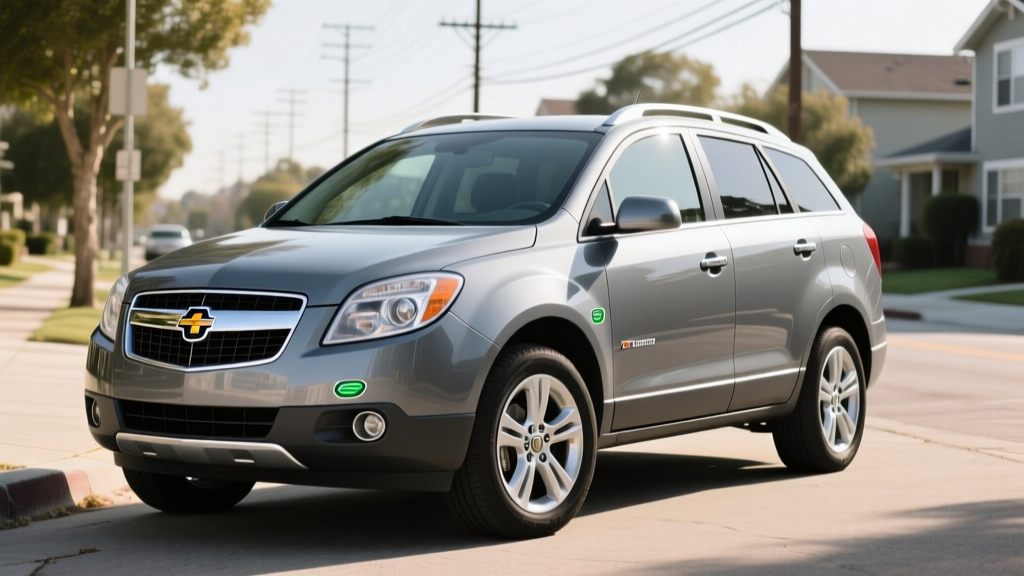
The 2009 Saturn Vue Hybrid was General Motors' attempt to bring fuel-efficient crossover SUVs to mainstream buyers using a belt-alternator-starter (BAS) mild-hybrid system. Built on the Epsilon platform alongside the Chevrolet Malibu Hybrid, the Vue Hybrid paired a 2.4-liter four-cylinder engine with a small electric motor-assist system to deliver a modest but meaningful efficiency bump over its gasoline-only sibling. Saturn as a brand was discontinued after the 2010 model year, making the 2009 Vue Hybrid a piece of automotive history — and a used-car option that still shows up on the market today.
For 2026 used-car shoppers considering this model, the Vue Hybrid offers a low entry price (typically $3,000–$6,000 depending on mileage and condition), straightforward mechanicals, and real-world fuel economy that can exceed its EPA estimates in city driving. However, it is not a plug-in hybrid, its electric-only capability is essentially zero, and its hybrid system is far simpler than what modern HEVs and PHEVs offer. Let's break down exactly what you're getting.
HEV vs. PHEV: Understanding What the Vue Hybrid Actually Is
Before diving into specs, it's critical to clarify what kind of hybrid the 2009 Saturn Vue is — and what it is not.
| Feature | Conventional Hybrid (HEV) | Plug-In Hybrid (PHEV) | 2009 Saturn Vue Hybrid |
|---|---|---|---|
| Plugs in to charge? | No | Yes | No |
| Electric-only driving? | Limited or none | 20–50 mi typical | None (motor-assist only) |
| Battery size | 0.5–2 kWh | 10–25 kWh | ~0.5 kWh (NiMH) |
| Regenerative braking? | Yes | Yes | Yes |
| Auto stop-start? | Yes | Yes | Yes |
| Federal tax credit? | No (§30D expired for HEVs) | Potentially up to $7,500 | No |
The 2009 Saturn Vue Hybrid is a conventional mild hybrid (HEV) — specifically, GM's first-generation BAS system. The electric motor is not capable of propelling the vehicle on its own. Instead, it assists the gasoline engine during acceleration, enables engine auto stop-start at idle, and captures energy through regenerative braking. You never plug it in; the small nickel-metal hydride (NiMH) battery charges exclusively through regen and engine operation.
This is fundamentally different from a modern PHEV like the Toyota RAV4 Prime or Chrysler Pacifica Hybrid, which can drive 30–42 miles on electricity alone before the gas engine kicks in. If you're looking for electric-only range, the Vue Hybrid does not provide any.
Fuel Economy: EPA Numbers and Real-World MPG
The headline reason buyers chose the Vue Hybrid over the standard 4-cylinder Vue was improved fuel efficiency. Here's what the EPA published, via fueleconomy.gov:
| Driving Cycle | 2009 Saturn Vue Hybrid (EPA) | 2009 Saturn Vue 2.4L Gas (EPA) |
|---|---|---|
| City | 25 MPG | 19 MPG |
| Highway | 32 MPG | 26 MPG |
| Combined | 27 MPG | 22 MPG |
The hybrid system's biggest advantage shows up in city driving, where the auto stop-start and regenerative braking recover energy that a conventional vehicle wastes at every red light. The 6-MPG improvement in city driving (25 vs. 19) represents a 32% efficiency gain — substantial for a mild hybrid of this era.
Real-World MPG: What Owners Actually Report
Hybrid vehicles, particularly those with strong stop-start systems, tend to perform closer to or even above their EPA city estimates in real-world stop-and-go traffic. Owner reports on forums and fuel-tracking sites like Fuelly generally cluster around 24–28 MPG combined, with city-dominant drivers occasionally seeing 27–29 MPG. Highway-heavy drivers typically land in the 29–31 MPG range, slightly below the EPA highway figure — a pattern common to hybrids, whose efficiency advantage shrinks at sustained high speeds where the electric assist contributes less.
Real-World Expectation: EPA combined 27 MPG. Expect 24–28 MPG in mixed driving. City-dominant commutes may push toward 28–29 MPG; highway-heavy trips at 75+ MPH will drop closer to 25–27 MPG. Cold weather and short trips (under 5 miles) reduce efficiency further due to engine warm-up cycles.
Powertrain: Engine, Motor, and Combined Output
The 2009 Vue Hybrid uses a relatively simple parallel-assist mild-hybrid powertrain. Here are the exact specifications:
| Specification | Detail |
|---|---|
| Engine | 2.4L Ecotec LE5 inline-4 (DOHC, VVT) |
| Engine Output | 169 hp @ 6,200 rpm / 161 lb-ft @ 5,100 rpm |
| Electric Motor | Belt-alternator-starter (BAS), ~5 kW assist |
| Combined System Output | ~170 hp |
| Transmission | 4-speed automatic (4T45-E) |
| Drivetrain | Front-wheel drive (FWD) only |
| Hybrid Battery | ~0.5 kWh NiMH (36V system) |
| 0–60 mph | ~9.5 seconds (est.) |
| Towing Capacity | 1,500 lbs |
| Curb Weight | ~3,800 lbs |
The BAS motor is mounted where the traditional alternator would be and connects to the crankshaft via a reinforced belt. It provides torque assist during acceleration, smooths engine restarts, and captures kinetic energy during deceleration. The electric assist is subtle — you won't feel a dramatic torque surge — but it reduces the load on the gasoline engine, which is where the fuel savings come from.
One limitation worth noting: the 4-speed automatic transmission was already dated in 2009. Competitors like the Ford Escape Hybrid used a more sophisticated eCVT (electronically controlled continuously variable transmission) that kept the engine in its most efficient operating range. The Vue's conventional 4-speed is reliable but limits the hybrid system's ability to optimize efficiency across all speeds.
Battery Life, Warranty, and Replacement Cost
For any used hybrid buyer, battery health is the top concern. Here's what you need to know about the 2009 Vue Hybrid's NiMH pack.
Original Hybrid Battery Warranty: 8 years / 100,000 miles (whichever comes first). This warranty has expired for all 2009 models as of 2017 at the latest.
Battery Chemistry: Nickel-Metal Hydride (NiMH) — a mature, well-understood chemistry that degrades more gracefully than early lithium-ion packs. NiMH batteries typically lose capacity slowly rather than failing catastrophically.
Expected Battery Lifespan
GM's BAS hybrid batteries have proven reasonably durable. Many 2008–2010 Vue and Malibu Hybrids have reached 150,000–200,000 miles on their original battery packs. However, at 15–17 years old (as of 2026), age-related degradation is a real factor regardless of mileage. NiMH cells degrade with time and heat exposure, not just charge cycles.
Signs of a degrading BAS battery include:
- Reduced or non-functional auto stop-start (engine no longer shuts off at idle)
- Noticeably worse fuel economy (dropping below 22 MPG combined)
- A "Check Hybrid System" or battery-related warning light on the dash
- Sluggish acceleration as the motor-assist function diminishes
Battery Replacement Cost
If the hybrid battery needs replacement, expect the following cost ranges:
- Remanufactured battery pack: $1,200–$2,000 (parts only)
- New OEM battery pack: $2,500–$3,500 (if still available from GM/Chevrolet dealers — availability is increasingly limited for discontinued Saturn models)
- Installation labor: $300–$600 at an independent hybrid specialist
- Total replacement cost: $1,500–$4,100 depending on source and shop
The good news is that the BAS battery pack is compact and relatively accessible compared to full-hybrid packs buried under rear seats or in the floor pan. Several aftermarket suppliers offer remanufactured NiMH packs with 1–3 year warranties. A competent independent mechanic can perform the swap in 2–3 hours.
If the battery fails completely, the Vue Hybrid can still be driven as a conventional gasoline vehicle — the 2.4L Ecotec engine will run on its own, though you'll lose the fuel-economy benefits and stop-start functionality. This is a meaningful advantage over some full-hybrid systems where a dead battery renders the vehicle undrivable.
Pricing, Tax Credits, and Used-Car Value
As a 2009 model, the Saturn Vue Hybrid is available only on the used market. Here's the pricing landscape as of early 2026:
| Condition / Mileage | Typical Asking Price |
|---|---|
| High mileage (150k+ mi), fair condition | $2,500–$4,000 |
| Average mileage (100k–150k mi), good condition | $4,000–$6,000 |
| Low mileage (under 100k mi), excellent condition | $6,000–$8,500 |
When the Vue Hybrid was new, it carried an MSRP of approximately $26,995 (including destination) for the sole "Green Line" trim level. That represented a roughly $3,500 premium over the base gasoline 4-cylinder Vue.
Tax Credit Eligibility
The 2009 Saturn Vue Hybrid does not qualify for any current federal tax credit. The IRS §30D Clean Vehicle Credit applies to new plug-in electric vehicles and PHEVs meeting battery-sourcing, MSRP, and buyer income requirements. Conventional hybrids (HEVs) have not been eligible for the federal credit since the original hybrid credit phase-out structure ended years ago. Some states may offer small used-EV or hybrid rebates, but these vary by jurisdiction — check your state's energy office or IRS guidance for current rules.
Reliability, Safety, and Ownership Costs
The 2009 Saturn Vue shares its platform and powertrain with the Chevrolet Equinox and GMC Terrain of the same era, meaning parts availability is generally good through Chevrolet/GMC dealers and aftermarket suppliers. The 2.4L Ecotec LE5 engine is one of GM's most widely produced four-cylinders, used across dozens of models from 2005–2012.
Known Reliability Concerns
- Timing chain stretch: The 2.4L Ecotec is known for timing chain elongation at higher mileages (typically 120k+ miles). Listen for a rattling noise on cold starts. Replacement cost: $800–$1,400.
- Oil consumption: Some Ecotec engines consume oil at higher rates as they age. Check oil level frequently and address excessive consumption before it leads to engine damage.
- BAS system belt wear: The reinforced belt driving the BAS motor should be inspected regularly. A worn or cracked belt disables the hybrid system.
- Power steering pump: The electro-hydraulic power steering pump has a known failure rate on this generation. Symptoms include whining noise and stiff steering.
Safety Ratings
The 2009 Saturn Vue received a 5-star overall rating in NHTSA frontal crash testing and 4 stars in side-impact testing. Standard safety equipment included front and side curtain airbags, stability control, and anti-lock brakes. However, it predates modern ADAS features — there is no automatic emergency braking, lane-keeping assist, or blind-spot monitoring. For context on how safety expectations have evolved, see NHTSA's current rating system.
Insurance and Maintenance Costs
Insurance premiums for a 2009 Vue Hybrid are among the lowest of any vehicle on the road, simply because the vehicle's replacement value is so low. Expect $60–$100/month for full coverage depending on your state and driving record. Liability-only coverage is common for vehicles in this price range and costs even less.
Routine maintenance follows a standard gasoline-car schedule: oil changes every 5,000–7,500 miles, transmission fluid service every 60,000 miles, and brake service intervals that are actually extended thanks to regenerative braking reducing pad wear.
Pros, Cons, and Who Should Buy the 2009 Vue Hybrid
Pros
- Low purchase price ($3,000–$6,000) for a fuel-efficient crossover
- 27 MPG combined EPA — strong city MPG from stop-start and regen
- Simple, proven 2.4L Ecotec engine with wide parts availability
- Hybrid system failure doesn't strand you — car still runs on gas
- Spacious interior with 31.8 cu ft cargo area (68.7 cu ft with rear seats folded)
- Low insurance and registration costs
Cons
- Mild hybrid — no electric-only driving, modest efficiency gains vs. modern HEVs
- Dated 4-speed automatic limits refinement and efficiency
- Saturn brand discontinued — no dealer network, some trim-specific parts scarce
- Original hybrid battery warranty expired; replacement adds $1,500–$4,000
- No modern safety tech (AEB, lane assist, backup camera)
- FWD only — no all-wheel-drive option
Who Should Consider the 2009 Saturn Vue Hybrid?
Choose the Vue Hybrid if:
- You need a cheap, efficient daily commuter with crossover utility and can budget for potential battery replacement
- You do mostly city and suburban driving where the stop-start system delivers its best MPG advantage
- You want hybrid fuel savings without the complexity or cost of a PHEV or full EV
Look elsewhere if:
- You want electric-only driving range — consider a used PHEV like the Toyota Prius Prime or Chevrolet Volt
- You need AWD for snow or off-road use — the Vue Hybrid is FWD only
- You prioritize modern safety technology — any 2020+ vehicle will offer substantially better crash-avoidance features
- You drive mostly highway miles — the hybrid advantage shrinks significantly at sustained speeds
Hybrid vs. PHEV vs. Full EV: Which Fits Your Needs?
If you're researching the 2009 Vue Hybrid, you're likely weighing different levels of electrification. Here's a practical framework:
| Factor | Conventional HEV (like Vue Hybrid) | PHEV (e.g., RAV4 Prime) | Full BEV (e.g., Tesla Model Y) |
|---|---|---|---|
| Plug-in required? | No | Optional (but recommended) | Yes |
| Electric-only range | 0 miles | 25–42 miles | 250–330 miles |
| Home charging needed? | No | Recommended (Level 2) | Yes (Level 2 strongly recommended) |
| Fuel cost per mile | ~$0.12–$0.15 | ~$0.04 (electric) / $0.12 (gas) | ~$0.03–$0.06 |
| Used price range (2026) | $3,000–$8,500 | $18,000–$35,000 | $15,000–$40,000 |
| Federal tax credit (used) | None | Up to $4,000 (§25E used EV credit) | Up to $4,000 (§25E used EV credit) |
| Best for | Budget buyers, no home charging | Short commutes + road trip flexibility | Home chargers, lowest operating cost |
The Vue Hybrid makes sense as an ultra-budget entry point to hybrid efficiency. If your budget allows $18,000+, a used PHEV gives you genuine electric-only commuting capability with a gas engine backup — a dramatically more versatile solution. And if you have access to home Level 2 charging, a used BEV offers the lowest per-mile operating cost and the smoothest driving experience.
Frequently Asked Questions
How many MPG does the 2009 Saturn Vue Hybrid get?
The EPA rates the 2009 Saturn Vue Hybrid at 25 MPG city, 32 MPG highway, and 27 MPG combined. In real-world driving, most owners report 24–28 MPG combined, with city-dominant drivers occasionally exceeding the EPA city estimate thanks to the auto stop-start system.
Can the 2009 Saturn Vue Hybrid drive on electric power alone?
No. The Vue Hybrid uses a belt-alternator-starter (BAS) mild-hybrid system that cannot propel the vehicle independently. The electric motor only assists the gasoline engine during acceleration and enables engine shut-off at idle. There is zero electric-only driving range.
Is the 2009 Saturn Vue Hybrid reliable?
The 2.4L Ecotec engine is generally reliable with proper maintenance, though timing chain stretch and oil consumption are known issues at higher mileages. The BAS hybrid system is simple and has fewer failure points than full-hybrid systems. The main concern for a 2026 buyer is the age of the NiMH hybrid battery, which may need replacement ($1,500–$4,000).
What does it cost to replace the hybrid battery?
A remanufactured NiMH battery pack costs $1,200–$2,000 for the part, plus $300–$600 for installation labor. Total replacement cost typically falls between $1,500 and $2,600 through an independent hybrid specialist. OEM new packs from GM dealers may cost $3,500+ if still available.
Does the 2009 Saturn Vue Hybrid qualify for any tax credit?
No. The 2009 Vue Hybrid is a conventional (non-plug-in) hybrid and does not qualify for the federal §30D Clean Vehicle Credit or the §25E Used Clean Vehicle Credit. Both programs require plug-in capability. Some states may offer small rebates for efficient used vehicles, but these vary by jurisdiction.
Can I still get parts for a Saturn vehicle?
Yes. Saturn was a GM division, and the 2009 Vue Hybrid shares its engine, transmission, and many components with the Chevrolet Equinox, GMC Terrain, and Chevrolet Malibu of the same era. Mechanical parts are widely available through Chevrolet/GMC dealers and aftermarket suppliers. Saturn-specific body trim, badges, and interior pieces are harder to source.
How does the Vue Hybrid compare to the Ford Escape Hybrid of the same era?
The 2009 Ford Escape Hybrid used a more advanced full-hybrid system (co-developed with Toyota/Aisin) with a true eCVT and the ability to drive short distances on electric power alone. The Escape Hybrid was rated at 34 MPG city / 31 MPG highway — significantly better in city driving than the Vue Hybrid's 25 MPG city. On the used market, the Escape Hybrid typically commands a $1,000–$2,000 premium over the Vue Hybrid, which reflects its superior hybrid technology and efficiency.