Why the 2009 Prius Still Matters in 2026
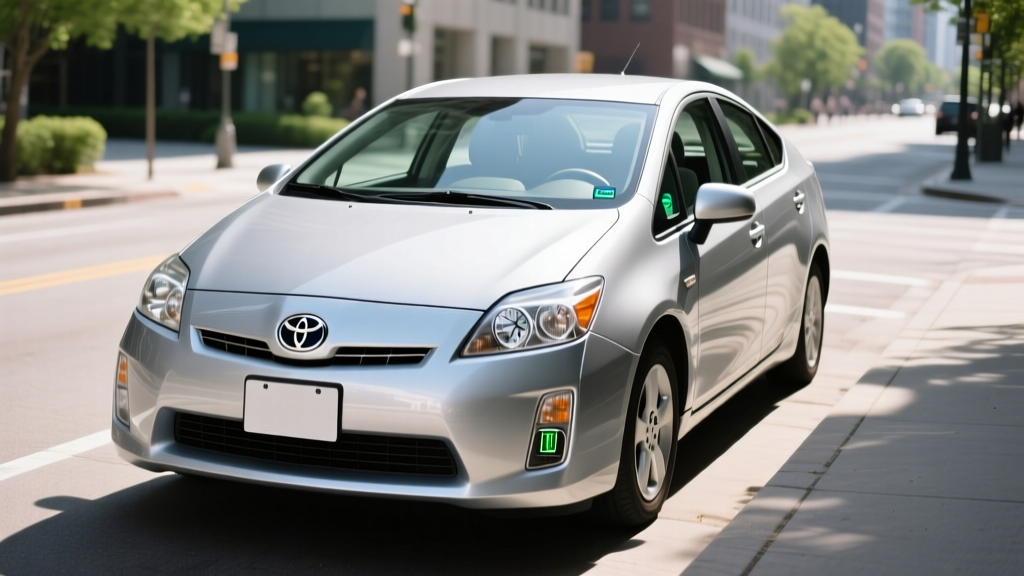
The second-generation Toyota Prius (model years 2004–2009) is one of the most consequential vehicles in automotive history. It proved that hybrid-electric powertrains could deliver exceptional fuel economy, daily-driver reliability, and low running costs at a mainstream price. The 2009 Prius hybrid represents the final and most refined year of that generation, combining a proven 1.5-liter Atkinson-cycle engine with Toyota's Hybrid Synergy Drive system.
In 2026, used 2009 Prius examples trade for roughly $3,500–$7,000 depending on mileage and condition. For budget-conscious commuters, that price point—paired with 46 MPG EPA combined—makes it one of the cheapest vehicles to fuel on the road. But a 17-year-old hybrid also raises legitimate questions about battery longevity, replacement cost, and whether a plug-in hybrid or full EV might serve you better.
This guide covers the exact specs, real-world MPG data, battery health expectations, and the ownership math you need before buying a 2009 Prius today.
2009 Prius Hybrid Specs at a Glance
| Specification | Value |
|---|---|
| Powertrain Type | Conventional Hybrid (HEV) — no plug |
| Gas Engine | 1.5L 4-cyl Atkinson-cycle, 76 hp |
| Electric Motor | 50 kW (67 hp) permanent-magnet AC motor |
| Combined Net Horsepower | 110 hp |
| Transmission | ECVT (planetary gearset, no fixed gears) |
| Hybrid Battery | 1.3 kWh nickel-metal hydride (NiMH) |
| EPA City MPG | 48 MPG |
| EPA Highway MPG | 45 MPG |
| EPA Combined MPG | 46 MPG |
| Fuel Tank Capacity | 11.9 gallons |
| Total Driving Range | ~547 miles (EPA combined) |
| 0–60 mph | ~10.4 seconds |
| Curb Weight | ~2,932 lbs |
| Drivetrain | Front-wheel drive |
Source: EPA Fuel Economy
HEV vs PHEV: What the 2009 Prius Is (and Isn't)
Conventional Hybrid (HEV) — 2009 Prius
The 2009 Prius is a conventional hybrid electric vehicle (HEV). It has a small 1.3 kWh NiMH battery that recharges exclusively through regenerative braking and the gasoline engine. You never plug it in. The battery assists during acceleration, enables brief low-speed electric-only driving (typically under 1 mile at speeds below ~25 mph), and powers accessories when the engine shuts off at stops.
Plug-In Hybrid (PHEV) — Prius Prime (2017+)
Toyota introduced the Prius Prime (a PHEV) starting with the 2017 model year. The 2025 Prius Prime offers a much larger 13.6 kWh lithium-ion battery, an EPA-estimated 44 miles of electric-only range, and DC fast-charge capability (on higher trims). You plug it in overnight to fill the battery, then the gas engine kicks in once the electric range is depleted.
Key Difference
If you see a Prius with a charging port, it's a PHEV (Prime). The 2009 Prius has no charging port—it runs entirely on gasoline, with the hybrid system optimizing efficiency automatically.
Real-World MPG: What Owners Actually Report
The EPA rates the 2009 Prius at 48 city / 45 highway / 46 combined MPG. Unlike most gas cars, hybrids typically exceed their city rating in stop-and-go traffic because regenerative braking recovers energy that would otherwise be lost as heat.
| Driving Scenario | Expected MPG | Notes |
|---|---|---|
| City / stop-and-go | 46–52 MPG | Regen-heavy driving favors hybrids |
| Suburban mixed | 44–48 MPG | Close to EPA combined estimate |
| Highway (70+ mph) | 38–43 MPG | Aero drag dominates; hybrid advantage shrinks |
| Cold weather (below 30°F) | 36–42 MPG | Engine runs more for cabin heat; battery less efficient |
| Aged battery (degraded) | 40–44 MPG | Reduced regen capacity; engine compensates |
According to aggregated user data on FuelEconomy.gov, real-world 2009 Prius owners average approximately 44–47 MPG combined, closely tracking the EPA figure. Some hypermilers report 50+ MPG with careful technique, while aggressive driving or extreme cold can drop economy into the high 30s.
Practical takeaway: Expect 44–48 MPG in normal mixed driving. Budget your fuel costs around 44 MPG to avoid surprises.
Hybrid Battery Longevity, Replacement Cost & Warranty
Battery Warranty & Expected Lifespan
Toyota originally warranted the 2009 Prius hybrid battery for 8 years / 100,000 miles (10 years / 150,000 miles in CARB states like California, New York, and Massachusetts). That factory warranty has expired on all 2009 models.
The NiMH battery pack in the Gen 2 Prius has proven remarkably durable. Many examples reach 150,000–200,000+ miles on the original pack. However, at 17 years old, most surviving 2009 Prius vehicles have either had a battery replacement or are running on a degraded original pack.
Battery Replacement Options & Costs (2026 Estimates)
| Option | Cost Range | Notes |
|---|---|---|
| New OEM Toyota battery | $2,000–$2,500 (part) + $500–$800 labor | Best longevity; dealer or OEM parts supplier |
| Refurbished / reconditioned pack | $800–$1,500 installed | Replaced weak cells; 1–3 year warranty typical |
| Used salvage yard pack | $300–$700 + $500 labor | Unknown remaining life; gamble on age/mileage |
| Individual cell module replacement | $200–$600 (DIY or specialist) | Replace only failed modules; requires diagnostic tool |
Warning signs of battery failure: Noticeable MPG drop (below 38–40), the battery charge indicator fluctuating wildly between full and near-empty, a dashboard triangle warning light, or the engine running constantly even at low speeds.
For a used 2009 Prius, budget $1,500–$3,000 for a battery replacement within your first few years of ownership if the original pack hasn't been replaced. This is a known cost of ownership and should be factored into your purchase price negotiation.
Tax Credits & Incentives: What Applies in 2026
The 2009 Prius hybrid is a conventional HEV, not a plug-in vehicle. Here's the incentive reality:
- Federal §30D Clean Vehicle Credit ($7,500): Does NOT apply. The §30D credit requires a plug-in vehicle with a battery of at least 7 kWh and meeting critical-mineral and battery-component sourcing rules per IRS guidelines. The 2009 Prius has a 1.3 kWh NiMH battery and no plug.
- Used Clean Vehicle Credit (§25E, up to $4,000): Also does NOT apply. This credit requires a plug-in EV or fuel-cell vehicle purchased used from a dealer for $25,000 or less. Conventional hybrids are excluded.
- Federal HEV tax credit (original): The original federal hybrid tax credit for the Prius (up to $3,150) phased out for Toyota in 2007 and is no longer available.
- State incentives: A few states offer minor incentives for high-efficiency used vehicles, HOV lane access (now expired in most states for the Gen 2 Prius), or reduced registration fees. Check your state's DMV or energy office for current programs.
Bottom line: No federal tax credits apply to a used 2009 Prius in 2026. The financial case rests entirely on low fuel costs and low purchase price.
2009 Prius vs PHEV vs Full EV: Which Fits You?
Choose the 2009 Prius HEV If…
- Your budget is under $7,000
- You have no home charging access (apartment, street parking)
- You drive 10–30 miles/day in mixed city/suburban conditions
- You want the lowest possible fuel cost without plugging in
- You accept a 10.4-second 0–60 and modest acceleration
Choose a Prius Prime PHEV If…
- You can install a Level 2 home charger or have a 120V outlet near parking
- Your daily commute is under 40 miles (coverable on electric-only)
- You want to eliminate most gasoline use without range anxiety
- You qualify for the §30D $7,500 federal credit (new) or §25E credit (used PHEV)
- Budget allows $28,000+ (new) or $18,000+ (used)
Choose a Full EV (BEV) If…
- You have reliable home Level 2 charging
- Your daily driving is under 200 miles
- You want zero tailpipe emissions and minimal maintenance
- You qualify for federal/state EV incentives
- Budget allows $25,000+ (used EV) or $35,000+ (new)
The 2009 Prius occupies a specific niche: ultra-low-cost, no-plug-required commuting. If you can charge at home and have a higher budget, a PHEV or BEV will deliver lower per-mile energy costs and a more modern driving experience. If charging access is a barrier or your budget is tight, the 2009 Prius remains one of the most efficient gasoline vehicles ever sold.
Pros, Cons & the 2026 Verdict
Pros
- 46 MPG combined — still top-tier for any gasoline vehicle
- Extremely low purchase price ($3,500–$7,000 used)
- Proven, well-documented reliability with massive aftermarket support
- Low annual fuel cost (~$1,100/yr at 12,000 mi and $3.40/gal)
- Spacious hatchback cargo area (50+ cu ft with seats folded)
- Simple to maintain — no turbo, no complex transmission
Cons
- Hybrid battery replacement likely needed ($1,500–$3,000)
- No federal tax credits or incentives apply
- Slow acceleration (10.4 sec 0–60) and dated driving dynamics
- Minimal safety tech — no automatic emergency braking, lane-keep, or blind-spot monitoring
- Aged interior materials, basic infotainment (no Apple CarPlay/Android Auto)
- High-mileage examples may need suspension, brake actuator, or inverter work
The verdict: The 2009 Prius hybrid is the best $5,000 you can spend on fuel-efficient transportation—if you go in with eyes open about battery replacement costs and 2009-era safety and tech. For a second car, a commuter beater, or a budget-first buyer without charging access, it remains genuinely hard to beat on cost-per-mile.
Frequently Asked Questions
How many MPG does the 2009 Prius hybrid get?
The EPA rates the 2009 Prius at 48 city / 45 highway / 46 combined MPG. Real-world owners average 44–47 MPG combined, with city driving often yielding 48–52 MPG thanks to regenerative braking. Highway driving at 70+ mph typically drops to 38–43 MPG. Cold weather can reduce economy by 10–15%.
Does the 2009 Prius need to be plugged in?
No. The 2009 Prius is a conventional hybrid (HEV), not a plug-in hybrid. Its small 1.3 kWh battery recharges through regenerative braking and the gasoline engine. There is no charging port. If you want a plug-in Prius, look at the Prius Prime (2017 and newer).
How long does the 2009 Prius hybrid battery last?
The original NiMH battery typically lasts 150,000–200,000 miles or 10–15 years under normal use. At 17 years old, most 2009 Prius vehicles will need or have already had a battery replacement. Budget $1,500–$3,000 for a refurbished or new OEM replacement.
What does a 2009 Prius hybrid battery replacement cost?
A new OEM Toyota battery runs $2,000–$2,500 for the part plus $500–$800 in labor. Refurbished packs cost $800–$1,500 installed. Used salvage packs are $300–$700 plus labor but carry unknown remaining life. Individual cell module replacement (for partial failures) can cost $200–$600 at a specialist shop.
Does the 2009 Prius qualify for any federal tax credit?
No. The federal §30D Clean Vehicle Credit and §25E Used Clean Vehicle Credit both require plug-in electric vehicles. The 2009 Prius is a conventional hybrid with no plug and a 1.3 kWh battery, making it ineligible for any current federal EV or PHEV tax incentive. The original hybrid tax credit for the Prius phased out in 2007.
Is the 2009 Prius reliable?
Yes—the Gen 2 Prius is widely regarded as one of the most reliable vehicles Toyota has ever built. The planetary-gear eCVT transmission has no clutch packs or bands to wear out, and the hybrid system has fewer moving parts than a conventional drivetrain. Common failure points on high-mileage examples include the hybrid battery, brake actuator assembly, combination meter (dashboard display), and strut/shock absorbers. Parts and specialist knowledge are abundant and affordable.
How does the 2009 Prius compare to a modern PHEV or EV?
A 2025 Prius Prime PHEV delivers 44 miles of electric-only range, 150 combined hp, modern safety tech, and federal tax credit eligibility—but starts around $33,000 new. A used 2009 Prius costs roughly $5,000, gets 46 MPG on gas alone, and requires no charging infrastructure. The right choice depends on budget, charging access, and how much you value modern safety and technology features.