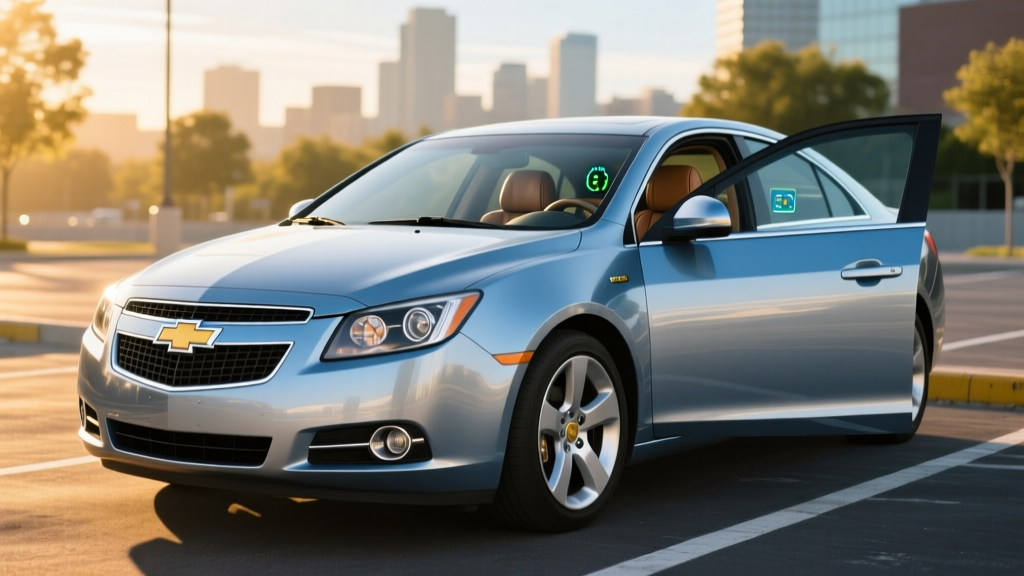
If you're researching the 09 Malibu Hybrid — whether as a used-car prospect or just benchmarking how far hybrid tech has come — this midsize sedan offers an interesting window into first-generation GM hybrid engineering. Built on GM's mild hybrid system rather than a full parallel hybrid like the Toyota Prius, the 2009 Chevrolet Malibu Hybrid was discontinued after just one model year, making it a rare find on the used market today.
This guide covers the exact EPA fuel economy figures, powertrain specs, battery reliability, ownership costs, and how this early hybrid stacks up against modern HEVs, PHEVs, and full EVs in 2026.
HEV (Hybrid Electric Vehicle): Cannot be plugged in. Charges via regenerative braking and the gas engine. The 2009 Malibu Hybrid is an HEV.
PHEV (Plug-in Hybrid): Can be plugged in for electric-only driving (typically 20–50 miles), then operates as a conventional hybrid.
BEV (Battery Electric Vehicle): Runs entirely on electricity with zero tailpipe emissions; requires plug-in charging.
EPA Fuel Economy: How Many MPG Does the 09 Malibu Hybrid Get?
The 2009 Chevrolet Malibu Hybrid was rated by the EPA at 34 mpg city / 37 mpg highway / 35 mpg combined. These numbers were competitive for the 2008–2009 model years, though they've since been eclipsed by modern hybrids.
| Metric | Value |
|---|---|
| City MPG | 34 |
| Highway MPG | 37 |
| Combined MPG | 35 |
| Fuel Tank Capacity | 16.5 gallons |
| Estimated Total Range | ~577 miles |
Source: fueleconomy.gov
Real-World MPG vs. EPA Sticker
The 2009 Malibu Hybrid uses GM's belt-alternator-starter (BAS) mild hybrid system. Unlike full hybrids (like the Toyota Camry Hybrid), the BAS system cannot propel the car on electric power alone. Instead, it provides:
- Engine auto stop-start at idle
- Regenerative braking to capture energy
- Modest electric assist during acceleration
- Electric power steering (reducing parasitic loss)
Because the electric motor provides minimal propulsion assist, real-world fuel economy tends to track closely with EPA estimates — and in some cases falls slightly short. Owner reports and fuel tracking data (from sources like Fuelly) typically show 30–34 mpg combined in mixed driving, with city driving yielding the most benefit from auto stop-start functionality.
Compared to modern HEVs, which routinely exceed their EPA city ratings due to more robust regenerative braking and electric-only low-speed driving, the Malibu Hybrid's mild system doesn't offer the same city-driving MPG boost.
Powertrain Specs: Engine, Motor, and Horsepower
| Specification | Detail |
|---|---|
| Engine | 2.4L 4-cylinder DOHC |
| Engine Power | 164 hp @ 5,100 rpm |
| Engine Torque | 159 lb-ft @ 4,500 rpm |
| Electric Motor Type | Belt-alternator-starter (BAS) |
| Electric Motor Output | ~5 hp (3 kW) assist |
| Combined System Output | ~169 hp |
| Transmission | 4-speed automatic |
| Drivetrain | Front-wheel drive |
| 0–60 mph | ~9.5 seconds (est.) |
The BAS system's electric assist is modest — roughly 3 kW (about 4 hp) — and serves primarily to smooth out the engine start-stop cycle and provide marginal acceleration support. This is fundamentally different from full hybrid systems (like Toyota's Hybrid Synergy Drive or Hyundai's TMED), where the electric motor can contribute 40–100+ hp and drive the wheels independently.
The 4-speed automatic transmission was already dated for the 2009 model year (most competitors offered 5- or 6-speed automatics), and it contributes to both the unremarkable acceleration and the highway fuel economy that isn't dramatically better than city driving.
Hybrid Battery: Size, Warranty, and Replacement Cost
Original Warranty: GM covered the hybrid battery and related components for 8 years / 100,000 miles.
Current Status (2026): All 2009 models are well beyond original warranty coverage. Any battery replacement is at owner expense.
Replacement Cost: Estimated $1,500–$3,000 for a remanufactured NiMH battery pack, plus labor (~$300–$500).
The 2009 Malibu Hybrid uses a nickel-metal hydride (NiMH) battery pack mounted behind the rear seat. This is a small pack — estimated at roughly 0.5 kWh — because the mild hybrid system doesn't require significant energy storage. The battery's job is to store enough energy for regenerative braking capture and to power the BAS motor during engine restarts and brief acceleration assist.
NiMH batteries in mild hybrid applications tend to be quite durable because they operate in a narrow state-of-charge window (never fully charged, never fully depleted), which reduces stress. Many 2009 Malibu Hybrids still on the road may still have their original battery packs, though capacity degradation over 15+ years is expected.
Signs of Hybrid Battery Degradation
If you're evaluating a used 2009 Malibu Hybrid, watch for:
- Reduced fuel economy: A degraded battery means less regenerative capture and weaker assist, pushing MPG toward the non-hybrid Malibu's ~25 mpg combined
- Rough or delayed engine restarts: The BAS motor relies on the battery for smooth stop-start transitions
- Dashboard warning lights: A "Service Hybrid System" or check engine light with hybrid-related diagnostic trouble codes
- Charging system warnings: The BAS unit doubles as the alternator; battery issues can cascade
Is the 09 Malibu Hybrid Reliable?
The 2009 Malibu Hybrid's reliability record is mixed, and it's important to separate the hybrid-specific components from the base vehicle.
Hybrid-specific reliability: The BAS system is mechanically simpler than a full hybrid drivetrain — there's no high-voltage motor driving the wheels, no complex power-split device, and no high-voltage cabling to the wheels. This simplicity means fewer hybrid-specific failure points. The NiMH battery, as noted, tends to last well due to its shallow cycling.
Base vehicle reliability: The 2008–2012 Malibu generation received middling reliability ratings from sources like J.D. Power and Consumer Reports. Common issues for this generation include:
- Power steering failures (electric power steering rack)
- Transmission shudder or rough shifting (4-speed automatic)
- Excessive oil consumption on the 2.4L Ecotec engine
- Interior build quality and electrical gremlins
For the most accurate safety and crash-test data, consult NHTSA's vehicle safety database.
Hybrid vs PHEV vs EV: Which Fits You in 2026?
If you're cross-shopping the 2009 Malibu Hybrid against modern electrified options, this decision framework should help:
| Factor | HEV (like 09 Malibu) | PHEV (e.g., Prius Prime) | BEV (e.g., Tesla Model 3) |
|---|---|---|---|
| Plug-in required? | No | Optional (best with plug-in) | Yes |
| Electric-only range | 0 miles | 25–50 miles | 250–400 miles |
| Typical MPG / MPGe | 30–55 mpg | 90–130 MPGe (elec), 45–55 mpg (gas) | 100–140 MPGe |
| Home charging needed? | No | Recommended (120V OK) | Required (240V ideal) |
| Federal tax credit | None | Up to $7,500 (§30D, if eligible) | Up to $7,500 (§30D, if eligible) |
| Maintenance cost | Low–moderate | Moderate | Low |
| Best for | No plug access, budget buyers | Home charging + road trips | Home charging, daily commutes |
Choose the 2009 Malibu Hybrid If:
- You're on a very tight used-car budget (typically $3,000–$6,000 in 2026)
- You have no access to plug-in charging at home or work
- You want marginally better fuel economy than a standard gas Malibu without changing your driving habits
- You drive primarily in city traffic where stop-start provides the most benefit
Choose a Modern PHEV or EV Instead If:
- You have access to home or workplace charging (even a standard 120V outlet works for PHEVs)
- You want meaningful fuel cost savings — a PHEV doing 30 miles electric daily can cut fuel use by 60–80%
- You want modern safety features (automatic emergency braking, blind-spot monitoring, lane-keep assist) that the 2009 Malibu lacks
- You want federal tax credit eligibility — per IRS §30D rules, new PHEVs and BEVs may qualify for up to $7,500, subject to MSRP caps, buyer income limits, and battery component/critical mineral sourcing requirements
Tax Credit Eligibility for the 2009 Malibu Hybrid
The 2009 Chevrolet Malibu Hybrid does not qualify for any federal EV or plug-in hybrid tax credit.
Under current IRS §30D rules (as of 2026), only new plug-in electric vehicles (BEVs and PHEVs with at least 7 kWh of battery capacity) are eligible for the Clean Vehicle Credit. The 2009 Malibu Hybrid fails on multiple counts:
- It's a conventional HEV, not a plug-in vehicle
- Its battery is far below the 7 kWh minimum threshold
- It's only available as a used vehicle, and the separate Used Clean Vehicle Credit (§25E, up to $4,000) also requires a plug-in vehicle with at least 7 kWh
If you're seeking a hybrid or electrified vehicle with tax credit eligibility, you'll need to look at new PHEVs or BEVs. Check the latest eligibility lists on fueleconomy.gov, which maintains the most current qualified vehicle database.
Ownership Costs and Verdict
At current used-car pricing (typically $3,000–$6,000 depending on mileage and condition), the 2009 Malibu Hybrid is an inexpensive entry into hybrid ownership. However, the fuel savings over a standard 2009 Malibu (rated ~25 mpg combined) are modest:
| Vehicle | Combined MPG | Annual Fuel Cost | Savings vs. Gas Malibu |
|---|---|---|---|
| 2009 Malibu (2.4L gas) | 25 | $2,100 | — |
| 2009 Malibu Hybrid | 35 | $1,500 | ~$600/year |
| 2026 Toyota Camry Hybrid | 52 | $1,010 | ~$1,090/year |
The ~$600/year savings over a gas Malibu is meaningful on a budget, but a modern hybrid like the 2026 Camry Hybrid nearly doubles those savings while offering dramatically better safety tech, reliability, and warranty coverage.
Pros
- Low purchase price on the used market
- No plug-in charging needed
- ~35 MPG combined beats the gas Malibu by ~10 MPG
- Simple BAS hybrid system has fewer failure points than full hybrids
- Spacious midsize cabin and trunk
Cons
- Mild hybrid offers no electric-only driving
- 4-speed automatic is outdated and sluggish
- ~9.5 second 0–60 mph time is slow even by 2009 standards
- Original hybrid battery warranty expired years ago
- Lacks modern safety features (no AEB, no BSM, no lane assist)
- Discontinued after one year — limited parts availability
- No tax credit eligibility
Frequently Asked Questions
How many MPG does the 2009 Malibu Hybrid get in real driving?
The EPA rates it at 34 city / 37 highway / 35 combined. Real-world owner data typically shows 30–34 mpg combined, depending on driving conditions. City driving with frequent stops yields the best results thanks to regenerative braking and auto stop-start. Highway driving at 70+ mph may drop to 32–34 mpg due to the 4-speed transmission's limited gear ratios.
Is the 2009 Malibu Hybrid a plug-in hybrid?
No. The 2009 Malibu Hybrid is a conventional hybrid (HEV) that cannot be plugged in. It charges its small NiMH battery exclusively through regenerative braking and the gasoline engine. If you want a plug-in Chevrolet, the current-generation Chevrolet Equinox PHEV or the discontinued Chevrolet Volt (EREV/PHEV) are options.
How much does it cost to replace the hybrid battery?
A remanufactured NiMH battery pack for the 2009 Malibu Hybrid typically costs $1,500–$3,000, with an additional $300–$500 in labor. Because the BAS system's battery is small and simple compared to full-hybrid packs (like a Prius battery at ~$2,000–$4,000), replacement costs are moderate. However, at the car's current market value, a battery replacement may represent 30–60% of the vehicle's worth.
Is the 2009 Malibu Hybrid a good buy in 2026?
It depends on your budget and expectations. If you need a cheap, no-plug-required commuter with marginally better fuel economy than a gas car, it can work — but only if the hybrid system is still functional and the car has a clean maintenance history. For most buyers spending $4,000–$6,000, a newer used hybrid (like a 2015–2018 Prius or Camry Hybrid) will deliver better MPG, better reliability, modern safety features, and stronger parts availability.
Does the 2009 Malibu Hybrid qualify for any tax credits?
No. Federal tax credits under IRS §30D and §25E require plug-in electric vehicles (BEVs or PHEVs) with battery packs of at least 7 kWh. The 2009 Malibu Hybrid's ~0.5 kWh NiMH pack and conventional HEV architecture make it ineligible for any federal EV incentive. Some states may have offered hybrid incentives when the car was new in 2009, but those programs have long since expired.