Why the 2009 Chevy Tahoe Hybrid Still Gets Attention
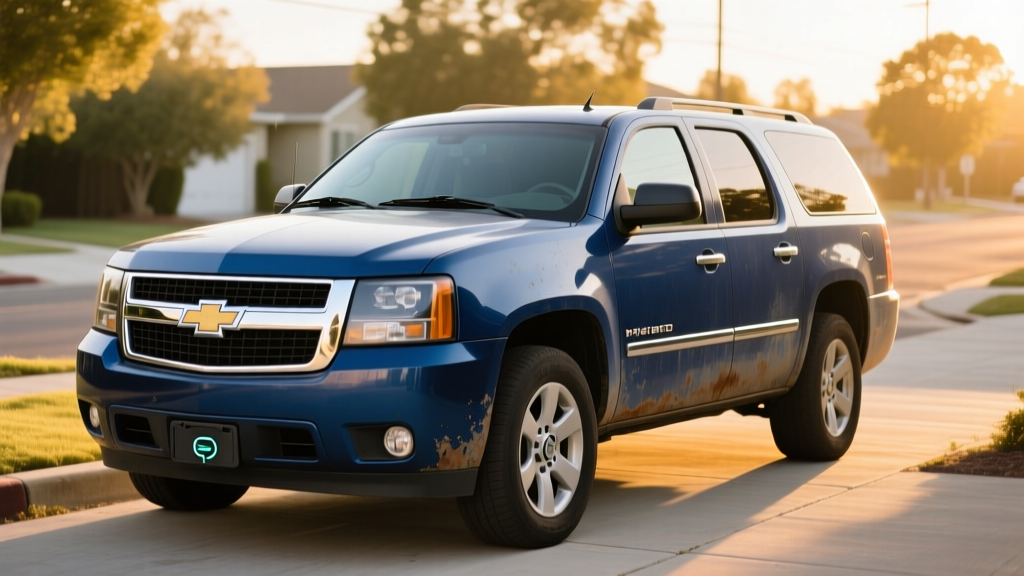
Long before plug-in hybrids and 400-mile EVs dominated headlines, General Motors bet big on full-size SUV electrification with its Two-Mode Hybrid system. The 2009 Chevy Tahoe Hybrid was one of the first large body-on-frame SUVs to pair a V8 with electric motors for meaningful fuel-economy gains — without requiring a plug. For used-car shoppers in 2026 eyeing a capable three-row hauler on a budget, this truck still raises important questions about hybrid longevity, battery replacement costs, and whether a 17-year-old hybrid system is a bargain or a liability.
This guide breaks down the 2009 Tahoe Hybrid's real fuel economy, powertrain specs, battery warranty status, and ownership economics so you can decide if it belongs in your driveway — or if a modern hybrid, PHEV, or full EV is the smarter move.
HEV vs. PHEV: What the 2009 Tahoe Hybrid Actually Is
The 2009 Chevy Tahoe Hybrid is a conventional hybrid (HEV), not a plug-in hybrid (PHEV). It charges its battery exclusively through regenerative braking and the gasoline engine. There is no charging port, no plug, and no electric-only driving mode. You fuel it like any other gas vehicle and the hybrid system manages energy recovery automatically.
This distinction matters because many buyers confuse HEVs with PHEVs. Here's how they differ:
| Feature | HEV (2009 Tahoe Hybrid) | PHEV (e.g., modern plug-in SUV) | BEV (full electric) |
|---|---|---|---|
| Plug-in charging | No | Yes | Yes |
| Electric-only range | 0 miles | 25–50 miles typical | 250–400+ miles |
| Battery size | ~1.8 kWh (NiMH) | 15–30 kWh (Li-ion) | 60–120+ kWh (Li-ion) |
| Gas engine | Yes (primary) | Yes (backup + hybrid) | None |
| Federal tax credit (new) | None | Up to $7,500 (§30D) | Up to $7,500 (§30D) |
| Fueling | Gas station only | Gas + plug | Plug only |
The Tahoe's Two-Mode Hybrid system was genuinely innovative for 2009. It used two electric motors integrated into a specially designed transmission (GM's 2ML70 EVT) to assist the 6.0L V8, enable engine stop-start, and recover braking energy. But it was never designed for electric-only propulsion beyond very low-speed crawling.
Fuel Economy: EPA Numbers and Real-World MPG
| Driving Cycle | EPA Estimate | Real-World Expectation |
|---|---|---|
| City | 21 MPG | 19–22 MPG |
| Highway | 22 MPG | 19–23 MPG |
| Combined | 21 MPG | 18–22 MPG |
Source: EPA fueleconomy.gov
For context, the non-hybrid 2009 Tahoe with the 5.3L V8 and 4WD rated just 14 city / 20 highway / 16 combined. The hybrid's advantage was most pronounced in city driving, where regenerative braking and electric-motor assist reduced the V8's workload. On the highway, the benefit narrowed because the heavy vehicle (roughly 5,800 lbs curb weight) still required substantial engine output to maintain speed.
Real-world caveat: At 17 years old, expect degraded fuel economy unless the hybrid battery has been replaced or reconditioned. A weakened NiMH battery pack reduces regenerative braking effectiveness and forces the engine to work harder. Owners reporting on forums typically see 17–20 MPG combined on original batteries, improving to near-EPA figures after a battery refresh.
Powertrain and Performance Specs
| Specification | 2009 Chevy Tahoe Hybrid |
|---|---|
| Engine | 6.0L V8 (Vortec) with Active Fuel Management |
| Electric Motors | Two 60 kW motors (integrated EVT) |
| Combined System Output | 379 hp |
| Transmission | 2-Mode Continuously Variable (EVT) |
| Drivetrain | 2WD or 4WD |
| 0–60 mph | ~8.0 seconds (estimated) |
| Towing Capacity | 5,800 lbs (4WD) / 5,600 lbs (2WD) |
| Curb Weight | ~5,800–6,000 lbs |
| Battery Type | Nickel-Metal Hydride (NiMH) |
| Battery Capacity | ~1.8 kWh (gross) |
| Seating | 7 passengers |
| Original MSRP | $51,685 (2WD) / $54,435 (4WD) |
| 2026 Used Price Range | $4,000–$9,000 (depending on mileage/condition) |
The Two-Mode system's cleverness was in its ability to operate in all-electric mode at very low speeds (under ~30 mph in light-load conditions), seamlessly blending motor and engine power, and using Active Fuel Management to shut down four of eight cylinders during cruising. The result was a full-size SUV that could tow a boat and still beat its gas-only sibling by roughly 5 MPG combined.
Battery Health, Warranty Status, and Replacement Costs
Original warranty: GM covered the hybrid battery and related components for 8 years / 100,000 miles (10 years / 150,000 miles in CARB states like California, New York, and Massachusetts). As of 2026, every 2009 Tahoe Hybrid is well beyond factory warranty coverage regardless of mileage.
This is the single most important ownership question for a used 2009 Tahoe Hybrid. NiMH batteries degrade with age and heat, and a 17-year-old pack is likely operating at reduced capacity — if it hasn't already failed.
Battery replacement costs:
- Remanufactured NiMH pack: $2,000–$3,500 (parts + labor at an independent hybrid specialist)
- Used/salvage pack: $800–$1,500 (risky — age and condition uncertain)
- OEM new from GM: No longer readily available; if sourced, $4,000–$5,500+
- Individual cell reconditioning: $1,000–$2,000 at a specialist shop (replaces only weak cells)
Signs of hybrid battery degradation:
- Reduced fuel economy (2–4 MPG drop from baseline)
- More frequent engine running at stops (stop-start disabled)
- "Check Hybrid System" or "Service Hybrid System" dashboard warning
- Reduced regenerative braking feel
- Battery state-of-charge gauge fluctuating rapidly
Before purchasing, have the hybrid battery tested by a shop with GM hybrid scan tools. A proper State of Health (SoH) reading and individual cell voltage balance check will reveal whether the pack has years of life left or needs immediate investment.
Tax Credits and Incentives: What Applies in 2026?
The 2009 Chevy Tahoe Hybrid qualified for a federal tax credit of up to $2,200 under the original Energy Policy Act when purchased new. That credit has been unavailable for over a decade, and no retroactive claims are possible.
For used buyers in 2026:
- Federal used-EV credit (§25E): This credit (up to $4,000 or 30% of sale price) applies only to used plug-in EVs and PHEVs with at least 7 kWh of battery capacity. The Tahoe Hybrid, as a conventional HEV with a ~1.8 kWh NiMH pack and no plug, does not qualify.
- State incentives: Most state rebates and HOV-lane stickers target PHEVs and BEVs. The Tahoe Hybrid is ineligible for current state electrification incentives in virtually all jurisdictions.
- Federal §30D new-vehicle credit: Not applicable — this is a used, discontinued, non-plug-in vehicle.
Bottom line: there are no tax credits or government incentives available for purchasing a 2009 Tahoe Hybrid in 2026. You're buying it purely on its merits as a used vehicle.
Reliability and Long-Term Ownership Reality
The 2009 Tahoe Hybrid's 6.0L V8 is part of GM's LS-based small-block family, widely regarded as one of the most durable engines in modern American trucks. With proper maintenance, these engines routinely exceed 200,000 miles. The transmission (the 2ML70 EVT), however, is a more specialized unit:
- Engine (6.0L V8): Excellent long-term reliability; timing-chain driven, no known systemic failures
- EVT Transmission: Generally robust, but repairs require hybrid-certified technicians; fewer shops can service this than a standard 6L80 automatic
- Hybrid battery (NiMH): The primary reliability concern at this age; expect replacement or reconditioning within the first 1–2 years of ownership unless recently done
- Electronics/inverters: The power inverter module and hybrid control module have been known to fail; replacement cost $1,500–$3,000 per component
- Standard truck components: Suspension, brakes, and body share parts with the standard Tahoe, so maintenance is straightforward and affordable
Parts availability: Mechanical and body parts remain widely available through aftermarket suppliers and salvage yards. Hybrid-specific components (battery pack, inverter, EVT transmission) are increasingly scarce from GM but supported by the hybrid-repair aftermarket.
Who Should Buy the 2009 Tahoe Hybrid vs. Alternatives
Choose the 2009 Tahoe Hybrid if:
- You need a body-on-frame SUV with three rows and real towing capacity (5,800 lbs)
- Your budget is under $10,000 and you want better MPG than a standard V8 Tahoe
- You're comfortable budgeting $2,000–$3,500 for a hybrid battery replacement if needed
- You drive a mix of city and highway and want the city MPG benefit of regenerative braking
- You have access to a mechanic familiar with GM Two-Mode Hybrid systems
Choose a modern PHEV or EV instead if:
- You want federal tax credits (up to $7,500 for qualifying new EVs/PHEVs under §30D)
- You have home charging access and want 25–50 miles of electric-only commuting
- You want a factory warranty (modern hybrids carry 10-year/100,000-mile hybrid warranties)
- You prioritize modern safety features (automatic emergency braking, lane-keeping, blind-spot monitoring)
- You want lower long-term maintenance costs with a newer vehicle
Pros
- 21 MPG combined — 5 MPG better than gas-only Tahoe
- 379 hp system output; confident towing and passing power
- Body-on-frame durability; LS-family V8 longevity
- Low entry price on the used market ($4K–$9K)
- No plug required; works with existing fueling habits
Cons
- Hybrid battery almost certainly degraded or replaced
- No tax credits or incentives available
- Outdated safety tech (no AEB, no backup camera standard)
- Hybrid-specific repairs require specialized shops
- Heavy curb weight hurts highway MPG vs. modern hybrids
Frequently Asked Questions
How many MPG does the 2009 Chevy Tahoe Hybrid get?
The EPA rates it at 21 city / 22 highway / 21 combined MPG. Real-world figures range from 18–22 MPG depending on driving style, terrain, and hybrid battery condition. This represents a roughly 30% improvement over the non-hybrid V8 Tahoe's 16 MPG combined rating.
Is the 2009 Tahoe Hybrid a plug-in?
No. It is a conventional hybrid (HEV) with no plug and no electric-only driving range. The battery charges through regenerative braking and the gasoline engine only. You fuel it exclusively at gas stations.
How much does a replacement hybrid battery cost?
Expect $2,000–$3,500 for a remanufactured NiMH pack installed by a hybrid specialist. Used packs run $800–$1,500 but carry significant risk. Cell-level reconditioning can cost $1,000–$2,000 if only a few cells have degraded.
Is the 2009 Tahoe Hybrid reliable?
The 6.0L V8 engine and truck chassis are highly reliable and share parts with the standard Tahoe. The main risk is the aging hybrid battery and specialized EVT transmission. Budget for a battery refresh and ensure you have access to a hybrid-qualified mechanic before purchasing.
Does it qualify for any tax credit in 2026?
No. The original $2,200 federal credit expired long ago, and the current used-EV credit (§25E) requires a plug-in vehicle with at least 7 kWh of battery capacity. The Tahoe Hybrid's ~1.8 kWh NiMH pack and lack of a charging port make it ineligible for all current federal and most state electrification incentives.
How does it compare to a modern hybrid SUV?
A 2026 Toyota Grand Highlander Hybrid achieves 36 MPG combined with a full factory warranty, modern safety tech, and available AWD — but starts around $40,000. The 2009 Tahoe Hybrid trades modern efficiency and safety for a sub-$10K entry price and genuine body-on-frame towing capability that crossovers can't match.