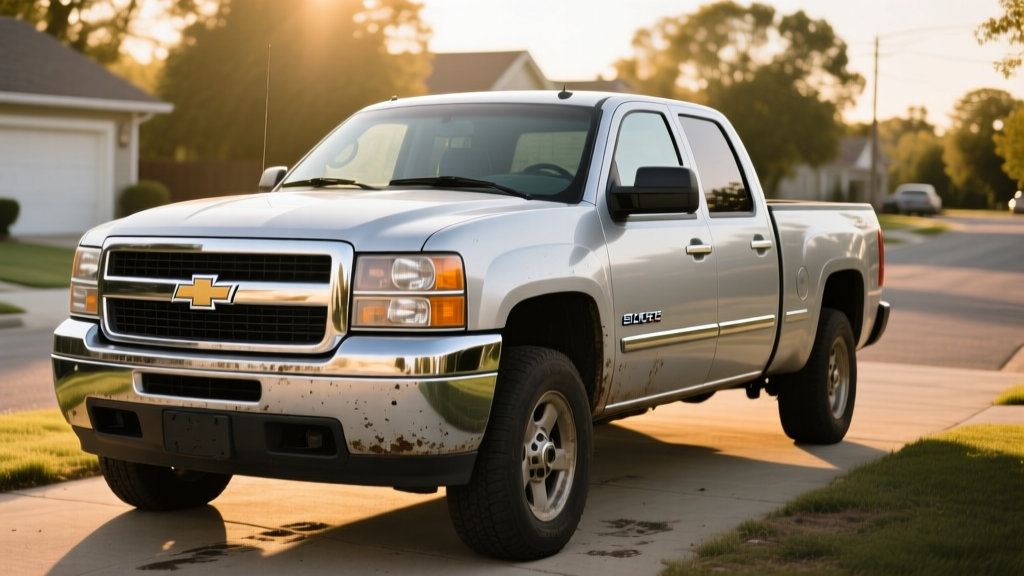
The 2009 Chevy Silverado 1500 Hybrid was one of General Motors' earliest attempts at electrifying a full-size pickup, using a sophisticated two-mode hybrid system co-developed with BMW and DaimlerChrysler. More than 15 years later, it remains a curiosity on the used market — a heavy, body-on-frame truck that promised meaningful fuel savings without sacrificing towing. But does a 2009 hybrid pickup still make sense in 2026, when modern PHEVs and BEVs dominate the electrified truck conversation? This guide breaks down every number that matters: EPA fuel economy, real-world MPG, the two-mode hybrid powertrain, battery longevity, and what used buyers should actually expect before writing a check.
HEV vs PHEV: What the 2009 Silverado Hybrid Actually Is
Before diving into specs, it's critical to establish what this truck is — and what it isn't. The 2009 Chevy Silverado 1500 Hybrid is a conventional hybrid electric vehicle (HEV). It is not a plug-in hybrid (PHEV). You cannot plug it in. There is no electric-only driving range to speak of, no charging port, and no eligibility for federal plug-in tax credits.
HEV vs PHEV — Quick Distinction
| Feature | HEV (2009 Silverado Hybrid) | PHEV (e.g., modern plug-in truck) |
|---|---|---|
| Plug-in charging | No — charges via regenerative braking and engine | Yes — external charge port |
| Electric-only range | ~0 miles (motor assists at low speed only) | 20-50+ miles typical |
| Battery size | 1.8 kWh (NiMH, very small) | 12-25+ kWh (lithium-ion) |
| Federal tax credit | None (expired long ago; HEVs never qualified under §30D) | Up to $7,500 if eligible under current IRS §30D rules |
| Fueling | Gasoline only | Gasoline + electricity |
The Silverado's hybrid system recovers energy during braking and coasting, stores it in a small NiMH pack, and uses twin electric motors to assist the V8 or enable cylinder deactivation. It never drives on electric power alone at meaningful speeds.
2009 Silverado 1500 Hybrid MPG: EPA Numbers vs Real World
The headline number for this truck was always its fuel economy — a meaningful improvement over the standard 5.3L V8 Silverado of the same era, though not transformative by today's standards.
| Metric | 2009 Silverado 1500 Hybrid (2WD) | 2009 Silverado 1500 Hybrid (4WD) | 2009 Silverado 5.3L V8 (non-hybrid, 2WD) |
|---|---|---|---|
| EPA City | 21 MPG | 20 MPG | 15 MPG |
| EPA Highway | 22 MPG | 20 MPG | 20 MPG |
| EPA Combined | 21 MPG | 20 MPG | 17 MPG |
Source: EPA Fuel Economy
Real-World MPG Expectations (2026 Used-Vehicle Reality)
EPA stickers for a 2009 vehicle were tested under the older, more generous cycle. In real-world 2026 driving with a 15-year-old hybrid system, expect:
- City driving: 17–20 MPG (the two-mode system excels here with frequent regenerative braking and engine shutoff at stops)
- Highway driving: 18–21 MPG (hybrid advantage diminishes at sustained speed; the 6.0L V8 still drinks fuel at 70+ mph)
- Towing or hauling: 12–15 MPG (the hybrid system provides minimal benefit under heavy load)
- Battery degradation factor: If the original NiMH pack is still in the truck and has degraded, city MPG could drop 1–3 MPG below these estimates as the system has less electric assist capacity.
The hybrid's biggest real-world advantage is in stop-and-go city traffic, where engine auto-stop and regenerative braking shine. On open highways, the gap between this and a conventional V8 Silverado narrows significantly.
Two-Mode Hybrid Powertrain: Engine, Motors, and Combined Output
The 2009 Silverado 1500 Hybrid uses GM's Two-Mode Hybrid system — a technically ambitious powertrain that was advanced for its time and shared architecture with the Cadillac Escalade Hybrid, GMC Yukon Hybrid, and Tahoe Hybrid of the same generation.
| Specification | Detail |
|---|---|
| Engine | 6.0L Vortec V8 (VVT, Active Fuel Management cylinder deactivation) |
| Engine output | 332 HP @ 5,100 RPM / 367 lb-ft torque @ 4,100 RPM |
| Electric motors | Twin 60 kW AC motors integrated into the transmission housing |
| Combined system output | 379 HP |
| Transmission | Electrically Variable Transmission (EVT) — 2-mode, 4 fixed gears |
| Battery pack | 1.8 kWh Nickel-Metal Hydride (NiMH), 300V nominal |
| Drivetrain | 2WD or 4WD (4WD models use a modified transfer case) |
| Towing capacity | 5,800 lbs (2WD) / 5,700 lbs (4WD) |
| Curb weight | ~5,700 lbs (hybrid system adds ~300 lbs vs conventional) |
How the Two-Mode System Works
The "two-mode" designation refers to the transmission's ability to operate in two distinct power-split configurations:
- Mode 1 (Low-speed / city): At low speeds and from a stop, the system operates as an input-split hybrid. One electric motor provides launch torque while the engine can shut off entirely at idle. Regenerative braking captures energy during deceleration. This is where the 21 MPG city rating comes from.
- Mode 2 (High-speed / highway): At highway speeds, the system switches to a compound-split configuration. Both electric motors work in concert with fixed gear ratios (the four mechanical gears) to improve efficiency at sustained speed. This mode is less effective than Mode 1 at saving fuel, which explains the relatively modest highway improvement.
The system also enables Active Fuel Management — GM's cylinder deactivation — to run the V8 on four cylinders more frequently and for longer durations than a non-hybrid Silverado, since the electric motors can smooth out the torque transitions.
Battery Longevity, Warranty, and Replacement Cost
For any used hybrid buyer in 2026, battery health is the single most important question. The 2009 Silverado Hybrid's NiMH pack is now 15+ years old, and understanding what that means for reliability and cost is essential.
Original Battery Warranty & Current Status
| Original warranty | 8 years / 100,000 miles (hybrid-specific components including battery pack) |
| Powertrain warranty | 5 years / 100,000 miles |
| Warranty status in 2026 | Expired — all 2009 models are well past both time and mileage limits |
Any battery failure or hybrid-system repair on a 2009 Silverado Hybrid will be an out-of-pocket expense unless covered by an aftermarket warranty.
NiMH Battery Degradation Reality
Nickel-metal hydride batteries are known for their durability — Toyota's Prius NiMH packs from the same era frequently exceed 200,000 miles. However, GM's two-mode system uses a relatively small 1.8 kWh pack that cycles frequently, and age-related degradation is inevitable even with low mileage.
- Typical capacity loss after 15 years: 20–40% depending on climate and usage patterns
- Failure modes: Individual cell imbalance is more common than total pack failure. A single weak cell can reduce the entire pack's usable capacity and trigger hybrid-system warning lights.
- Signs of a degraded pack: Reduced city MPG (less regenerative capture), more frequent engine starts at stops, "Service Hybrid System" dashboard warning
Battery Replacement Cost
| Option | Estimated Cost (2026) | Notes |
|---|---|---|
| OEM replacement (GM dealer) | $3,500–$5,500 | Limited availability; GM no longer actively produces these packs |
| Aftermarket/remanufactured pack | $2,000–$3,500 | Available from hybrid-specialty shops; quality varies |
| Individual cell replacement | $500–$1,500 | Requires a shop that can test and rebalance NiMH cells; most cost-effective if only a few cells are weak |
| Used/salvage pack | $800–$1,800 | High risk — unknown remaining life, no warranty |
Key insight for used buyers: Before purchasing any 2009 Silverado Hybrid, have a hybrid-qualified mechanic scan the battery management system for individual cell voltage data. A healthy pack should show cells within 0.1–0.2V of each other. Wider spreads indicate imbalance and impending failure.
Hybrid vs PHEV vs EV: Where Does the 2009 Silverado Fit in 2026?
The used-truck buyer considering a 2009 Silverado Hybrid in 2026 is likely cross-shopping against conventional gas V8 Silverados of the same vintage, and possibly wondering whether a newer electrified truck makes more financial sense. Here's how the options compare:
Which Truck Fits Your Situation?
Choose the 2009 Silverado 1500 Hybrid if:
- You drive primarily in city/stop-and-go traffic where the hybrid system's MPG advantage is largest (3–5 MPG over a conventional V8)
- You need a body-on-frame truck for occasional towing or hauling but don't want the fuel cost of a standard 5.3L V8
- Your budget is under $8,000–$12,000 (typical 2026 used pricing for this model with 120K–180K miles)
- You have access to a hybrid-qualified mechanic for battery diagnostics and potential repairs
Choose a conventional 2009–2013 Silverado 5.3L V8 (gas) if:
- You mostly drive highway miles where the hybrid's advantage is minimal
- You want simpler, cheaper maintenance with no hybrid-system risk
- You tow frequently near the truck's max capacity — the hybrid system adds weight without adding meaningful towing benefit
Choose a modern PHEV or BEV truck (e.g., Ford F-150 Lightning, Chevy Silverado EV) if:
- Your budget allows $45,000+ and you want current-generation efficiency, safety, and technology
- You have home Level 2 charging access and want to eliminate gasoline for daily driving (BEV) or most daily driving (PHEV)
- You want eligibility for the federal §30D clean vehicle tax credit (up to $7,500 for qualifying new EVs/PHEVs, subject to MSRP caps, buyer income limits, and battery-sourcing requirements — consult a tax professional)
Pricing, Tax Credits, and Used-Buyer Economics
Original MSRP and 2026 Used Market Pricing
| Trim / Configuration | 2009 Original MSRP | 2026 Used Market (est.) |
|---|---|---|
| Silverado 1500 Hybrid 2WD Crew Cab | ~$39,500 | $7,000–$10,000 |
| Silverado 1500 Hybrid 4WD Crew Cab | ~$42,500 | $8,500–$12,000 |
The hybrid carried a roughly $4,000–$5,000 premium over an equivalent non-hybrid Silverado when new. On the used market in 2026, that premium has largely evaporated — hybrid and conventional models sell within a few hundred dollars of each other, with condition and mileage mattering far more than the hybrid badge.
Tax Credit Reality
The 2009 Silverado Hybrid does not qualify for any current federal tax credit. The IRS §30D credit applies only to new plug-in vehicles (BEVs and PHEVs) meeting specific battery-sourcing, MSRP, and buyer-income requirements. Conventional hybrids (HEVs) have never qualified under the current §30D framework. The older Alternative Motor Vehicle Credit that some early hybrids used was phased out for GM vehicles years ago.
Some states may offer minimal used-EV incentives, but these almost exclusively target plug-in vehicles. Check your state's energy office or DOE Alternative Fuels Data Center for any applicable local programs.
5-Year Ownership Cost Snapshot
| Cost Category | 2009 Silverado Hybrid | 2009 Silverado 5.3L V8 |
|---|---|---|
| Purchase price (avg.) | $9,500 | $8,500 |
| Fuel (15,000 mi/yr × 5 yrs, $3.40/gal) | $12,143 (21 MPG avg) | $15,000 (17 MPG avg) |
| Hybrid battery repair reserve | $2,500 | $0 |
| Insurance (est. avg.) | $7,500 | $7,200 |
| 5-Year Total | ~$31,643 | ~$30,700 |
The fuel savings are real — roughly $2,850 over five years at 2026 gas prices — but they're largely offset by the higher purchase price and the risk of hybrid-system repairs. The financial case for the hybrid over a conventional V8 is marginal and depends heavily on your driving mix (more city = more savings) and whether the battery holds up.
Reliability, Common Issues, and What to Inspect
The 2009 Silverado 1500 Hybrid's two-mode system is complex, and while the powertrain is generally robust, there are specific failure points that used buyers should know about:
Known Problem Areas
- Hybrid battery pack degradation: As discussed, NiMH cell imbalance is the most common hybrid-specific issue. Budget $2,000–$3,500 for a potential replacement within your ownership period.
- Transmission (EVT) cooler lines: The specialized EVT generates heat, and the cooler lines can develop leaks at high mileage. Check for fluid residue near the transmission housing.
- Active Fuel Management (AFM) lifter failure: The 6.0L V8's cylinder-deactivation system is known for lifter collapse at higher mileage (typically 130K+ miles). This is a $2,000–$4,000 repair and affects both hybrid and non-hybrid GM V8s of this era.
- Electric power steering: Some 2009 Silverados (hybrid and non-hybrid) experience EPS motor failures. Listen for groaning or stiffness in the steering at low speeds.
- 300V wiring and inverter: The high-voltage system is generally reliable, but any orange high-voltage cable damage (from road debris or prior accident repair) is a serious safety and cost concern.
Pre-Purchase Inspection Checklist
- Have a hybrid-qualified technician scan the battery management system for cell voltage spread and diagnostic trouble codes.
- Test-drive in heavy stop-and-go traffic — the engine should shut off cleanly at stops and restart smoothly.
- Check for "Service Hybrid System" or "Check Hybrid System" warnings on the dash.
- Verify the transmission shifts through all four fixed gears smoothly under acceleration.
- Inspect for any stored codes related to the inverter, electric motors, or high-voltage system.
- Confirm the truck's towing equipment matches the hybrid's reduced rating (5,800 lbs 2WD vs. 7,000+ lbs for some conventional configurations).
Pros and Cons: The Honest Verdict
Pros
- 3–5 MPG improvement over conventional V8 in city driving
- 379 combined HP provides strong acceleration and merging power
- Regenerative braking reduces brake wear significantly
- Engine auto-stop at idle cuts fuel waste in traffic
- Body-on-frame capability for towing and hauling retained
- Low used-market price — often under $10,000
Cons
- 15+ year old NiMH battery is a ticking repair expense ($2,000–$5,500)
- Highway MPG advantage is minimal (1–2 MPG over non-hybrid)
- Complex two-mode EVT transmission is expensive to repair if it fails
- No electric-only driving, no plug-in capability, no tax credits
- Towing capacity reduced vs. conventional Silverado
- AFM lifter failure risk on the 6.0L V8 at higher mileage
- Outdated interior tech and safety features by 2026 standards
Frequently Asked Questions
How many MPG does the 2009 Chevy Silverado 1500 Hybrid get?
The EPA rates the 2WD model at 21 city / 22 highway / 21 combined MPG, and the 4WD model at 20/20/20 MPG. In real-world 2026 driving with an aging battery, expect 17–20 MPG in the city and 18–21 MPG on the highway. The hybrid advantage is most pronounced in stop-and-go traffic.
Can the 2009 Silverado Hybrid drive on electric power only?
Not in any practical sense. The two-mode hybrid system can move the truck at very low speeds (parking-lot creeping) with the engine off, but it cannot sustain electric-only driving at road speeds. There is no electric-only range figure — this is a conventional HEV, not a PHEV.
Is the 2009 Silverado 1500 Hybrid reliable?
The 6.0L V8 and two-mode transmission are mechanically robust, but at 15+ years old, the NiMH battery pack and AFM lifters are the primary reliability concerns. The hybrid system itself is well-engineered, but any failure in the EVT, inverter, or battery is expensive due to parts scarcity. A thorough pre-purchase hybrid-system scan is essential.
What does it cost to replace the hybrid battery?
Expect $2,000–$3,500 for a remanufactured pack, $3,500–$5,500 for an OEM replacement (if available), or $500–$1,500 for individual cell replacement if only a few cells are weak. OEM parts availability is declining as GM no longer actively supports this generation.
Does the 2009 Silverado Hybrid qualify for any tax credit?
No. The 2009 Silverado Hybrid is a conventional HEV and does not qualify for the federal §30D clean vehicle tax credit, which applies only to new plug-in vehicles (BEVs and PHEVs). The older hybrid tax incentives that existed in 2009 were phased out for GM vehicles long ago. No current federal or typical state incentive applies to this vehicle.
Should I buy a 2009 Silverado Hybrid or a newer conventional Silverado?
If your budget is under $12,000 and you drive mostly in the city, the hybrid's fuel savings can offset its age-related risks. But if you drive primarily highway miles or tow frequently, a same-era conventional 5.3L V8 Silverado is simpler, cheaper to maintain, and nearly as efficient on the highway. For buyers with a larger budget ($40K+), a modern electrified truck like the Ford F-150 PowerBoost hybrid or F-150 Lightning delivers far superior efficiency, technology, and warranty coverage.
What's the towing capacity of the 2009 Silverado 1500 Hybrid?
The hybrid is rated at 5,800 lbs for 2WD and 5,700 lbs for 4WD. This is notably less than some conventional 2009 Silverado 1500 configurations (which could reach 7,000–10,000 lbs with the right engine and axle ratio). The hybrid's added weight and specialized transmission limit its towing capability.