Quick Verdict: The 2009 Silverado 1500 Hybrid at a Glance
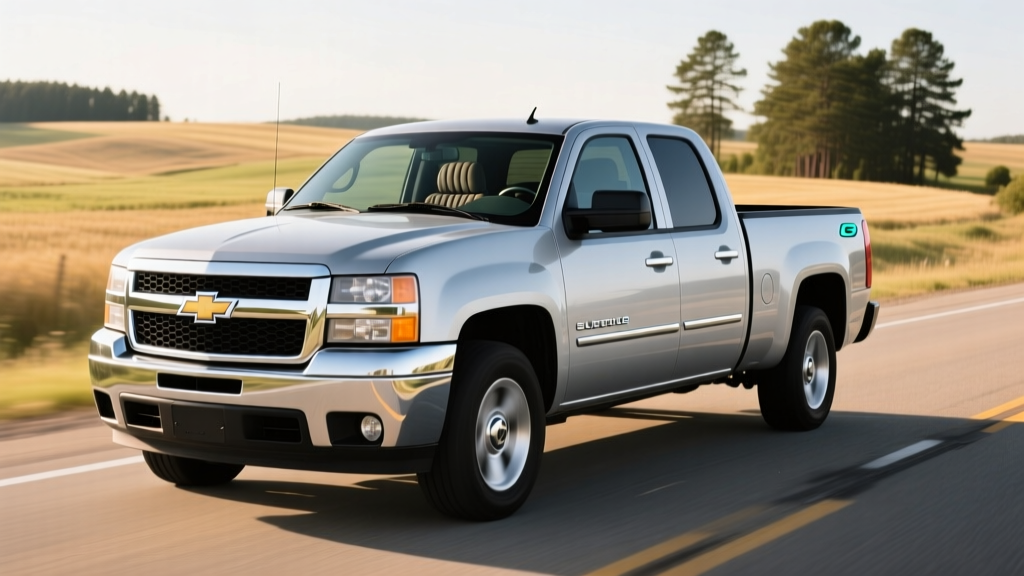
The 2009 Chevrolet Silverado 1500 Hybrid was GM's first full-size pickup to pair a two-mode hybrid system with a V8 engine — a bold experiment in truck efficiency that arrived years before the Ford F-150 PowerBoost or Toyota Tundra i-FORCE MAX. If you're researching this truck on the used market today, you're likely weighing whether a 17-year-old hybrid pickup is a smart buy or a maintenance liability. This guide covers the exact EPA fuel economy, powertrain specs, real-world efficiency, battery longevity, and ownership costs you need to decide.
Let's be direct: the 2009 Silverado Hybrid delivers modest fuel economy gains over its gas-only sibling — roughly 2-3 MPG combined — but those gains came at a significant price premium when new, and the hybrid battery is now well past its original warranty window. Understanding the system's strengths and failure points is essential before you hand over cash.
| Specification | Value |
|---|---|
| Powertrain | 6.0L V8 + Two-Mode Hybrid System (2 electric motors) |
| Combined Horsepower | 379 hp (332 hp engine + electric assist) |
| Engine Torque | 367 lb-ft @ 4,100 rpm |
| Transmission | Two-mode hybrid CVT (electrically variable) |
| EPA MPG (City / Hwy / Combined) | 21 / 22 / 21 |
| Drivetrain | RWD or 4WD (4WD reduces MPG to 20/20/20) |
| Towing Capacity | 6,100 lbs (properly equipped) |
| Hybrid Battery Type | NiMH (Nickel-Metal Hydride), ~1.8 kWh |
| Original MSRP (2009) | ~$40,490 (base Hybrid trim) |
| Original Hybrid Battery Warranty | 8 years / 100,000 miles |
EPA Fuel Economy: How Many MPG Does the 2009 Silverado Hybrid Get?
The 2009 Chevrolet Silverado 1500 Hybrid carries an EPA rating of 21 MPG city, 22 MPG highway, and 21 MPG combined in rear-wheel-drive configuration. Four-wheel-drive models drop slightly to 20 city / 20 highway / 20 combined. For context, the conventional 2009 Silverado 1500 with the 5.3L V8 rated 15 city / 21 highway / 17 combined (RWD), meaning the hybrid delivered roughly a 4 MPG combined improvement — a meaningful 24% gain.
| Powertrain | City MPG | Highway MPG | Combined MPG |
|---|---|---|---|
| Hybrid 6.0L V8 (RWD) | 21 | 22 | 21 |
| Hybrid 6.0L V8 (4WD) | 20 | 20 | 20 |
| 5.3L V8 Gas (RWD) | 15 | 21 | 17 |
| 5.3L V8 Gas (4WD) | 14 | 20 | 16 |
| 6.2L V8 Gas (RWD) | 13 | 18 | 15 |
Source: EPA / fueleconomy.gov
Real-World MPG vs. EPA Sticker
The two-mode hybrid system excels in stop-and-go driving, where regenerative braking and electric-only low-speed operation provide the biggest efficiency advantage. In real-world city driving, owners frequently report matching or slightly exceeding the 21 MPG city rating — a common trait of conventional hybrids, since regenerative braking recovers energy that gas-only trucks waste as heat.
Highway driving tells a different story. At sustained speeds above 65 mph, the electric motors contribute less, and the truck's aerodynamic drag and weight work against efficiency. Expect 18-20 MPG on the highway in real-world conditions, particularly with a loaded bed or at higher altitudes. Combined real-world usage typically lands between 18-21 MPG, depending heavily on your city-to-highway ratio.
Real-World Expectation: EPA combined is 21 MPG (RWD). Plan for 18-21 MPG in mixed driving. City-heavy routes may hit 22+ MPG; highway-heavy or loaded driving may drop to 17-18 MPG. Cold weather and short trips reduce efficiency further.
Two-Mode Hybrid Powertrain: How It Works
The 2009 Silverado uses GM's Two-Mode Hybrid system — a fundamentally different architecture from the simpler mild-hybrid systems appearing in some competitors at the time. This is a full parallel hybrid (HEV), not a plug-in hybrid (PHEV). You never plug it in. The battery charges exclusively through regenerative braking and engine-driven generation.
HEV vs. PHEV — Where the 2009 Silverado Fits
| Feature | 2009 Silverado Hybrid (HEV) | Plug-In Hybrid (PHEV) Example |
|---|---|---|
| Plug-in Charging | No — self-charging only | Yes — plugs into Level 1/2 charger |
| Electric-Only Range | ~1 mile at very low speed | 20-50 miles typical (modern PHEVs) |
| Battery Size | ~1.8 kWh (NiMH) | 13-30+ kWh (Li-ion typical) |
| Tax Credit Eligibility | None (expired, never qualified for §30D) | Up to $7,500 if eligible (§30D) |
| Primary Benefit | Improved MPG in city driving | Electric-only commuting + gas flexibility |
The two-mode system uses two electric motors integrated into the transmission housing. In "Mode 1," the system operates primarily as a series-parallel hybrid at low speeds, allowing electric-only creeping (up to roughly 25 mph under light load for very short distances). In "Mode 2," the system engages at higher speeds and under load, providing electric assist to the V8 and optimizing the engine's operating range for efficiency. The transition between modes is managed automatically — the driver simply presses the accelerator.
The 6.0L Vortec V8 features Active Fuel Management (cylinder deactivation), which can shut down four cylinders under light-load conditions. Combined with the hybrid system's electric assist, this gives the truck multiple efficiency strategies depending on driving conditions.
Hybrid Battery: Lifespan, Reliability, and Replacement Cost
This is the single most important consideration for anyone evaluating a 2009 Silverado Hybrid on the used market today. The truck's NiMH (nickel-metal hydride) hybrid battery pack was warranted for 8 years or 100,000 miles from the original in-service date. As of 2026, every surviving example is well past that warranty window.
⚠ Battery Warranty Status (2026): The original 8-year/100,000-mile hybrid battery warranty has expired on all 2009 Silverado Hybrids. Any battery failure is an out-of-pocket expense. Budget accordingly.
How Long Does the Hybrid Battery Last?
NiMH battery packs in GM's two-mode hybrid system generally last between 120,000 and 180,000 miles before significant capacity degradation triggers warning lights or reduced hybrid functionality. Many owners report original batteries lasting 150,000+ miles with proper maintenance, but age is as much a factor as mileage. A 17-year-old NiMH pack that has sat unused for extended periods may degrade faster than one in regular daily use.
When the hybrid battery degrades beyond its operational threshold, the truck will still drive — the gasoline engine operates independently — but you lose all hybrid fuel economy benefits, regenerative braking diminishes, and a dashboard warning illuminates. Some states will fail emissions or safety inspections with active hybrid system warning lights.
Battery Replacement Cost
Replacement options for the 2009 Silverado Hybrid battery include:
- OEM dealer replacement: $3,000–$4,500 (parts + labor). GM original packs are increasingly scarce and may need to be ordered through specialty channels.
- Aftermarket/remanufactured pack: $1,800–$2,800 installed. Several hybrid battery specialists offer remanufactured NiMH packs with 1-3 year warranties.
- Individual cell replacement: $500–$1,200 if only specific cells have failed, though this requires a technician experienced with NiMH module balancing.
- Used/salvage yard pack: $400–$800 — high risk, unknown remaining life, typically no warranty.
Given the truck's current market value (typically $5,000–$10,000 depending on condition and mileage), a full OEM battery replacement can represent 30-50% of the vehicle's worth. This economics gap is the primary reason many 2009 Silverado Hybrids on the used market have been converted to run on the gasoline engine alone with the hybrid system disabled — a modification that eliminates the efficiency benefit entirely.
Other Reliability Considerations
Beyond the hybrid battery, the two-mode hybrid transmission itself has proven reasonably durable, though it is more complex than a standard automatic. The electric motors inside the transmission housing are generally reliable, but inverter and power electronics failures have been reported at higher mileages (150,000+ miles). Repair costs for inverter issues typically run $1,500–$2,500.
The 6.0L Vortec V8 engine is one of GM's more reliable truck engines from this era. Common non-hybrid issues include Active Fuel Management lifter failures (which can cause misfires and costly repairs), exhaust manifold bolt breakage, and standard high-mileage wear items. These are shared with conventional Silverado models and are well-documented in owner communities.
Does the 2009 Silverado Hybrid Qualify for Any Tax Credit?
No. The 2009 Chevrolet Silverado 1500 Hybrid does not qualify for the federal §30D Clean Vehicle Credit or any current federal EV/PHEV incentive. There are several reasons:
- The §30D credit applies to plug-in electric vehicles (BEVs and PHEVs) with battery capacities of at least 7 kWh. The Silverado Hybrid's ~1.8 kWh NiMH pack and lack of plug-in capability disqualify it entirely.
- The original hybrid tax credit that existed in the mid-2000s (a different provision, §30B) offered up to $2,200 for qualifying hybrids, but this credit had a manufacturer phase-out cap that GM exceeded, and it expired for all GM vehicles by mid-2010. Even if it hadn't, tax credits apply only to the original purchaser in the year of purchase — they cannot be claimed on a used vehicle purchase in 2026.
- The Used Clean Vehicle Credit (§25E) offers up to $4,000 for used BEVs and PHEVs, but again, only for plug-in vehicles — not conventional hybrids.
Federal Tax Credit Summary — 2009 Silverado Hybrid
- ❌ §30D New Clean Vehicle Credit: Not eligible (not a plug-in vehicle)
- ❌ §25E Used Clean Vehicle Credit: Not eligible (not a plug-in vehicle)
- ❌ §30B Alternative Motor Vehicle Credit: Expired; GM cap exceeded in 2010
- ⚠️ State incentives: Check your state — a few states offer minimal used hybrid incentives, but most have sunset or apply only to plug-in vehicles
For current federal incentive rules, consult the IRS Clean Vehicle Credits page.
Pricing and Used Market Value in 2026
The 2009 Silverado 1500 Hybrid originally started at approximately $40,490 — roughly $10,000–$12,000 more than a comparably equipped conventional Silverado with the 5.3L V8. That premium was never recoverable through fuel savings alone at any realistic mileage accumulation.
On today's used market, expect the following pricing ranges (2026 estimates based on aggregator data):
- High mileage (150,000+ mi), fair condition: $4,500–$6,500
- Average mileage (100,000–150,000 mi), good condition: $6,500–$9,000
- Lower mileage (under 100,000 mi), excellent condition: $9,000–$12,000
Critical buyer's note: always verify whether the hybrid system is fully functional before purchase. Many examples at this price point have disabled or degraded hybrid systems, effectively making them conventional (but heavier) Silverados. A pre-purchase inspection by a technician familiar with GM two-mode hybrids is strongly recommended — and increasingly difficult to find as the platform ages.
Who Should Buy This Hybrid vs. a Full EV or Gas Truck?
The 2009 Silverado 1500 Hybrid occupies a narrow and increasingly awkward position in the 2026 truck market. Here's how it stacks up against modern alternatives:
Reasons to Consider the 2009 Silverado Hybrid
- You need a low-cost full-size truck and found one with a verified working hybrid system
- Your driving is predominantly city/stop-and-go where the hybrid advantage is most pronounced
- You want a V8 truck with slightly lower fuel costs and don't want to deal with plug-in charging
- You're a mechanic or enthusiast comfortable with hybrid system maintenance
Reasons to Look Elsewhere
- The hybrid battery is expired-warranty age — a $2,000–$4,500 liability
- Fuel savings over a gas Silverado are roughly $300–$500/year at 15,000 miles — not enough to offset hybrid repair risk
- Modern hybrid trucks (Ford F-150 PowerBoost, Toyota Tundra i-FORCE MAX) deliver 22-25 MPG combined with full warranties
- No tax credits, no modern safety tech, no current infotainment
- Dealer expertise for two-mode hybrid repairs is vanishing
Decision Framework: Is the 2009 Silverado Hybrid Right for You?
Choose the 2009 Silverado Hybrid if: You find a well-maintained example under $7,000 with confirmed hybrid system health, your budget is tight, and you drive primarily in the city.
Choose a conventional gas 2009 Silverado instead if: You want simpler maintenance, lower repair risk, and the hybrid system on any candidate truck shows warning signs. The fuel economy penalty is 3-4 MPG combined, but you eliminate the battery replacement gamble.
Choose a modern hybrid truck (2023+ F-150 PowerBoost or Tundra Hybrid) if: Your budget allows $40,000+. You get 22-25 MPG combined, a full factory warranty, modern safety features, and current infotainment — a generational improvement in every metric.
Choose a full EV truck (Rivian R1T, Ford F-150 Lightning, Silverado EV) if: You have home charging access, want maximum fuel cost savings (equivalent to 70-100+ MPGe), qualify for the §30D credit, and don't need to tow over 8,000 lbs regularly.
Frequently Asked Questions
How many MPG does the 2009 Chevrolet Silverado 1500 Hybrid get?
The EPA rates the 2009 Silverado Hybrid at 21 city / 22 highway / 21 combined (RWD). Four-wheel-drive models rate 20/20/20. Real-world combined driving typically returns 18-21 MPG depending on conditions.
Do I need to plug in the 2009 Silverado Hybrid?
No. This is a conventional hybrid (HEV), not a plug-in hybrid. The battery charges exclusively through regenerative braking and the gasoline engine. There is no charging port.
How far can the 2009 Silverado Hybrid drive on electric power alone?
Essentially zero meaningful electric-only range. The two-mode system can creep at very low speeds (under 25 mph) on electric power for brief distances (roughly one mile or less), but this is not usable as an electric commuting mode. This is fundamentally different from a PHEV, which offers 20-50 miles of electric-only range.
Is the 2009 Silverado Hybrid reliable?
The 6.0L V8 engine and conventional truck components are generally reliable for the era. The hybrid-specific components — the NiMH battery pack, inverter, and two-mode transmission — are the primary risk factors. At 17 years old, the hybrid battery is the most likely costly failure point, with replacement running $1,800–$4,500.
What does it cost to replace the hybrid battery?
Expect $1,800–$2,800 for a remanufactured pack installed, or $3,000–$4,500 for an OEM replacement (if available). Individual cell repair can run $500–$1,200 but requires specialized knowledge.
Does the 2009 Silverado Hybrid qualify for any federal tax credit in 2026?
No. The truck is a conventional hybrid, not a plug-in vehicle. It does not qualify for the §30D new vehicle credit, the §25E used vehicle credit, or any current federal EV incentive. The original hybrid tax credit for GM vehicles expired in 2010.
Can I still get the hybrid system serviced?
GM dealers can technically service the two-mode hybrid system, but technician expertise has diminished significantly since the platform was discontinued. Independent hybrid specialists are an option in larger metro areas. Before purchasing, confirm that a qualified technician is accessible in your area.
How does this compare to modern hybrid trucks?
The 2024-2026 Ford F-150 PowerBoost hybrid achieves 22-25 MPG combined with 430 hp and a full factory warranty. The Toyota Tundra i-FORCE MAX delivers 20-22 MPG combined with 437 hp. Both are dramatically more capable, efficient, and technologically current — but at $50,000+ new, they occupy a completely different price bracket than a used 2009 Silverado Hybrid.
Sources: EPA fueleconomy.gov, IRS Clean Vehicle Credits, NHTSA