Quick Verdict: An Early Hybrid Worth Considering on a Budget
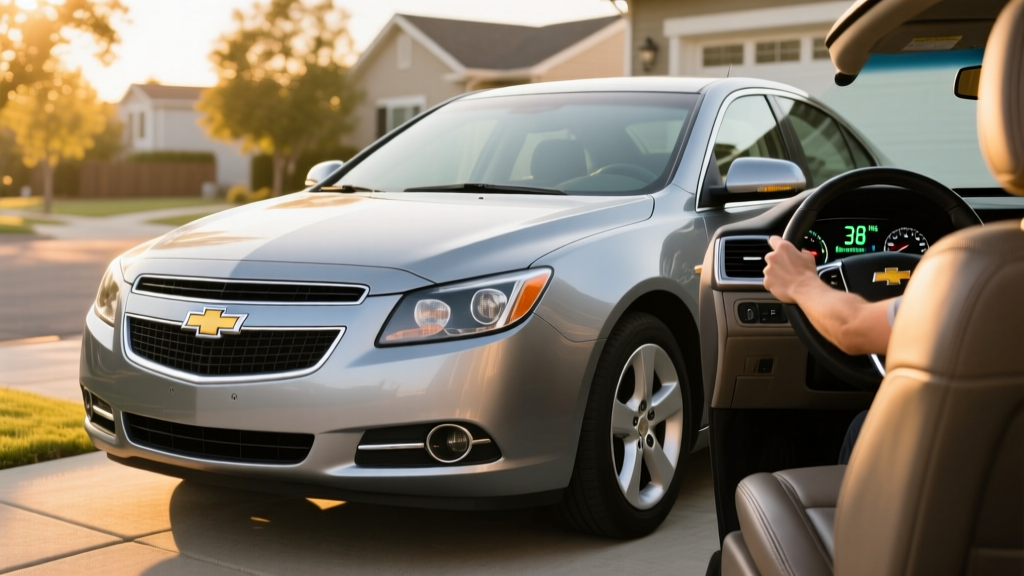
The 2009 Chevrolet Malibu Hybrid sedan occupies a specific niche in today's used-car market: it's an affordable entry point into hybrid ownership for buyers who want better fuel economy without the complexity of a plug-in vehicle or the commitment of a full EV. Built on GM's mild-hybrid "belt alternator starter" (BAS) system rather than a full parallel hybrid architecture like the Toyota Prius, the Malibu Hybrid delivers modest but real efficiency gains over its gasoline-only sibling. At current used-car prices—typically $3,000 to $5,500 depending on mileage and condition—it competes with other mid-2000s hybrids as a budget commuter.
This guide covers everything a prospective buyer needs to know: exact EPA fuel economy figures, the BAS powertrain's real-world behavior, battery longevity and replacement costs, and whether this 17-year-old hybrid still makes financial sense in 2026.
EPA Fuel Economy: What the Numbers Say
The 2009 Malibu Hybrid is a conventional hybrid electric vehicle (HEV)—meaning it charges its small battery through regenerative braking and the gasoline engine. There is no plug, no electric-only driving mode, and no external charging required. This is a critical distinction from plug-in hybrids (PHEVs), which we'll address later.
| Metric | Malibu Hybrid | Malibu Gas (2.4L 4-cyl) | Advantage |
|---|---|---|---|
| City MPG | 26 MPG | 22 MPG | +4 MPG |
| Highway MPG | 34 MPG | 30 MPG | +4 MPG |
| Combined MPG | 29 MPG | 25 MPG | +4 MPG |
Source: EPA Fuel Economy Guide
How Many MPG Does the 2009 Malibu Hybrid Actually Get?
The EPA combined rating of 29 MPG is the headline figure, but real-world results with GM's BAS system tend to be closer to the sticker than with full hybrids like the Prius. Owner reports and long-term testing from the era consistently showed 27–30 MPG in mixed driving. The BAS system's efficiency gains come primarily from:
- Auto engine stop/start: The engine shuts off at idle and restarts seamlessly when you lift off the brake—ahead of its time for 2009, now standard on most vehicles.
- Regenerative braking: Captures energy during deceleration to charge the 36-volt NiMH battery pack.
- Electric motor assist: Provides a brief torque boost during acceleration, reducing the load on the 2.4L Ecotec engine.
Unlike full hybrids (Toyota's HSD, Honda's i-MMD), the BAS motor cannot propel the car on electricity alone. There is no EV mode. The gains are real but incremental—roughly a 15–18% improvement over the conventional 4-cylinder Malibu.
Powertrain Deep Dive: GM's BAS Mild-Hybrid System
Understanding the 2009 Malibu Hybrid requires understanding what it is not. This is not a Toyota-style full hybrid with a large traction battery and a powerful electric motor capable of solo propulsion. It's a mild hybrid—specifically, GM's Belt Alternator Starter (BAS) system, sometimes called "eAssist" in later model years.
| Specification | Value |
|---|---|
| Engine | 2.4L Ecotec I4 (DOHC, VVT) |
| Engine Output | 164 HP @ 5,100 RPM / 159 lb-ft @ 4,500 RPM |
| Electric Motor | Belt-driven motor/generator unit |
| Motor Output | ~5 kW (assist only, no solo EV drive) |
| Combined System Power | ~164 HP (motor supplements, doesn't add peak) |
| Transmission | 4-speed automatic (4T45-E) |
| Hybrid Battery | 36V Nickel-Metal Hydride (NiMH) |
| Battery Capacity | ~0.5 kWh (nominal) |
| Drivetrain | Front-wheel drive |
| 0–60 MPH | ~8.5 seconds |
How the BAS System Works
The motor/generator unit replaces the traditional alternator and is connected to the engine's serpentine belt. It serves three functions:
- Engine stop/start: Shuts off the engine at stops and restarts it almost instantly (faster and smoother than conventional starter motors).
- Regenerative braking: Acts as a generator during deceleration, converting kinetic energy into electricity stored in the 36V battery.
- Launch assist: Provides a brief electric torque boost during initial acceleration, reducing fuel consumption during the most fuel-intensive driving phase.
The system is transparent to the driver. There's no mode selection, no plug, and no change in driving behavior required. The instrument cluster includes a simple "Auto Stop" indicator and an economy gauge, but otherwise the car drives identically to a conventional Malibu.
HEV vs PHEV vs EV: Where Does the Malibu Hybrid Fit?
The 2009 Malibu Hybrid is a conventional HEV. It is not a plug-in hybrid and not an electric vehicle. For buyers cross-shopping used hybrids, understanding these categories is essential.
| Feature | HEV (Malibu Hybrid) | PHEV (e.g., Prius Prime) | BEV (e.g., Bolt EV) |
|---|---|---|---|
| Plug-in charging? | No | Yes (Level 1/2) | Yes (Level 1/2/DC) |
| Electric-only range | 0 miles | 25–45 miles (typical) | 200–350+ miles |
| Gasoline engine? | Yes (primary) | Yes (backup) | No |
| Fuel/energy source | Gasoline only | Gasoline + electricity | Electricity only |
| Home charging needed? | No | Recommended | Essential |
| Federal tax credit (new) | None | Up to $7,500 (§30D) | Up to $7,500 (§30D) |
| Used-car credit (§25E) | Not eligible | Up to $4,000 | Up to $4,000 |
Hybrid vs PHEV vs EV — Which Fits You?
Choose the 2009 Malibu Hybrid (HEV) if: You want a cheap, simple commuter car with slightly better fuel economy, no charging infrastructure requirements, and minimal learning curve. You drive 20–40 miles per day, mostly in mixed city/highway conditions, and want to spend under $6,000 on a vehicle.
Choose a used PHEV if: You have access to home or workplace charging, want 20–40 miles of electric-only commuting, and still need gasoline flexibility for longer road trips. Expect to spend $10,000–$18,000 on a used PHEV (e.g., 2017–2020 Prius Prime, 2016–2019 Volt).
Choose a used BEV if: You have reliable home charging, your daily driving is under 200 miles, and you want zero tailpipe emissions and the lowest per-mile fuel cost. A used Chevrolet Bolt EV (2017–2022) can be found for $12,000–$18,000 and may qualify for the §25E used EV credit of up to $4,000.
Battery Life, Reliability, and Replacement Costs
The 36-volt NiMH battery pack in the 2009 Malibu Hybrid is small—roughly 0.5 kWh—and operates under relatively mild stress compared to full-hybrid or EV battery packs. This is good news for longevity, but at 17 years old, any original battery is nearing or past its expected service life.
Is the 2009 Malibu Hybrid Reliable?
The BAS system proved reasonably reliable in service. The motor/generator unit itself rarely fails—the more common issues are:
- 36V NiMH battery degradation: Capacity loss over time reduces the effectiveness of auto stop/start and regenerative braking. The car remains drivable but loses its fuel-economy advantage.
- Battery control module faults: Intermittent "Service Hybrid System" messages were reported by some owners, sometimes related to sensor or wiring issues rather than the battery itself.
- Conventional 12V battery issues: The Malibu Hybrid uses both the 36V hybrid pack and a standard 12V battery. A failing 12V battery can cause hybrid-system error messages.
The 2.4L Ecotec engine and 4-speed automatic transmission are conventional GM components with well-documented service histories. Timing chain stretch on the 2.4L Ecotec is a known concern at higher mileages (above 120,000 miles) and is unrelated to the hybrid system.
Battery Replacement Cost
If the 36V NiMH battery fails or degrades significantly:
- Remanufactured battery pack: $600–$1,200 (parts only, from aftermarket suppliers)
- Dealer replacement (if available): $1,500–$2,200 (parts + labor), though dealer stock of these specific packs is increasingly limited
- Individual cell replacement: Some hybrid battery specialists can replace individual NiMH cells for $300–$600, but this requires specialized knowledge
Given that a clean 2009 Malibu Hybrid sells for $3,000–$5,500 in 2026, a $1,500+ battery replacement represents a significant percentage of the vehicle's value. Buyers should verify the hybrid system's operational status before purchasing—specifically, confirm that auto stop/start engages at idle and that the economy gauge shows regenerative braking activity during deceleration.
Pricing and Tax Credit Eligibility
The 2009 Chevrolet Malibu Hybrid originally carried an MSRP of approximately $26,620, including the $795 destination charge. The hybrid premium over a comparably equipped gas Malibu LT was roughly $2,000–$2,500.
Current Used-Car Pricing (2026 Market)
| Condition | Mileage Range | Estimated Price |
|---|---|---|
| Fair (high miles, cosmetic wear) | 150,000+ miles | $2,500–$3,500 |
| Good (average wear, maintained) | 100,000–140,000 miles | $3,500–$4,500 |
| Excellent (low miles, clean) | Under 100,000 miles | $4,500–$5,500 |
Does the 2009 Malibu Hybrid Qualify for Any Tax Credit?
No. The 2009 Malibu Hybrid does not qualify for any current federal tax credit:
- §30D New Clean Vehicle Credit: Not applicable—the vehicle is used, and conventional HEVs have never qualified for §30D, which requires plug-in capability and minimum battery capacity.
- §25E Used Clean Vehicle Credit: Not applicable—this credit (up to $4,000, or 30% of sale price, whichever is less) applies only to qualified plug-in EVs and fuel-cell vehicles purchased used from a dealer. Conventional hybrids are excluded.
- Original hybrid tax credits (expired): When new, the 2009 Malibu Hybrid qualified for a modest federal Alternative Motor Vehicle Credit of approximately $1,300–$1,550 (the exact amount phased out based on GM's cumulative hybrid sales). This credit has long since expired and applies only to the original purchaser.
For current credit rules, consult IRS §30D guidance and IRS §25E guidance. State-level incentives for used hybrids are rare; most state programs now focus on plug-in vehicles.
Who Should Buy the 2009 Malibu Hybrid in 2026?
Pros
- Low purchase price ($3,000–$5,500)
- No charging infrastructure needed
- 29 MPG combined EPA—15–18% better than gas Malibu
- Familiar, conventional driving experience
- Comfortable midsize sedan with decent trunk space (15.1 cu ft)
- Auto stop/start reduces idle fuel waste
Cons
- Mild-hybrid system provides limited fuel savings vs full hybrids
- No electric-only driving capability
- Outdated 4-speed automatic (contemporaries had 5–6 speeds)
- No federal tax credit eligibility
- Battery replacement cost can approach vehicle value
- 2009 safety tech lacks modern ADAS features (no AEB, lane-keep, etc.)
- Only 29 MPG combined trails Prius (50+ MPG) significantly
The Right Buyer Profile
The 2009 Malibu Hybrid makes sense for:
- Budget-conscious commuters spending under $6,000 who want a slight MPG bump without changing their fueling habits.
- Short-term vehicle buyers who need reliable transportation for 2–3 years and plan to upgrade to a newer hybrid or EV when finances allow.
- Drivers without home charging access who cannot practically own a PHEV or BEV.
It does not make sense for:
- High-mileage drivers (20,000+ miles/year) who would benefit far more from a full hybrid like a used Prius (50 MPG) or a PHEV for electric commuting.
- Buyers prioritizing safety technology—the 2009 Malibu lacks automatic emergency braking, blind-spot monitoring, lane departure warning, and other ADAS features now common even in budget vehicles.
- Anyone eligible for the §25E used EV credit—a used Bolt EV at $14,000 minus a $4,000 credit nets $10,000, delivering 259 miles of EV range and dramatically lower per-mile energy costs.
Pre-Purchase Inspection Checklist
If you're evaluating a 2009 Malibu Hybrid, verify these hybrid-specific items before purchase:
- Auto stop/start function: At a complete stop with your foot on the brake, the engine should shut off within 1–2 seconds and the "Auto Stop" indicator should illuminate on the dash. When you release the brake, the engine should restart instantly and smoothly.
- Regenerative braking: During deceleration, the economy gauge should swing toward the "Charge" zone, indicating the motor/generator is recovering energy.
- Hybrid system warnings: Check for any "Service Hybrid System" or battery-related warning lights. These may indicate degraded battery cells or control module issues.
- Conventional 12V battery age: A weak 12V battery can cause false hybrid-system errors. Check the date sticker—replace if over 4 years old.
- Timing chain condition: The 2.4L Ecotec is prone to timing chain stretch above 120,000 miles. Listen for a rattling sound at cold start; have a mechanic inspect if concerned.
- Transmission behavior: The 4-speed automatic should shift smoothly. Harsh shifts or slipping indicate internal wear and are costly to repair relative to vehicle value.
Frequently Asked Questions
How many MPG does the 2009 Chevrolet Malibu Hybrid get?
The EPA rates it at 26 MPG city, 34 MPG highway, and 29 MPG combined. Real-world driving typically yields 27–30 MPG combined, with city-heavy driving occasionally reaching 31–32 MPG thanks to frequent auto stop/start engagement.
Does the 2009 Malibu Hybrid need to be plugged in?
No. This is a conventional hybrid (HEV), not a plug-in hybrid (PHEV). The 36V battery charges exclusively through regenerative braking and the gasoline engine. There is no charging port and no electric-only driving mode.
How far can it go on electric only?
Zero miles. The BAS mild-hybrid system cannot propel the vehicle on electricity alone. The electric motor only assists the gasoline engine during acceleration and enables auto stop/start at idle. For electric-only driving, you need a PHEV (25–45 miles electric) or a full BEV (200+ miles electric).
Is the 2009 Malibu Hybrid reliable?
The BAS system itself is reasonably reliable, with fewer failure points than full-hybrid systems. The main concern at this vehicle's age is 36V NiMH battery degradation. The 2.4L Ecotec engine is generally durable but watch for timing chain stretch above 120,000 miles. Overall reliability is acceptable for a budget used car, but not class-leading compared to contemporary Toyota or Honda hybrids.
What does it cost to replace the hybrid battery?
A remanufactured 36V NiMH battery pack costs $600–$1,200 for parts. Dealer-installed replacement (if parts are still available) runs $1,500–$2,200 including labor. Given the vehicle's $3,000–$5,500 market value, this is a significant repair. Verify hybrid system function before purchase to avoid surprise costs.
Does the 2009 Malibu Hybrid qualify for any tax credit?
No. Conventional hybrids are not eligible for the federal §30D new vehicle credit or the §25E used vehicle credit. These credits require plug-in capability and minimum battery capacity thresholds. When new, the 2009 Malibu Hybrid qualified for a small Alternative Motor Vehicle Credit (~$1,300–$1,550), but that credit applied only to the original purchaser and has since expired.
How does it compare to a Toyota Prius of the same era?
A 2009 Toyota Prius (3rd generation) is EPA-rated at 51 city / 48 highway / 50 combined MPG—nearly double the Malibu Hybrid's efficiency. The Prius uses a full parallel hybrid system capable of low-speed EV driving. Used Prius prices are higher ($5,000–$8,000 for a 2009), but the fuel savings over time are substantially greater, especially for high-mileage drivers. See EPA comparison data for side-by-side figures.
Is the 2009 Malibu Hybrid a good car for a teenager?
It's an affordable, easy-to-drive sedan with reasonable fuel economy, but it lacks modern safety technology. The 2009 Malibu earned a 5-star NHTSA frontal crash rating and 4-star side rating, but it does not have electronic stability control as standard equipment (it was optional), nor any advanced driver-assistance features. For a teen driver in 2026, a newer used vehicle with standard ESC, AEB, and backup camera would be a safer choice—even if it costs more upfront.