The Toyota Camry Hybrid has been a benchmark for fuel-sipping midsize sedans since its debut, and the 2009 model year remains one of the most searched used hybrids on the market. Buyers looking up 2009 Camry Hybrid MPG figures are usually weighing a practical question: can a 17-year-old hybrid still deliver on its efficiency promises, and what does ownership actually cost in 2026?
This guide covers the official EPA fuel economy, real-world MPG expectations, battery longevity, replacement costs, and how the 2009 Camry Hybrid stacks up against modern hybrids, plug-in hybrids, and full EVs for today's buyers.
2009 Camry Hybrid MPG: Official EPA Ratings
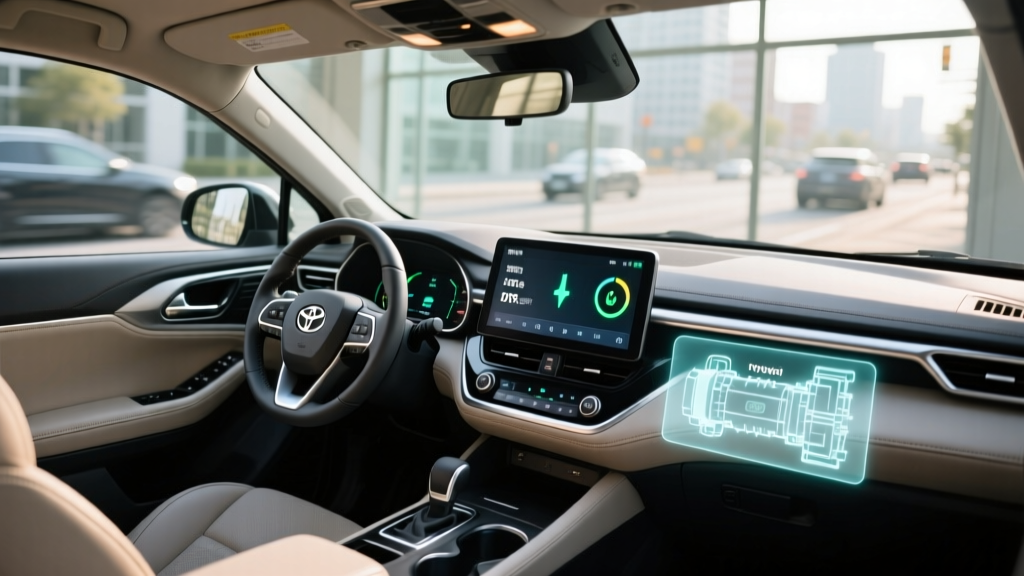
The 2009 Toyota Camry Hybrid is a conventional hybrid electric vehicle (HEV). It uses a small nickel-metal hydride (NiMH) battery that recharges through regenerative braking and the gasoline engine — you never plug it in. Here are the official EPA fuel economy figures as published on fueleconomy.gov:
| Metric | Value |
|---|---|
| City MPG | 33 |
| Highway MPG | 34 |
| Combined MPG | 34 |
| Annual Fuel Cost (est.) | ~$1,350 (at $3.20/gal) |
| Fuel Type | Regular unleaded (87 octane) |
One characteristic of Toyota's Hybrid Synergy Drive system is that city and highway MPG are nearly identical — and in some driving conditions, city MPG actually exceeds highway. This is because the electric motor does most of the work at low speeds and in stop-and-go traffic, where a conventional gas car is least efficient.
Real-World MPG: What Owners Actually Report
EPA stickers are a starting point, not a guarantee. For the 2009 Camry Hybrid, real-world data from owner forums and fuel-tracking sites like Fuelly tells a nuanced story:
- Typical real-world combined: 30–35 MPG
- City-dominant driving: 34–38 MPG (hybrids thrive in traffic)
- Highway-dominant (70+ mph): 28–32 MPG (aerodynamic drag and sustained engine load reduce hybrid advantage)
- Cold-weather penalty: Expect a 5–10% drop in winter months as the engine runs more frequently to generate cabin heat and warm the catalytic converter
The 2009 Camry Hybrid's 2.4-liter four-cylinder engine paired with its electric motor produces a combined 187 horsepower. That's adequate for merging and passing, but aggressive acceleration will push real-world MPG into the mid-to-high 20s. Drivers who adopt a moderate, pulse-and-glide style consistently report numbers at or above the EPA combined rating.
Powertrain Specs and How the Hybrid System Works
| Component | Specification |
|---|---|
| Gasoline Engine | 2.4L 4-cylinder (2AZ-FXE), 147 HP @ 6,000 rpm |
| Electric Motor | Permanent magnet AC synchronous, 40 HP |
| Combined Net Output | 187 HP |
| Transmission | ECVT (electronically controlled continuously variable) |
| Battery Type | Nickel-Metal Hydride (NiMH) |
| Battery Capacity | ~1.3 kWh (nominal) |
| Drivetrain | Front-wheel drive |
| 0–60 mph | ~8.4 seconds |
| Curb Weight | ~3,680 lbs |
The eCVT in this generation Camry Hybrid isn't a belt-and-pulley CVT like those found in some competitors. Toyota's Hybrid Synergy Drive uses a planetary gearset to blend power from the gas engine and electric motor seamlessly. This design has proven extremely durable — there are no traditional transmission clutches or bands to wear out, and the eCVT is widely regarded as one of the most reliable transmissions ever put in a passenger car.
Hybrid Battery Health: Longevity, Warranty, and Replacement Cost
The single biggest concern for any used hybrid buyer is the traction battery. Here's what you need to know about the 2009 Camry Hybrid's NiMH pack:
Expected Battery Lifespan
NiMH batteries in Toyota hybrids have a strong track record. Many 2007–2011 Camry Hybrids have reached 200,000–250,000 miles on the original battery pack. However, at 17 years old, most surviving 2009 examples have either already had a battery replacement or are showing signs of age-related capacity loss.
Warning signs of a degraded hybrid battery include:
- Noticeably lower MPG (dropping below 28 combined)
- The engine running more frequently than usual, even at low speeds
- Rapid state-of-charge fluctuations on the dashboard energy monitor
- A check engine light with codes P0A80 (replace hybrid battery pack) or P0A7F (hybrid battery pack deterioration)
Replacement Cost in 2026
| Option | Cost Range | Notes |
|---|---|---|
| New OEM Toyota battery | $3,000–$4,000 (installed) | Best longevity, dealer or certified shop |
| Remanufactured battery | $1,500–$2,500 (installed) | Rebuilt with tested cells; 1–3 year warranty typical |
| Used/salvage battery | $500–$1,000 (installed) | Risky — unknown remaining life |
| Individual cell/module replacement | $300–$800 (parts + labor) | Only viable if 1–2 modules are bad; requires specialist |
If you're buying a 2009 Camry Hybrid in 2026, budget for a potential battery replacement within your first few years of ownership unless the seller can provide documentation of a recent replacement.
Does the 2009 Camry Hybrid Qualify for Any Tax Credit?
No. The 2009 Camry Hybrid does not qualify for any federal tax credit in 2026. Here's why:
- Federal §30D New Clean Vehicle Credit: This applies only to new qualifying plug-in vehicles (BEVs and PHEVs with ≥7 kWh battery). The 2009 Camry Hybrid is neither new nor a plug-in vehicle.
- Federal Used Clean Vehicle Credit (§25E): This credit (up to $4,000) applies only to used plug-in EVs and PHEVs purchased from a dealer. Conventional hybrids like the Camry HEV are not eligible.
- Original hybrid credit (expired): The 2009 Camry Hybrid did qualify for a federal tax credit when new (up to $2,200), but that credit phase out for Toyota ended in 2010.
- State incentives: A few states may offer small rebates or HOV lane access for hybrids, but these vary by jurisdiction and most have shifted focus to plug-in vehicles. Check your state's energy or DMV website for current programs.
For the latest eligibility rules on federal EV and PHEV credits, consult the IRS Clean Vehicle Credits page.
2009 Camry Hybrid vs. Modern Alternatives: Which Should You Choose?
The 2009 Camry Hybrid's value proposition in 2026 comes down to budget and use case. Here's how it compares to the alternatives a buyer might be cross-shopping:
| Vehicle | Type | Combined MPG / MPGe | Electric-Only Range | Approx. 2026 Price |
|---|---|---|---|---|
| 2009 Toyota Camry Hybrid | HEV | 34 MPG | None | $5,000–$8,000 (used) |
| 2026 Toyota Camry Hybrid | HEV | 51 MPG | None | $29,495+ (new MSRP) |
| 2026 Toyota Prius Prime | PHEV | 52 MPG / 127 MPGe | 40–44 miles | $33,675+ (new MSRP) |
| 2026 Hyundai Ioniq 6 | BEV | 140 MPGe | 316 miles (EPA) | $37,500+ (new MSRP) |
Choose the 2009 Camry Hybrid If:
- Your budget is under $10,000
- You want proven reliability with massive aftermarket support
- You drive mostly in the city (where hybrid efficiency shines)
- You have no access to home or workplace charging
- You want low insurance and registration costs
Look at a Modern Alternative If:
- You want warranty coverage and modern safety features (AEB, lane-keep)
- You can charge at home and want electric-only commuting (PHEV or BEV)
- You drive a lot of highway miles (modern hybrids get 50+ MPG combined)
- You want the $7,500 federal tax credit (new BEV/PHEV, subject to IRS rules)
- Safety is a priority — the 2009 lacks electronic stability control on base trims
Ownership Costs: Fuel, Insurance, and Maintenance in 2026
At current fuel prices, the 2009 Camry Hybrid remains an economical daily driver. Here's a realistic annual cost snapshot based on 15,000 miles/year and $3.20/gallon regular unleaded:
| Expense | 2009 Camry Hybrid (34 MPG) | 2009 Camry Gas I4 (24 MPG) |
|---|---|---|
| Fuel | ~$1,410 | ~$2,000 |
| Insurance (avg.) | ~$900–$1,100 | ~$900–$1,100 |
| Oil Changes (2×/yr) | ~$80 | ~$80 |
| Estimated Annual Savings vs. Gas | ~$590/year fuel savings | |
The hybrid's fuel savings over the equivalent gas Camry add up to roughly $590 per year. Over five years, that's nearly $3,000 — enough to offset a battery replacement if one becomes necessary. Maintenance costs are generally low; the regenerative braking system extends brake pad life significantly, and the eCVT requires no fluid changes under normal driving.
Safety Ratings and What to Watch For
The 2009 Camry Hybrid earned strong crash-test scores for its era. The NHTSA gave it 5 stars for frontal crash protection for both driver and passenger. However, it's important to contextualize this against modern safety standards:
- No standard electronic stability control on all trims (it was optional)
- No forward collision warning or automatic emergency braking
- No lane departure warning
- Side curtain airbags are standard, but rear-seat side airbags were optional
If you're comparing a 2009 Camry Hybrid to any 2023+ vehicle, the safety technology gap is substantial. For families or drivers who prioritize active safety, a newer vehicle — even a non-hybrid — will offer significantly more crash-avoidance technology.
Frequently Asked Questions
How many MPG does the 2009 Camry Hybrid get?
The EPA rates it at 33 city / 34 highway / 34 combined MPG. Real-world results typically range from 28–38 MPG depending on driving style, terrain, and climate. City-heavy driving tends to produce the best numbers because the electric motor handles low-speed propulsion.
Does the 2009 Camry Hybrid need to be plugged in?
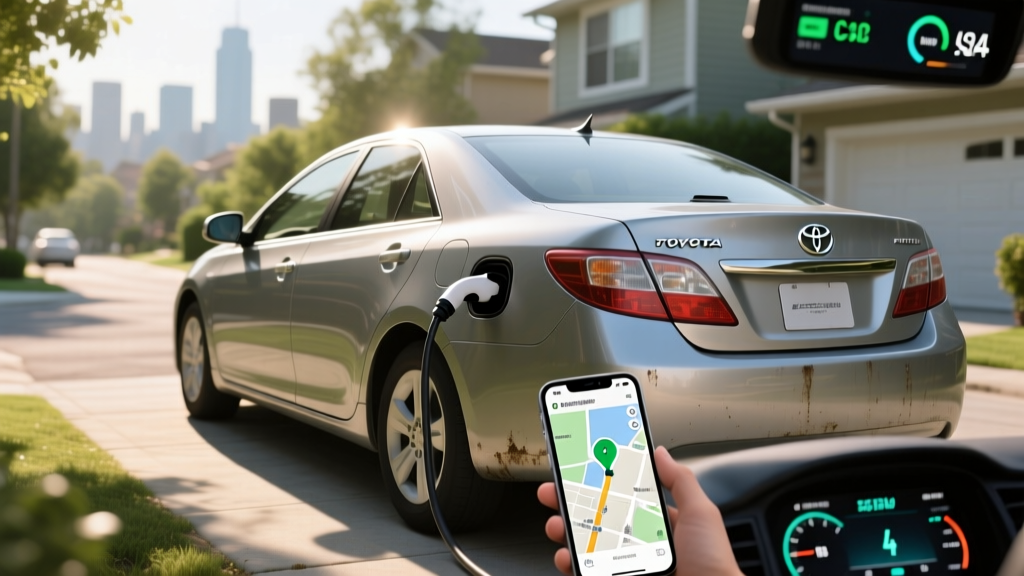
No. This is a conventional hybrid (HEV), not a plug-in hybrid (PHEV). The battery charges entirely through regenerative braking and the gasoline engine. There is no charging port and no electric-only driving range.
Is the 2009 Camry Hybrid reliable?
Yes, with a major caveat. The powertrain — the 2.4L engine, eCVT, and hybrid system — is among the most reliable Toyota has ever built. The weak point in 2026 is battery age. At 17 years old, original NiMH batteries are near or past their expected lifespan. Budget $1,500–$4,000 for a potential battery replacement unless the seller documents a recent one.
How much does it cost to replace the hybrid battery?
A new OEM battery from Toyota runs $3,000–$4,000 installed. Remanufactured batteries from reputable suppliers cost $1,500–$2,500 installed. Individual module repairs can be done for $300–$800 if only a few cells have failed.
Hybrid vs PHEV vs EV — which should I choose?
If you have no charging access and want maximum simplicity, a conventional hybrid like the 2009 Camry Hybrid is ideal. If you can charge at home and want to commute on electricity while keeping a gas engine for road trips, a PHEV (like a used Prius Prime) is the sweet spot. If you have reliable home charging, drive under 250 miles most days, and want the lowest per-mile fuel cost, a full BEV is the best long-term choice.
Is the 2009 Camry Hybrid still worth buying in 2026?
At $5,000–$8,000 on the used market, it's one of the most affordable ways to get into a fuel-efficient vehicle with strong reliability credentials. The fuel savings over a comparable gas car are meaningful, and the driving experience is comfortable and quiet. Just go in with eyes open about the battery's age and the lack of modern safety features. For budget-conscious commuters who drive primarily in the city, it remains a smart buy.