Why the 2009 Camry Hybrid Still Matters in 2026
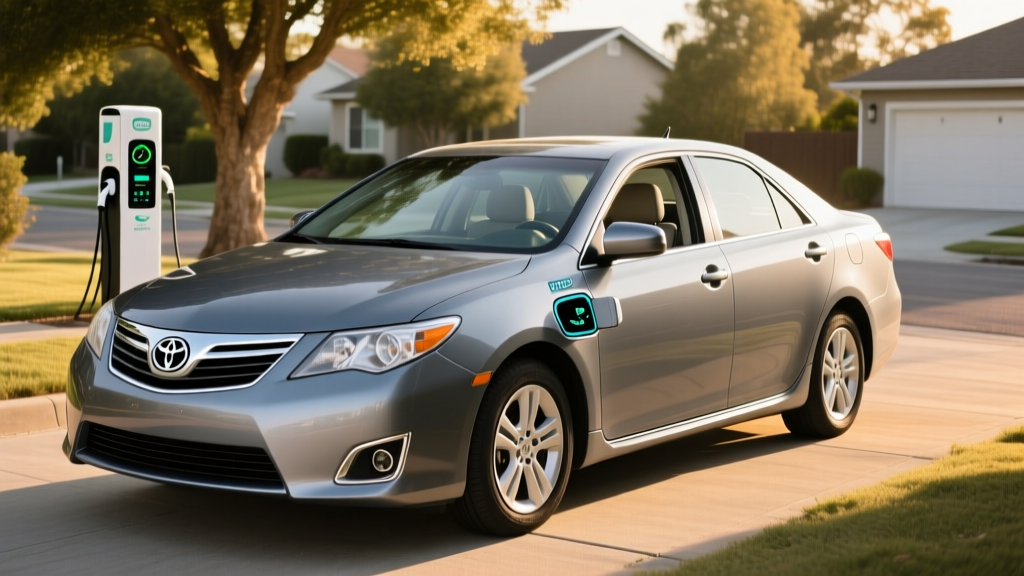
Fifteen years after it rolled off the assembly line, the 2009 Toyota Camry Hybrid remains one of the most searched used hybrids on the market — and for good reason. At a time when new EVs still carry premium price tags and charging infrastructure varies wildly by region, a well-maintained 2009 Camry Hybrid can be picked up for $4,000–$7,500 and deliver fuel economy that rivals many brand-new compact cars. It's a conventional hybrid (HEV), meaning it never needs to be plugged in, and its powertrain is one of the most thoroughly proven in Toyota's history.
This guide breaks down exactly what you get: EPA and real-world MPG figures, the specifics of its hybrid battery and replacement economics, powertrain details, and how this 15-year-old hybrid stacks up against modern PHEVs and EVs for today's buyers.
Fuel Economy: EPA Numbers vs. Real-World MPG
The 2009 Camry Hybrid was rated by the EPA using the revised testing methodology adopted for 2008+ model years. Here's the official breakdown from fueleconomy.gov:
| Metric | Value |
|---|---|
| City MPG | 33 MPG |
| Highway MPG | 34 MPG |
| Combined MPG | 34 MPG |
| Fuel Tank Capacity | 17.2 gallons |
| Total Range (est.) | ~585 miles |
Real-World MPG: What Owners Actually Report
The 2009 Camry Hybrid is one of those rare vehicles where real-world fuel economy frequently matches or exceeds the EPA sticker — particularly in city driving. The hybrid system's regenerative braking and engine shut-off at stops give it a significant urban efficiency advantage that the EPA city cycle captures reasonably well.
Owner-reported data from Fuelly and Edmunds forums clusters in the 30–36 MPG combined range for mixed driving. Drivers who do predominantly city and suburban driving at moderate speeds regularly report 35–38 MPG. Highway-heavy driving at 75+ MPH tends to drop figures to 28–31 MPG, as the aerodynamic penalty and reduced regen benefit work against the hybrid system.
Cold-weather note: Expect a 10–15% fuel economy drop in winter months (roughly 28–30 MPG combined in freezing temperatures). The gasoline engine runs more frequently to provide cabin heat and maintain battery temperature, reducing the electric-motor assist time.
Powertrain and Hybrid System Specs
The 2009 Camry Hybrid uses Toyota's second-generation Hybrid Synergy Drive, a series-parallel full-hybrid system that was extensively proven across the Prius, Highlander Hybrid, and Camry Hybrid lineups.
| Component | Specification |
|---|---|
| Gasoline Engine | 2.4L inline-4 (2AZ-FXE), Atkinson cycle |
| Engine Power | 147 hp @ 6,000 rpm / 138 lb-ft torque |
| Electric Motor | Permanent-magnet synchronous, 40 hp (30 kW) |
| Net Combined System Power | 192 hp |
| Transmission | eCVT (electronically controlled continuously variable) |
| Hybrid Battery | Nickel-Metal Hydride (NiMH), 1.6 kWh (gross) |
| Drivetrain | Front-wheel drive |
| 0–60 MPH | ~8.4 seconds |
A few technical notes worth highlighting. The 2AZ-FXE engine runs an Atkinson cycle, which sacrifices low-end torque for greater thermal efficiency — the electric motor fills in the torque gap off the line. The eCVT is not a belt-and-cone CVT like those found in Nissan or Subaru applications; it's a planetary gearset that splits power between the engine and motor with no belts or clutches to wear. This design is a major factor in the drivetrain's long-term reliability.
Hybrid Battery: Lifespan, Warranty, and Replacement Cost
The hybrid battery is the single biggest concern for any used hybrid buyer. The 2009 Camry Hybrid uses a 1.6 kWh NiMH (nickel-metal hydride) pack — far smaller than a modern PHEV or EV battery, and fundamentally different in chemistry and failure mode.
How Long Do These Batteries Actually Last?
NiMH hybrid batteries in the Camry typically last 150,000–200,000 miles before significant capacity loss triggers a check-engine light or noticeable fuel economy decline. Some units exceed 250,000 miles; others fail around 120,000 miles, particularly in hot climates (Arizona, Texas, Florida) where thermal stress accelerates cell degradation.
Unlike EV batteries, which degrade gradually and remain usable at 70–80% capacity, NiMH hybrid packs tend to fail at the individual-module level. The 2009 Camry Hybrid battery contains 34 modules. When one or two modules develop an internal short or high resistance, the entire pack's performance drops and the car's computer flags a fault code (typically P0A80 or similar).
Battery Replacement Costs in 2026
| Option | Cost Range | Warranty |
|---|---|---|
| New OEM Toyota battery | $3,500–$4,500 (parts + labor) | 3 yr / 36,000 mi |
| Remanufactured battery (e.g., Dorman, GreenBean) | $1,800–$2,800 | 1–3 yr depending on supplier |
| Individual module replacement (specialist shop) | $600–$1,200 | Varies, often 6–12 mo |
| DIY module replacement (advanced) | $200–$500 (parts only) | None |
Practical advice: At the current market value of a 2009 Camry Hybrid ($4,000–$7,500), a new OEM battery at $4,000+ is often economically irrational. Most owners opt for a remanufactured pack or individual module replacement at a hybrid specialist shop. Before buying, always pull the hybrid battery health report via an OBD-II scanner that reads Toyota hybrid-specific data (Techstream or a capable aftermarket tool like Carista).
Reliability and Long-Term Ownership Costs
The 2009 Camry Hybrid benefits from one of the strongest reliability reputations in Toyota's lineup. The 2AZ-FXE engine is under-stressed compared to its non-hybrid sibling (the Atkinson cycle produces less peak cylinder pressure), and the eCVT has no belts, chains, or friction clutches to replace. There is no starter motor, no alternator, and no conventional accessory belt — the hybrid system handles all of those functions electrically.
According to NHTSA records, the 2009 Camry Hybrid has very few safety recalls — primarily limited to the broader Toyota floor-mat/accelerator-pedal campaign that affected most Toyota models of that era. Check that the recall work was completed.
Common non-hybrid issues to watch for:
- Water pump failure (the engine water pump, not the hybrid-system inverter pump — different components): $300–$500 repair
- Power steering fluid leaks: this generation uses electric power steering, so hydraulic leaks aren't a concern, but the steering rack can develop play past 150,000 miles
- Brake actuator assembly: the regenerative braking system uses an electro-hydraulic actuator that can fail at high mileage ($800–$1,500 replacement). A firm, consistent brake pedal feel during a test drive is a good sign; a spongy or pulsating pedal is not.
Annual Cost of Ownership Estimate
Assuming 12,000 miles per year, 34 MPG combined, and $3.40/gallon regular unleaded (2026 national average), annual fuel cost runs approximately $1,200. Compare that to a 2009 non-hybrid Camry V6 (22 MPG combined) at roughly $1,855/year — a savings of around $655 annually in fuel alone. Insurance for a 15-year-old Camry Hybrid is typically minimal ($600–$900/year depending on state and coverage).
Does the 2009 Camry Hybrid Qualify for Any Tax Credits?
No. The 2009 Camry Hybrid is not eligible for any current federal tax credit. Here's why:
- The IRS §30D Clean Vehicle Credit applies only to new plug-in electric vehicles (BEVs and PHEVs) meeting battery sourcing, MSRP, and buyer income requirements. Conventional hybrids (HEVs) have never qualified.
- The original Alternative Motor Vehicle Credit that provided up to $2,600 for the Camry Hybrid when new was subject to a manufacturer cap (Toyota hit 60,000 qualifying units in 2007), meaning the credit was fully phased out well before the 2009 model year.
- The Used Clean Vehicle Credit (§25E, up to $4,000) applies only to used BEVs and PHEVs — not conventional hybrids.
- Some state-level programs offer rebates for hybrid purchases, but these are typically limited to new vehicles. Check your state's energy office for current programs.
The value proposition of the 2009 Camry Hybrid is entirely in its low purchase price and strong fuel economy — not in tax incentives.
2009 Camry Hybrid vs. Modern Alternatives: HEV, PHEV, or EV?
If you're cross-shopping the 2009 Camry Hybrid, you're likely also considering a newer used hybrid, a modern PHEV, or a budget EV. Here's a decision framework:
Choose the 2009 Camry Hybrid if:
- Your budget is under $8,000
- You have no access to plug-in charging (apartment, street parking)
- You drive 10,000–15,000 miles/year in mixed city/highway
- You want minimal maintenance and proven reliability
- You need a midsize sedan with a large trunk (15.1 cu ft)
Choose a Modern PHEV (e.g., Prius Prime) if:
- You can charge at home (Level 1 outlet is sufficient)
- Your daily commute is under 40 miles round-trip
- You want to drive mostly on electricity but need gas for road trips
- You qualify for the §30D tax credit ($3,750–$7,500)
- Budget allows $28,000+ after incentives
Choose a Used EV (e.g., Bolt, Leaf) if:
- You have reliable home Level 2 charging
- Your daily driving is under 150 miles
- You want near-zero maintenance (no oil, filters, spark plugs)
- You can access the §25E used EV credit (up to $4,000)
- Budget allows $10,000–$20,000
Buying Checklist: What to Inspect Before You Buy
If you're evaluating a specific 2009 Camry Hybrid, here's a prioritized inspection list:
- Hybrid battery health report — Use a Toyota-compatible OBD-II scanner to read individual module voltages. All 34 modules should be within 0.2V of each other. A spread greater than 0.3V indicates weak modules and impending failure.
- Brake actuator test — With the car in Park, press the brake pedal firmly and hold for 30 seconds. The pedal should remain firm and consistent. If it slowly sinks or pulses, the actuator may be failing.
- Inverter coolant level — Check the pink Toyota Super Long Life Coolant in the inverter reservoir (separate from the engine coolant reservoir). Low or discolored coolant suggests neglected maintenance.
- 12V auxiliary battery age — The Camry Hybrid uses a standard 12V battery in the trunk to power electronics and boot the hybrid system. These typically last 4–5 years. A dead 12V battery will prevent the car from starting even if the hybrid battery is healthy.
- Service records — Look for regular oil changes (5W-30, every 5,000 miles), transmission fluid service (Toyota WS ATF, every 60,000 miles), and any hybrid-related work.
- Recall completion — Verify via NHTSA's VIN lookup tool that all open recalls have been addressed.
Frequently Asked Questions
How many MPG does the 2009 Camry Hybrid get?
The EPA rates the 2009 Camry Hybrid at 33 city / 34 highway / 34 combined MPG. Real-world owners typically report 30–36 MPG combined, with city-heavy drivers often seeing 35–38 MPG and highway-heavy drivers seeing 28–31 MPG.
Is the 2009 Camry Hybrid a plug-in?
No. It is a conventional hybrid (HEV). It generates all its own electricity through regenerative braking and the gasoline engine. There is no plug, no charging port, and no electric-only driving mode. You simply put gas in it and drive.
How much does it cost to replace the hybrid battery?
A new OEM battery costs $3,500–$4,500 installed. Remanufactured packs run $1,800–$2,800. Individual module replacement at a hybrid specialist shop costs $600–$1,200. Given the car's current market value ($4,000–$7,500), most owners choose remanufactured or module-level repair.
Is the 2009 Camry Hybrid reliable?
Yes. The hybrid powertrain (2AZ-FXE engine + eCVT + NiMH battery) is among the most proven in Toyota's history. The eCVT has no wearable friction components. Primary failure points at high mileage are the hybrid battery (150,000–200,000 mi typical life), brake actuator ($800–$1,500), and water pump ($300–$500). With proper maintenance, these cars regularly exceed 250,000 miles.
Does it qualify for any tax credit in 2026?
No. The 2009 Camry Hybrid is a conventional hybrid and has never qualified for the current §30D Clean Vehicle Credit (which requires a plug-in EV or PHEV). The original hybrid tax credit that applied to early Camry Hybrids was fully phased out for Toyota by mid-2007. No federal or typical state incentive applies to this vehicle today.
What's the difference between this and a newer Camry Hybrid?
The current-generation Camry Hybrid (2025+) uses a lithium-ion battery, a 2.5L Dynamic Force engine, and achieves 52 MPG combined — an 18 MPG improvement over the 2009 model. However, a new Camry Hybrid starts around $30,000, roughly 4–6× the cost of a used 2009. The efficiency gap narrows in practical terms: at 12,000 miles/year, the 2009 costs about $1,200/year in fuel vs. ~$785/year for the newest model — a difference of roughly $415 annually.