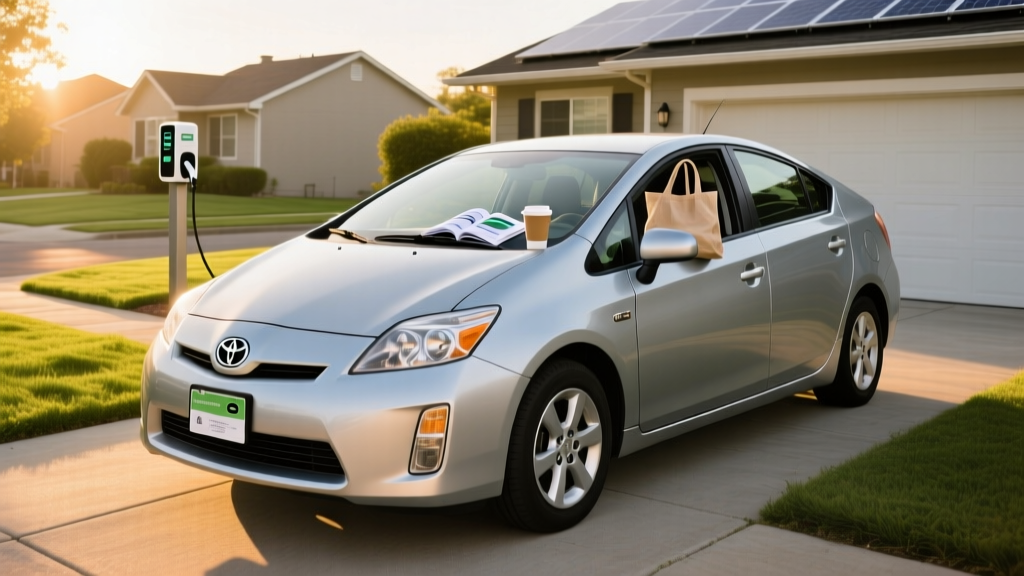
The 2008 Toyota Prius remains one of the most recognizable hybrid vehicles ever sold in the United States. Nearly two decades after it rolled off the assembly line, used examples still populate commuter lanes and ride-share fleets — a testament to the durability of Toyota's second-generation Hybrid Synergy Drive. If you're researching the 2008 Toyota Prius hybrid MPG as a prospective used-car buyer or current owner looking to benchmark your fuel economy, this guide covers the EPA sticker numbers, what you'll actually see in real-world driving, and the long-term ownership costs that matter most in 2026.
2008 Toyota Prius Hybrid MPG: The Official EPA Numbers
The 2008 Toyota Prius is a conventional hybrid electric vehicle (HEV). It does not plug in. The gasoline engine and regenerative braking system charge a small nickel-metal hydride (NiMH) traction battery, which in turn powers an electric motor that assists the engine and enables brief electric-only driving at low speeds.
| Metric | Value |
|---|---|
| City MPG | 48 |
| Highway MPG | 45 |
| Combined MPG | 46 |
| Fuel Tank Capacity | 11.9 gallons |
| Estimated Total Range | ~547 miles |
| Annual Fuel Cost (15,000 mi/yr) | ~$1,050 (at $3.20/gal) |
Source: fueleconomy.gov
Those EPA figures were notable in 2008 and remain competitive today. For context, the EPA revised its testing methodology for the 2008 model year, producing lower — and more realistic — numbers than the pre-2008 estimates. The 2007 Prius carried a 60/51 sticker; the mechanically identical 2008 model was re-rated to 48/45 under the new protocols.
Real-World MPG: What Owners Actually Report
EPA estimates are a starting point, not a guarantee. The 2008 Prius is one of the vehicles where real-world results frequently diverge from the sticker — sometimes favorably, sometimes not.
- City / stop-and-go driving: 44–52 MPG. The Prius thrives in traffic. Regenerative braking recovers energy, and the engine shuts off at stops. Many owners report exceeding the 48 MPG city sticker on suburban commutes.
- Highway (65–75 mph): 38–44 MPG. Aerodynamic drag and sustained engine load reduce efficiency at higher speeds. Expect the low 40s on a flat interstate at 70 mph, and high 30s if you push 80 mph or climb grades.
- Cold weather (below 35°F): 36–42 MPG combined. The engine runs longer to heat the cabin and bring the catalytic converter to operating temperature. Short-trip winter driving can push this into the low 30s.
- Mixed daily driving (year-round average): Most owners on Fuelly and Prius forums report lifetime averages between 43 and 48 MPG.
The Prius rewards hypermiling techniques — gentle acceleration, coasting to stops, and using the "B" gear mode for engine-braking on descents. But even driven normally, it consistently delivers mid-40s efficiency in temperate conditions.
Powertrain Specs: What Powers the 2008 Prius
| Component | Specification |
|---|---|
| Gasoline Engine | 1.5L inline-4 (1NZ-FXE), Atkinson cycle |
| Engine Horsepower | 76 HP @ 5,000 RPM |
| Engine Torque | 82 lb-ft @ 4,200 RPM |
| Electric Motor (MG2) | 67 HP / 295 lb-ft |
| Combined Net Horsepower | 110 HP |
| Transmission | Continuously Variable (eCVT — planetary gearset) |
| Traction Battery | 1.3 kWh (NiMH), 201.6V nominal |
| Drivetrain | Front-wheel drive |
| 0–60 mph | ~10.0 seconds |
The 1.3 kWh battery is tiny by modern EV standards — roughly 1/60th the capacity of a contemporary electric vehicle. But it's not designed for range; it's a buffer that stores regenerative braking energy and provides torque-fill for the electric motor. The Prius can travel roughly 0.5 to 1 mile on electric power alone at speeds below 25 mph, primarily in parking lots or creeping traffic.
HEV vs PHEV vs EV: Where Does the 2008 Prius Fit?
Understanding the 2008 Prius requires distinguishing it from the plug-in hybrids and full EVs that have proliferated since its production run. Toyota eventually released the Prius Plug-in Hybrid (later renamed Prius Prime), but the 2008 model year was strictly a conventional HEV.
| Feature | 2008 Prius (HEV) | 2026 Prius Prime (PHEV) | 2026 EV (e.g., Tesla Model 3) |
|---|---|---|---|
| Plugs In? | No | Yes (Level 1/2) | Yes (Level 1/2/DC) |
| Electric-Only Range | ~1 mile (low speed) | ~44 miles | ~300+ miles |
| Gasoline Engine | Yes (primary) | Yes (backup) | No |
| Combined MPG / MPGe | 46 MPG | 52 MPG + 127 MPGe | 132 MPGe |
| Home Charging Needed | No | Recommended | Required |
| Federal Tax Credit (new) | None | Up to $7,500 (§30D) | Up to $7,500 (§30D) |
| Used Price Range (2026) | $3,500–$7,000 | N/A (new model) | $18,000–$35,000+ |
The 2008 Prius occupies a specific niche: maximum fuel savings with zero lifestyle change. You fuel it at any gas station, never think about charging, and still cut your fuel bill roughly in half compared to a conventional 25 MPG sedan.
Hybrid Battery Lifespan, Warranty, and Replacement Cost
When new, the 2008 Prius carried Toyota's hybrid battery warranty of 8 years / 100,000 miles (extended to 10 years / 150,000 miles in California Air Resources Board states). By 2026, all original warranties have expired.
However, real-world data shows the Gen 2 Prius NiMH battery is remarkably durable:
- Typical lifespan: 150,000–250,000 miles before significant degradation
- Failure mode: Gradual capacity loss reducing MPG by 2–5 MPG, or individual cell failure triggering a check-engine light (codes P0A80, P0A7F)
- Replacement cost (OEM new): $2,000–$2,800 installed at a Toyota dealer
- Replacement cost (refurbished/reconditioned): $800–$1,500 installed at an independent hybrid shop
- Individual cell module replacement: $200–$500 (if only 1–2 modules are weak)
The Gen 2 Prius (2004–2009) is one of the best-documented hybrid vehicles in history. Independent shops across the country specialize in Prius battery service, and the aftermarket ecosystem keeps costs reasonable. Many owners report original batteries lasting 200,000+ miles with minimal capacity loss.
Reliability and Common Issues at Higher Mileage
Toyota's 1NZ-FXE engine and eCVT planetary gearset are among the most reliable powertrain components ever mass-produced. There are no belts to replace, no traditional transmission clutches to wear out, and the engine operates under reduced stress thanks to the Atkinson cycle and electric-motor assist.
That said, a 2008 Prius in 2026 is at least 18 years old. High-mileage examples commonly need attention to:
- Inverter coolant pump: Known failure point; replacement runs $300–$600. Critical — failure can damage the inverter ($2,000+).
- Brake actuator assembly: The regenerative braking system's accumulator can fail around 120,000–180,000 miles. Parts: $800–$1,200.
- 12V auxiliary battery: Located in the rear cargo area. Standard replacement every 3–5 years, ~$180–$250 for the correct AGM-type group 51 battery.
- Catalytic converter theft: The Prius is a high-value target due to precious-metal content. A catalytic converter shield ($200–$350 installed) is strongly recommended.
- Headlight and combination meter issues: Some owners report dimming HID headlights or combination-meter display failures on earlier Gen 2 models (less common on 2008+).
For reliability data, the NHTSA recall database lists several campaigns for the 2008 Prius, including steering intermediate shaft and hybrid brake system inspections. Verify any used example has had recall work completed.
Does the 2008 Toyota Prius Qualify for Any Tax Credit?
No. The 2008 Toyota Prius does not qualify for the federal §30D new clean vehicle credit — that credit applies only to new vehicle purchases and has specific MSRP, buyer income, and battery-sourcing requirements. Toyota's hybrid credit allocation was also exhausted years ago under the previous credit structure.
For used EV and PHEV buyers, the §25E used clean vehicle credit (up to $4,000 or 30% of sale price, whichever is less) exists, but the 2008 Prius as a conventional HEV does not qualify. The §25E credit applies only to used BEVs and PHEVs with a minimum 4 kWh battery capacity that meet model-year and price requirements.
The 2008 Prius's value proposition is purely operational: low fuel costs, low maintenance costs, and a low purchase price on the used market. For current federal incentive details, consult the IRS clean vehicle credits page.
Who Should Buy a 2008 Prius in 2026?
- You want 45+ MPG without plugging in or changing your fueling habits
- Your budget is under $7,000 and you need dependable daily transportation
- You do mostly city and suburban driving where hybrid efficiency peaks
- You want a vehicle with massive aftermarket support and documented repair procedures
- You're a rideshare driver seeking low per-mile operating costs
- You want modern safety tech (no automatic emergency braking, lane-keep, or backup camera on most trims)
- You primarily drive long highway stretches where a modern diesel or PHEV may match its efficiency
- You need significant cargo space or towing capacity
- You want electric-only commuting capability (consider a used Prius Prime or Chevy Volt instead)
- You're uncomfortable with a vehicle that's 18+ years old and likely has 150,000+ miles
2008 Toyota Prius Hybrid MPG: Frequently Asked Questions
How many MPG does the 2008 Toyota Prius get?
The EPA rates the 2008 Prius at 48 city / 45 highway / 46 combined MPG. Real-world averages for most owners fall between 43 and 48 MPG combined, with city driving often exceeding the sticker and highway driving falling slightly below it.
Does the 2008 Prius need to be plugged in?
No. The 2008 Prius is a conventional hybrid (HEV). Its small NiMH battery charges exclusively through regenerative braking and the gasoline engine. There is no plug, no charging port, and no electric-only range beyond about one mile at low speed.
How much does a Prius hybrid battery replacement cost in 2026?
A new OEM battery from Toyota costs approximately $2,000–$2,800 installed. Refurbished batteries from independent hybrid specialists run $800–$1,500 installed. Individual cell module replacement can cost as little as $200–$500 if the pack is otherwise healthy.
Is the 2008 Prius reliable at high mileage?
Yes, with proper maintenance. The powertrain is exceptionally durable, with many examples exceeding 250,000 miles. The main concerns at high mileage are the hybrid battery, inverter coolant pump, and brake actuator — all of which have well-documented repair procedures and reasonable aftermarket parts pricing.
How does the 2008 Prius compare to a modern hybrid like the 2026 Prius?
The 2026 Toyota Prius achieves up to 57 MPG combined (LE FWD trim) with a more powerful 196 HP powertrain, modern safety features (Toyota Safety Sense 3.0), and available all-wheel drive. However, a used 2008 Prius at $4,000–$6,000 delivers roughly 80% of the fuel savings at a fraction of the purchase price, making it a strong value play for budget-conscious commuters.