The 2008 Toyota Highlander Hybrid: A Fuel-Economy Benchmark for Its Era
When the second-generation Toyota Highlander Hybrid debuted for the 2008 model year, it was one of the few three-row SUVs on the market that could return mid-20s fuel economy without requiring a plug. More than a decade and a half later, used-car shoppers still search for the 08 Toyota Highlander Hybrid MPG figure to see if this early hybrid SUV holds up as a budget-friendly family hauler in 2026. The short answer: it does, though with important caveats around battery age, real-world efficiency, and how it stacks up against modern hybrids, PHEVs, and full EVs.
This guide covers the EPA-rated and real-world fuel economy, the hybrid powertrain, long-term battery reliability, ownership costs, and whether a 2008 Highlander Hybrid still earns a spot in your driveway — or whether a newer electrified vehicle makes more financial sense.
EPA MPG Ratings: City, Highway, and Combined
The 2008 Toyota Highlander Hybrid carries EPA ratings that were impressive for a 4,500-pound, three-row SUV when new. Here is the official breakdown from fueleconomy.gov:
| Metric | Value |
|---|---|
| City MPG | 27 |
| Highway MPG | 25 |
| Combined MPG | 26 |
| Annual Fuel Cost (est.) | ~$2,150 (based on 15,000 mi/yr at 2026 avg. fuel prices) |
| Fuel Type | Regular unleaded (87 octane) |
One characteristic of Toyota's Hybrid Synergy Drive system is that city MPG exceeds highway MPG. The electric motor does its heaviest work at low speeds and during stop-and-go driving, where regenerative braking recaptures energy and the gasoline engine shuts off at idle. On the highway, the 3.3-liter V6 carries more of the load, which is why the highway number is slightly lower.
Owner-reported data on forums and fuel-tracking sites consistently shows the 2008 Highlander Hybrid averaging 23–26 MPG combined in real-world driving. Drivers who do mostly city and suburban commuting often report 27–28 MPG, while highway-heavy road trips at 75+ mph can drop to 22–23 MPG. Cold-weather operation (below 30°F) reduces fuel economy by roughly 2–4 MPG due to longer engine warm-up cycles and increased drivetrain friction. Expect roughly 425–475 miles of total range from the 19.2-gallon fuel tank.
Hybrid Powertrain: How It Works Without a Plug
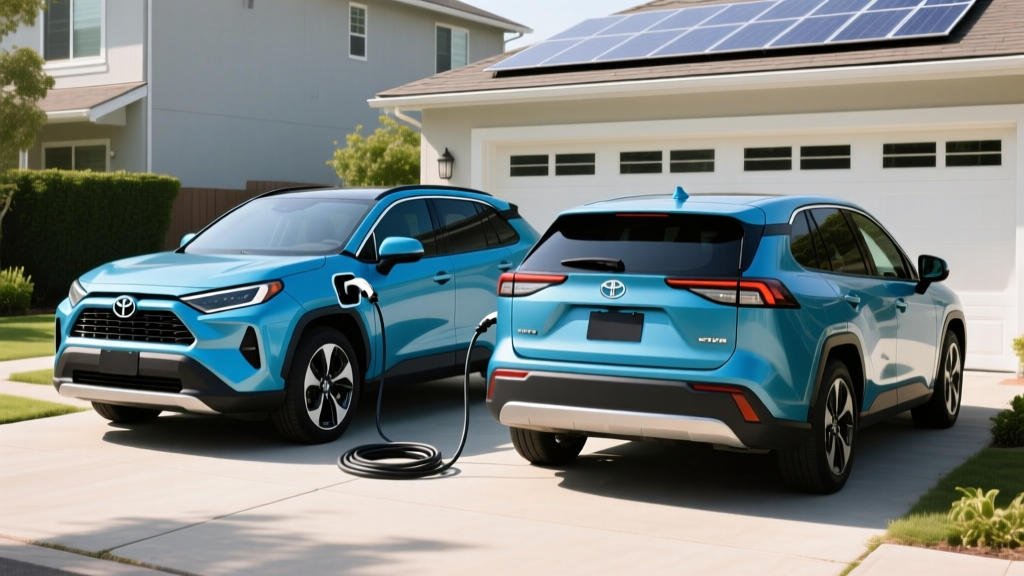
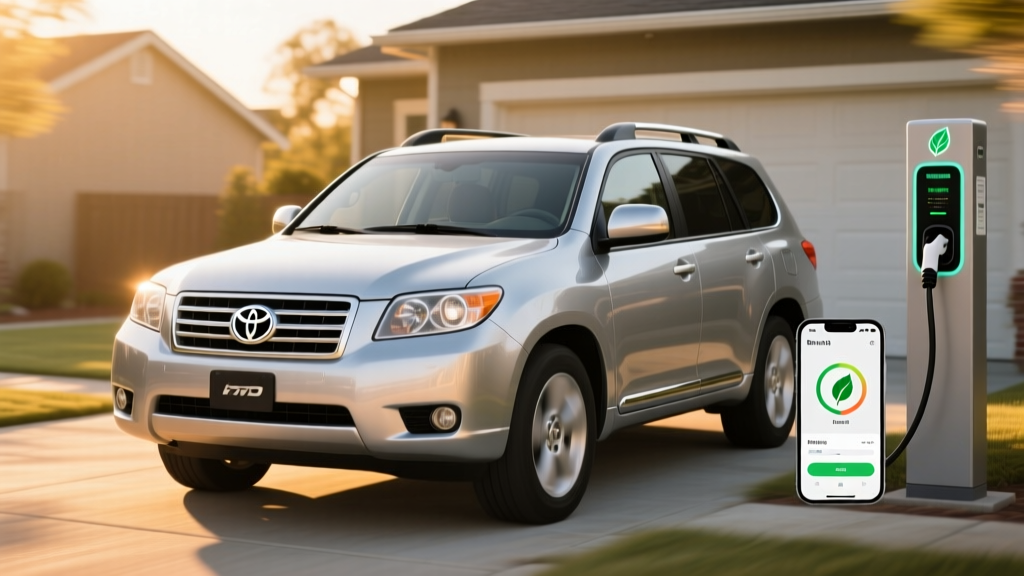
A common point of confusion for shoppers new to electrified vehicles is the difference between a conventional hybrid (HEV) and a plug-in hybrid (PHEV). The 2008 Highlander Hybrid is a conventional hybrid (HEV). It does not plug in, has no electric-only driving range to speak of, and charges its small battery entirely through regenerative braking and the gasoline engine.
| Specification | Detail |
|---|---|
| Gasoline Engine | 3.3L V6 (3MZ-FE), 208 hp @ 5,600 rpm |
| Electric Motor | Permanent-magnet synchronous, 120 kW (161 hp) |
| Net Combined System Output | 270 hp |
| Transmission | Electronically controlled CVT (eCVT) |
| Drivetrain | AWD (e-four: rear axle driven by separate electric motor) |
| Hybrid Battery | Nickel-metal hydride (NiMH), ~6.5 kWh total / ~1.5 kWh usable |
| 0–60 mph | ~7.8 seconds |
| Curb Weight | ~4,500 lbs |
| Towing Capacity | 3,500 lbs (with towing prep package) |
The eCVT is not a belt-and-pulley CVT like those found in some competitors. Toyota's planetary gearset design is widely regarded as one of the most durable transmissions ever put into a passenger vehicle — there are no belts to slip and no clutch packs to wear. This is a key reason the Highlander Hybrid has aged well mechanically.
The "e-four" AWD system is also notable: rather than a mechanical driveshaft to the rear wheels, a separate rear electric motor provides rear-wheel traction when the system detects slip. This eliminates the weight and friction losses of a traditional AWD system, contributing to the strong fuel economy figures.
- HEV (this vehicle): No plug. Battery charges via regen and engine. Electric motor assists at low speeds. Cannot drive on electricity alone beyond ~1 mile at very low speed. MPG is constant regardless of charging habits.
- PHEV (e.g., 2026 Toyota RAV4 Prime): Plugs in. Larger battery (typically 15–20 kWh) provides 30–45 miles of electric-only driving before the gas engine takes over. Requires access to charging to realize full benefit.
- BEV (e.g., 2026 Hyundai Ioniq 5): All-electric. No gas engine. 250–350+ miles of EPA range. Requires home or public charging infrastructure.
Battery Lifespan, Warranty, and Replacement Cost
For any used hybrid — especially one approaching 18 years old — battery condition is the single biggest ownership risk. Here is what you need to know about the 2008 Highlander Hybrid's NiMH battery pack.
Original warranty: Toyota warranted the hybrid battery for 8 years / 100,000 miles (10 years / 150,000 miles in California Air Resources Board states). That coverage has expired for all 2008 models.
Expected lifespan: Toyota's NiMH batteries in this generation typically last 150,000–200,000 miles before significant capacity loss. Many original batteries have survived 15+ years, but age-related degradation is now the primary concern rather than mileage alone. Heat exposure (common in Southern states) accelerates NiMH degradation.
Replacement cost (2026):
- Remanufactured battery from a specialist: $2,000–$3,500 (installed)
- New OEM Toyota battery: $3,500–$5,000+ (installed, if still available for this model year)
- Individual module replacement (for single-cell failures): $500–$1,200 at a hybrid specialist
A critical ownership tip: before purchasing a used 2008 Highlander Hybrid, have the hybrid battery tested with a scan tool that reads individual module voltages and internal resistance. A healthy pack will show module voltages within 0.2V of each other. Several independent hybrid shops nationwide offer this service for $50–$100, and it is the best $100 you can spend before buying a used hybrid.
Warning signs of a failing battery include a noticeable drop in fuel economy (below 22 MPG combined), the "Check Hybrid System" dashboard warning, and the engine running more frequently than expected at stoplights or low speeds.
Ownership Costs in 2026: What Does It Actually Cost to Drive?
The appeal of the 2008 Highlander Hybrid in 2026 is primarily financial: low purchase price on the used market and fuel savings versus its non-hybrid counterpart. Here is a realistic breakdown.
| Cost Category | Highlander Hybrid (26 MPG) | Highlander Gas V6 AWD (19 MPG) |
|---|---|---|
| Fuel (15,000 mi/yr, $3.40/gal avg) | ~$1,960 | ~$2,685 |
| Annual Fuel Savings | ~$725/year in the hybrid's favor | |
| Insurance (avg.) | ~$1,200–$1,600 | ~$1,200–$1,600 |
| Maintenance | ~$400–$700/yr (age-dependent) | ~$400–$700/yr |
| Hybrid Battery Reserve Fund | ~$200/yr (saving for replacement) | N/A |
The hybrid saves roughly $725 per year in fuel over the gas V6 model. Over a 5-year ownership period, that is approximately $3,625 in fuel savings — enough to offset a potential battery replacement if one becomes necessary. However, this calculation assumes a relatively low used purchase price ($5,000–$9,000 depending on mileage and condition in early 2026 used-car markets).
Tax credits: The 2008 Highlander Hybrid does not qualify for any current federal tax credit. The IRS §30D new clean vehicle credit applies only to new vehicle purchases, and the §25E used clean vehicle credit applies only to used BEVs and PHEVs (not conventional HEVs). Some states offer registration or inspection fee reductions for hybrids, but these vary by jurisdiction — check your state's DMV or energy office for details.
Reliability and Common Issues Beyond the Battery
The 2008 Highlander Hybrid benefits from Toyota's reputation for durability, but at 18 years old, several age-related items deserve attention:
- Inverter coolant pump: The hybrid system has its own electric coolant pump. These can fail around 120,000–160,000 miles. Replacement runs $300–$600. Failure triggers a hybrid system warning and should be addressed immediately to avoid inverter damage (a $2,000+ repair).
- Brake actuator: The regenerative braking system uses an electro-hydraulic brake actuator that can develop issues at higher mileage. Symptoms include a firm pedal or unusual braking feel. Replacement is $800–$1,500.
- Rack-and-pinion steering: A known issue on 2008–2013 Highlanders. Listen for clunking when turning at low speed. Toyota issued a customer support program for some model years, but coverage has largely expired.
- Standard age-related items: Suspension bushings, wheel bearings, AC compressor, and timing belt (the 3MZ-FE uses a timing belt, not a chain — budget $600–$900 for replacement every 90,000–100,000 miles if not documented).
On the positive side, the eCVT transmission and electric motors are essentially maintenance-free. There are no spark plugs to change on a regular schedule beyond the normal 100,000-mile interval, and brake pads last significantly longer than on the gas model thanks to regenerative braking — many owners report 80,000+ miles on original front pads.
How the 2008 Highlander Hybrid Compares to Modern Alternatives
The automotive landscape has shifted dramatically since 2008. Here is how this early hybrid stacks up against current electrified options across key metrics that matter to family SUV buyers.
| Vehicle | Type | Combined MPG/MPGe | Used/New Price (2026) | Electric-Only Range |
|---|---|---|---|---|
| 2008 Toyota Highlander Hybrid | HEV | 26 MPG | $5,000–$9,000 (used) | N/A |
| 2026 Toyota Highlander Hybrid | HEV | 35 MPG | $42,000–$53,000 (new) | N/A |
| 2026 Toyota RAV4 Prime | PHEV | 94 MPGe / 38 MPG (gas) | $46,000–$52,000 (new) | 42 miles |
| 2026 Hyundai Santa Fe Hybrid | HEV | 34 MPG | $39,000–$47,000 (new) | N/A |
| 2026 Kia EV9 | BEV | 89 MPGe | $56,000–$72,000 (new) | 270–304 mi (EPA) |
The current-generation Toyota Highlander Hybrid achieves 35 MPG combined — a 35% improvement over the 2008 model — thanks to a more efficient 2.5L four-cylinder hybrid system, improved aerodynamics, and a lighter lithium-ion battery pack. If budget allows, a newer hybrid delivers meaningfully better fuel economy along with modern safety features (automatic emergency braking, lane-keeping assist, adaptive cruise control) that the 2008 model lacks entirely.
For buyers with home charging access, a PHEV like the RAV4 Prime offers the best of both worlds: 42 miles of electric-only commuting (covering most daily trips without burning fuel) plus a gas engine for road trips. The tradeoff is a significantly higher purchase price, though the IRS §30D tax credit may apply to qualifying new PHEVs (subject to MSRP caps, buyer income limits, and battery sourcing requirements — consult a tax professional).
Who Should Buy the 2008 Highlander Hybrid in 2026?
Choose It If:
- You need a three-row SUV on a tight budget (under $10,000)
- Your driving is mostly city/suburban where the hybrid system shines
- You want AWD without the fuel penalty of a traditional AWD SUV
- You can verify the hybrid battery health before purchase
- You don't have access to home or workplace charging (ruling out PHEVs and BEVs)
- You value Toyota's reliability track record and parts availability
Skip It If:
- You need modern active safety features (AEB, blind-spot monitoring, lane-keep)
- The hybrid battery shows signs of degradation and you can't budget $2,000–$4,000 for replacement
- You primarily drive highway miles (where the hybrid advantage shrinks)
- You want to reduce tailpipe emissions as much as possible (a PHEV or BEV does far more)
- You can stretch your budget to a 2017+ Highlander Hybrid with better MPG and safety tech
- You tow near the 3,500-lb limit frequently (towing MPG drops to ~18–20)
Frequently Asked Questions
How many MPG does the 2008 Toyota Highlander Hybrid actually get?
The EPA rates it at 27 city / 25 highway / 26 combined. Real-world owners typically report 23–26 MPG combined, with city-heavy drivers seeing up to 28 MPG and highway-heavy driving dropping to 22–23 MPG. Cold weather and towing reduce these numbers further.
Does the 2008 Highlander Hybrid need to be plugged in?
No. It is a conventional hybrid (HEV), not a plug-in hybrid (PHEV). The battery charges entirely through regenerative braking and the gasoline engine. You simply fill it with regular 87-octane gasoline like any other car.
How long does the hybrid battery last and what does replacement cost?
Toyota's NiMH battery packs in this generation typically last 150,000–200,000 miles or 15+ years. Given the vehicle's age, many original batteries are near or past their expected lifespan. A remanufactured replacement costs $2,000–$3,500 installed; a new OEM battery can exceed $4,000. Individual module repair is possible for $500–$1,200 if only one or two cells have failed.
Does the 2008 Highlander Hybrid qualify for any tax credit?
No. Federal tax credits (§30D for new vehicles, §25E for used clean vehicles) do not apply to the 2008 Highlander Hybrid. The §30D credit is for qualifying new vehicles only, and the §25E used credit applies to used BEVs and PHEVs, not conventional hybrids. The original hybrid tax credit that existed when this vehicle was new (up to $2,200) expired long ago and was subject to Toyota's phase-out cap.
Is the 2008 Highlander Hybrid reliable compared to the gas version?
Mechanically, the hybrid system (eCVT, electric motors) is arguably more reliable than the conventional automatic transmission in the gas V6 model. The main risk is hybrid battery age. Budget $200–$300/year as a reserve for eventual battery replacement and you will likely find the total cost of ownership competitive with or lower than the gas version, thanks to fuel savings and longer brake pad life.
How does the 2008 model compare to the current Highlander Hybrid?
The 2026 Highlander Hybrid achieves 35 MPG combined (vs. 26 MPG), uses a lighter lithium-ion battery, offers modern safety technology (Toyota Safety Sense 2.5+), and provides a more refined driving experience. However, it starts around $42,000 new — roughly 5–8x the cost of a used 2008 model. If fuel savings are the primary motivation, the 2008 still delivers meaningful savings over a non-hybrid SUV of similar vintage at a fraction of the purchase price.