Quick Verdict: A Pioneer Hybrid SUV in the Used Market
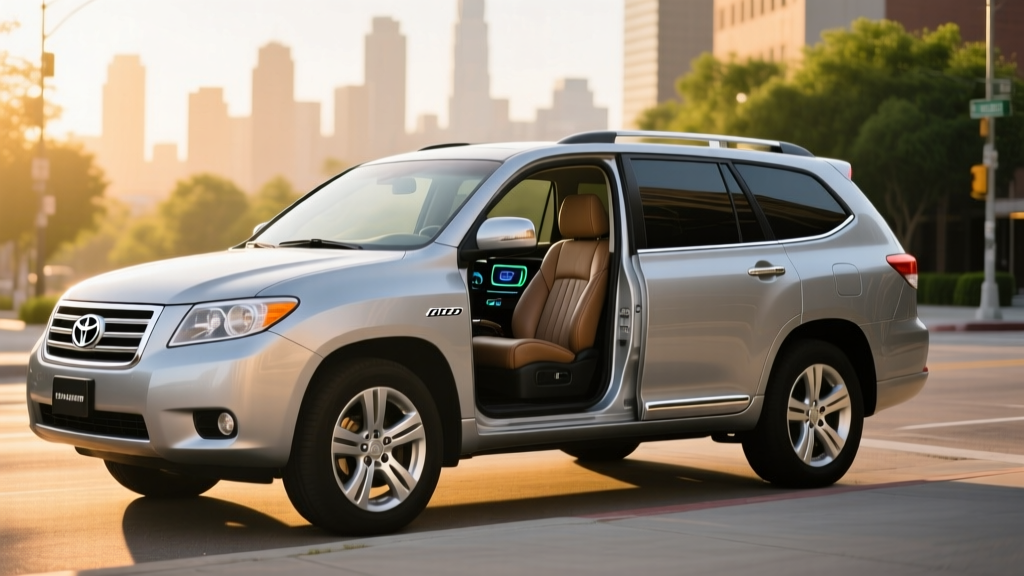
The 2008 Toyota Highlander Hybrid Limited was one of the first mainstream three-row SUVs to pair a V6 engine with Toyota's Hybrid Synergy Drive. Nearly two decades later, it remains a fixture on the used market, often changing hands between $5,000 and $9,000 depending on mileage and condition. For buyers who want a no-plug hybrid with Toyota's legendary durability and don't mind a vehicle that predates modern infotainment, it can still serve as a practical family hauler — provided the hybrid battery is healthy or has been replaced.
This guide breaks down everything a 2026 used-car shopper needs to know: real-world fuel economy, the hybrid battery's remaining lifespan, what replacement costs, and how this older HEV compares to today's PHEVs and full EVs.
HEV vs PHEV: Where the 2008 Highlander Hybrid Fits
Conventional Hybrid (HEV): The 2008 Highlander Hybrid is a self-charging hybrid. It has a small nickel-metal hydride (NiMH) battery pack — roughly 2.4 kWh total capacity — that charges through regenerative braking and the gasoline engine. You never plug it in. The electric motor assists the V6 during acceleration and can propel the vehicle at very low speeds (under ~25 mph) for short distances, but there is no meaningful electric-only range.
Plug-In Hybrid (PHEV): Modern PHEVs like the current Toyota RAV4 Prime or Chrysler Pacifica Hybrid carry much larger battery packs (18–22 kWh) that you charge via a plug, delivering 30–42 miles of electric-only driving before the gas engine engages. The 2008 Highlander Hybrid has none of this capability.
Full EV (BEV): A battery-electric vehicle has no gasoline engine at all. If you're considering the 2008 Highlander Hybrid for fuel savings but have home charging access, a modern BEV or PHEV will dramatically outperform it on operating costs.
Fuel Economy: EPA Ratings and Real-World MPG
The EPA rated the 2008 Toyota Highlander Hybrid at 27 MPG city / 25 MPG highway / 26 MPG combined. These figures apply to both the base and Limited trims, which share the same powertrain. For a 4,500-pound, three-row, all-wheel-drive SUV from 2008, that was genuinely impressive — the non-hybrid V6 Highlander of the same year managed just 19 MPG combined.
| Metric | 2008 Highlander Hybrid | 2008 Highlander V6 (Non-Hybrid) | 2026 Toyota Grand Highlander Hybrid (AWD) |
|---|---|---|---|
| City MPG | 27 | 17 | 27 |
| Highway MPG | 25 | 22 | 28 |
| Combined MPG | 26 | 19 | 27 |
Source: fueleconomy.gov
Real-World MPG: What Owners Actually Report
Like most Toyota hybrids, the 2008 Highlander Hybrid tends to perform close to its EPA estimates in mixed driving. Owners on Fuelly and similar tracking platforms report averages between 23 and 28 MPG combined, with city-heavy commuters occasionally seeing 28–30 MPG thanks to the regenerative braking system's effectiveness at lower speeds. Highway-only driving at 75+ mph typically drops to 22–24 MPG, as the electric motor provides minimal benefit at sustained high speeds and the older four-speed automatic transmission lacks the overdrive ratios of modern hybrids.
Cold weather and short trips hit fuel economy harder in this generation than in newer Toyotas. The system lacks the electric water pump and exhaust-heat recirculation of later Hybrid Synergy Drive iterations, so the V6 runs more often to warm the cabin in winter. Expect 20–22 MPG in sub-freezing, short-trip city driving.
Powertrain and Performance Specs
| Specification | 2008 Toyota Highlander Hybrid Limited |
|---|---|
| Engine | 3.3L V6 (3MZ-FE) |
| Engine Output | 208 hp @ 5,600 rpm |
| Electric Motor (front) | 123 kW (165 hp) |
| Electric Motor (rear) | 50 kW (67 hp) |
| Net System Horsepower | 270 hp |
| Transmission | eCVT (electronically controlled CVT) |
| Drivetrain | AWD (eFour — rear motor drives rear wheels) |
| 0–60 mph | ~7.8 seconds |
| Towing Capacity | 3,500 lbs |
| Curb Weight | ~4,500 lbs |
| Battery Type | NiMH (nickel-metal hydride) |
| Battery Capacity | ~2.4 kWh (total) |
The 2008 Highlander Hybrid's eFour AWD system was ahead of its time. Instead of a mechanical driveshaft to the rear axle, the rear wheels are driven by a dedicated 50 kW electric motor. This provides instant torque to the rear wheels when slip is detected, though it's designed for light traction aid rather than off-road capability. The eCVT transmission is the same planetary gearset design Toyota has used since the original Prius — there are no belts or pulleys, making it extremely durable.
Hybrid Battery Lifespan, Reliability, and Replacement Cost
Original warranty: Toyota covered the hybrid battery for 8 years / 100,000 miles (10 years / 150,000 miles in CARB states like California, New York, and Massachusetts). All original factory coverage has expired on every 2008 model.
Expected battery lifespan: The NiMH pack in this generation typically lasts 120,000–180,000 miles before significant degradation triggers a hybrid system warning. Many examples exceed 200,000 miles, but battery failure is a near-certainty on any 2008 model that still has its original pack at this point.
What Does Hybrid Battery Replacement Cost?
This is the single biggest financial risk when buying a used 2008 Highlander Hybrid. Here's what to budget for:
- New OEM Toyota battery: $3,000–$4,500 installed at a dealership. Toyota still supplies replacement packs for this generation.
- Refurbished/remanufactured battery: $1,500–$2,500 installed at an independent hybrid specialist. Companies like Green Bean Battery and Dorman offer reconditioned NiMH packs with 1–3 year warranties.
- Individual module replacement: $400–$800 if only a few cells within the pack have failed. A hybrid specialist can test and replace individual modules, but this is a temporary fix on a 17-year-old pack — remaining modules are likely near end-of-life.
Buyer's rule: If the vehicle still has its original battery with over 140,000 miles, assume you'll need a replacement within 1–2 years. Factor $2,000–$4,000 into your purchase budget, or negotiate the sale price accordingly. Ask the seller for documentation of any battery replacement — a vehicle with a recently installed OEM pack is worth a significant premium.
Overall Reliability
Beyond the battery, the 2008 Highlander Hybrid is one of the most reliable vehicles Toyota has built. The 3MZ-FE V6 engine is known to exceed 250,000 miles with basic maintenance. The eCVT transmission has no wearable clutch packs or belts. The eFour rear motor is sealed and largely maintenance-free. Common non-hybrid issues include:
- Power steering pump whine (hydraulic, not electric on this generation)
- Dashboard cracking in sun-exposed climates
- Worn struts/shocks by 100,000 miles
- A/C compressor cycling more frequently due to the hybrid system's electric compressor drawing additional load
The Limited trim added leather seats, a JBL audio system, and a rear-seat DVD entertainment system. These features are nice but introduce additional failure points — check that the DVD player mechanism works, the leather isn't excessively cracked, and all power seat motors function.
Pricing and Tax Credit Eligibility in 2026
The 2008 Toyota Highlander Hybrid Limited is no longer in production and is available only on the used market. Here's the current pricing landscape:
- Used market range: $4,500–$9,000 depending on mileage (100k–200k miles typical), condition, and battery status
- High-mileage examples (180k+ miles): $3,500–$5,500
- Low-mileage, battery-replaced examples: $8,000–$10,000
Does It Qualify for Any Tax Credit?
No. The IRS §30D federal clean vehicle credit applies only to new qualifying plug-in electric vehicles and fuel cell vehicles. Conventional hybrids (HEVs) that cannot be plugged in have never qualified for the §30D credit. Additionally, the federal used-EV credit (§25E) covers only used plug-in EVs and PHEVs priced under $25,000 — not conventional hybrids.
Some states previously offered rebates for hybrid purchases, but nearly all have shifted their incentive programs to plug-in vehicles. Check your state's energy office for any remaining hybrid-specific programs, but do not expect a credit.
Who Should Buy This Hybrid — and Who Should Look Elsewhere
Choose the 2008 Highlander Hybrid Limited if:
- You need a three-row SUV on a sub-$10,000 budget
- You want AWD capability without the fuel penalty of a conventional V6 AWD SUV
- You have no access to plug-in charging (apartment, street parking) and need a self-charging solution
- You prioritize long-term mechanical reliability over modern tech features
- Your daily driving is mostly city and suburban, where the hybrid system maximizes fuel savings
Look at a PHEV or full EV instead if:
- You have home Level 2 charging and a commute under 40 miles — a PHEV like the Toyota RAV4 Prime or a BEV like the Hyundai Ioniq 5 will cost far less per mile to operate
- You want modern safety features (automatic emergency braking, lane-keeping assist, blind-spot monitoring) — the 2008 Highlander predates all of these
- You plan to keep the vehicle only 2–3 years and want to avoid the battery-replacement gamble
- You want to take advantage of federal tax credits ($7,500 for new EVs, up to $4,000 for used EVs/PHEVs)
Pros
- Proven, durable hybrid powertrain with exceptional longevity
- 26 MPG combined is excellent for a 3-row AWD SUV of this era
- eFour AWD provides competent all-weather traction without a fuel penalty
- Limited trim offers premium features (leather, JBL audio, navigation) at used-car prices
- Low annual maintenance costs compared to European or domestic SUVs of the same age
Cons
- Hybrid battery replacement ($2,000–$4,500) is likely if original pack remains
- Four-speed automatic feels dated; highway passing power is modest
- No modern driver-assistance features (no AEB, no lane-keeping, no adaptive cruise)
- Dated interior technology — no Bluetooth audio streaming, no backup camera standard
- Zero federal or state tax credit eligibility
Hybrid vs PHEV vs EV: Which Powertrain Fits Your Life?
| Factor | HEV (like 2008 Highlander Hybrid) | PHEV (like 2026 RAV4 Prime) | BEV (like 2026 Ioniq 5) |
|---|---|---|---|
| Plug-in required? | No | Yes (optional but recommended) | Yes (mandatory) |
| Electric-only range | None (motor assist only) | 30–42 miles | 250–350+ miles |
| Combined MPG / MPGe | 26 MPG | 94 MPGe (electric) / 38 MPG (gas) | 110+ MPGe |
| Home charging needed? | No | Recommended for EV mode | Essential |
| Tax credit eligible? | No | Up to $7,500 (new) | Up to $7,500 (new) |
| Best for | No-plug buyers, budget shoppers | Short commuters who road-trip | Home-charging owners, max savings |
| Starting price (2026) | $5,000–$9,000 (used) | ~$44,500 (new) | ~$42,000 (new) |
If you're cross-shopping the 2008 Highlander Hybrid against newer electrified options, the decision typically comes down to budget and charging access. The Highlander Hybrid wins on upfront cost by a massive margin. But over five years of ownership, a PHEV or BEV with home charging will save $3,000–$6,000 in fuel alone — and that's before factoring in tax credits.
Frequently Asked Questions
How many MPG does the 2008 Toyota Highlander Hybrid get?
The EPA rates it at 27 city / 25 highway / 26 combined MPG. Real-world owners typically see 23–28 MPG combined depending on driving style, climate, and trip length. City-heavy driving yields better results than highway cruising, which is typical of Toyota's hybrid system.
Can I drive the 2008 Highlander Hybrid on electric power only?
Only at very low speeds (under ~25 mph) for very short distances (a few hundred yards). This is not a plug-in hybrid — there is no usable electric-only range. The electric motor's primary role is to assist the V6 during acceleration and to recapture energy during braking.
Is the 2008 Highlander Hybrid reliable, and what does a battery replacement cost?
The vehicle is highly reliable mechanically — the V6 engine and eCVT transmission routinely exceed 200,000 miles. The main concern is the NiMH hybrid battery, which costs $1,500–$4,500 to replace depending on whether you choose a refurbished or new OEM pack. At 17+ years old, assume any original battery is near end-of-life.
Does the 2008 Highlander Hybrid qualify for any federal tax credit?
No. Federal clean vehicle credits (§30D for new, §25E for used) apply only to plug-in electric vehicles and fuel cell vehicles. Conventional hybrids that cannot be plugged in are not eligible for any current federal tax incentive. Check your state's energy office for any local programs.
Should I buy a 2008 Highlander Hybrid or a newer used PHEV?
If your budget is strictly under $10,000 and you lack plug-in charging, the 2008 Highlander Hybrid is one of the best options in its price range. If you can stretch to $18,000–$25,000 and have home charging, a used PHEV like the 2018–2020 Chrysler Pacifica Hybrid or a used Toyota Prius Prime will deliver dramatically lower operating costs, modern safety features, and some electric-only range for daily commuting.
What should I inspect before buying a used 2008 Highlander Hybrid?
Have a mechanic or hybrid specialist perform a hybrid battery health test — this measures individual module voltages and internal resistance. Check for hybrid system warning lights on the dash. Verify the inverter coolant pump is circulating (you can see movement in the reservoir when the vehicle is on). Beyond the hybrid system, inspect for standard wear items: suspension, brakes, timing belt (replace at 90,000-mile intervals if no records exist), and transmission fluid condition.