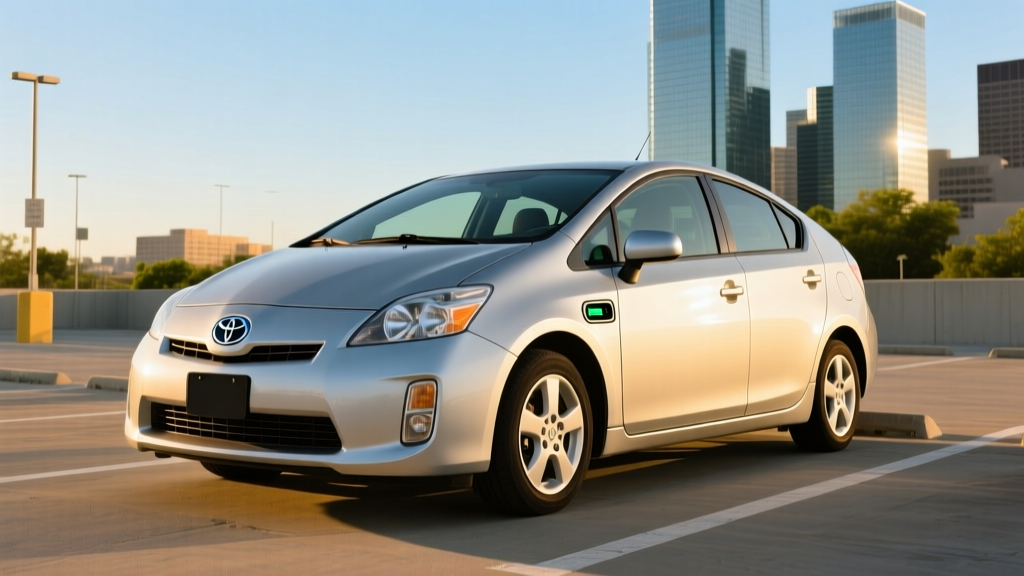
The second-generation Toyota Prius (model code XW20) defined what a hybrid could be for American drivers. If you're researching the 2008 Prius hybrid today — likely as a budget-friendly used car, a commuter backup, or a first car for a new driver — you need data that reflects its reality at nearly two decades old. This guide covers the 2008 Prius's fuel economy, battery longevity, replacement costs, reliability track record, and how it stacks up against modern hybrids, plug-in hybrids, and full EVs in 2026.
HEV vs PHEV: Where the 2008 Prius Fits
Before diving into specs, it's critical to distinguish the two hybrid architectures, because confusion here leads to bad purchase decisions:
| Feature | Conventional Hybrid (HEV) | Plug-In Hybrid (PHEV) |
|---|---|---|
| Plug-in charging? | No — refuels via gas + regenerative braking | Yes — charges from a wall outlet or public charger |
| Battery size | Small (1–2 kWh) | Larger (8–25+ kWh) |
| Electric-only driving | Very limited (~1 mi at low speed) | Typically 20–50 miles |
| Primary fuel | Gasoline | Electricity + gasoline |
| 2008 Prius? | Yes — this is an HEV | N/A (Prius Prime PHEV launched 2017) |
The 2008 Toyota Prius is a conventional hybrid electric vehicle (HEV). It does not plug in. You never need to find a charger. It captures energy through regenerative braking and the gasoline engine to keep its small nickel-metal hydride (NiMH) battery topped up. If you want plug-in capability from a Prius, you'd need a 2017-or-newer Prius Prime.
2008 Prius Hybrid: Fuel Economy & Efficiency
Fuel economy is the headline reason anyone buys a 2008 Prius in 2026. Here's what the EPA officially rates it at, sourced from fueleconomy.gov:
| Metric | 2008 Toyota Prius (HEV) |
|---|---|
| EPA City | 48 MPG |
| EPA Highway | 45 MPG |
| EPA Combined | 46 MPG |
| Fuel tank capacity | 11.9 gallons |
| Total range (EPA est.) | ~547 miles |
| Annual fuel cost (EPA est.) | ~$1,050 (at $3.15/gal) |
Real-World MPG vs. EPA Sticker
The 2008 Prius is one of the few vehicles where real-world city driving often matches or slightly exceeds the EPA city rating. That's because the EPA city cycle includes frequent stops — exactly where a hybrid's regenerative braking and electric-motor assist shine. In stop-and-go urban traffic, owners commonly report 48–52 MPG.
Highway driving tells a different story. At sustained 70–80 mph speeds, the gasoline engine does most of the work, and aerodynamic drag penalizes the Prius's tall, hatchback profile. Expect 40–43 MPG on the highway in real-world conditions, slightly below the 45 MPG EPA figure.
Cold weather also takes a toll. Below 40°F, the engine runs more frequently to maintain cabin heat and battery temperature, dropping observed MPG by roughly 10–15%. A 2008 Prius in a Minnesota winter might average 38–42 MPG combined until temperatures rise.
Powertrain Specs: Engine, Motor, and Combined Output
| Specification | 2008 Toyota Prius |
|---|---|
| Engine | 1.5L 4-cylinder Atkinson-cycle (76 hp, 82 lb-ft) |
| Electric motor | Permanent-magnet synchronous (67 hp, 295 lb-ft) |
| Combined net horsepower | 110 hp |
| Transmission | eCVT (planetary gearset, no traditional belts) |
| Drivetrain | Front-wheel drive |
| 0–60 mph | ~10.4 seconds |
| Battery type | Nickel-metal hydride (NiMH), ~1.3 kWh |
| Curb weight | ~2,932 lbs |
The Toyota Hybrid Synergy Drive (HSD) in the 2008 Prius uses a planetary gearset to seamlessly blend power from the gasoline engine and electric motor. There's no traditional transmission — no belts, no clutches, no fixed gears. This eCVT design is a major reason the drivetrain has proven extraordinarily durable, with very few mechanical failures even past 200,000 miles.
Performance is modest. The 110 combined horsepower and 10.4-second 0–60 time mean highway merging requires planning. This is a vehicle optimized for efficiency, not acceleration. If you need brisk passing power, look at the 2026 Prius (196 hp) or a modern PHEV like the RAV4 Prime (302 hp).
Battery Life, Degradation, and Replacement Cost
The high-voltage NiMH traction battery is the single biggest concern for anyone buying a 2008 Prius in 2026. Here's what the data shows:
Original battery warranty: 8 years / 100,000 miles (10 years / 150,000 miles in California-emission states). This warranty expired long ago for all 2008 models.
Expected battery lifespan: 150,000–200,000+ miles with normal use, though individual results vary widely based on climate, driving patterns, and whether the car sat unused for extended periods.
How Long Do 2008 Prius Batteries Actually Last?
NiMH batteries degrade more gracefully than early lithium-ion packs. Rather than sudden capacity loss, they gradually lose their ability to hold a charge, which manifests as reduced MPG and more frequent engine cycling. Many 2008 Priuses are still running on their original battery at 180,000+ miles, but it's increasingly common for vehicles of this age to need a replacement.
Warning signs of a failing hybrid battery:
- Sudden drop in observed MPG (5+ MPG below your baseline)
- Battery state-of-charge gauge swings rapidly between full and near-empty
- Engine runs constantly, even at low speeds or stops
- Check engine light with codes P0A80 (replace hybrid battery) or individual block-voltage imbalance codes
- Reduced regenerative braking feel
Battery Replacement Cost Breakdown
| Replacement Option | Cost Range (2026) | Warranty | Notes |
|---|---|---|---|
| New OEM Toyota battery | $2,200–$2,800 (part + labor) | 1 year / unlimited miles | Most reliable, available through dealers |
| Refurbished/reconditioned battery | $800–$1,500 (part + labor) | 1–3 years (varies by vendor) | Replaced weak cells; good mid-range option |
| Used salvage-yard battery | $400–$800 (part + labor) | 30–90 days typical | Cheapest but highest risk; check date code |
| Individual cell/module replacement | $200–$500 (DIY or specialist) | None to 1 year | Requires hybrid-battery diagnostic skill |
For a 2008 Prius with a market value of $3,500–$6,000 in 2026, a $2,500 OEM battery replacement is a significant percentage of the car's worth. A quality refurbished pack at $1,000–$1,500 installed is usually the economically rational choice. Independent hybrid specialists (not just Toyota dealers) are increasingly common in most metro areas and often offer the best value.
Reliability and Common Issues Beyond the Battery
The 2008 Prius earns its reputation as one of the most reliable vehicles Toyota ever built. The eCVT transmission has virtually no wear components, and the Atkinson-cycle engine runs under less stress than conventional engines. That said, at this age, several non-powertrain items deserve inspection:
- 12V auxiliary battery: Located in the rear cargo area. A weak 12V battery can prevent the car from starting, even if the hybrid battery is healthy. Replace every 4–5 years; cost ~$180–$250.
- Brake actuator assembly: The electro-hydraulic brake actuator can fail (codes C1391, C1256). Replacement runs $1,200–$1,800 at a dealer. Test the brakes carefully — any grinding, unusual pulsing, or warning lights warrant a professional inspection.
- Inverter coolant pump: Can fail silently, leading to inverter overheating. Check for turbulence in the inverter coolant reservoir when the car is ON.
- Combination meter (dashboard): A known issue where the instrument cluster goes dark or shows incorrect data. Repairable by specialty shops for ~$200–$400.
- Headlight HID ballasts: If equipped with HID headlights, ballast failure is common. ~$100–$200 per side aftermarket.
Tax Credits and Incentives: What Applies to a 2008 Prius?
Here's the short answer: no federal tax credit applies to a 2008 Prius purchase in 2026.
The original hybrid vehicle tax credit that applied to new Prius purchases phased out for Toyota back in 2007, when the company hit the 60,000-unit cap under the old Energy Policy Act credit structure. The current IRS §30D Clean Vehicle Credit applies only to new and qualifying used electric vehicles and plug-in hybrids — the 2008 Prius is a conventional HEV and does not qualify.
For the used-EV credit (up to $4,000 or 30% of sale price, whichever is less), the vehicle must be a battery-electric or plug-in hybrid with a minimum 7 kWh battery. The 2008 Prius's ~1.3 kWh NiMH pack falls far short.
Some states offer registration-fee reductions or HOV-lane access for hybrid vehicles, but most of these programs have sunset or now require plug-in capability. Check your state's DMV for any remaining perks.
2008 Prius vs. Modern Hybrids, PHEVs, and EVs: Which Fits You?
Choosing between a used 2008 Prius, a new hybrid, a PHEV, or a full EV depends on your budget, driving pattern, and charging access:
Choose the 2008 Prius if:
- Your total car budget is under $6,000
- You want maximum MPG without plugging in
- You drive mostly city/suburban with moderate highway use
- You want minimal financial risk — even with a battery replacement, total cost stays low
- You lack access to home or workplace charging
Look at a modern hybrid, PHEV, or EV if:
- You want current safety tech (AEB, lane-keeping, blind-spot monitoring — absent on the 2008 Prius)
- You drive significant highway miles and want a quieter, more refined ride
- You have home charging access and want to eliminate gasoline (full EV)
- You want 25–45 miles of electric-only commuting (PHEV like the 2026 Prius Prime or RAV4 Prime)
- You want a warranty — new vehicles come with 3–5 year bumper-to-bumper and 8–10 year hybrid battery coverage
For context, the 2026 Toyota Prius delivers 57 MPG combined (LE trim), 196 hp, and modern safety features starting around $29,000. The 2026 Prius Prime PHEV offers up to 44 miles of electric-only range and qualifies for up to $3,750 in federal tax credits (subject to income and sourcing requirements). If your budget allows, these represent substantial upgrades in every measurable category.
Frequently Asked Questions
How many MPG does the 2008 Prius hybrid get?
The EPA rates the 2008 Prius at 48 city / 45 highway / 46 combined MPG. In real-world driving, expect 48–52 MPG in city traffic and 40–43 MPG at sustained highway speeds. Cold weather can reduce combined MPG by 10–15%.
Does the 2008 Prius plug in?
No. The 2008 Prius is a conventional hybrid (HEV). It charges its battery through regenerative braking and the gasoline engine. You never plug it in. The plug-in Prius Prime did not exist until the 2017 model year.
How much does a replacement hybrid battery cost for a 2008 Prius?
A new OEM battery runs $2,200–$2,800 installed. Refurbished batteries cost $800–$1,500 installed, and used salvage batteries run $400–$800. Most owners of 2008 models choose a quality refurbished pack as the best value proposition.
Is the 2008 Prius reliable at this age?
The powertrain (engine, eCVT, hybrid system) is among the most reliable Toyota ever produced. Failures are rare even past 200,000 miles. The main risk is hybrid battery degradation (expected at 150,000–200,000+ miles) and age-related wear on the brake actuator, 12V battery, and electronics. A pre-purchase inspection by a hybrid-qualified mechanic is strongly recommended.
Does a 2008 Prius qualify for any federal tax credit?
No. The 2008 Prius is a conventional hybrid with a ~1.3 kWh battery. Federal tax credits under IRS §30D require plug-in vehicles with at least 7 kWh of battery capacity. No federal incentive applies to this vehicle in 2026.
Is a 2008 Prius still worth buying in 2026?
At $3,500–$6,000, a well-maintained 2008 Prius remains one of the cheapest vehicles to own and operate per mile. If you budget for a potential battery replacement (~$1,000–$1,500 refurbished) and accept the lack of modern safety features, it delivers exceptional value as a commuter, second car, or budget-conscious daily driver.