Quick Verdict: A Pioneering Hybrid That Still Commutes Well
The 2008 Nissan Altima Hybrid occupies a unique space in the used hybrid market. Built on Toyota's proven Hybrid Synergy Drive technology (licensed for this generation), it delivers solid real-world fuel economy, a comfortable midsize sedan cabin, and — nearly two decades later — a track record that lets us evaluate its long-term reliability with confidence. For budget-conscious shoppers seeking a dependable hybrid commuter without the complexity of a plug-in, the Altima Hybrid remains worth a serious look, provided you verify the health of its high-voltage battery.
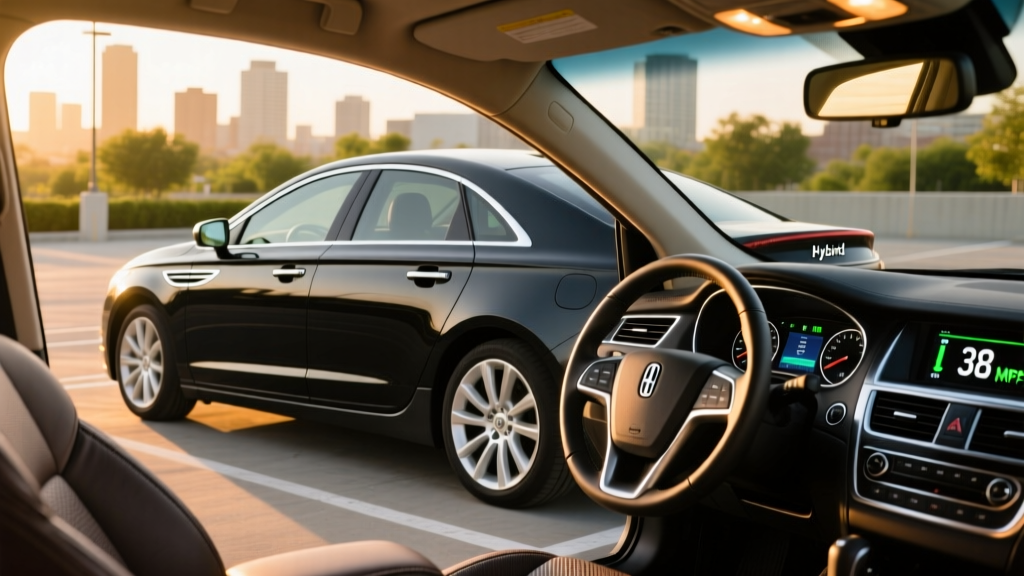
Before we dig into specs, let's clear up a critical distinction: the 2008 Altima Hybrid is a conventional hybrid (HEV), not a plug-in hybrid (PHEV). You never plug it in. The battery charges through regenerative braking and the gasoline engine. This matters because some used-car listings blur the lines, and the ownership experience is fundamentally different from a PHEV like the Toyota RAV4 Prime or a full battery-electric vehicle (BEV).
HEV vs. PHEV vs. EV: Where the Altima Hybrid Fits
Understanding the three electrified powertrain types is essential before buying any used hybrid:
| Feature | HEV (Altima Hybrid) | PHEV (e.g., RAV4 Prime) | BEV (e.g., Tesla Model 3) |
|---|---|---|---|
| Plug-in charging? | No — self-charging | Yes — Level 1/2 | Yes — Level 1/2/DC |
| Electric-only range | ~1 mile at low speed | 25–42 miles typical | 250–400+ miles |
| Gasoline engine? | Yes (primary) | Yes (backup) | No |
| Fuel cost per mile | ~$0.09 (at 34 MPG, $3.20/gal) | ~$0.04 electric / $0.09 gas | ~$0.04 (at $0.14/kWh) |
| Tax credit (new) | None currently | Up to $7,500 (§30D) | Up to $7,500 (§30D) |
| Home charging needed? | No | Recommended | Essential |
The Altima Hybrid is ideal for drivers who want better fuel economy but lack access to home or workplace charging. If you can install a Level 2 charger and want electric-only commuting, a modern PHEV or BEV delivers far greater savings — but at a higher purchase price.
Fuel Economy: EPA Ratings vs. Real-World MPG
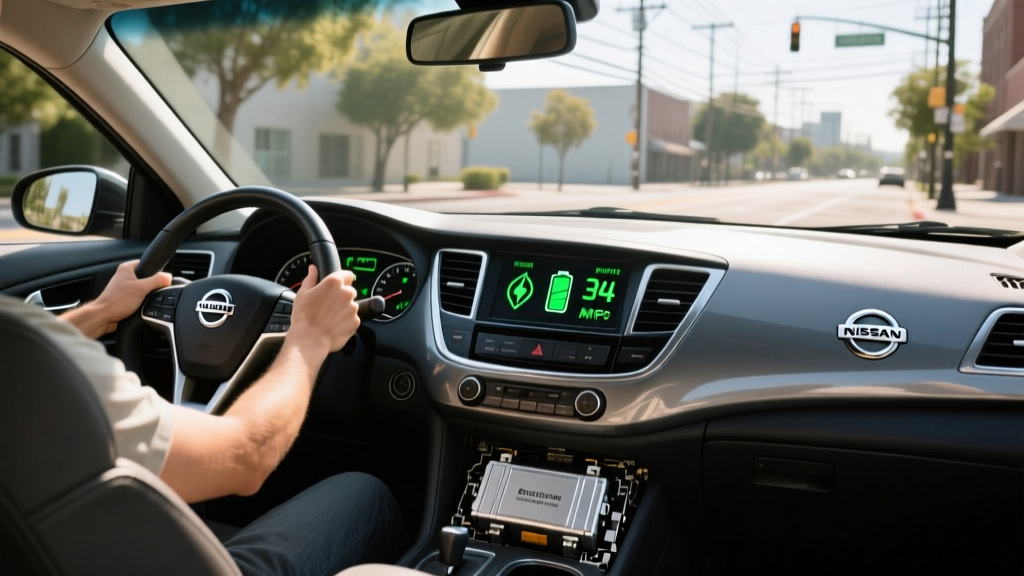
The 2008 Nissan Altima Hybrid was rated by the EPA at 35 MPG city / 33 MPG highway / 34 MPG combined. These figures come from fueleconomy.gov, the official EPA source.
| Driving Condition | EPA Rating | Real-World Expectation |
|---|---|---|
| City | 35 MPG | 33–38 MPG (hybrids excel in stop-and-go) |
| Highway | 33 MPG | 29–33 MPG (less regen benefit at steady speed) |
| Combined | 34 MPG | 31–35 MPG depending on driving mix |
How many MPG does this hybrid get in practice? Real-world owner reports cluster around 31–35 MPG combined, which tracks closely with the EPA sticker. Hybrids tend to exceed their EPA city rating because regenerative braking recovers energy in stop-and-go traffic. Highway driving, where the gasoline engine does most of the work, typically yields slightly lower numbers than the sticker.
One important caveat: at 18 years old, a 2008 Altima Hybrid with a degraded battery may see fuel economy drop to 28–30 MPG combined. The hybrid system relies on the high-voltage battery to assist acceleration and enable engine-off coasting. If battery capacity has diminished significantly, the 2.5L four-cylinder engine works harder, burning more fuel.
Powertrain Specs: Toyota-Derived Hybrid System
| Specification | 2008 Nissan Altima Hybrid |
|---|---|
| Engine | 2.5L inline-4 (QR25DE) |
| Engine horsepower | 158 HP @ 5,600 RPM |
| Electric motor | AC synchronous permanent magnet |
| Combined net output | 198 HP |
| Transmission | eCVT (electronically controlled) |
| Drivetrain | Front-wheel drive |
| Hybrid battery | NiMH (nickel-metal hydride), ~1.6 kWh |
| 0–60 MPH | ~7.5 seconds (est.) |
| Curb weight | ~3,490 lbs |
| Seating | 5 passengers |
Nissan licensed Toyota's Hybrid Synergy Drive for this generation Altima. The result is a system that pairs a 2.5-liter four-cylinder engine with an electric motor through a planetary gearset eCVT — the same architecture that powered the contemporary Toyota Camry Hybrid. Combined output is 198 horsepower, which gives the Altima Hybrid respectable acceleration for a midsize sedan of its era. The eCVT has no traditional gears or belts, which contributes to its long-term durability.
Because this is a conventional HEV, the ~1.6 kWh NiMH battery is small. It cannot propel the car on electric power alone for meaningful distances — perhaps a mile at very low speeds in a parking lot. Its role is to smooth acceleration, enable engine stop-start, and capture braking energy.
Hybrid Battery: Lifespan, Degradation, and Replacement Cost
Original Battery Warranty
When new, Nissan covered the hybrid battery for 8 years / 100,000 miles (10 years / 150,000 miles in CARB states like California, New York, and Massachusetts). As of 2026, all original factory warranties have expired unless the battery was replaced under warranty and a new coverage period was issued.
Is this hybrid reliable and what is battery replacement cost? The 2008 Altima Hybrid's Toyota-derived powertrain has proven durable. The eCVT transmission is essentially bulletproof in normal use. The main concern for any used hybrid of this age is the NiMH battery pack.
NiMH batteries degrade more gradually than lithium-ion packs. Rather than a sudden failure, owners typically notice a slow decline in fuel economy and a more frequent engine running. Based on owner reports and hybrid specialist shops:
- Battery lifespan: Most original NiMH packs in the Altima Hybrid lasted 120,000–180,000 miles before significant degradation. Many are still running on original batteries at 150,000+ miles, albeit with reduced efficiency.
- Replacement cost (OEM new): $2,500–$3,500 for a new NiMH pack from a Nissan dealer, plus $300–$600 labor.
- Replacement cost (remanufactured): $1,200–$2,000 for a reconditioned pack from hybrid specialists like Green Bean Battery or similar vendors, often with a 3–5 year warranty.
- Individual cell replacement: Some hybrid shops can replace only the failed modules within the pack for $500–$900, though this is a temporary fix if other cells are aging.
Buyer tip: Before purchasing, have a hybrid-qualified technician perform a battery health check. Tools like Techstream or aftermarket OBD-II scanners can read the battery's state of health (SoH) and individual cell voltage variance. A pack with more than 0.3V difference between the highest and lowest cell blocks is a red flag.
Pricing and Tax Credit Eligibility in 2026
The 2008 Nissan Altima Hybrid originally carried an MSRP of approximately $25,650 (base), which was a $3,650 premium over the gasoline Altima 2.5 S. In the 2026 used market, examples typically sell for:
- Fair condition (150K+ miles, cosmetic wear): $2,500–$3,500
- Good condition (100K–140K miles, maintained): $3,500–$5,000
- Excellent condition (under 100K miles, documented service): $5,000–$6,500
Does it qualify for any tax credit? No. The federal §30D Clean Vehicle Credit applies only to new and qualified used EVs and PHEVs purchased from a dealer. Conventional hybrids (HEVs) like the Altima Hybrid do not qualify for the federal credit. The IRS guidelines on clean vehicle credits are clear: the vehicle must have a plug and meet battery capacity, sourcing, MSRP, and buyer income requirements. A self-charging HEV is ineligible.
Some states previously offered hybrid purchase incentives, but most have shifted their incentive budgets toward PHEVs and BEVs. Check your state's energy office for any residual programs, but do not count on a tax credit for this vehicle.
Who Should Buy the 2008 Altima Hybrid?
Pros
- Proven Toyota-derived hybrid system with strong reliability record
- No plug-in charging required — ideal for apartment dwellers
- Comfortable midsize sedan with usable trunk (9.1 cu ft; battery takes some space)
- Low running costs: 34 MPG combined, conventional maintenance
- eCVT transmission is durable with no belt or clutch wear
- Low purchase price in the used market ($3K–$6K range)
Cons
- Hybrid battery replacement risk ($1,500–$3,500) on a 18-year-old vehicle
- Trunk space reduced by battery pack placement
- No electric-only driving capability (unlike PHEVs)
- Outdated infotainment and safety tech by 2026 standards
- No federal or state tax credit eligibility
- Only sold in select states when new, so used inventory is regional
Choose the 2008 Altima Hybrid if: You need an affordable, fuel-efficient commuter sedan, you cannot charge at home, and you're willing to budget $1,500–$3,000 for a potential battery replacement. It's a strong pick for drivers covering 12,000–18,000 miles per year in mixed city/highway conditions who want to minimize fuel costs without the upfront expense of a newer PHEV or BEV.
Look elsewhere if: You want electric-only commuting (consider a used Chevy Volt or Toyota RAV4 Prime), you need modern ADAS features like automatic emergency braking and lane-keeping, or you drive mostly highway miles where the hybrid advantage shrinks. For heavy highway commuters, a clean-diesel or efficient gasoline sedan might offer similar real-world economy at lower battery-replacement risk.
Hybrid vs. PHEV vs. EV: Which Fits Your Situation?
The used 2008 Altima Hybrid competes against three categories in 2026. Here's a practical decision framework:
| Your Situation | Best Choice | Example Vehicles |
|---|---|---|
| No home charging, tight budget | Used HEV | 2008 Altima Hybrid, Toyota Camry Hybrid |
| Home charging available, short commute | Used PHEV | Chevy Volt, Toyota Prius Prime |
| Home charging, want lowest fuel cost | Used BEV | Nissan LEAF, Chevy Bolt EV |
| Long highway commute, no charging | Efficient gas or HEV | Toyota Corolla Hybrid, Honda Accord Hybrid |
| Want tax credits and latest tech | New PHEV or BEV | 2026 Hyundai Tucson PHEV, Tesla Model 3 |
The Altima Hybrid's sweet spot is clear: budget buyers who want hybrid efficiency without lifestyle changes. If your situation allows for home charging, a used PHEV or BEV will deliver dramatically lower per-mile fuel costs — but at a higher entry price and with charging logistics to manage.
Frequently Asked Questions
How many MPG does the 2008 Nissan Altima Hybrid get?
The EPA rates it at 35 city / 33 highway / 34 combined MPG. Real-world owners typically report 31–35 MPG combined, with city driving often exceeding the EPA estimate thanks to regenerative braking. A degraded hybrid battery can drop real-world economy to 28–30 MPG.
Does the 2008 Altima Hybrid need to be plugged in?
No. It is a conventional hybrid (HEV), not a plug-in. The battery charges through regenerative braking and the gasoline engine. You fuel it like any other car — just with better mileage.
How far can it drive on electric power alone?
Effectively zero meaningful electric-only range. The NiMH battery can propel the car at very low speeds (under 25 MPH) for roughly one mile on a flat surface, such as creeping through a parking lot. It is not designed for electric-only commuting. If you need electric-only range, you need a PHEV or BEV.
Is the hybrid battery reliable, and what does replacement cost?
The Toyota-derived NiMH system has a strong reliability record. Most original batteries last 120,000–180,000 miles. Replacement runs $1,200–$2,000 for a remanufactured pack or $2,500–$3,500 for a new OEM pack. Budget for this as a potential expense when buying any 18-year-old hybrid.
Does the 2008 Altima Hybrid qualify for a tax credit?
No. The federal §30D Clean Vehicle Credit requires a plug-in vehicle (PHEV or BEV) that meets battery sourcing, MSRP, and buyer income requirements. Conventional hybrids are not eligible. No current state incentives specifically target used HEVs either.
Was the 2008 Altima Hybrid sold nationwide?
No. Nissan initially sold the Altima Hybrid only in eight states: California, Oregon, Washington, New York, Connecticut, Massachusetts, Vermont, and Rhode Island — all states with CARB emissions requirements. This means used inventory is concentrated in these regions, and finding one in other states may require a broader search.
How does it compare to the 2008 Toyota Camry Hybrid?
The Camry Hybrid used the same Toyota HSD architecture and delivered similar fuel economy (33 city / 34 highway EPA for the 2008 model year). The Camry Hybrid had broader national availability and a larger dealer network for hybrid service, making it slightly easier to find and maintain. The Altima Hybrid offers sportier styling and Nissan's interior design, but the Camry is the more practical used buy for parts availability.